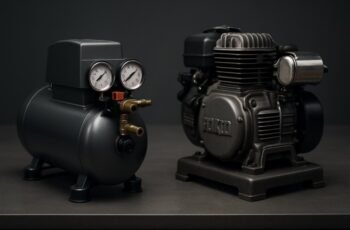
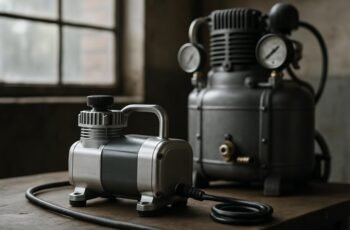
Imagine choosing between a compact sports car and a rugged truck — each designed for different needs. That’s how we see pancake and hot dog compressors: one prioritizes portability and quiet operation, while the other emphasizes durability and high performance. Understanding their technical differences can help you determine which model aligns with your specific tasks. As we compare these two types, you’ll discover how to make an informed decision for your projects.
Key Takeaways
- Pancake compressors are compact, lightweight, and quieter, ideal for portability and small-scale indoor projects.
- Hot dog compressors feature larger, elongated tanks suitable for heavy-duty, continuous outdoor tasks.
- Pancake models typically have higher durability due to cast iron construction; hot dog units may wear faster under heavy use.
- Hot dog compressors support higher airflow and are better for demanding, prolonged applications.
- Choice depends on project size, portability needs, noise preferences, and workload intensity.
What Are Pancake and Hot Dog Compressors? An Overview
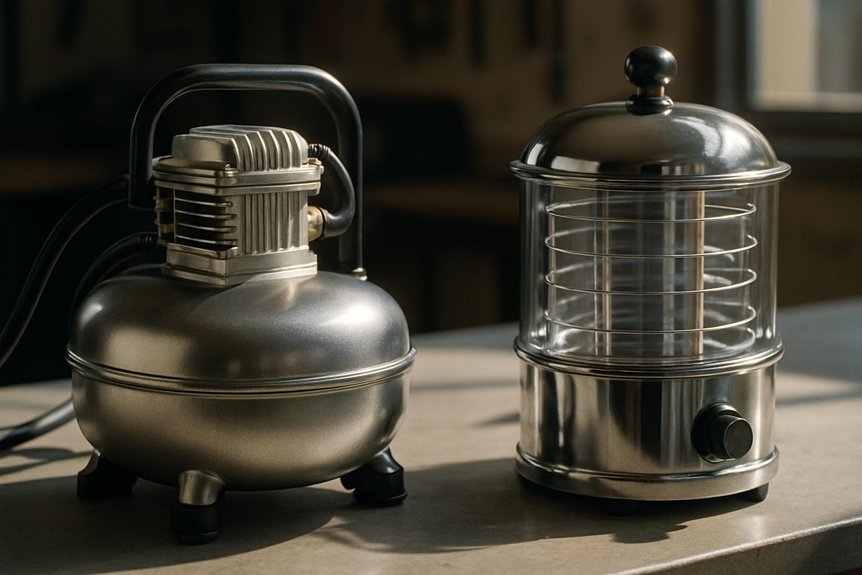
Pancake and hot dog compressors are two common types of portable air compressors, each designed for specific applications and operational efficiencies. Pancake compressors feature a low-profile, circular tank, making them ideal for lightweight tasks and tight spaces. Hot dog compressors, with their elongated tank design, offer increased capacity and are better suited for continuous use. Both types are valued for their portability, but they differ markedly in air compressor noise levels and energy efficiency. Pancake models tend to produce less noise, making them suitable for quieter environments, while hot dog compressors often consume more energy due to their larger tanks and higher airflow capabilities. Understanding these distinctions helps in selecting a compressor that balances operational needs with noise and energy considerations.
Comparing Size and Portability: Which Compressor Fits Your Workspace?
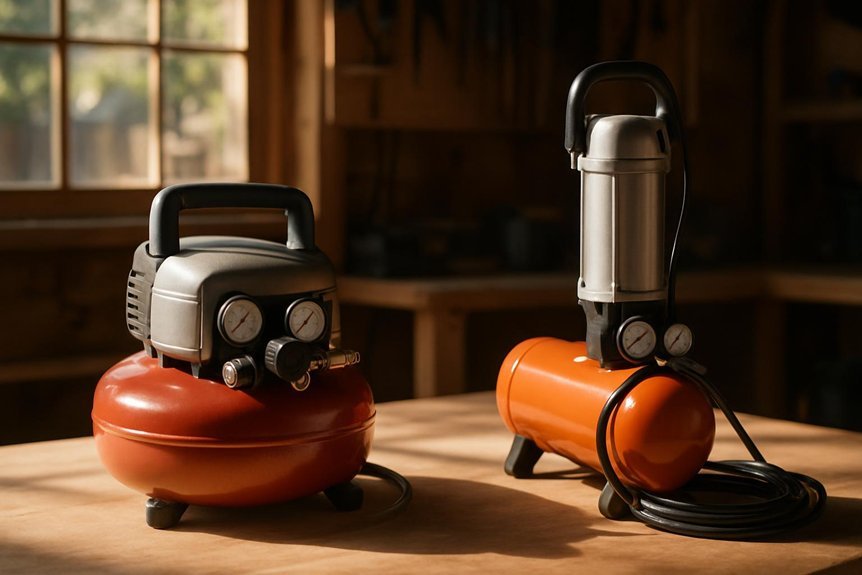
When selecting an air compressor for a specific workspace, size and portability are critical factors that influence operational efficiency and ease of use. Pancake compressors are generally compact, featuring a low-profile design that enhances decorative aesthetics and allows for easy storage in tight spaces. Their lightweight structure also improves portability, making them ideal for tasks requiring frequent movement. Conversely, hot dog compressors tend to be larger and less portable, but often offer more robust construction, which may be beneficial for heavier-duty applications. Noise levels are also a consideration; pancake models typically operate more quietly due to their smaller size, contributing to a more comfortable workspace. Ultimately, choosing between the two depends on balancing space constraints with desired portability and noise reduction.
Capacity and Performance: How Do These Compressors Handle Your Projects?
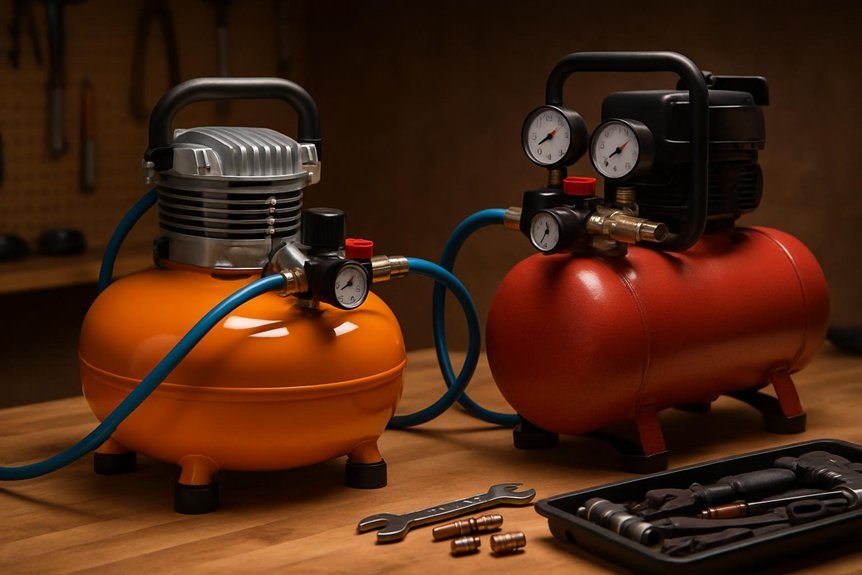
We need to evaluate how airflow rates and pressure levels influence each compressor’s ability to meet project demands. Additionally, determining duty cycles and longevity provides insight into their reliability over extended use. Understanding which unit suits specific project types guarantees ideal performance and efficiency.
Airflow Rates and Pressure
How do airflow rates and pressure levels influence a compressor’s capacity and overall performance? Higher airflow rates enable compressors to deliver more air volume quickly, essential for continuous operation and demanding tasks. Adequate pressure levels ensure sufficient force for tools and applications, directly impacting efficiency. Both factors are affected by air filtration, which maintains consistent airflow by preventing debris buildup that can hinder performance. Additionally, noise levels are connected to pressure and airflow; increased output often results in louder operation, which can be a concern in work environments. Pancake compressors typically have lower airflow rates and pressure, suitable for light tasks, while hot dog models offer higher performance. Understanding these parameters helps us select a compressor aligned with project requirements, balancing capacity, noise, and longevity.
Duty Cycle and Longevity
The duty cycle and longevity of a compressor directly determine its capacity to sustain consistent performance over time. A higher duty cycle (e.g., 50% vs. 25%) allows for longer operation without overheating, enhancing productivity. Longevity depends on factors like component durability and maintenance, impacting overall lifespan. When comparing pancake and hot dog compressors:
- Pancake models often have lower duty cycles, limiting continuous use but offering quieter noise levels.
- Hot dog compressors generally feature higher duty cycles, supporting prolonged tasks with better energy efficiency.
- Both types’ longevity varies based on build quality and usage patterns, influencing long-term reliability.
- Noise levels tend to increase with extended operation, especially in less durable units, affecting user comfort.
Understanding these aspects helps determine how each compressor handles your projects over time.
Suitability for Project Types
When selecting between pancake and hot dog compressors, evaluating their capacity and performance for specific project requirements is essential. The suitability depends on factors like noise levels, aesthetic appeal, and airflow needs. Pancake compressors typically offer lower noise levels and a compact design, making them ideal for light-duty tasks and indoor use. In contrast, hot dog compressors generally provide higher capacity and more consistent performance for heavy-duty applications but may produce more noise and less aesthetic appeal. Consider this comparison:
| Feature | Pancake Compressor | Hot Dog Compressor | Suitability |
|---|---|---|---|
| Noise Levels | Lower | Higher | Light-duty, indoor |
| Aesthetic Appeal | Compact & Sleek | Larger & Bulkier | Heavy-duty, outdoor |
| Capacity | Moderate | High | Continuous, demanding |
| Performance | Reliable for small | Robust for large | Project-specific |
| Portability | High | Moderate | On-site flexibility |
Choosing depends on project scale and environment.
Best Uses for Pancake vs. Hot Dog Compressors: Which Is Right for You?
Choosing between a pancake and a hot dog compressor depends largely on the specific tasks you plan to undertake. For creative applications, a pancake compressor’s consistent airflow supports finishing tasks like spray painting or upholstering. Aesthetic considerations favor pancake models for projects requiring fine detail, such as precision carpentry or delicate molding. Conversely, hot dog compressors excel in tasks demanding portability and quick recovery times, like tire inflation or framing nailers.
- Creative projects requiring steady, reliable airflow (pancake).
- Aesthetic-focused tasks with precision requirements (pancake).
- Jobsite versatility where mobility is key (hot dog).
- Heavy-duty applications needing rapid, repeated use (hot dog).
Pros and Cons of Each Type: Making an Informed Choice
Understanding the advantages and disadvantages of pancake and hot dog compressors is essential for making an informed decision tailored to your needs. Pancake compressors are lightweight, portable, and often more affordable, making them ideal for small-scale or mobile projects. Their compact design offers creative uses in tight spaces, though their lower durability can be a drawback. Hot dog compressors, with their larger tanks and higher CFM output, excel in heavy-duty applications, but their size and aesthetic appeal reduce portability. While they provide sustained airflow, they tend to be bulkier and more expensive. Both types have unique pros and cons; pancake models favor mobility and cost-efficiency, whereas hot dog compressors prioritize power and endurance. Your choice depends on balancing these technical factors and your specific project requirements.
Tips for Maintaining and Choosing Between Pancake and Hot Dog Compressors
When selecting and maintaining pancake and hot dog compressors, evaluating durability, portability, and maintenance needs is essential for peak performance. We should consider how build quality impacts longevity, how size affects ease of transport, and what maintenance routines guarantee sustained efficiency. Analyzing these points helps in making informed choices tailored to specific application requirements.
Durability and Build Quality
Examining the durability and build quality of pancake and hot dog compressors reveals significant differences that influence their longevity and maintenance needs. For industrial applications, robustness is critical, especially when considering noise levels and operational stress.
- Pancake compressors typically feature cast iron cylinders, providing superior wear resistance, ideal for continuous use.
- Hot dog compressors often use aluminum components, which are lighter but may degrade faster under heavy workloads.
- Noise levels are generally lower in pancake models due to their enclosed design, enhancing durability by reducing vibrations.
- Hot dog compressors, with their compact build, may experience quicker fatigue in high-demand settings, impacting overall lifespan.
Choosing between these depends on application demands, with pancake compressors offering greater durability for intensive use.
Portability and Size
Given their compact designs, both pancake and hot dog compressors prioritize portability, but their size and weight markedly affect ease of transportation and storage. Pancake compressors tend to be lighter and flatter, enabling easier maneuverability and space-saving storage, while hot dog models are slightly more elongated but still manageable. Noise levels are a vital consideration; smaller units often operate more quietly, enhancing portability in noise-sensitive environments. Additionally, energy efficiency relates directly to size—compact compressors typically consume less power, making them more suitable for mobility and extended use. When choosing between the two, consider how size impacts not only transport but also operational noise and energy consumption, ensuring the compressor aligns with your workspace requirements for efficiency and convenience.
Maintenance and Longevity
Have you considered how maintenance routines impact the lifespan of pancake and hot dog compressors? Proper upkeep directly affects their durability, aesthetic appeal, and noise levels. To optimize longevity, consider these key maintenance practices:
- Regularly check and replace air filters to prevent debris buildup that diminishes performance.
- Drain moisture from tanks frequently to avoid corrosion, which impacts both aesthetic appeal and functional integrity.
- Inspect belts and pulleys for wear, ensuring smooth operation and reducing noise levels.
- Keep units clean and free of dust to maintain aesthetic appeal and facilitate cooling, preventing overheating.
Adhering to these routines guarantees both compressor types operate efficiently, prolongs service life, and maintains their visual and acoustic qualities.
Frequently Asked Questions
Are Pancake or Hot Dog Compressors Better for Automotive Work?
We find pancake compressors better for automotive work due to their portability and consistent power, while hot dog compressors excel in affordability. Both suit different needs, but for frequent, portable use, pancakes offer greater efficiency and ease.
Which Compressor Type Is Quieter During Operation?
We find pancake air compressors notably quieter than hot dog compressors, with sound levels that barely register, making them ideal for noise-sensitive environments. Their noise comparison reveals a substantial reduction, ensuring a peaceful workspace during operation.
Can These Compressors Handle Continuous Heavy-Duty Use?
Both compressors, with oil lubrication and portability features, can handle continuous heavy-duty use when appropriately maintained; however, their efficiency depends on design quality and operational conditions, emphasizing the importance of regular upkeep for sustained performance.
How Long Do Pancake and Hot Dog Compressors Typically Last?
Like a trusted companion, pancake compressors typically last 5-10 years, while hot dog models often reach 7-12 years, depending on design efficiency and maintenance. Regular upkeep extends lifespan, ensuring reliable performance under heavy-duty demands.
Are There Specific Brands Known for Reliable Pancake or Hot Dog Compressors?
We find that reputable brands like DeWalt and California Air Tools excel due to strong brand reputation and lower maintenance requirements, making them reliable choices for pancake and hot dog compressors. Their durability enhances long-term performance and reduces downtime.
Conclusion
In the end, choosing between a pancake and hot dog compressor isn’t just about size or noise—it’s about matching capacity to your needs. Ironically, the quieter pancake might struggle with heavy-duty tasks, while the robust hot dog could be overkill for light jobs. We recommend carefully analyzing your workload and workspace to avoid a mismatch. After all, even the best compressor’s true value depends on how well it fits your specific requirements—and not just its size or noise level.