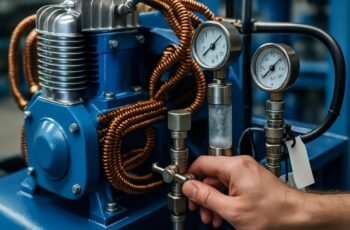
When an air compressor motor begins to show signs of trouble, it can impact overall system efficiency and safety. Identifying early indicators such as unusual noises, overheating, or performance drops is essential for effective troubleshooting. Understanding the underlying causes—ranging from mechanical misalignment to electrical faults—helps prevent costly damages. As we explore common symptoms and their roots, you’ll gain insights into maintaining peak performance and knowing when professional intervention becomes necessary.
Key Takeaways
- Common signs include irregular noises, increased vibration, reduced pressure, overheating, and frequent circuit breaker trips.
- Overheating and electrical failures often result from inadequate lubrication, misalignment, or electrical issues like insulation breakdown.
- Strange noises and performance drops indicate bearing wear, loose parts, or electrical faults requiring inspection.
- Regular preventive maintenance, such as cleaning filters and monitoring lubrication, helps prevent motor problems.
- Significant efficiency loss, recurrent electrical faults, or unusual noises signal the need for professional repair or replacement.
Common Signs of Air Compressor Motor Problems and How to Recognize Them
Understanding the signs of air compressor motor problems is essential for timely diagnosis and maintenance. When the motor exhibits irregular sounds such as grinding or rattling, it indicates potential mechanical issues or bearing wear. Unusual noise often correlates with increased vibration, which can signal imbalance or misalignment. A noticeable decline in performance, like reduced airflow or pressure, suggests the motor isn’t operating efficiently. Overheating, evidenced by excessive heat or a burning smell, is another critical warning. Additionally, frequent tripping of circuit breakers points to electrical stress or overload conditions within the motor. Recognizing these signs early allows us to intervene before minor issues escalate into significant failures, ensuring the compressor’s longevity and reliable operation.
Causes Behind Overheating and Electrical Failures in Your Motor
Overheating and electrical failures in air compressor motors often stem from a combination of mechanical and electrical factors that compromise the motor’s integrity. Mechanical issues such as inadequate lubrication, misalignment, or excessive load increase friction and thermal stress, elevating operating temperatures. Electrical failures frequently result from insulation breakdown, voltage fluctuations, or short circuits, which generate abnormal current flow and heat buildup. Over time, dust accumulation and poor ventilation hinder heat dissipation, exacerbating these issues. Additionally, worn brushes or faulty windings can cause electrical arcing, further damaging components. These interconnected factors accelerate thermal degradation, reduce efficiency, and ultimately lead to motor failure. Identifying these root causes requires careful analysis of operating conditions, electrical patterns, and maintenance history to prevent catastrophic breakdowns.
Troubleshooting Strange Noises and Reduced Performance
Strange noises and reduced performance in an air compressor motor often indicate underlying mechanical or electrical issues that disrupt normal operation. Unusual sounds like grinding, squealing, or knocking typically suggest bearing wear, misalignment, or loose components. Reduced efficiency, such as decreased airflow or pressure, can result from worn-out pistons, clogged filters, or electrical faults affecting motor torque. Diagnosing these symptoms involves inspecting for abnormal vibrations, checking for loose or damaged parts, and monitoring electrical connections for irregularities. Analyzing noise patterns and performance metrics helps pinpoint specific problems. Addressing these issues promptly ensures the motor operates within ideal parameters, preventing further damage and maintaining consistent compressor output. Accurate troubleshooting requires a systematic approach to identify root causes efficiently.
Preventive Maintenance Tips to Avoid Motor Breakdowns
Regularly scheduled preventive maintenance is essential to prolong the lifespan of an air compressor motor and prevent unexpected breakdowns. Consistent inspection of electrical connections ensures proper conductivity and identifies corrosion or looseness that could cause short circuits or overheating. Monitoring lubrication levels and replacing oil according to manufacturer specifications minimizes friction and wear on moving parts, reducing the risk of overheating and mechanical failure. Regularly cleaning filters and cooling systems maintains peak airflow, preventing heat buildup that can damage motor components. Additionally, performing vibration analysis helps detect early signs of imbalance or misalignment, allowing for timely corrections. Implementing a structured maintenance schedule based on operating hours and environmental conditions ensures critical components are serviced before failure, ultimately reducing downtime and repair costs.
When to Seek Professional Repair or Replacement for Your Air Compressor Motor
While preventive maintenance can considerably reduce the likelihood of motor failure, certain signs indicate it’s time to consult a professional for repair or replacement. Significant drops in operational efficiency, such as persistent overheating or unusual vibrations, suggest internal component issues that require expert diagnosis. Additionally, recurrent tripping of circuit breakers or persistent electrical faults often point to motor winding problems or insulation failure, which demand specialized testing. Unusual noise patterns, like grinding or squealing, can signal bearing wear or alignment problems that worsen over time if unaddressed. When your compressor experiences frequent downtime despite basic troubleshooting, or if repairs become increasingly costly, it’s prudent to seek professional assessment for potential motor replacement. Prompt expert intervention ensures safety, minimizes downtime, and prevents further equipment damage.
Frequently Asked Questions
How Long Do Air Compressor Motors Typically Last With Proper Maintenance?
With proper maintenance, air compressor motors typically last between 10 to 15 years. Regular lubrication, timely part replacement, and keeping the system clean help optimize lifespan, ensuring reliable performance and minimizing unexpected downtime.
Can Using Incompatible Lubricants Damage the Compressor Motor?
Using incompatible lubricants can indeed damage the compressor motor by causing inadequate lubrication, increased friction, overheating, and potential component failure. We recommend always selecting lubricants specified by the manufacturer to guarantee ideal motor performance and longevity.
What Are the Environmental Factors That Affect Motor Lifespan?
Ever wondered how environment impacts motor lifespan? We find that temperature fluctuations, humidity, and dust ingress accelerate wear, cause corrosion, and lead to overheating, ultimately reducing the motor’s operational life through increased stress and component degradation.
Are There Specific Brands More Prone to Motor Problems?
Some brands tend to have higher failure rates due to inconsistent manufacturing quality or inferior components, which we’ve observed through industry data and user reports. We recommend thorough research and choosing reputable brands for enhanced reliability and longevity.
How Does Humidity Impact Air Compressor Motor Performance?
Humidity acts like a silent saboteur, corroding motor components and causing insulation breakdown. We observe increased wear and reduced efficiency in high humidity, emphasizing the need for moisture control to maintain ideal compressor performance and longevity.
Conclusion
By understanding these signs and causes, we can proactively address motor issues and minimize downtime. Regular maintenance and timely troubleshooting are vital, even if you’re concerned about the complexity; many issues are manageable with basic checks. Remember, seeking professional help when needed guarantees safety and long-term efficiency. Staying vigilant and informed allows us to optimize compressor performance, preventing costly repairs and ensuring reliable operation under demanding conditions.