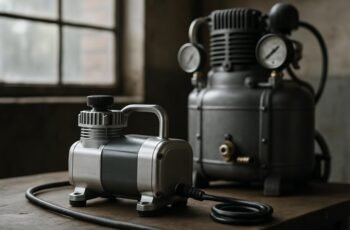
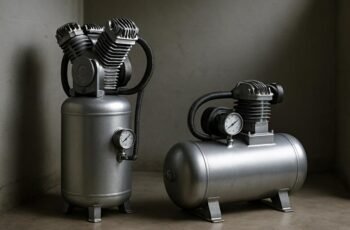
When comparing silent air compressors to standard models, it’s crucial to evaluate how their design influences noise levels, durability, and application suitability. While silent units offer significant advantages in noise-sensitive environments, they often come with higher upfront costs and specific maintenance needs. Understanding these differences can help us select the right equipment for our needs, but there are more factors—like long-term performance and environmental impact—that warrant a closer look.
Key Takeaways
- Silent compressors feature soundproofing and insulation, significantly reducing noise compared to standard models.
- Standard compressors are typically less insulated, resulting in higher noise levels and environmental exposure.
- Silent units often have sealed bearings and durable components, offering better longevity and reliability.
- Initial costs for silent compressors are higher, but they can lower long-term expenses by reducing noise-related mitigation needs.
- Silent compressors are ideal for indoor, noise-sensitive environments, while standard units suit outdoor, heavy-duty applications.
What Are the Main Differences Between Silent and Standard Air Compressors?
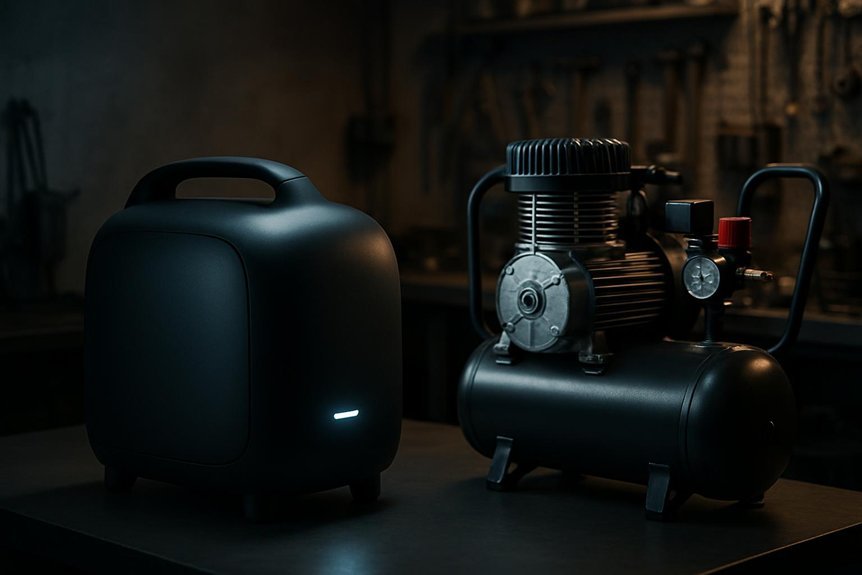
While both silent and standard air compressors serve the same fundamental purpose—pressurizing air for various applications—they differ considerably in design and operational characteristics. Concerning efficiency comparison, silent compressors often utilize advanced soundproofing and optimized motor designs, which can marginally impact energy consumption but mainly prioritize noise reduction. Standard compressors typically have simpler, less insulated constructions, potentially leading to higher noise levels but sometimes offering slightly better efficiency due to fewer soundproofing components. Regarding portability factors, silent compressors are usually more compact and lightweight, making them easier to move and suitable for confined spaces. Conversely, standard units tend to be bulkier and heavier, which can hinder portability but might provide larger capacity or power for industrial tasks.
How Do Noise Levels Impact Your Workspace With Each Type?
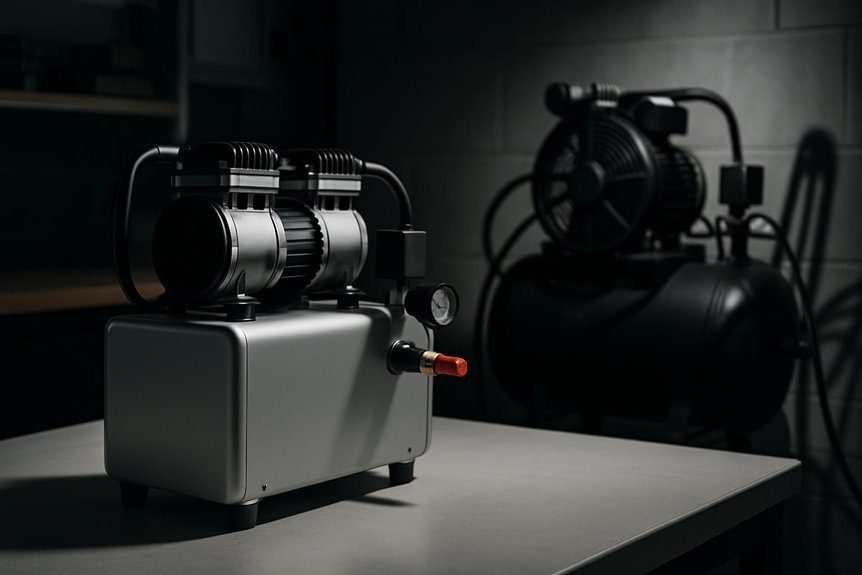
The noise levels emitted by air compressors directly influence workspace safety, comfort, and productivity. High noise pollution from standard compressors can lead to increased fatigue, reduced concentration, and potential communication breakdowns, impairing overall efficiency. In contrast, silent air compressors minimize acoustic disturbances, creating a safer and more controlled work environment. Excessive noise not only hampers operator focus but can also contribute to long-term health issues, emphasizing the significance of noise level management. By reducing sound emissions, silent compressors support better communication, lower stress levels, and compliance with occupational health standards. Understanding these impacts highlights why noise reduction is essential for optimizing operational effectiveness and ensuring a healthier, more productive work environment.
What Are the Advantages of Choosing a Silent Air Compressor?
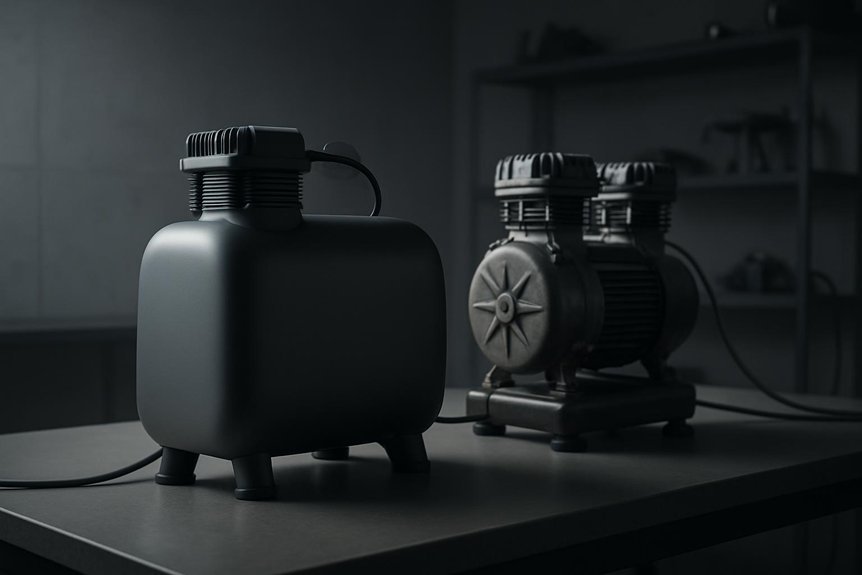
Choosing a silent air compressor offers significant advantages in reducing noise levels, which directly improves overall workplace comfort. Lower noise emissions minimize fatigue and distraction, leading to increased productivity and safety. Analyzing these benefits underscores the importance of considering acoustic performance in compressor selection.
Reduced Noise Levels
Have you considered how noise levels impact your workspace or environment? Silent air compressors substantially reduce sound emissions, contributing to a quieter, more focused setting. This reduction minimizes disturbances, improving worker concentration and safety. Additionally, quieter operation correlates with enhanced air quality, as noise often indicates mechanical inefficiencies that can affect internal components. From an energy efficiency perspective, silent compressors typically operate with optimized mechanisms, reducing energy consumption linked to noise production.
| Feature | Impact |
|---|---|
| Reduced Noise Levels | Less disturbance, improved focus |
| Air Quality | Lower mechanical vibration enhances air purity |
| Energy Efficiency | Quieter units often operate more efficiently |
| Workplace Safety | Less noise reduces fatigue and hearing risks |
Enhanced Workplace Comfort
A quieter work environment directly enhances overall comfort and productivity by reducing auditory stress and physical fatigue. Silent air compressors contribute markedly to this improvement by minimizing noise pollution, which can otherwise cause distraction and strain. Additionally, these compressors often deliver better air quality, as they incorporate advanced filtration systems that reduce contaminants and maintain cleaner airflow. Their superior energy efficiency results in lower operational costs and less heat generation, creating a more stable and comfortable workspace. This combination of improved air quality and energy efficiency supports healthier working conditions, decreasing the likelihood of respiratory issues and discomfort. Ultimately, choosing a silent air compressor fosters a more ergonomic environment, promoting sustained focus and well-being for workers.
What Drawbacks Should You Consider With Silent Compressors?
One key drawback to contemplate with silent compressors is their generally higher initial cost compared to standard models. This price premium often stems from advanced noise insulation materials designed to minimize sound emissions, which can markedly increase manufacturing costs. Additionally, while silent compressors typically feature enhanced portability features, such as compact design and integrated handles, these benefits can be offset by the expense of these sophisticated components. The improved noise insulation may also contribute to a heavier unit, potentially affecting ease of transport despite portability features. Consequently, for applications with tight budget constraints, the higher upfront investment might outweigh the operational advantages. It’s essential to balance the benefits of reduced noise and mobility against the initial financial outlay when considering silent compressors.
How Do Costs Compare Between Silent and Standard Air Compressors?
When comparing costs between silent and standard air compressors, the initial investment emerges as a primary differentiator. Silent compressors typically require a higher purchase price due to specialized noise-reduction components and advanced engineering, which influence the overall cost comparison. Price factors such as build quality, motor efficiency, and added soundproofing contribute to the higher upfront cost of silent models. Conversely, standard compressors often have lower initial prices but may incur higher long-term expenses due to increased energy consumption and maintenance. While silent compressors tend to be more expensive initially, their reduced noise levels can lower operational costs related to noise mitigation. Ultimately, the cost comparison hinges on balancing upfront investment against potential savings in energy and maintenance over the compressor’s lifespan.
Which Applications Are Best Suited for Silent Versus Standard Compressors?
Silent compressors are particularly well-suited for environments where noise levels must be minimized, such as medical facilities, laboratories, and residential settings. They excel in indoor workshops where quiet operation enhances worker comfort and reduces disruption. Their low noise profile makes them ideal for tasks requiring precision or prolonged use, preventing noise fatigue. Conversely, standard compressors are better suited for outdoor construction sites, where noise emissions are less regulated, and durability against environmental factors is prioritized. For outdoor applications, the robust build and higher power capacity of standard compressors accommodate heavy-duty tasks like powering pneumatic tools and large-scale equipment. While silent compressors shine in controlled, noise-sensitive environments, standard models are more appropriate for demanding outdoor applications where noise is less of a concern.
How Do Maintenance and Durability Vary Between the Two Types?
Maintenance needs and durability are key factors distinguishing silent and standard compressors, especially under continuous use. Silent models generally require less frequent maintenance due to fewer moving parts and quieter operation, which reduces wear. However, their durability can vary depending on operational conditions and build quality, warranting a detailed comparison.
Maintenance Frequency Differences
How often each type of compressor requires maintenance considerably impacts their operational longevity and cost-efficiency. Silent compressors generally demand less frequent maintenance due to their sealed, low-noise design, which reduces dust ingress and contamination. Standard compressors, however, require more regular upkeep, particularly concerning lubrication requirements, as oil and filters need frequent replacement to prevent wear and overheating. Storage considerations also influence maintenance schedules; silent units often have integrated, protected components that lower exposure risks. Key differences include:
- Lubrication requirements: Silent compressors often feature sealed bearings, reducing lubrication needs, whereas standard units need regular oil checks and changes.
- Filter and part replacement frequency: Standard models tend to require more frequent filter changes.
- Storage considerations: Silent compressors’ compact, enclosed design minimizes dust and environmental impact, extending maintenance intervals.
These factors directly affect maintenance timelines and operational efficiency.
Durability Under Use
Although both silent and standard compressors are designed for durability, their performance under continuous use varies considerably due to differences in construction and maintenance requirements. Silent compressors typically feature enhanced insulation and robust components, contributing to better energy efficiency and consistent operation over time. Their advanced design reduces wear and tear, extending lifespan even with prolonged use. Conversely, standard compressors often have simpler construction, which may lead to quicker degradation under constant demand, especially if maintenance lapses occur. Portability features also influence durability; portable silent units are engineered with durable casings and vibration reduction, maintaining reliability during frequent movement. Overall, silent compressors generally offer superior durability under continuous operation, provided maintenance is properly managed, making them a more resilient choice for demanding applications.
Frequently Asked Questions
Are Silent Compressors More Energy-Efficient Than Standard Models?
Silent compressors tend to be more energy-efficient because they generate less noise pollution, which indicates smoother operation, and their design often reduces vibration, leading to less compressor maintenance and overall improved operational efficiency.
How Does Compressor Size Affect Noise Reduction?
Larger compressors often generate more noise due to increased vibration, but effective noise insulation and vibration damping mitigate this. Smaller units typically produce less noise, though proper insulation and damping are essential for noise reduction regardless of size.
Can Silent Compressors Operate at Higher Pressures?
Silent compressors can operate at higher pressures thanks to superior noise insulation and vibration control, which dampen operational stress. These features enable safer, more stable performance under increased pressure, making them suitable for demanding industrial applications.
What Are the Long-Term Cost Differences Between the Two Types?
We find silent compressors generally have higher upfront costs but lower maintenance expenses and noise-related costs over time. Their quieter operation reduces noise level-related issues, making them more cost-effective long-term despite initial investments.
Are Silent Compressors Suitable for Heavy-Duty Industrial Use?
Silent compressors are generally less suitable for heavy-duty industrial applications due to noise reduction limits, heat dissipation challenges, and durability concerns. We analyze their performance critically, recognizing that traditional compressors often better meet the demands of heavy industrial use.
Conclusion
In conclusion, choosing between a silent and standard compressor is like selecting the right tool for a precise job—each has its strengths. Silent compressors excel in noise-sensitive environments, offering quieter operation and better protection, while standard units suit rugged, outdoor tasks. By weighing factors like noise levels, costs, and application needs, we can make an informed decision that guarantees efficiency and longevity. Ultimately, aligning the compressor with our specific demands optimizes performance and minimizes downtime.