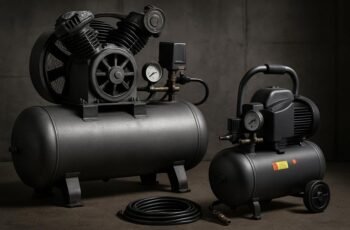
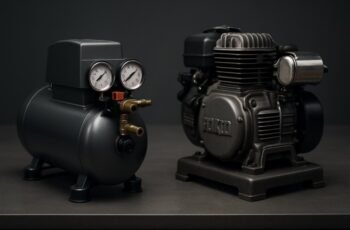
Imagine you’re on a construction site, needing to power tools quickly and efficiently. It’s evident that choosing between a portable and stationary air compressor isn’t straightforward; each offers distinct advantages suited to specific tasks. The decision hinges on factors like mobility, power, and operational demands, which directly influence project success. Understanding these differences can help you determine the best fit for your needs, but the nuances often require a closer look at their design and application.
Key Takeaways
- Portable compressors are lightweight, compact, and easy to transport, ideal for on-site tasks and confined spaces.
- Stationary compressors are larger, more durable, and suited for continuous, high-demand industrial applications.
- Portables offer flexibility for multiple locations, while stationaries provide higher efficiency and lower operational noise.
- Power and capacity should match specific task requirements; portable units typically have lower capacity than stationary models.
- The choice depends on mobility needs, space availability, noise considerations, and long-term operational efficiency.
How Do Portable and Stationary Air Compressors Differ in Design?
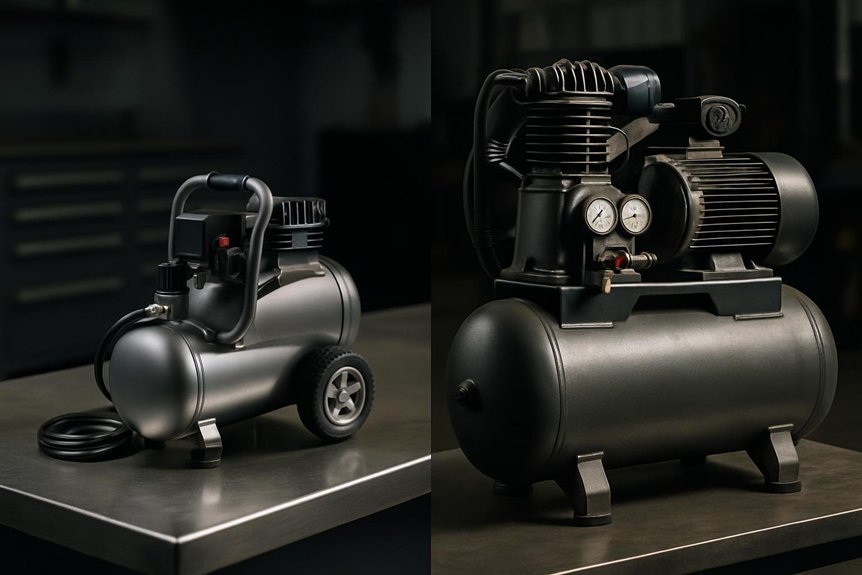
While both portable and stationary air compressors serve the same fundamental purpose, their designs differ considerably to accommodate their respective applications. We observe that design innovation drives the development of compact, lightweight frames in portable units, emphasizing mobility without sacrificing performance. These compressors often utilize durable, impact-resistant materials such as reinforced plastics and aluminum alloys to enhance material durability while reducing weight. Conversely, stationary compressors prioritize structural stability and robustness, featuring larger, more rigid metal casings designed to withstand continuous, high-demand operation. Material selection in stationary models favors heavy-duty steel for enhanced longevity and resilience. Overall, both types reflect tailored design approaches—portable models focus on lightweight, durable construction for ease of transport, while stationary units emphasize material durability to ensure long-term, reliable operation.
Which Tasks Are Best Suited for Portable vs. Stationary Compressors?
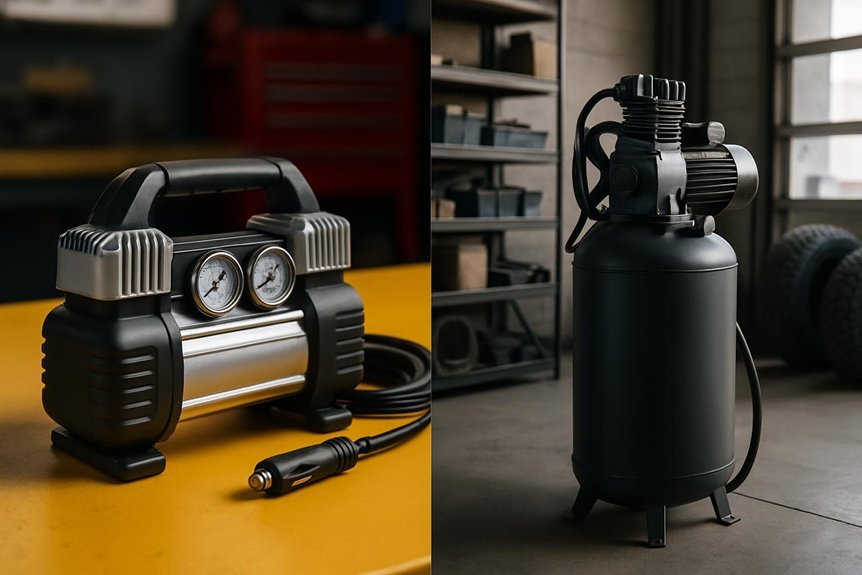
Portable compressors excel in tasks requiring mobility and on-the-spot air delivery, making them ideal for construction sites, roadside repairs, and small-scale manufacturing. Their compact size allows quick setup and operation in diverse environments, but maintenance routines tend to be simpler, and initial cost considerations are lower. Stationary compressors, however, are better suited for continuous, high-demand applications like manufacturing plants and large workshops. They offer higher CFM output and stability for prolonged use. Tasks best suited for portable units include tire inflation, carpentry, and light construction work. Conversely, stationary compressors excel in heavy-duty tasks such as sandblasting, large-scale assembly, and industrial automation. When selecting, consider the frequency of use and maintenance needs to optimize operational efficiency and cost management.
What Are the Key Advantages of Portable Air Compressors?
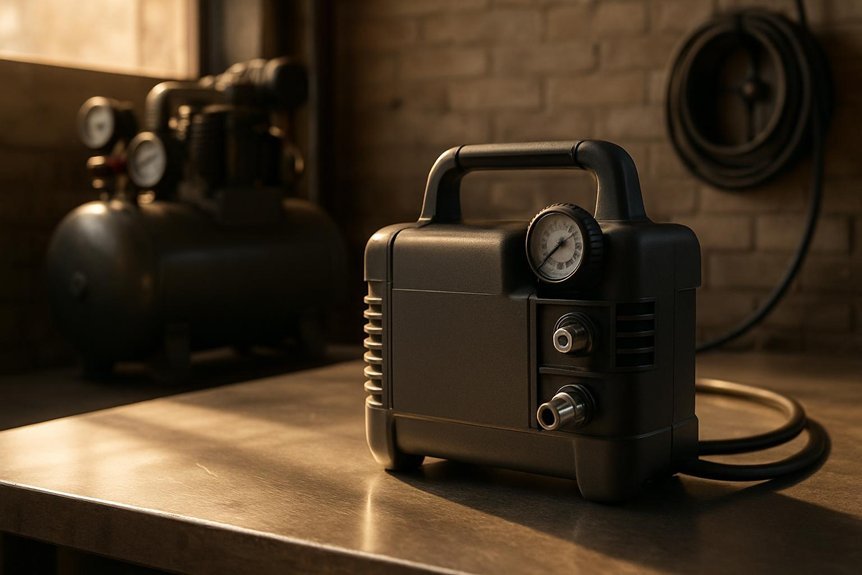
Portable air compressors offer significant advantages in mobility and flexibility, making them ideal for tasks requiring movement across various locations. Their compact design facilitates easy storage and transport, reducing logistical challenges. Additionally, their versatile application options enable use in diverse settings, enhancing operational efficiency.
Enhanced Mobility and Flexibility
The inherent design of portable air compressors prioritizes ease of movement, making them highly adaptable to various work environments. This mobility allows users to quickly position equipment, reducing setup time and enhancing operational efficiency. Their compact form factor often results in lower energy consumption, promoting better energy efficiency during use. Additionally, portable units typically operate at lower noise levels, minimizing disruption in sensitive work areas. This flexibility ensures that tasks requiring compressed air can be performed without extensive infrastructure or fixed installations. Key advantages include:
- Rapid deployment across multiple sites
- Reduced need for extensive piping or hoses
- Lower energy consumption per task
- Quieter operation in confined or noise-sensitive settings
These features collectively improve worksite adaptability and responsiveness.
Easy Storage and Transport
Because they are designed with compactness and lightweight materials, portable air compressors offer significant advantages in storage and transportation. Their small footprint allows easy storage in confined spaces, such as closets or vehicle trunks, without requiring dedicated equipment rooms. This flexibility simplifies transportation, enabling users to move the compressor between job sites or storage locations with minimal effort. Additionally, portable units typically feature lower noise levels, making them suitable for use in noise-sensitive environments. They also tend to have lower maintenance requirements due to simpler components and fewer moving parts, reducing downtime and operational costs. Overall, these factors contribute to greater convenience and efficiency, making portable air compressors ideal for users prioritizing mobility and ease of handling in various settings.
Versatile Application Options
Their compact size and portability open up a wide range of application options, making portable air compressors highly versatile tools across various industries. They excel in environments requiring quick, on-the-go inflation, powering pneumatic tools, or supporting remote maintenance tasks. Their energy efficiency benefits users by reducing operational costs, especially in intermittent use cases. Additionally, lower maintenance requirements simplify upkeep, minimizing downtime and labor expenses. These factors allow for seamless integration into diverse tasks, from construction sites to automotive repairs. Portable compressors can adapt to varying pressures and airflow needs, making them suitable for multiple applications. This flexibility enhances productivity while reducing setup complexity, offering a practical advantage over stationary counterparts in dynamic work environments.
- Quick inflation and tire servicing
- Powering pneumatic tools in remote locations
- Supporting maintenance tasks on-site
- Adaptability to different pressures and airflow demands
Why Choose a Stationary Air Compressor for Heavy-Duty Jobs?
Heavy-duty tasks demand reliable and consistent airflow, which makes stationary air compressors an ideal choice. These units are designed for continuous operation, ensuring steady pressure essential for demanding applications. While maintenance requirements are higher compared to portable models, their robustness and durability justify the effort, especially in industrial settings. Additionally, stationary compressors generally operate at lower noise levels, reducing workplace disruption and enhancing safety. Their fixed installation allows for easier integration into existing systems, facilitating automation and remote monitoring. Although they lack portability, the stability, power output, and reduced operational noise make stationary compressors the supreme solution for long-term, high-intensity workloads, where performance consistency and operational efficiency are critical.
How Do Size, Power, and Portability Impact Your Choice?
How do size, power, and portability influence your decision when selecting an air compressor? These factors directly affect cost analysis, maintenance requirements, and operational efficiency. Larger compressors typically offer higher power output but incur greater upfront costs and increased maintenance demands. Portability reduces setup time and enhances versatility but may limit capacity and power, influencing your long-term efficiency. Small, portable units are ideal for quick tasks and tight spaces, while stationary models suit continuous, heavy-duty applications. Power capacity determines operational speed and pressure, impacting both performance and energy consumption. Balancing these elements ensures ideal functionality aligned with your specific needs.
- Size impacts cost, space requirements, and maintenance complexity
- Power influences operational efficiency, cost, and longevity
- Portability affects setup, versatility, and long-term cost analysis
- Maintenance needs vary with size and power levels
What Factors Should You Consider When Selecting an Air Compressor?
When selecting an air compressor, we need to evaluate how portability and mobility align with our operational needs, ensuring easy transportation and setup. Additionally, understanding the required power and capacity helps determine whether a portable or stationary unit best supports our workload. Balancing these factors allows us to optimize efficiency and performance for specific applications.
Portability and Mobility
What factors should we prioritize when selecting an air compressor for portability and mobility? Primarily, weight and size directly impact ease of transport, so lightweight models with compact designs are advantageous. Additionally, noise levels are critical; quieter compressors facilitate use in noise-sensitive environments. Energy efficiency also plays a role, reducing operational costs during frequent mobility. Robust handle design and sturdy wheels enhance maneuverability, but durability under varying conditions must be evaluated. Portability hinges not only on physical attributes but also on ease of setup and storage. Prioritizing these factors ensures a balance between practicality and performance, making the compressor suitable for diverse on-the-go tasks. Consider these key aspects to optimize your choice for portable, mobile compressors.
Power and Capacity
Choosing the right air compressor requires a clear understanding of its power and capacity to meet specific operational demands. Power, measured in horsepower or wattage, determines how effectively the compressor can handle continuous or heavy-duty tasks, while capacity—typically in CFM (cubic feet per minute)—indicates airflow volume. We must consider energy efficiency, as higher power doesn’t always mean better performance if efficiency is compromised, leading to increased operational costs. Noise levels are equally critical, especially in noise-sensitive environments; a high-capacity compressor with excessive noise may be disruptive. Balancing these factors ensures peak performance and sustainability. Whether selecting portable or stationary units, aligning power and capacity with application needs maximizes efficiency and minimizes operational drawbacks.
Is It Better to Invest in a Portable or Stationary Model for Your Needs?
Deciding whether to invest in a portable or stationary air compressor hinges on evaluating your specific operational requirements and workspace constraints. Portable models excel in flexibility, allowing quick deployment across different sites, but often lag in energy efficiency and tend to generate higher noise levels. Stationary compressors typically offer superior energy efficiency, reducing operational costs over time, and operate more quietly due to their larger, sound-dampened enclosures.
Choose portable for flexibility; opt for stationary for efficiency, quiet operation, and space considerations.
- Mobility needs: Do you require frequent movement or fixed installation?
- Operational efficiency: Is energy consumption a priority?
- Noise considerations: Will noise levels impact your environment?
- Space availability: Do you have sufficient room for a stationary unit?
Frequently Asked Questions
What Maintenance Is Required for Portable Versus Stationary Air Compressors?
We recommend regular maintenance, including weekly checks for portable compressors and bi-weekly for stationary units, focusing on lubrication requirements and filter cleanliness, to guarantee peak performance and prevent wear and tear.
How Does Noise Level Differ Between Portable and Stationary Models?
We find that sound levels generally differ, with portable compressors producing higher noise levels due to compact design and less sound insulation, whereas stationary models tend to have lower noise comparison, thanks to larger, enclosed structures reducing overall sound emissions.
Can Portable Compressors Handle Continuous Operation for Industrial Use?
Portable compressors generally can’t handle continuous industrial operations due to their mobility advantages being offset by power limitations; they’re designed for short-term, mobile tasks, whereas stationary units provide sustained power essential for continuous industrial use.
What Safety Precautions Are Essential for Both Compressor Types?
We always wear safety gear and guarantee emergency shutdown procedures are in place, like when a technician avoided injury during a compressor malfunction. These precautions are essential for both compressor types to prevent accidents and ensure safe operation.
Are There Specific Brands Known for Reliable Portable or Stationary Compressors?
We find that brands like Makita, DeWalt, and Quincy are renowned for their compressor durability and reliability, making them excellent choices for portable or stationary models. Their consistent performance guarantees long-term operational efficiency and safety.
Conclusion
Ultimately, choosing between a portable or stationary air compressor hinges on your specific needs, workload, and environment. While portable units offer unrivaled flexibility—akin to carrying a powerhouse in your toolbox—stationary models deliver unmatched durability and continuous performance for demanding tasks. Carefully analyzing size, power, and application demands guarantees you don’t just pick a compressor; you select a game-changer that can elevate your productivity to legendary levels. Your decision shapes your efficiency—make it count.