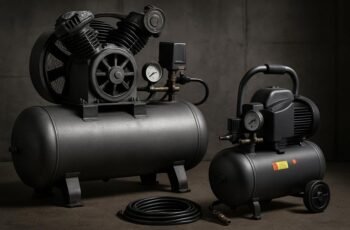
Did you know that the choice between hot dog and pancake compressors can substantially impact project efficiency, with hot dog models often providing up to 50% more horsepower? As professionals evaluating compressor options, it’s essential to consider performance metrics, durability, and application suitability. Understanding these differences can influence your decision, especially when balancing portability with power. Let’s explore how each type stacks up for various tasks and which might best meet your specific needs.
Key Takeaways
- Hot dog compressors are portable with higher power and airflow, suitable for heavy-duty, prolonged tasks; pancake compressors are stationary, quieter, and ideal for light, intermittent use.
- Hot dog models have a compact, elongated design, while pancake compressors feature a low-profile, flat shape for stability and easier handling.
- Pancake compressors typically have larger tanks for longer runtime, but lower CFM; hot dog units provide higher CFM and PSI for demanding applications.
- Hot dog compressors tend to be more durable and long-lasting; pancake units are more affordable and easier to maintain for light-duty tasks.
- Hot dog compressors generate more noise and are costlier upfront; pancake compressors are quieter, more budget-friendly, and suitable for indoor environments.
What Are Hot Dog and Pancake Compressors? An Overview of Key Differences
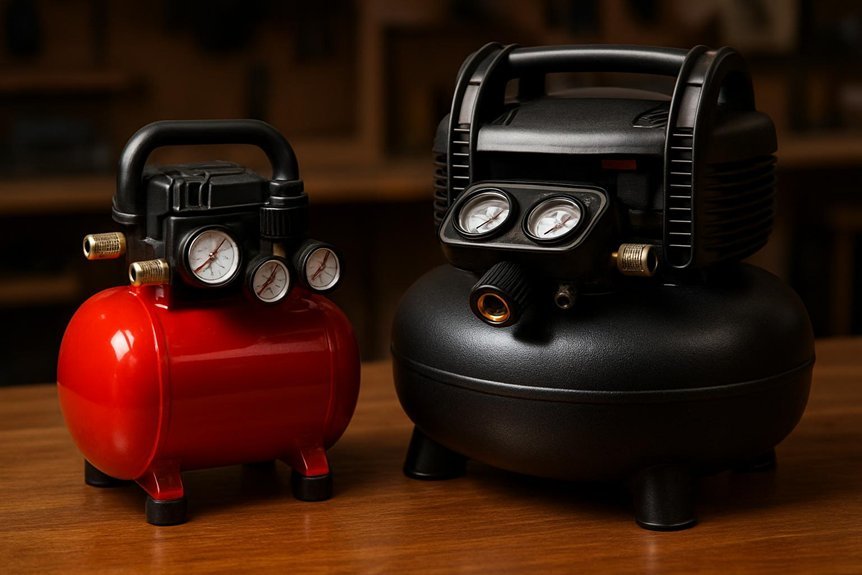
Have you ever wondered what distinguishes hot dog air compressors from pancake compressors? The primary differences lie in design aesthetics and brand reputation, which influence user perception and reliability. Hot dog compressors feature a compact, elongated tank shape that emphasizes portability and space efficiency, often appealing to users seeking convenience. In contrast, pancake compressors have a low-profile, flat design that enhances stability and ease of use in fixed settings. Brand reputation plays a critical role in selecting between the two, as established brands often offer superior build quality, durability, and technical support. These factors affect not only performance expectations but also long-term reliability. Understanding these distinctions helps users choose a compressor aligned with their specific needs and preferences, rooted in both aesthetic appeal and trusted brand reliability.
How Do Hot Dog and Pancake Compressors Perform in Power and Capacity?
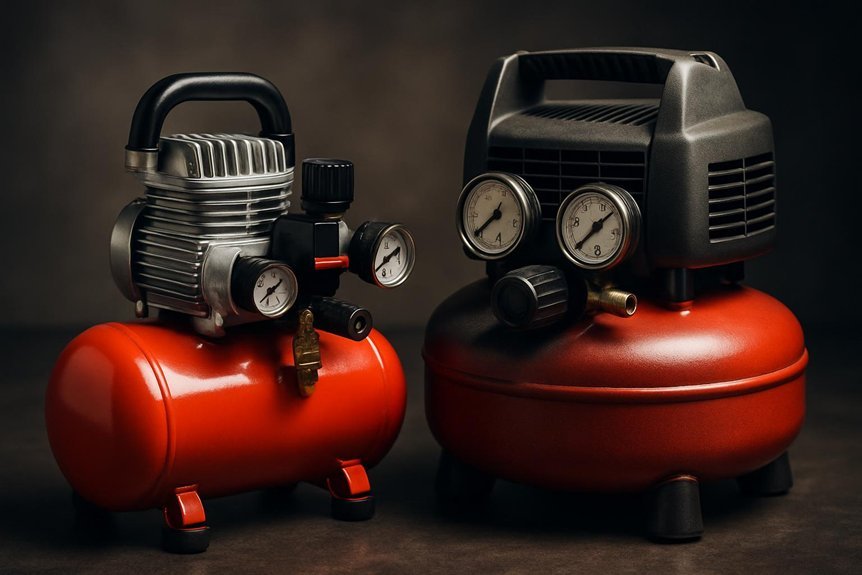
When comparing hot dog and pancake compressors, we analyze their power output and how it affects performance under load. Capacity and runtime are critical factors that determine their suitability for various tasks, especially in continuous operation. By examining these metrics, we can better understand the efficiency and limitations of each compressor type.
Power Output Comparison
While both hot dog and pancake compressors are designed to deliver compressed air, their power output and capacity differ considerably due to their distinct designs. Hot dog compressors generally have higher horsepower ratings, enabling greater airflow and pressure, which translates to enhanced power for demanding tasks. Pancake compressors, with their lower horsepower, typically offer less immediate power but are more fuel-efficient for light-duty applications. Safety features also influence power utilization, as modern units incorporate pressure relief valves and thermal overload protection to prevent overexertion. These safety features guarantee reliable operation without compromising fuel efficiency. Overall, hot dog models excel in delivering higher power output suited for intensive work, while pancake compressors prioritize safety and efficiency for lighter, intermittent use.
Capacity and Runtime
The capacity and runtime of hot dog and pancake compressors are primarily determined by their tank size and airflow capabilities, which directly impact how long they can operate under load. Airflow efficiency plays a vital role in maintaining consistent performance during extended use, especially for tasks requiring sustained pressure. Hot dog compressors typically offer higher airflow rates but smaller tank sizes, limiting their runtime despite better airflow efficiency. Pancake compressors generally have larger tanks, providing longer operational periods, but may have lower airflow rates, affecting performance under heavy loads. Their size and portability influence practical applications; hot dog models excel in mobility, while pancake units are better suited for stationary, high-capacity tasks. Overall, these factors define each compressor’s capacity and runtime in real-world usage.
Which Compressor Is Better for Portable and DIY Tasks?
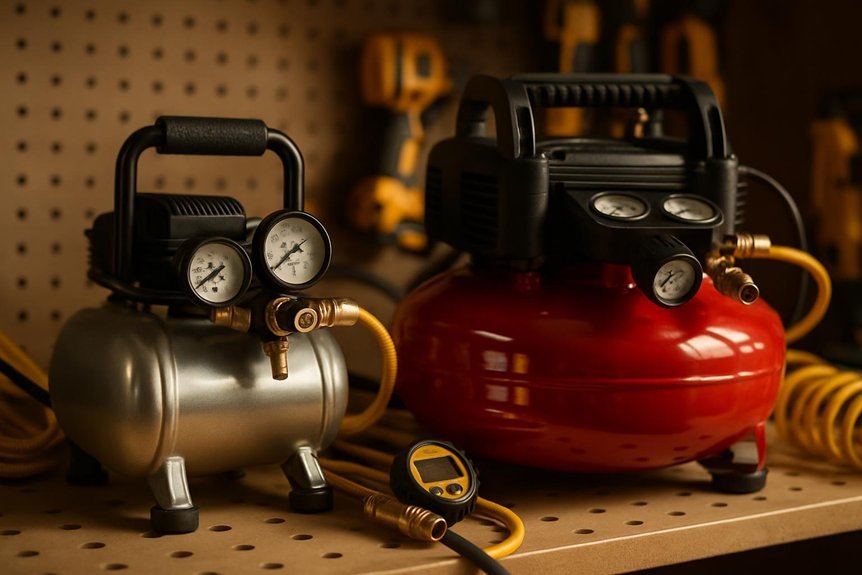
Deciding between a hot dog air compressor and a pancake compressor for portable and DIY tasks hinges on evaluating their weight, size, and ease of transport. Hot dog compressors generally offer superior compressor portability due to their compact, lightweight design, making them ideal for on-the-go applications. In regards to air pressure, both types can deliver sufficient psi for typical DIY projects, but hot dog compressors often have higher pressure ratings relative to their size, enhancing versatility. Conversely, pancake compressors tend to be bulkier but are still manageable for stationary or semi-portable use. For tasks requiring frequent movement or quick setup, the hot dog compressor’s portability advantage becomes critical. Ultimately, selecting the best compressor depends on balancing air pressure needs with ease of transport.
Comparing Noise Levels and Ease of Use Between Hot Dog and Pancake Compressors
Noise levels and ease of use are key factors when choosing between hot dog and pancake compressors, especially for users working in shared or noise-sensitive environments. Hot dog compressors tend to generate higher noise levels due to their larger motors and open designs, though they often offer better portability. Pancake compressors are generally quieter, thanks to their enclosed, low-profile construction, making them suitable for indoor use. Regarding ease of use, pancake models are typically lighter and easier to handle, while hot dog compressors may require more effort due to their size and weight.
| Feature | Hot Dog Compressor | Pancake Compressor |
|---|---|---|
| Noise Levels | Higher | Lower |
| Ease of Use | Moderate to Difficult | Easier to Handle |
| Portability | Good | Excellent |
| Setup and Operation | Slightly More Complex | Simpler |
What Are the Cost Considerations for Each Type of Compressor?
When evaluating cost considerations, we focus on initial purchase prices, which often vary markedly between hot dog and pancake compressors. Additionally, maintenance and operational expenses can impact the total cost of ownership over time. Analyzing these factors helps determine the most economical choice for specific applications.
Purchase Price Differences
The purchase price of hot dog air compressors and pancake compressors varies considerably, driven by their design, capacity, and intended application. Hot dog compressors typically have a larger compressor size, allowing for higher air pressure output, which increases manufacturing costs. In contrast, pancake compressors tend to be more compact, often suited for lighter tasks, resulting in a lower initial investment. The air pressure these units can produce influences their cost, with higher-pressure models demanding more robust components and consequently higher prices. Additionally, the overall design complexity of a hot dog compressor, including its motor and tank size, contributes to a higher purchase price. Conversely, pancake compressors are generally more affordable due to their simpler, space-efficient design and limited capacity requirements.
Maintenance and Operating Costs
Maintenance and operating costs substantially influence the long-term affordability of hot dog and pancake compressors. Hot dog compressors typically have higher energy efficiency due to their design, which reduces power consumption and lowers operational expenses. In contrast, pancake compressors often feature simpler mechanics, which can lead to increased maintenance requirements over time. Additionally, energy efficiency directly impacts environmental impact, as more efficient units consume less power and emit fewer greenhouse gases. Maintenance costs for pancake models may be higher due to more frequent oil changes and part replacements. Conversely, hot dog compressors tend to be more durable with lower ongoing maintenance. When evaluating total costs, it’s essential to take into account both energy efficiency and environmental impact, as these factors profoundly influence long-term operating expenses.
Which Compressor Offers Better Durability and Maintenance?
Although both hot dog and pancake compressors are designed for durability, their construction and maintenance requirements differ considerably. Durability factors such as build quality, material robustness, and operational design influence longevity. Hot dog compressors typically feature a more rugged construction with fewer moving parts, which can enhance their lifespan and reduce wear over time. In contrast, pancake compressors often have a simpler design but may require more frequent maintenance due to their compact, lightweight construction. Maintenance requirements for hot dog models tend to focus on periodic inspections of valves and belts, while pancake compressors demand regular lubrication and component checks. Overall, hot dog compressors generally offer better durability with lower ongoing maintenance, making them preferable for long-term, heavy-duty applications.
How to Choose the Right Compressor Based on Your Projects and Needs
Selecting the appropriate compressor hinges on understanding the specific demands of your projects and operational environment. For high-demand tasks, a pancake compressor with higher CFM and PSI ratings may be necessary, while intermittent use can be served by a hot dog compressor. Consider air compressor safety protocols to prevent overloads or failures, especially in prolonged operations. Proper compressor storage solutions are essential to maintain performance and guarantee safety, preventing damage from environmental factors. Evaluate how much space is available and whether portability or stationary setup aligns with your workflow. Matching compressor specifications to your project needs ensures efficiency, safety, and longevity. Carefully analyzing your workload, safety requirements, and storage considerations helps in selecting a compressor that ideally supports your work.
Frequently Asked Questions
Can Hot Dog and Pancake Compressors Be Used for Industrial Applications?
We believe hot dog and pancake compressors aren’t ideal for heavy industrial applications due to their portable design and higher noise levels, which limit continuous, high-demand use; they’re better suited for light, occasional tasks.
What Safety Precautions Should I Take With Each Compressor Type?
We investigate safety by following maintenance tips and storage guidelines, ensuring proper ventilation, regular inspections, and pressure relief procedures. These precautions prevent accidents, prolong compressor lifespan, and maintain ideal performance, emphasizing safety’s critical role in compressor use.
How Long Do Hot Dog and Pancake Compressors Typically Last?
Typically, hot dog and pancake compressors last around 5 to 10 years with proper maintenance. Regular oil checks, cleaning filters, and monitoring noise levels extend lifespan, ensuring reliable performance and preventing costly repairs through proactive upkeep.
Are There Specific Brands Recommended for Durability?
Notably, we’ve found that brands like California Air Tools and Ingersoll Rand excel in compressor longevity due to their focus on durability. These brands consistently deliver superior build quality, ensuring longer-lasting compressors, making them reliable choices for demanding applications.
Can These Compressors Be Used With Air Tools Other Than Inflators?
Yes, both compressors offer significant air tool versatility, but compressor compatibility varies; hot dog compressors excel with smaller tools like nail guns, while pancake models handle a broader range, including impact wrenches, depending on CFM and PSI ratings.
Conclusion
Ultimately, selecting between a hot dog and pancake compressor is like choosing the right tool for a journey—each has its own strength, guiding us toward efficiency or ease. By understanding their core differences, we can navigate our projects with precision, ensuring our investment fuels productivity and reliability. In the end, the right compressor becomes more than a tool; it’s a dependable partner, empowering us to bring our visions to life with confidence and clarity.