Did you know that the choice between electric and gas-powered air compressors involves more than just power source? It’s a nuanced decision that impacts operational efficiency, environmental footprint, and cost over time. Understanding these differences can directly influence your equipment’s performance and suitability for specific tasks. We’ll examine the technical aspects, advantages, and limitations of each type to help you make an informed choice tailored to your needs.
Key Takeaways
- Electric compressors are quieter, more energy-efficient, and ideal for indoor or light-duty applications.
- Gas compressors offer greater portability, higher power, and are suitable for outdoor or heavy-duty tasks.
- Electric units require less maintenance and have lower upfront and operational costs compared to gas models.
- Gas compressors produce higher noise, emissions, and need regular engine maintenance, making them better for remote or rugged environments.
- Choice depends on application needs, environment, mobility, power requirements, and environmental impact considerations.
What Are the Main Differences Between Electric and Gas-Powered Air Compressors?
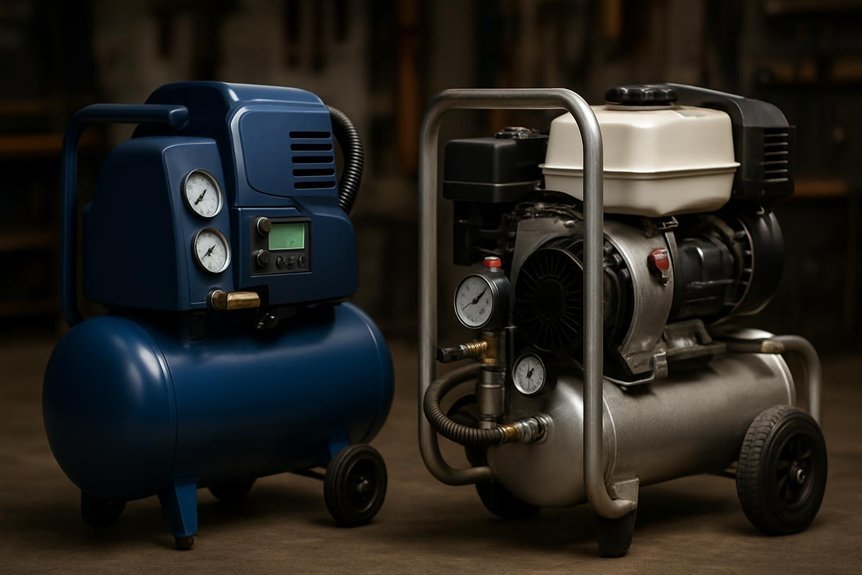
While both electric and gas-powered air compressors serve the same fundamental purpose—compressing air for various applications—they differ markedly in design, operation, and performance characteristics. Electric compressors typically feature compact designs, lower noise levels, and require less maintenance, making them suitable for controlled environments. Gas-powered units, on the other hand, offer greater mobility and higher power output, ideal for remote or rugged settings. When selecting an air compressor, it’s essential to take into account reputable air compressor brands that meet strict certification standards, ensuring safety and reliability. Certification standards, such as UL or CSA, validate compliance with safety and performance criteria. These factors influence operational efficiency, longevity, and adherence to industry regulations, guiding users toward best choices based on their specific needs.
Pros and Cons of Electric Air Compressors for Home and Light Industrial Use
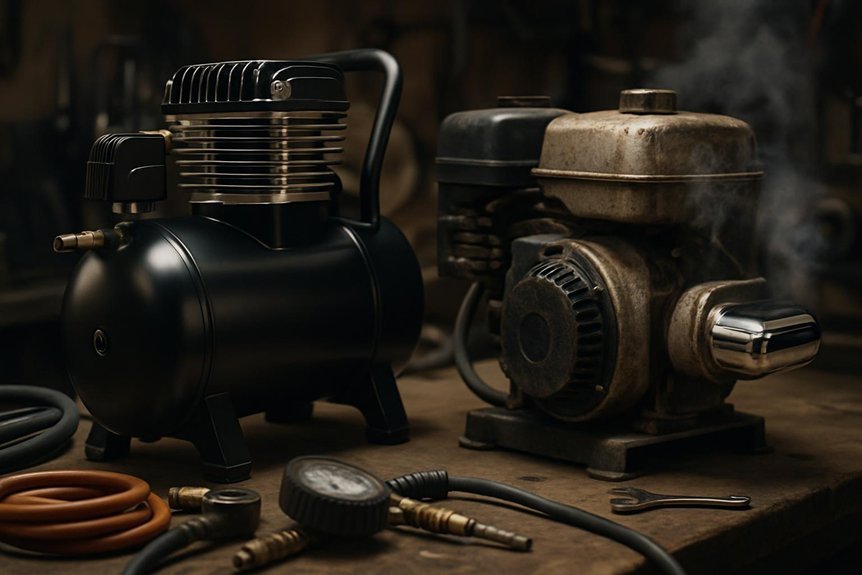
Electric air compressors are a popular choice for both household and light industrial applications due to their efficiency, ease of use, and lower operational costs. They typically offer quieter operation and require less maintenance, simplifying adherence to maintenance schedules and ensuring safe operation. However, their reliance on electricity limits mobility, and power outages can halt work. Air compressor safety is enhanced with proper grounding and regular inspection, but users must remain vigilant for electrical hazards. Maintenance routines are generally straightforward, focusing on filter replacements and checking electrical connections. Despite these advantages, electric models may struggle with high-demand tasks or prolonged use, which can impact performance and longevity. Overall, their advantages make them suitable for light-duty tasks but necessitate disciplined safety and maintenance practices.
Advantages and Disadvantages of Gas-Powered Compressors for Heavy-Duty Tasks
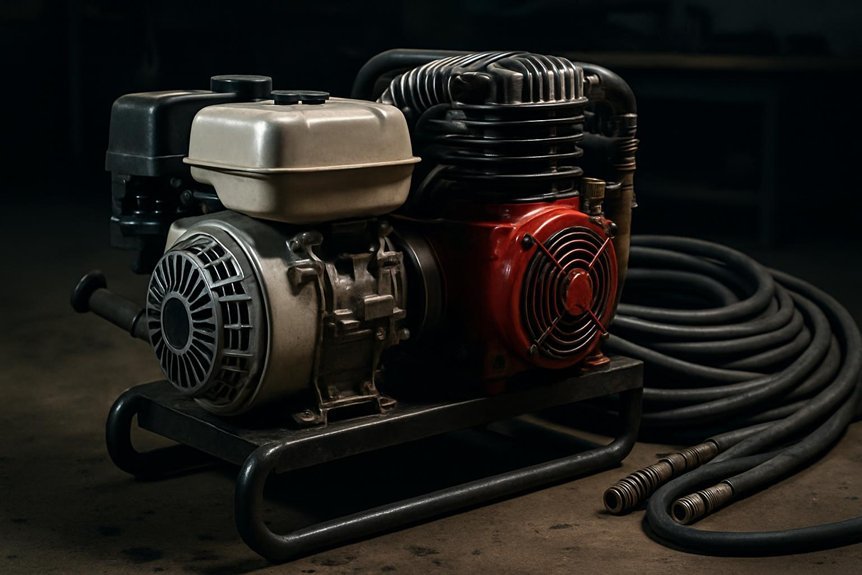
Gas-powered compressors excel in heavy-duty tasks due to their superior portability and ability to operate in remote locations without power access. However, their increased noise levels and emissions can pose challenges regarding environmental impact and operator comfort. Analyzing these factors helps determine their suitability for demanding industrial applications.
Portability and Mobility
Because of their design, gas-powered air compressors excel in providing exceptional portability and mobility for heavy-duty tasks, especially in remote or construction sites where power outlets are unavailable. Their independence from external power sources makes them ideal for on-site operations, though improvements in battery technology have begun to enhance portability further. The compact size and lightweight nature facilitate easy transport, while robust compressor accessories enable adaptation to diverse tasks. However, their mobility is sometimes limited by fuel capacity and the need for regular refueling, which can interrupt workflow. Additionally, the noise level and emissions pose challenges in certain environments. Overall, gas-powered compressors offer significant advantages in rugged mobility but require consideration of fuel management and accessory compatibility for supreme operation.
Power and Performance
While gas-powered air compressors are widely regarded for their robust power output, their performance in heavy-duty tasks involves a nuanced balance of advantages and disadvantages. They deliver high CFM and PSI, making them suitable for demanding applications such as construction and industrial use. However, their air quality can be compromised by emissions and oil vapor, impacting both safety standards and environmental compliance. Additionally, consistent power output depends on fuel quality and engine maintenance, which can lead to fluctuations affecting task precision. While their portability supports remote operation, managing safety standards requires careful monitoring of potential hazards like fuel leaks and exhaust fumes. Overall, gas-powered compressors excel in raw power but demand rigorous maintenance and safety considerations to optimize heavy-duty performance.
Noise and Emissions
How do noise and emissions influence the suitability of gas-powered air compressors for heavy-duty applications? These factors critically determine operational feasibility and environmental impact. Gas compressors typically produce higher noise levels, complicating noise reduction efforts in confined or sensitive environments. Emission control is also a concern, as they emit pollutants like carbon monoxide and nitrogen oxides, raising environmental and safety issues.
Key considerations include:
- Elevated noise levels can cause operator fatigue and disturb surrounding areas
- Lack of effective noise reduction features limits use in noise-sensitive zones
- Emissions contribute to air pollution and may violate regulatory standards
- Continuous operation demands robust emission control systems for compliance
These factors often restrict gas-powered compressors to outdoor, industrial settings where noise and emissions are less constrained.
How to Choose the Right Air Compressor Based on Power, Portability, and Noise Levels
Selecting the appropriate air compressor involves analyzing key factors such as power output, portability, and noise levels to guarantee it meets specific operational needs. We assess energy efficiency and brand reputation to ensure peak performance and durability. Power determines operational capacity, while portability affects onsite versatility. Noise levels impact safety and comfort, especially in confined spaces. Consider this comparison:
| Feature | Electric Compressor | Gas-Powered Compressor |
|---|---|---|
| Power & Energy Use | Higher energy efficiency, consistent output | Less energy efficient, variable power |
| Portability | Generally lighter, easier to move | Heavier, more robust for remote use |
| Noise Levels | Quieter, suitable for enclosed areas | Louder, may require ear protection |
| Brand Reputation | Established brands ensure reliability | Varies, check reviews |
| Application Scope | Ideal for indoor, precise tasks | Suitable for rugged, outdoor work |
Cost Comparison: Upfront Investment and Operating Expenses
When comparing the costs of electric and gas-powered air compressors, it’s essential to evaluate both upfront purchase prices and ongoing operating expenses. Historical development shows that electric models generally have lower initial costs due to simpler design and widespread manufacturing. Brand comparisons reveal that established brands often offer reliable warranties and better efficiency, impacting long-term expenses. Gas-powered compressors tend to be more expensive upfront, driven by engine complexity and durability features, but can reduce fuel costs in remote applications. Key points include:
- Electric compressors usually have lower initial costs.
- Gas models often incur higher purchase prices.
- Operating expenses for electric units are driven by electricity consumption.
- Gas units’ costs depend on fuel efficiency and usage frequency.
Understanding these factors allows for a more informed investment based on long-term operational needs.
Maintenance Requirements for Electric Versus Gas-Powered Compressors
We recognize that maintenance procedures differ markedly between electric and gas-powered compressors, particularly regarding routine inspections and fluid management. Electric models generally require less frequent fuel and oil upkeep, focusing more on electrical component checks, while gas models necessitate regular fuel and oil system maintenance. Understanding these distinctions is vital for optimizing performance and minimizing downtime across both systems.
Routine Inspection Procedures
Routine inspection procedures differ markedly between electric and gas-powered air compressors due to their distinct operational components and maintenance needs. For both, ensuring air compressor safety is paramount, involving regular checks of electrical connections or fuel lines, leaks, and pressure gauges. Proper storage and installation are critical, especially for electric units that require dry, protected environments, while gas compressors need secure fueling areas. Key inspection points include:
- Checking electrical wiring, switches, and safety devices
- Inspecting air filters and cooling systems
- Verifying fuel levels and fuel system integrity (gas units)
- Confirming proper ventilation and secure mounting
Adhering to these procedures helps prevent operational hazards, extends equipment lifespan, and maintains ideal performance, emphasizing the importance of routine inspections tailored to each compressor type’s unique requirements.
Fuel and Oil Maintenance
Have you considered how fuel and oil maintenance requirements differ fundamentally between electric and gas-powered air compressors? Gas units demand regular fuel and oil checks to guarantee optimal fuel efficiency and oil quality, which directly impact performance and longevity. Electric compressors, however, eliminate fuel dependency, reducing maintenance complexity.
| Aspect | Gas-Powered Compressors | Electric Compressors |
|---|---|---|
| Fuel Efficiency | Dependent on proper fuel management | Not applicable |
| Oil Quality | Requires regular oil changes for reliability | Minimal oil maintenance, if any |
| Maintenance | More frequent, due to fuel and oil system checks | Less frequent, mainly electrical checks |
Best Use Cases for Electric Compressors in Residential and Indoor Settings
Electric compressors are particularly well-suited for residential and indoor applications due to their quiet operation, ease of use, and low maintenance requirements. They excel in environments where noise restrictions and safety precautions are critical. Their consistent power delivery makes them ideal for tasks requiring precise control, such as inflating tires or operating air tools. When selecting air compressor accessories, compatibility and safety are key considerations.
Typical use cases include:
- Inflating household items like mattresses and sports equipment
- Operating small pneumatic tools for DIY projects
- Providing clean, oil-free compressed air for sensitive equipment
- Supporting indoor paint spraying with minimal noise disturbance
These applications benefit from the compressor’s limited emissions and compact design, making them practical for continuous indoor use.
Ideal Scenarios for Gas-Powered Compressors in Remote or Outdoor Environments
Gas-powered compressors excel in remote or outdoor environments due to their off-grid power independence, eliminating reliance on external electrical sources. Their portability and mobility enable efficient operation across diverse terrains without tethering to infrastructure. These attributes make them ideal for fieldwork, construction sites, and emergency scenarios where grid access is unavailable.
Off-Grid Power Independence
When considering off-grid applications, the independence from electrical infrastructure makes gas-powered air compressors particularly advantageous. They enable continuous operation where power sources are unreliable or absent, offering superior weather resilience and energy storage capabilities. This independence reduces dependency on external energy inputs, guaranteeing consistent air supply in remote environments. Key advantages include:
- No reliance on grid power, ensuring operational continuity
- Enhanced weather resilience, unaffected by power outages or storms
- Capacity for energy storage, allowing for extended use without external recharge
- Suitability for remote locations where infrastructure is limited or nonexistent
These factors make gas-powered compressors ideal for rugged, isolated settings, providing reliable performance regardless of environmental conditions. Their autonomy ensures that critical tasks can proceed uninterrupted, making them essential in off-grid scenarios.
Portability and Mobility
In remote or outdoor environments, the ability to move equipment swiftly and efficiently becomes a primary concern. Gas-powered air compressors excel in portability and mobility due to their design, often featuring integrated handles, wheels, and compact frames that facilitate transportation across rugged terrain. These units typically support a range of air compressor accessories, enabling versatile applications without extensive setup. Safety features, such as automatic shutoff and vibration dampening, enhance operational reliability, especially in uncontrolled settings. Unlike electric models that require power sources, gas compressors operate independently, making them ideal for remote sites. Their rugged construction ensures durability and ease of movement, allowing workers to adapt quickly to changing project needs. Overall, gas-powered units provide the mobility and flexibility essential for outdoor or remote work scenarios.
Environmental Impact and Emission Considerations for Both Types
While electric air compressors produce no direct emissions during operation, their overall environmental impact depends largely on the energy sources used for electricity generation. If powered by renewable sources, their carbon footprint diminishes considerably, making them more sustainable. Conversely, reliance on fossil fuels increases their indirect emissions. Gas-powered compressors emit greenhouse gases directly, contributing more substantially to environmental degradation. Key considerations include:
- Energy source: Renewable vs. non-renewable impacts the compressor’s overall environmental footprint.
- Emissions: Gas compressors produce direct pollutants, while electric units depend on grid cleanliness.
- Lifecycle impacts: Manufacturing and disposal influence total environmental costs.
- Operational efficiency: Fuel consumption and energy use influence emissions and sustainability.
Understanding these factors helps in selecting an environmentally responsible compressor aligned with ecological and regulatory goals.
Tips for Selecting the Most Suitable Air Compressor for Your Specific Needs
Selecting the right air compressor requires a clear understanding of your specific operational demands and environment. Historical development reveals how technological innovations have shaped compressor efficiency, capacity, and reliability. For precise needs, consider airflow requirements, pressure ratings, and duty cycles, as these parameters directly impact performance. Modern advancements, such as variable speed drives and smart controls, enable better energy management and operational flexibility. Assess whether portability or stationary installation benefits your workflow, and evaluate energy sources—electric or gas—based on environmental conditions and usage duration. By analyzing these factors through the lens of technological progress, you can make an informed decision that optimizes productivity, minimizes operational costs, and aligns with your project scope.
Frequently Asked Questions
How Long Do Electric and Gas Compressors Typically Last?
Electric and gas compressors typically last 8-15 years with proper maintenance, but a consistent maintenance schedule can extend lifespan. Cost comparison shows electric units often cost less upfront, though gas models may have higher long-term operational expenses.
Are There Safety Concerns Unique to Each Compressor Type?
We find electric compressors pose fewer safety concerns, mainly due to lower maintenance requirements and reduced environmental impact, whereas gas compressors involve risks like exhaust fumes and flammable fuel handling, demanding stricter safety protocols and regular inspections.
Can Electric Compressors Be Used Outdoors Safely?
Yes, electric compressors can be used outdoors safely if they feature outdoor durability and weather resistance, including proper insulation and protective casing, ensuring they withstand environmental elements and maintain operational safety in variable weather conditions.
What Are the Noise Level Differences Between the Two Types?
We find electric compressors generally produce lower sound levels, offering quieter operation ideal for noise-sensitive environments, whereas gas-powered models exhibit higher noise levels, making them louder and less suitable where sound control is essential.
Do Electric Compressors Require Special Power Outlets or Connections?
Electric compressors typically require standard power outlets, but higher capacities may need dedicated circuits or special connections; understanding connection requirements and power outlet compatibility guarantees safe, efficient operation without electrical issues or overloads.
Conclusion
Ultimately, choosing between electric and gas-powered compressors depends on your specific operational demands. While electric models excel indoors with quiet, low-maintenance operation, gas units offer unmatched portability and power for rugged outdoor jobs. But, what if your needs shift or evolve? The decision isn’t just about current requirements—it’s about anticipating future challenges. So, which compressor will you choose when the moment of critical performance arrives? The answer might just surprise you.