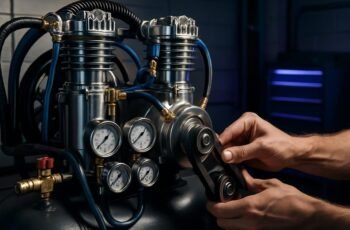
Studies show that over 60% of air compressor failures are linked to preventable faults, such as overheating or pressure loss. These issues can lead to costly downtime and component damage if not properly diagnosed and addressed. Understanding the common signs and root causes of faults is essential for maintaining reliable operation. We’ll explore these typical problems and practical troubleshooting steps to help you avoid unexpected breakdowns.
Key Takeaways
- Overheating signs such as surface temperature rise and unusual noises indicate potential faults.
- Pressure loss due to leaks, faulty valves, or internal component wear commonly causes operational issues.
- Safety switch trips often result from overpressure, overheating, or electrical faults.
- Unusual noises and vibrations can stem from loose components, bearing failure, or rotor misalignment.
- Oil degradation or insufficient lubrication leads to increased wear and reduced compressor performance.
Common Signs Your Air Compressor Is Overheating
When an air compressor begins to overheat, several clear and measurable signs typically emerge, signaling that the system is under excessive thermal stress. One primary indicator is an abnormal temperature rise on the compressor’s surface or within its casing, often detectable with infrared thermometers or thermal sensors. We also observe a sudden decrease in operational efficiency, as overheating causes components such as pistons, valves, and seals to expand and wear prematurely. Additionally, overheating frequently triggers thermal cut-off switches or safety relays, shutting down the system to prevent damage. Unusual noises like rattling or squealing may accompany the heat, stemming from thermal expansion or lubrication breakdown. Persistent overheating can ultimately lead to system failure if these signs aren’t addressed promptly.
Why Is My Air Compressor Losing Pressure?
Losing pressure in an air compressor typically indicates a leak or an internal malfunction that prevents the system from maintaining ideal air volume. Common causes include:
- Hose or seal leaks: Cracks or loose fittings allow compressed air to escape, reducing system pressure.
- Faulty pressure relief valves: If the valve fails to close properly, it continuously releases air, causing pressure loss.
- Internal component wear: Worn piston rings, valves, or cylinders can lead to inefficient sealing, resulting in pressure drops during operation.
Understanding these issues requires inspecting fittings for leaks, testing relief valve operation, and evaluating internal components for wear or damage. Precise diagnosis ensures targeted repairs and restores ideal compressor performance.
Troubleshooting Unusual Noises During Operation
Unusual noises during compressor operation often signal mechanical issues or misalignments within the system. These sounds can include knocking, rattling, or high-pitched squeals, each indicating specific problems. Rattling may point to loose components, such as bolts or valves, while knocking sounds often suggest piston or connecting rod issues. Squealing or high-pitched noises typically involve bearing failure or belt slippage. To troubleshoot, we recommend inspecting for loose fasteners, checking for worn or misaligned belts, and listening carefully to identify the noise pattern. Vibrations accompanying these sounds can also indicate imbalance or misaligned rotors. Regular maintenance, including tightening connections, replacing worn bearings, and verifying component alignment, is essential for preventing these issues and ensuring smooth, quiet operation.
Identifying and Fixing Air Leaks in Compressors
Air leaks are a common issue that can considerably reduce compressor efficiency and increase energy costs, making their accurate identification and prompt repair essential. Detecting leaks involves listening for hissing sounds, applying soapy water to suspect areas, or using ultrasonic leak detectors for precise pinpointing. Once identified, fixing leaks requires specific attention:
Air leaks decrease efficiency and raise costs; detect and fix promptly for optimal compressor performance.
- Tightening or replacing fittings, couplings, and connections to ensure airtight seals.
- Replacing worn or damaged hoses, gaskets, or valves that may have developed cracks or deterioration.
- Inspecting and repairing or replacing compressor tank drain valves and other components prone to corrosion or fatigue.
What Causes Compressor Motor Failures?
Compressor motor failures often result from electrical issues, mechanical wear, or improper maintenance practices, all of which can substantially compromise performance and lead to costly downtime. Electrical faults, such as voltage fluctuations, short circuits, or insulation degradation, cause overheating and electrical stress, damaging windings and components. Mechanical wear from continuous operation, inadequate lubrication, or bearing fatigue leads to increased friction and eventual seizure. Overheating due to clogged cooling systems or excessive ambient temperatures accelerates insulation breakdown and component failure. Additionally, improper startup or shutdown procedures can induce electrical and mechanical stress, weakening motor parts over time. Neglecting routine inspections and maintenance exacerbates these issues, allowing minor faults to develop into complete motor failures, emphasizing the importance of vigilant diagnostics and timely repairs.
How to Recognize and Address Excess Vibration Issues
Excess vibration in a compressor motor often signals underlying mechanical or operational issues that, if left unaddressed, can lead to significant damage or failure. Identifying the root cause requires careful inspection.
- Imbalance in Rotating Components: Check for uneven wear or misalignment of the flywheel, pulley, or rotor, which can cause excessive oscillations.
- Loose or Damaged Mounts: Verify that mounting bolts and brackets are secure; looseness amplifies vibrations.
- Bearing Wear or Failure: Listen for abnormal noises and inspect bearings for signs of wear or overheating, as failing bearings often induce high vibration levels.
Addressing these issues promptly ensures operational stability and prolongs compressor lifespan.
Preventing and Managing Oil-Related Problems
Maintaining proper oil levels guarantees ideal lubrication and prevents component wear, so regular monitoring is essential. Selecting the correct oil type based on compressor specifications minimizes contamination and viscosity issues. Additionally, scheduling timely oil changes prevents degradation and sludge buildup that could impair compressor performance.
Monitoring Oil Levels
How can we guarantee peak compressor performance and longevity? By diligently monitoring oil levels, we prevent potential damage and ensure optimal operation. Regular checks are essential because:
- Consistent oil levels maintain proper lubrication, reducing wear on piston rings, cylinders, and bearings.
- Accurate readings prevent overfilling, which can cause foaming and oil breakdown, or underfilling, leading to increased friction and overheating.
- Monitoring helps identify leaks or contamination early, avoiding costly repairs and downtime.
We recommend using a sight glass or dipstick for precise measurements, recording levels at scheduled intervals, and inspecting for signs of oil degradation. Keeping oil levels within manufacturer-specified ranges is critical for maintaining compressor integrity and performance.
Using Correct Oil Type
Selecting the correct oil type is vital to guarantee peak compressor performance and prevent oil-related issues. Using incompatible or substandard oil can cause increased wear, reduced lubrication efficiency, and potential component failure. It’s essential to consult manufacturer specifications to identify the appropriate oil viscosity and additive package. The table below highlights key differences between synthetic and mineral oils:
| Aspect | Synthetic Oil | Mineral Oil |
|---|---|---|
| Viscosity Stability | Superior at varying temperatures | Less stable, viscosity fluctuations |
| Additive Compatibility | Enhanced corrosion and wear protection | Standard protection, fewer additives |
Choosing the proper oil ensures ideal lubrication, minimizes breakdowns, and extends compressor lifespan. Regular verification of oil specifications aligned with operational demands is fundamental for maintaining efficiency and preventing costly faults.
Regular Oil Changes
Regular oil changes are essential for preventing the accumulation of contaminants and ensuring ideal lubrication within the compressor system. Over time, dirt, moisture, and metal particles can degrade oil quality, leading to increased wear and efficiency loss. To maintain peak performance, consider these critical aspects:
- Frequency: Change oil based on manufacturer recommendations and operating hours, typically every 250-500 hours.
- Oil Quality: Use the correct type and viscosity as specified, avoiding low-quality substitutes that break down quickly.
- Inspection: Regularly check oil levels and condition; dark, gritty, or frothy oil signals it’s time for a change. Proper maintenance minimizes bearing wear and prevents costly repairs.
When and Why Does a Compressor Trip on Safety Switches?
A compressor trips on safety switches primarily as a protective response to abnormal operating conditions that threaten its integrity or safety. This trip is triggered by sensors and switches designed to monitor critical parameters such as pressure, temperature, and electrical current. For instance, if the pressure exceeds the maximum rated limit, the safety switch activates to prevent over-pressurization, which could cause component failure or rupture. Similarly, excessive temperature readings indicate overheating, risking thermal damage; consequently, the safety switch trips to avoid catastrophic failure. Overcurrent conditions, often caused by electrical faults or motor overloads, also prompt trips, protecting the motor windings. These safety mechanisms are essential for preventing damage, ensuring operational safety, and maintaining compressor longevity.
Tips for Regular Maintenance to Avoid Common Faults
Implementing regular inspection routines guarantees early detection of wear and potential failure points, minimizing unplanned downtime. Proper lubrication practices are vital to reduce friction, prevent overheating, and extend component life. Consistent adherence to these maintenance protocols is imperative for reliable compressor operation and fault prevention.
Regular Inspection Routines
To prevent common faults in air compressors, we must establish and adhere to a systematic inspection routine. Regular checks ensure early detection of potential issues, reducing downtime and repair costs. Key steps include:
- Monitoring Pressure and Temperature: Consistently verify gauge readings to identify deviations indicating internal wear or blockages.
- Inspecting for Leaks and Corrosion: Examine piping and fittings for air leaks, corrosion, or oil residue, which compromise efficiency and signal deterioration.
- Assessing Safety Devices and Valves: Test pressure relief valves and safety switches to confirm proper operation and prevent over-pressurization hazards.
Performing these inspections with precision enhances equipment reliability and longevity, preventing faults before they escalate into costly failures. Maintaining a detailed log of findings supports trend analysis and scheduled maintenance planning.
Proper Lubrication Practices
Consistent inspection routines should include verifying lubrication practices, as proper oil management is vital for maintaining compressor efficiency and preventing component wear. We recommend checking oil levels daily, ensuring they meet manufacturer specifications, and topping up with the correct grade of lubricant. Regular oil analysis helps detect contamination or degradation, which can cause increased friction and overheating. It’s essential to replace oil at intervals recommended by the manufacturer, avoiding both over- and under-lubrication. Use high-quality lubricants formulated for specific compressor types and operating conditions. Proper filtration of oil prevents dirt and debris from circulating, reducing wear on bearings and pistons. Maintaining precise lubrication practices minimizes friction, dissipates heat, and extends component lifespan, ultimately reducing the risk of unexpected failures.
Frequently Asked Questions
How Often Should I Perform Routine Air Compressor Maintenance?
We recommend performing routine air compressor maintenance every 250-500 hours of operation or quarterly, whichever comes first. Regular inspections, oil changes, filter replacements, and system checks guarantee peak performance, longevity, and prevent costly breakdowns.
What Are the Best Practices for Extending Compressor Lifespan?
We recommend regular oil changes, filter replacements, and thorough inspections, as studies show proper maintenance extends compressor lifespan by up to 50%. Consistent lubrication, temperature control, and monitoring operating hours optimize performance and prevent costly breakdowns.
How Can I Safely Shut Down an Overheated Compressor?
To safely shut down an overheated compressor, we immediately turn off the power supply, allow it to cool in a well-ventilated area, and inspect for potential damage before restarting, ensuring all safety protocols are strictly followed.
What Are the Signs of Internal Component Wear?
We observe signs like increased noise, fluctuating pressure, and reduced efficiency as indicators of internal component wear. Regular maintenance, monitoring for vibrations, and inspecting parts help us identify wear early, ensuring ideal compressor performance and preventing costly failures.
How Do Environmental Conditions Affect Compressor Performance?
Environmental conditions like high humidity, dust, and extreme temperatures can markedly impair compressor performance by causing corrosion, clogging filters, and increasing wear on internal parts, ultimately reducing efficiency and lifespan. Proper site management mitigates these effects effectively.
Conclusion
By staying vigilant and proactively addressing these common compressor issues, we can maintain ideal performance and extend the lifespan of our equipment. Regular inspections, timely repairs, and proper lubrication act as the silent guardians against unexpected downtime. Remember, attentive maintenance not only preserves efficiency but also ensures safety and reliability. In the end, a well-cared-for compressor quietly keeps your operations running smoothly, letting you focus on the bigger picture with confidence.