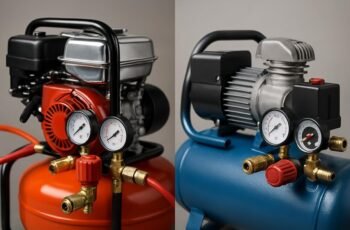
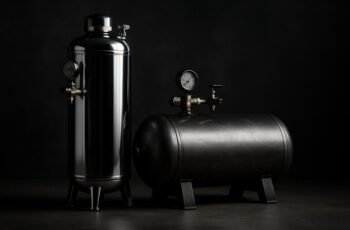
When evaluating air compressors, understanding the distinctions between vertical and horizontal designs is essential for optimizing performance and space utilization. Each configuration offers specific advantages and limitations that impact efficiency, stability, and application suitability. By analyzing these differences, we can better determine which model aligns with particular operational needs. As we explore further, it becomes clear that selecting the right type involves careful consideration of factors like workspace constraints and workload demands—an aspect worth examining in detail.
Key Takeaways
- Vertical compressors are space-saving and portable, ideal for small workshops, while horizontal models provide stability for industrial-scale applications.
- Horizontal compressors support larger tanks and continuous operation, suitable for high-volume, heavy-use environments.
- Vertical units typically have a compact footprint and lower center of gravity, enhancing stability in limited spaces.
- Both orientations require regular maintenance, but vertical models often offer easier access in tight spaces.
- Noise reduction methods, such as enclosures and vibration dampers, are applicable to both types, improving workplace safety and equipment longevity.
Understanding the Key Differences Between Vertical and Horizontal Air Compressors
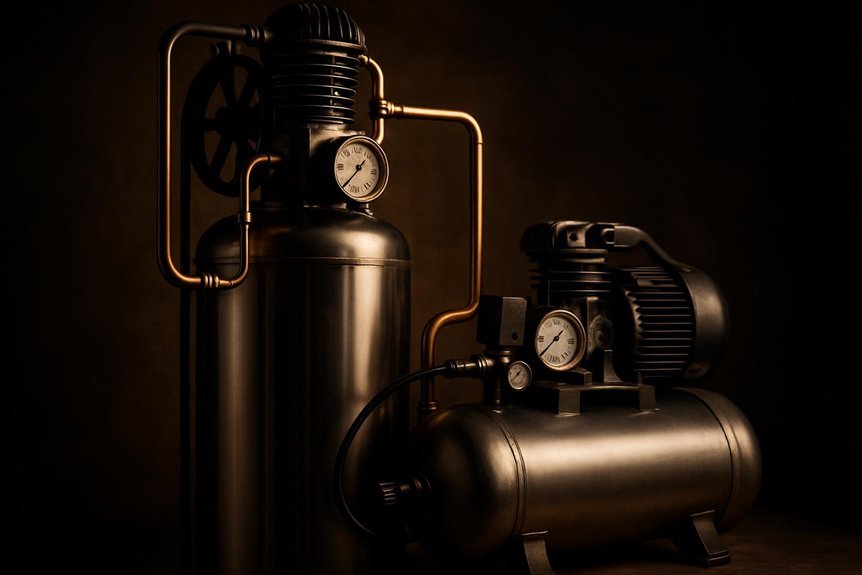
When selecting an air compressor, understanding the fundamental differences between vertical and horizontal models is essential for peak performance and space utilization. Analyzing the efficiency comparison reveals that both orientations can deliver similar operational efficiency, but the design impacts heat dissipation and maintenance access. Vertical compressors often have a more compact footprint, potentially reducing heat buildup and improving efficiency in confined spaces. Regarding noise level, horizontal models tend to generate slightly more sound due to their broader base and larger surface area, although modern designs mitigate this difference with sound-dampening features. Ultimately, the choice hinges on space constraints and operational requirements, but recognizing how the orientation influences efficiency and noise levels helps optimize compressor performance for specific applications.
Advantages of Vertical Air Compressors for Small Spaces and Portability
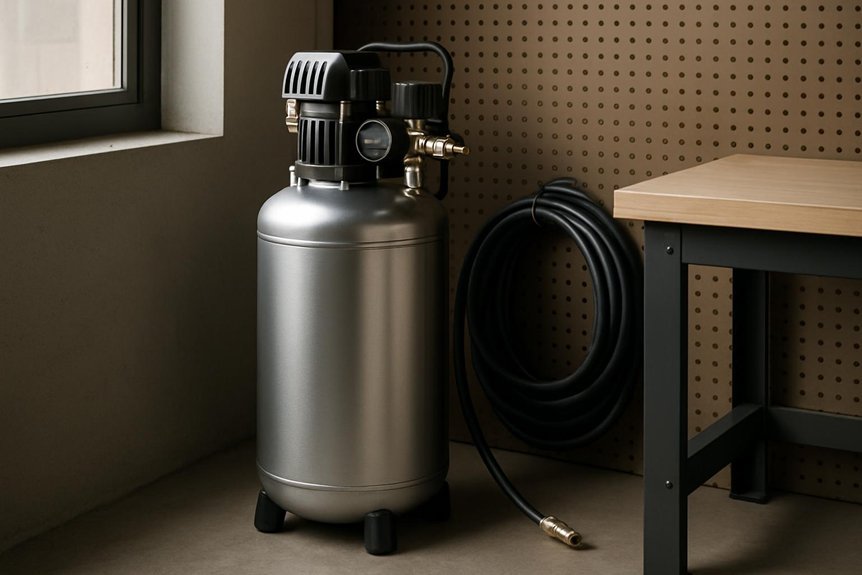
Vertical air compressors offer a compact footprint that maximizes limited workspace, making them ideal for small environments. Their design often includes integrated handles and lightweight construction, enhancing portability and ease of transport. These features collectively improve operational flexibility in constrained settings.
Space-Saving Design Benefits
Given the limited space in many work environments, vertical air compressors offer significant advantages in regard to compactness and portability. Their vertical design minimizes footprint, making them ideal for tight spaces. Additionally, these compressors tend to have a lower center of gravity, enhancing stability during operation.
- Space Efficiency: Their narrow profile maximizes floor space, allowing for easier placement alongside other equipment.
- Energy Efficiency: Vertical units often incorporate design features that reduce energy consumption, benefitting operational costs.
- Noise Reduction: Their compact form helps contain noise, contributing to a quieter work environment, especially in confined areas.
Enhanced Portability Features
Because space constraints are a common challenge in many work environments, vertical air compressors are designed with enhanced portability features that make them particularly advantageous for small or confined areas. These portability benefits stem from their compact, upright form factor, which simplifies transportation and storage. Design considerations include integrated handles, lightweight construction, and built-in wheels, all aimed at reducing the effort required to move the unit. Such features enable quick repositioning without disassembly, optimizing workflow efficiency. Additionally, vertical models often incorporate robust yet space-efficient frames that balance stability with mobility. Overall, these design considerations ensure that vertical air compressors deliver superior portability benefits, making them ideal for applications where space is limited but mobility remains essential.
Benefits of Horizontal Air Compressors for Large-Scale and Heavy-Duty Use
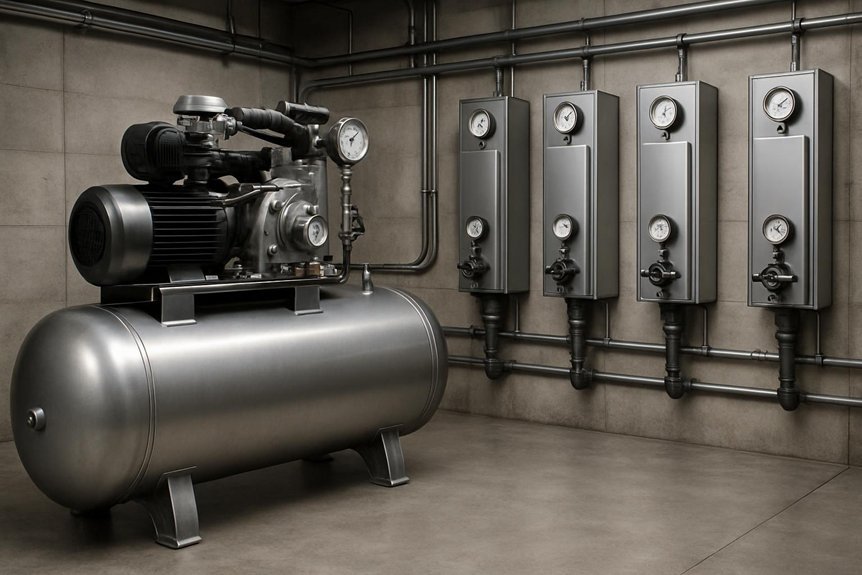
Horizontal air compressors provide superior stability and support during prolonged, heavy-duty operations, reducing the risk of tipping or movement. Their larger footprint allows for increased storage capacity, accommodating extensive air tank systems and additional components. This design enhances operational efficiency and durability in large-scale industrial environments.
Enhanced Stability and Support
Have you considered how the design orientation of an air compressor impacts its stability during heavy-duty operations? Horizontal compressors inherently offer superior stability improvement due to their low center of gravity and wider base. This design enhances support mechanisms, reducing vibrations and shifting under load. Specifically:
- The broad footprint distributes weight more evenly, minimizing tipping risks.
- Stabilizing legs or pads provide additional support during operation.
- Heavier components are positioned lower, lowering the overall center of gravity.
These features make horizontal compressors better suited for large-scale, continuous use, where stability is vital. The support mechanisms and design orientation work together to ensure consistent operation, reduce maintenance needs, and improve safety during demanding tasks.
Greater Storage Capacity
Horizontal air compressors offer greater storage capacity, making them ideal for large-scale, heavy-duty applications. Their design allows for larger tanks, which directly enhances air compressor efficiency by providing a more consistent air supply under high demand. This increased capacity reduces the frequency of cycles, minimizing wear and improving overall operational longevity. Additionally, larger tanks help maintain lower noise levels during extended operation, as the compressor runs less frequently and more smoothly. The horizontal configuration also facilitates easier integration of additional storage options, supporting continuous workflows. For industries requiring sustained high-volume air output, these compressors provide a reliable, efficient solution, ensuring maximum productivity without compromising system stability or increasing noise levels.
How to Choose the Right Air Compressor Based on Your Workspace and Needs
Choosing the appropriate air compressor depends heavily on evaluating your workspace’s specific demands and operational requirements. To determine the best fit, consider these factors:
- Energy efficiency: Select models with energy-saving features to reduce operational costs, especially in continuous-use environments.
- Noise levels: For indoor or noise-sensitive settings, opt for compressors with lower decibel ratings to maintain a safe and comfortable workspace.
- Space constraints: Assess whether vertical or horizontal models better fit your available space, balancing accessibility and installation ease.
Common Applications and Best Use Cases for Vertical and Horizontal Models
Vertical and horizontal air compressors each excel in specific applications based on their design and operational characteristics. Vertical models often suit environments where space-saving and noise reduction are priorities, making them ideal for small workshops or confined areas. Horizontal compressors, with their larger footprint, typically support applications requiring higher airflow efficiency and continuous operation, such as manufacturing or automotive repair.
| Application Area | Best Model Type | Key Benefits |
|---|---|---|
| Small workshops | Vertical | Compact, quieter operation |
| Manufacturing facilities | Horizontal | Greater airflow efficiency |
| Automotive repair | Horizontal | Durable, high-capacity use |
| Mobile or portable use | Vertical | Easy to move, space-saving |
Choosing the right model hinges on balancing airflow needs and noise considerations.
Maintenance Tips and Considerations for Both Vertical and Horizontal Air Compressors
Regular maintenance is essential to guarantee the peak performance and longevity of both vertical and horizontal air compressors. Adhering to proper lubrication schedules minimizes wear on moving parts, ensuring efficient operation. Additionally, regular inspection of filters and belts prevents airflow restrictions and mechanical failures. For noise reduction, consider installing vibration dampers and sound enclosures, especially in shared or sensitive environments.
- Maintain a strict lubrication schedule, replacing oil before contamination causes damage.
- Conduct routine inspections of air intake filters and belts to prevent operational bottlenecks.
- Implement noise mitigation strategies, such as vibration dampers and acoustic enclosures, to reduce sound levels and extend equipment lifespan.
Consistent maintenance optimizes compressor efficiency and minimizes downtime across both models.
Frequently Asked Questions
Are Vertical or Horizontal Compressors More Energy-Efficient?
Vertical compressors are generally more energy-efficient due to lower maintenance costs and better space utilization, reducing operational strain. Horizontal models may consume more energy, but their accessibility can ease maintenance, impacting overall efficiency.
Which Type Offers Better Noise Reduction?
Ironically, vertical compressors often excel in noise mitigation due to better sound insulation, making them quieter. Their design reduces sound transmission, providing superior noise reduction compared to horizontal models, which often transmit more vibrations and noise.
How Do Initial Costs Compare Between Vertical and Horizontal Models?
Vertical air compressors typically have higher initial costs due to complex design aesthetics but excel in space optimization, making them a practical choice for limited areas. Horizontal models usually cost less upfront but require more space.
Can Vertical Compressors Handle Continuous Heavy-Duty Work?
Vertical compressors can handle continuous heavy-duty work, thanks to their space-saving design and improved maintenance accessibility, which facilitate easier servicing and cooling. However, their durability depends on build quality and proper operational parameters.
Are There Specific Safety Concerns Unique to Each Orientation?
Like a wise old sage once said, safety varies with orientation. Vertical compressors pose maintenance challenges due to harder access, while horizontal models demand space optimization. Both require vigilant safety checks to prevent tipping and guarantee proper operation.
Conclusion
Choosing between vertical and horizontal air compressors ultimately depends on your specific workspace and operational demands. While vertical models excel in compactness and mobility, horizontal units offer stability and higher capacity for demanding tasks. Some might worry about maintenance complexity, but with proper care, both types deliver reliable performance. By understanding your environment and needs, you can select the most efficient model, ensuring peak airflow and longevity—making your investment a strategic, long-term asset.