Studies show that over 60% of industrial and construction projects rely on air compressors, yet choosing the right type remains complex. Gas-powered and electric models each have distinct advantages and limitations that impact performance, cost, and environmental factors. Understanding these differences is vital for selecting the best compressor for specific applications. As we explore these options, you’ll see how the decision hinges on more than just power—it’s about matching the right tool to the task at hand.
Key Takeaways
- Gas compressors offer higher torque and are suitable for heavy-duty, outdoor, and remote applications.
- Electric compressors are quieter, more efficient, and ideal for indoor or noise-sensitive environments.
- Gas models are less portable, heavier, and produce emissions; electric units are lightweight, environmentally friendly, and easier to move.
- Electric compressors have lower operational and maintenance costs, with no fuel or exhaust emissions.
- Gas compressors generate more noise and pollutants, while electric models operate quietly with a smaller environmental footprint.
What Are Gas-Powered and Electric Air Compressors?
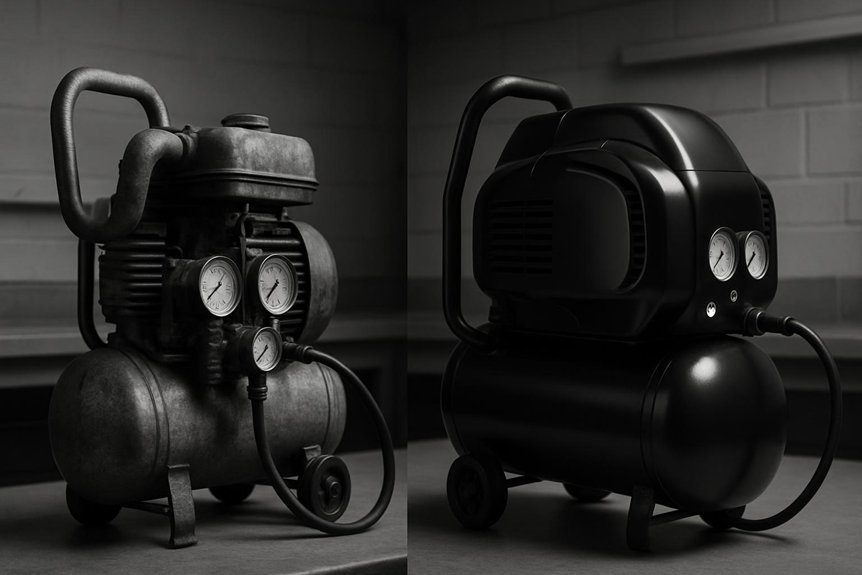
Gas-powered and electric air compressors are essential tools in a variety of industrial, commercial, and DIY applications, each distinguished by their power sources and operational characteristics. Understanding these differences is vital for ensuring air compressor safety and optimizing performance. Gas-powered models operate independently of electrical outlets, making them suitable for remote or outdoor use, but they require careful handling of exhaust emissions and fuel safety. Electric compressors, on the other hand, offer cleaner operation and quieter performance, often favored in controlled environments. Both types often utilize specific compressor accessories such as pressure regulators and filtration systems to maintain safety and efficiency. Recognizing the unique features and safety considerations associated with each type allows users to select the appropriate compressor for their specific needs.
How Do Gas and Electric Compressors Differ in Power and Performance?
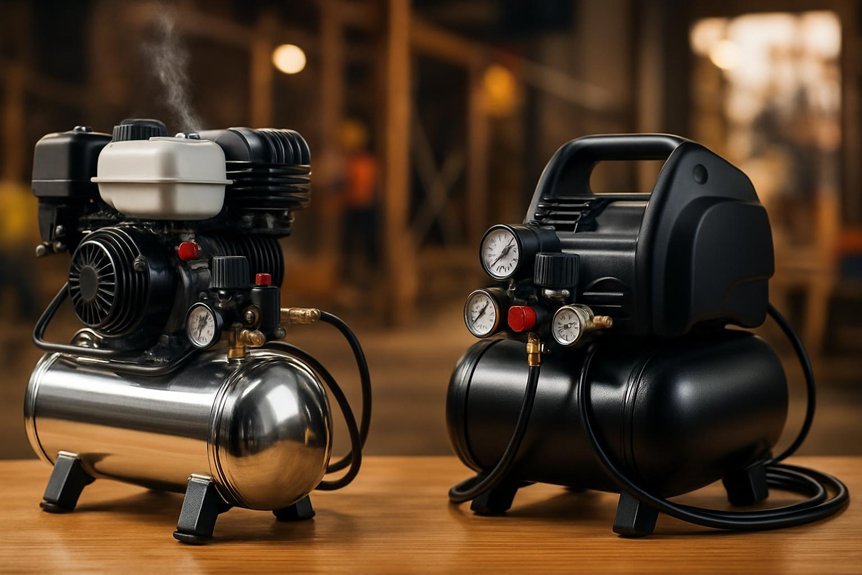
While both gas and electric compressors are designed to generate compressed air, their power output and performance characteristics differ markedly due to their underlying mechanisms. Gas compressors typically deliver higher torque and sustained power, making them suitable for heavy-duty applications. Electric models excel in efficiency improvements through technological advancements, often providing more precise control and faster startup times.
| Feature | Gas Compressors | Electric Compressors |
|---|---|---|
| Power & Torque | Higher, for demanding tasks | Lower, optimized for efficiency |
| Performance Consistency | Less consistent, affected by fuel | More consistent, stable output |
| Efficiency Improvements | Limited, fuel-dependent | Significant, with advanced motors |
| Suitability | Heavy-duty, remote locations | Indoor, stationary use |
Which Air Compressor Is More Portable and Suitable for Outdoor Use?
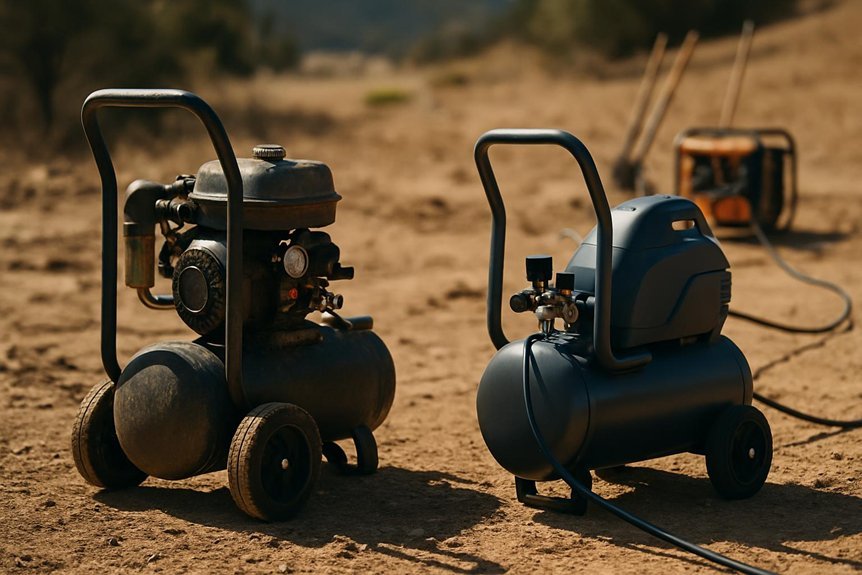
When evaluating portability for outdoor use, we consider weight and size, as these directly impact ease of transportation and setup. Power source flexibility also plays a critical role, with gas units offering more independence from electrical outlets. Additionally, features like integrated handles and wheels can considerably enhance maneuverability in rugged environments.
Weight and Size
Gas-powered air compressors generally outshine electric models in portability due to their larger size and heavier weight, which can hinder ease of transport. When considering air compressor dimensions and weight considerations, gas units tend to be bulkier, making them less convenient for quick outdoor setups. Electric models, being lighter and more compact, excel in portability but may lack power for heavy-duty tasks. The table below compares typical specifications:
| Model Type | Dimensions (inches) | Weight (lbs) | Portability Score |
|---|---|---|---|
| Gas-powered | 24 x 20 x 18 | 80-100 | Moderate |
| Electric | 18 x 14 x 12 | 30-50 | High |
| Portable Gas | 22 x 18 x 16 | 70-90 | Moderate |
| Compact Electric | 16 x 12 x 10 | 20-40 | Very High |
This analysis highlights how size and weight influence outdoor suitability and transport logistics.
Power Source Flexibility
Electric air compressors generally offer greater flexibility in power sourcing, making them more suitable for portable outdoor applications. They can operate directly from standard electrical outlets or portable power sources, reducing reliance on fuel and enabling quicker setup. This enhances fuel efficiency by eliminating fuel consumption during operation, which also lowers environmental impact. In contrast, gas-powered models require fuel storage and regular refueling, which can be cumbersome outdoors and increase emissions. While gas compressors may have advantages in remote locations without power access, their dependence on fuel affects operational costs and environmental footprint. Overall, electric compressors provide a more sustainable and efficient power source for outdoor use, especially in environments where portability, reduced emissions, and ease of power access are priorities.
Portability Features
While both gas-powered and electric air compressors are designed for mobility, their portability features differ considerably in practical outdoor applications. Gas compressors typically prioritize ruggedness, featuring durable design aesthetics and larger fuel tanks, making them suitable for extended use in remote locations. They often come with sturdy handles and wheels optimized for uneven terrain, enhancing portability despite increased weight. Electric models, however, tend to be lighter and more compact, facilitating easier transport and quick setup, especially in confined spaces. Brand reputation influences perceived portability, with reputable brands offering ergonomic designs and reliable construction. Ultimately, gas compressors excel in outdoor environments demanding endurance and greater autonomy, while electric units suit short-term, less demanding tasks where ease of movement and storage are prioritized.
How Do Operating Costs and Maintenance Compare Between Gas and Electric Models?
When comparing operating costs, electric models generally have lower fuel expenses but may incur higher electricity costs, depending on usage patterns. Maintenance differences are notable, with gas compressors requiring more frequent servicing of fuel systems and filters, while electric units tend to need less routine upkeep. Over the long term, electric compressors often prove more cost-efficient due to reduced fuel and maintenance requirements, but initial investment and energy prices can influence overall savings.
Fuel and Electricity Expenses
How do operating costs and maintenance compare between gas-powered and electric air compressors? Fuel efficiency and energy consumption are key factors influencing ongoing expenses. Gas-powered models typically exhibit higher fuel consumption due to less efficient fuel utilization, which can greatly increase operational costs over time. Conversely, electric compressors generally consume less energy, benefiting from higher energy efficiency, especially when operated continuously. This results in lower electricity bills, assuming electricity rates remain stable. While initial purchase prices may favor electric units, the long-term expenses hinge on fuel and electricity costs. Gas models tend to incur higher expenses due to fluctuating fuel prices and lower fuel efficiency, whereas electric models benefit from stable electricity rates and superior energy efficiency, ultimately reducing overall operating costs.
Routine Maintenance Differences
Routine maintenance requirements differ considerably between gas-powered and electric air compressors, impacting ongoing operational costs and equipment reliability. Gas models typically demand more frequent maintenance due to engine components, such as oil changes, filter replacements, and spark plug inspections. These tasks are critical for maintaining air compressor safety and guaranteeing peak performance. In contrast, electric compressors have fewer moving parts, simplifying maintenance scheduling and reducing overall upkeep costs. Electric units generally require less attention to lubrication and fuel management, translating to lower labor and material expenses over time. Both types, however, necessitate regular inspection of belts, hoses, and filters to prevent failures and maintain safety standards. Understanding these distinctions helps operators plan maintenance proactively, minimizing downtime while maintaining compliance with safety protocols.
Long-Term Cost Efficiency
Over the long term, electric air compressors generally prove more cost-effective than gas-powered models due to lower operating expenses and maintenance requirements. Electric units typically consume less energy for comparable output, reducing ongoing electricity costs. Maintenance is also simpler and less frequent, as electric motors lack the fuel systems and exhaust components that increase wear and tear in gas models. Additionally, electric compressors often meet stricter safety standards related to air quality and emissions, minimizing risks associated with fuel leaks or exhaust fumes. This contributes to improved air quality in the workspace and reduces health-related liabilities. Overall, the combination of lower energy costs, reduced maintenance, and enhanced compliance with safety standards makes electric compressors a more economical choice over their lifespan.
What Are the Noise Levels and Environmental Impacts of Each Type?
While both gas-powered and electric air compressors generate noise during operation, their environmental impacts differ markedly. Gas compressors typically produce higher noise levels, often exceeding 85 decibels, due to internal combustion processes. This increased noise contributes to environmental noise pollution, affecting nearby ecosystems and human health. Conversely, electric compressors tend to operate more quietly, usually under 75 decibels, making them more suitable for noise-sensitive environments. Regarding environmental impacts, gas compressors emit greenhouse gases and pollutants, such as carbon monoxide and nitrogen oxides, during fuel combustion. Electric compressors, however, have a lower direct environmental footprint, as their impact depends on the electricity source. The key considerations include:
- Noise levels during operation
- Emissions and pollutant output
- Overall ecological footprint
Which Compressor Is Better for Indoor Work and Quiet Environments?
Electric air compressors are generally better suited for indoor work and quiet environments due to their considerably lower noise emissions, making them ideal for enclosed spaces. Their quieter operation not only enhances air compressor safety by reducing noise-induced fatigue but also minimizes disruption in shared work environments. From a historical development perspective, electric models have evolved with advancements in motor technology, emphasizing efficiency and noise reduction. These improvements address concerns about safety and durability, ensuring reliable performance indoors. Conversely, gas-powered compressors tend to generate higher decibel levels, limiting their practicality for indoor use. Overall, electric compressors’ quieter profile and ongoing technological enhancements make them the superior choice for indoor applications where safety, comfort, and noise control are priorities.
How Do You Choose the Right Air Compressor for Your Needs?
Choosing the right air compressor depends on understanding your specific application requirements, including the volume of air needed, continuous versus intermittent use, and portability considerations. To select appropriately, consider these factors:
- Determine required CFM and PSI to match your tools’ demands, ensuring efficiency.
- Assess whether a portable unit suffices or if a stationary model is necessary for larger tasks.
- Prioritize models with accessible maintenance tips and safety features, like pressure relief valves.
Proper selection minimizes downtime and enhances safety. Regular maintenance tips, such as checking for leaks and lubricating moving parts, extend compressor life. Safety precautions—like wearing protective gear and operating within recommended pressure limits—are essential. Making an informed choice streamlines your workflow and ensures reliable performance tailored to your specific needs.
Frequently Asked Questions
Are Gas-Powered Compressors More Durable Than Electric Models?
We find gas-powered compressors generally more durable due to robust construction, but they tend to be less fuel-efficient and noisier than electric models. Noise levels and fuel efficiency are critical factors influencing long-term durability and operational suitability.
Can Electric Compressors Handle Heavy-Duty Industrial Tasks?
Electric compressors can handle heavy-duty industrial tasks, but their portable convenience may be limited by size and power capacity. They typically produce lower noise levels, making them suitable for environments prioritizing quieter operation despite potential performance constraints.
What Safety Concerns Are Associated With Gas-Powered Air Compressors?
Studies show gas-powered compressors emit 30% more fuel emissions and produce noise hazards exceeding 85 decibels, posing safety risks. We must prioritize proper ventilation and hearing protection to mitigate these concerns effectively.
Do Electric Compressors Require Special Electrical Outlets or Wiring?
Electric compressors typically require compatible electrical outlets and wiring, considering their power requirements and electrical compatibility. We recommend checking the manufacturer’s specifications to confirm your electrical system can handle the compressor’s voltage and amperage demands safely.
How Long Do Gas and Electric Compressors Typically Last?
Like seasoned sailors, we find electric compressors often last 10-15 years with proper maintenance, while gas-powered units can reach 8-12 years, though noise levels and maintenance schedules influence their longevity and operational efficiency.
Conclusion
In summary, understanding the distinctions between gas-powered and electric compressors helps us choose the right tool for specific tasks. Notably, electric compressors account for nearly 70% of the global market, reflecting their growing popularity in indoor and noise-sensitive environments. By analyzing power, portability, operating costs, and environmental impacts, we can make informed decisions that optimize performance and sustainability. Selecting the appropriate compressor ultimately enhances efficiency and safety across various applications.