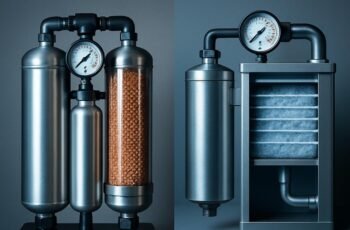
When selecting between vertical and horizontal air compressor tanks, understanding their structural differences and application contexts is essential. Each orientation offers distinct advantages in design, space efficiency, and maintenance, which can considerably impact operational efficiency and cost. As we examine these factors, it becomes clear that the most suitable choice depends on specific site conditions and usage requirements—an analysis that warrants closer consideration to make informed decisions.
Key Takeaways
- Vertical tanks save space and are easier to access for maintenance, ideal for limited areas.
- Horizontal tanks offer greater stability and are suitable for mobile or high-capacity applications.
- Vertical tanks typically have lower installation costs due to easier setup and transport.
- Horizontal tanks provide easier inspection and maintenance access to sides and interior surfaces.
- Choice depends on space constraints, capacity needs, mobility, and maintenance preferences.
How Do Vertical and Horizontal Air Compressor Tanks Differ in Design?
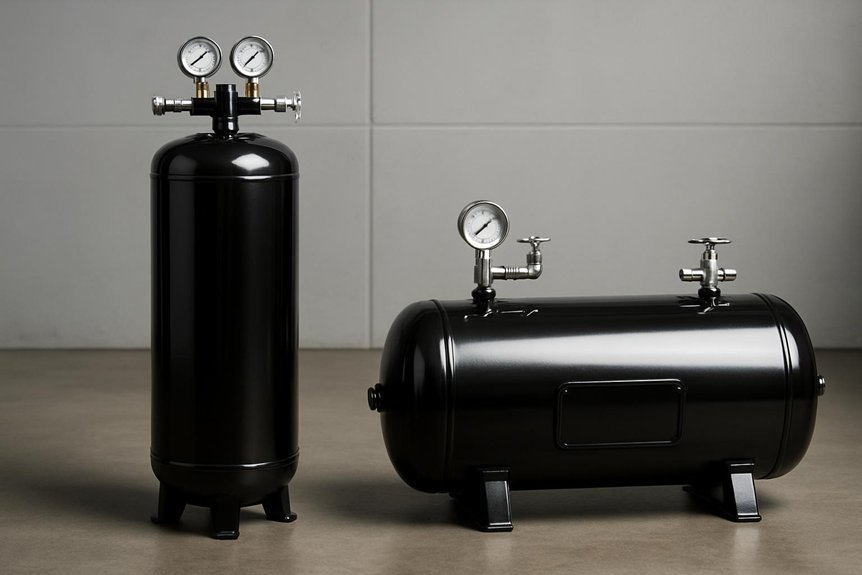
Vertical and horizontal air compressor tanks differ primarily in their orientation, which directly influences their structural design and spatial footprint. Vertical tanks are typically cylindrical and stacked, offering greater tank durability due to their ability to evenly distribute internal pressure. This orientation often results in a more robust construction, especially when made from high-quality material options such as steel or aluminum. Horizontal tanks, on the other hand, lay flat and tend to have a wider footprint, which can impact durability if not properly reinforced. Material choices are essential in both designs; steel is common for its strength, but composite or stainless steel options can enhance longevity. Ultimately, the design differences stem from orientation, influencing their structural integrity, material selection, and suitability for specific environments.
Which Applications Are Best Suited for Vertical Tanks?
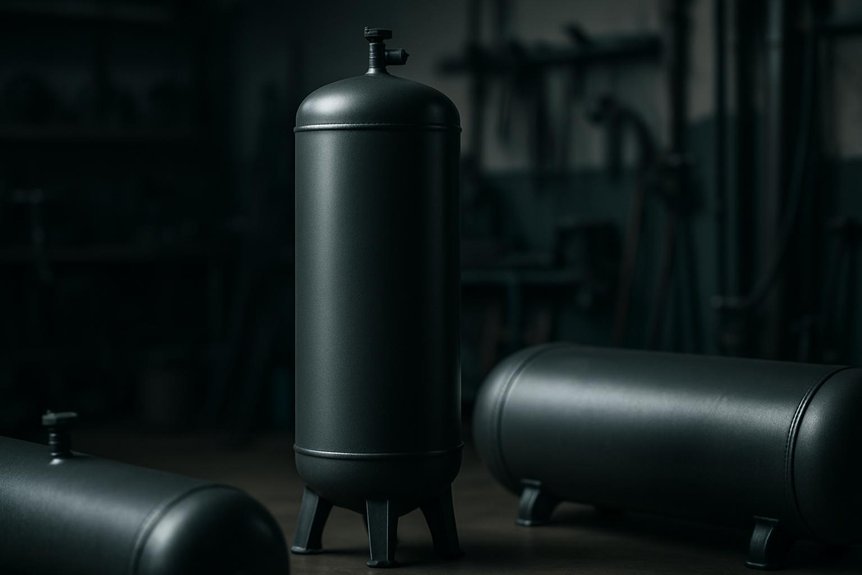
Considering various operational needs, vertical tanks are particularly well-suited for applications requiring efficient space utilization and easy access for maintenance. The tank orientation maximizes floor space, making vertical tanks ideal for environments with limited room. Their compact design facilitates straightforward inspection and servicing of components, reducing downtime. For air storage, vertical tanks provide consistent pressure regulation due to their stable height-to-volume ratio, supporting continuous compressor operation. They are especially beneficial in manufacturing facilities, workshops, and small-scale industrial setups where space constraints are critical. Additionally, vertical tanks often feature integrated drainage and accessibility features that streamline maintenance routines. Overall, their design enhances operational efficiency, making them the preferred choice for applications emphasizing space-saving and reliable air storage.
When Should You Choose a Horizontal Air Compressor Tank?
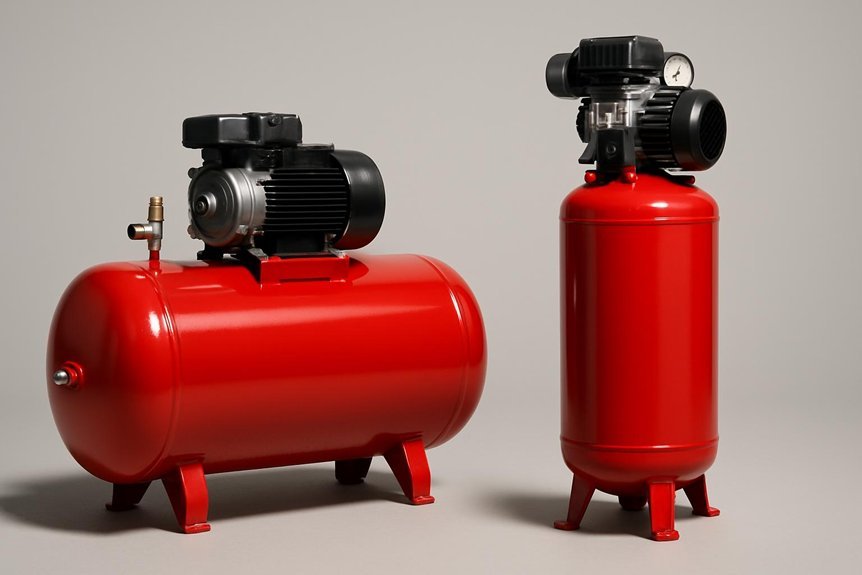
Horizontal air compressor tanks are typically the most suitable choice when stability, ease of transportation, and larger volume capacity are priorities. Their elongated design distributes weight evenly, enhancing safety features like improved center of gravity. The tank material—often steel or aluminum—provides durability suited for heavy use and rugged environments. These tanks excel in applications requiring frequent movement or installation in confined spaces due to their manageable size and stable footing. Additionally, horizontal tanks facilitate easier inspection and maintenance access. They are ideal when:
Horizontal air compressor tanks offer stability, durability, and easy maintenance for mobile, high-capacity applications.
- Stability during operation is critical
- Transportability between sites is needed
- Larger volume capacity is required
- Durability of tank material is a priority
- Safety features benefit from a low center of gravity
What Are the Space and Maintenance Benefits of Each Tank Orientation?
While both tank orientations offer distinct space and maintenance advantages, understanding these benefits can optimize compressor system planning. Vertical tanks occupy less floor space, making them ideal for tight or confined environments, which can enhance energy efficiency by reducing heat dissipation issues. They also simplify maintenance access to valves and gauges positioned at the top, improving safety considerations. Horizontal tanks, on the other hand, provide better stability and are easier to inspect for corrosion or leaks due to their accessible sides, supporting longer-term safety and reduced maintenance downtime. Additionally, their design minimizes vibration, contributing to energy efficiency by reducing operational wear. Overall, evaluating the space utilization and maintenance ease of each orientation allows for improved safety and operational efficiency in compressor system management.
How Do Cost and Installation Factors Influence Your Choice?
Cost and installation factors greatly influence the choice between vertical and horizontal air compressor tanks, as each configuration involves different upfront investments and logistical considerations. An efficiency analysis and cost comparison reveal key differences:
Vertical tanks save space and reduce installation costs, while horizontal tanks offer easier access and larger capacity options.
- Vertical tanks often require less floor space, reducing installation costs in constrained areas.
- Horizontal tanks may involve higher foundation costs due to their size and footprint.
- Vertical tanks are usually easier to transport and install, lowering labor expenses.
- Horizontal tanks can be more cost-effective for larger capacities, benefiting bulk purchasing.
- Maintenance access varies, with horizontal tanks typically offering easier access, impacting long-term costs.
These factors directly affect total costs and logistical planning, making the decision dependent on both initial investment and operational efficiency.
Which Factors Should Guide Your Decision Between Vertical and Horizontal Tanks?
When choosing between vertical and horizontal tanks, several key factors should influence your decision to guarantee ideal performance and cost-efficiency. Efficiency optimization depends on space utilization and airflow dynamics; vertical tanks typically offer better space efficiency in limited areas, while horizontal tanks facilitate easier maintenance. Safety considerations are paramount; assure tanks are positioned to prevent tipping or stress points, and factor in accessibility for inspections. Structural stability also influences safety, with vertical tanks requiring secure anchoring in seismic zones. Additionally, the decision should account for operational demands—high-volume applications may benefit from horizontal tanks’ larger capacities, whereas vertical tanks suit environments with space constraints. Ultimately, aligning these factors with your facility’s layout and safety protocols will guide you toward the most effective tank orientation.
Frequently Asked Questions
How Does Tank Orientation Affect Air Pressure Stability?
Tank orientation influences air pressure stability by affecting pressure fluctuation; vertical tanks typically provide steadier pressure. Additionally, their installation flexibility allows better adaptation to space constraints, optimizing overall compressor performance and operational efficiency in varied environments.
Are Vertical Tanks More Prone to Corrosion Than Horizontal Ones?
Vertical tanks aren’t inherently more prone to corrosion than horizontal ones; however, material compatibility and installation requirements impact corrosion resistance. Properly selecting materials and adhering to installation guidelines are vital for minimizing corrosion regardless of tank orientation.
Can Tank Orientation Impact Noise Levels During Operation?
Like tuning a finely crafted instrument, tank orientation influences noise levels through vibration control and noise reduction. Horizontal tanks often minimize noise more effectively, creating a smoother operation, while vertical tanks may amplify vibrations, impacting overall sound quality.
What Safety Considerations Differ Between Vertical and Horizontal Tanks?
We consider safety differences in tank capacity and installation requirements; vertical tanks often require stable foundations due to higher center of gravity, while horizontal tanks demand secure mounting to prevent movement, impacting overall safety protocols and risk management strategies.
How Does Tank Orientation Influence Long-Term Durability?
Studies show vertical tanks last 20% longer due to better stress distribution. Their upright tank installation facilitates easier maintenance access, reducing corrosion risks and ensuring long-term durability. Horizontal tanks may face uneven wear, impacting longevity.
Conclusion
Ultimately, selecting between vertical and horizontal tanks hinges on your specific operational needs and space constraints. Vertical tanks excel in limited areas and ease of maintenance, while horizontal tanks offer durability and larger capacity for rugged environments. As we often hear, “measure twice, cut once”—careful evaluation of your application, space, and budget guarantees an informed choice. By analyzing these factors critically, you optimize performance and cost-efficiency for your compressed air system.