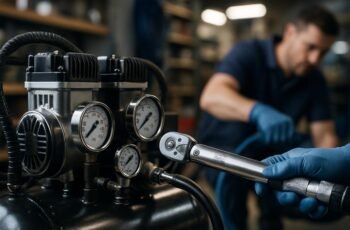
Many assume that reducing air compressor energy costs involves costly upgrades or complex overhauls, but effective strategies often focus on optimizing existing systems. By systematically analyzing operational inefficiencies and implementing targeted adjustments, we can substantially lower energy consumption without extensive capital investment. This approach requires a precise understanding of compressor performance, leak management, and control systems—details that can make the difference between mere maintenance and meaningful savings. Let’s explore how these technical insights can lead to tangible cost reductions.
Key Takeaways
- Regularly inspect and repair leaks to prevent unnecessary air loss and reduce energy consumption.
- Optimize compressor load and cycle times with proper sizing and control systems.
- Maintain equipment through routine lubrication and component checks to improve efficiency.
- Use real-time data monitoring to identify inefficiencies and guide energy-saving adjustments.
- Train staff on best practices for compressor operation and maintenance to ensure consistent efficiency.
How Do Air Compressors Consume Energy and Why Is It Costly?
Air compressors consume energy primarily through the mechanical work required to compress air from atmospheric pressure to higher pressures, which involves overcoming both volumetric and frictional losses within the system. The efficiency of an air compressor directly impacts its energy consumption, as lower efficiency results in more energy input for the same output. Factors influencing energy costs include the compressor’s design, load variability, and operating conditions. Inefficient compression processes generate excess heat and friction, leading to increased power demand. Understanding these energy cost factors helps us identify opportunities for enhancement. Improving air compressor efficiency—by selecting appropriate equipment, maintaining ideal operating parameters, and reducing unnecessary cycling—can considerably reduce energy consumption and operational costs.
Identify and Fix Air Leaks to Save Energy

Identifying hidden air leaks quickly is essential for optimizing compressor efficiency and reducing energy costs. Utilizing proper leak detection tools allows us to pinpoint leaks accurately, ensuring effective repairs. Regular maintenance checks help sustain system integrity and prevent energy waste caused by unnoticed leaks.
Detect Hidden Leaks Quickly
Detecting hidden leaks promptly is essential for optimizing compressor efficiency and reducing energy waste. Leaks can compromise air quality by introducing contaminants and cause unnecessary energy consumption. Effective leak detection requires a systematic approach, focusing on identifying small, often overlooked leaks that can markedly impact performance. By monitoring pressure drops and analyzing system performance, we can isolate potential leak points. Incorporating precise leak detection methods ensures that leaks are located quickly and accurately, allowing for targeted repairs. This not only improves air quality by minimizing contamination but also enhances overall system efficiency. Rapid identification of leaks prevents energy losses from escalating, reducing operational costs and extending equipment lifespan. Consistent leak detection is a critical component of an energy-conscious maintenance strategy.
Use Proper Leak Detection Tools
To effectively locate and eliminate leaks, it’s essential to utilize specialized leak detection tools designed for accuracy and efficiency. Leak detection methods often incorporate sound amplification technology, which enhances the ability to detect even minor air leaks. By employing ultrasonic leak detectors or electronic listening devices, we can precisely identify leak sources through sound amplification, reducing false positives. These tools allow for quick, non-invasive assessment of complex piping systems and fittings, ensuring no leak goes unnoticed. Accurate detection minimizes downtime and prevents unnecessary disassembly. Relying on sound amplification and advanced leak detection methods optimizes resource allocation, saves energy, and improves overall compressor efficiency. Proper tool selection and application are critical steps toward sustainable, cost-effective air compressor operation.
Regular Maintenance Checks
Regular maintenance checks play a crucial role in ensuring air compressor systems operate at peak efficiency by proactively identifying and repairing leaks. Routine inspections enable us to detect small leaks early, preventing energy waste and reducing operational costs. During these checks, strict adherence to safety protocols is essential to protect personnel and equipment. Using precise leak detection methods, such as ultrasonic or soap bubble testing, helps locate leaks efficiently. Addressing leaks promptly minimizes unnecessary pressure drops, ensuring the compressor runs at the most effective levels. Regular maintenance also includes verifying pressure settings and inspecting hoses, fittings, and valves for deterioration. Implementing a disciplined inspection schedule enhances system reliability, reduces energy consumption, and prolongs equipment lifespan. Consistent, safety-conscious routine inspections are fundamental to sustainable compressor operation.
Optimize Compressor Load and Duty Cycles for Efficiency
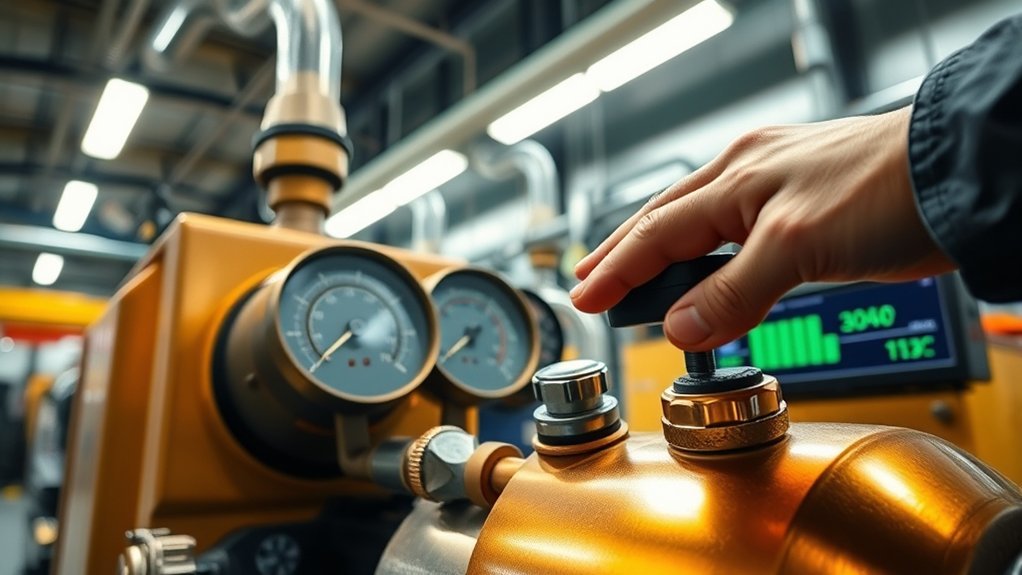
Optimizing compressor load and duty cycles is essential for reducing energy consumption and enhancing overall efficiency. Proper management of compressor load ensures units operate close to their ideal capacity, minimizing wasted energy during partial loads. Adjusting duty cycles prevents unnecessary cycling, which can cause energy spikes and wear. To improve efficiency, consider these strategies:
- Maintain compressor load within the best range to avoid excessive cycling or overloading.
- Implement demand management to match compressor operation with real-time air demand.
- Use control systems that modulate compressor speed, reducing the duty cycle during low demand periods.
Choose the Right Compressor Size and Type for Your Needs
How do we determine the most effective compressor size and type for specific applications? It begins with precise compressor sizing, which involves analyzing airflow requirements, pressure needs, and duty cycle patterns. Proper equipment selection hinges on understanding these parameters to avoid over- or under-sizing, both of which lead to inefficiencies. For instance, choosing a compressor that exceeds peak demand results in unnecessary energy consumption during low-demand periods. Conversely, undersized units struggle to meet operational needs, causing increased cycling and wear. Technical evaluation of load profiles and future scalability guides ideal equipment selection, ensuring the compressor operates within its most efficient range. This strategic approach minimizes energy costs, prolongs equipment lifespan, and enhances overall operational reliability.
Implement Variable Speed Drive Technology to Reduce Power Use
Implementing variable speed drive (VSD) technology offers a targeted approach to reducing compressor energy consumption by adjusting motor speed to match real-time demand. This innovation enhances compressor control techniques, allowing precise operation and minimizing unnecessary power use. VSDs respond dynamically to load fluctuations, avoiding the energy waste associated with fixed-speed models. Key energy-saving innovations include:
VSD technology optimizes compressor efficiency by adjusting motor speed to match real-time demand, reducing energy waste and wear.
- Continuous speed adjustment based on demand
- Reduced start-stop cycling, decreasing wear and tear
- Optimized compressor performance for varying load conditions
Maintain Your Air Compressor Regularly to Prevent Energy Waste
Regular maintenance of your air compressor is essential for guaranteeing it operates efficiently and prevents unnecessary energy consumption. Proper lubrication techniques reduce friction and wear on moving parts, minimizing energy loss and extending equipment lifespan. Regularly checking and replacing lubricants ensures ideal operation, avoiding increased power draw caused by inadequate lubrication. Additionally, maintenance focused on noise reduction can identify and mitigate sources of excessive sound, which often correlates with inefficient operation. By tightening fittings, replacing worn components, and ensuring proper alignment, we reduce vibration and noise, which directly impacts energy efficiency. Consistent inspections and proactive adjustments help maintain compressor performance at peak levels, preventing energy waste associated with mechanical inefficiencies or abnormal noise patterns, ultimately lowering operational costs.
Use Proper Air Storage and Distribution Systems to Minimize Losses
Effective air storage and distribution systems are essential to maintaining overall compressor efficiency by minimizing pressure drops and leaks that cause energy losses. Properly designed air storage guarantees stable pressure levels, reducing the compressor’s workload and preventing unnecessary cycling. Efficient distribution systems minimize pressure losses through optimized pipe sizing, strategic layout, and high-quality fittings, ensuring compressed air reaches point-of-use with minimal energy waste. To achieve this, consider:
Proper storage and piping optimize compressor efficiency by reducing pressure loss and energy waste.
- Using appropriately sized air storage tanks to balance demand and supply
- Implementing well-planned pipe routing to reduce frictional losses
- Utilizing high-quality, leak-proof fittings and valves to prevent pressure drops
Monitor and Analyze Energy Consumption With Smart Tools
To optimize energy efficiency in air compressor systems, we must actively monitor and analyze energy consumption using smart tools that provide real-time data. Smart sensors are essential for capturing precise, continuous measurements of energy use and system performance. By integrating these sensors, we can gather granular data that highlights inefficiencies, leaks, and unnecessary load cycles. Data analytics tools then process this information, revealing patterns and pinpointing areas for improvement. This approach enables us to make informed decisions, optimize compressor operation, and prevent energy waste. Regular analysis of energy consumption trends allows for proactive maintenance and system adjustments, ultimately reducing costs. Employing smart sensors and data analytics creates a dynamic, data-driven strategy for managing compressor energy use effectively.
Set Realistic, Data-Driven Goals for Energy Savings
By analyzing historical energy consumption data, we can establish a clear baseline to inform target setting. These measurable benchmarks enable us to create realistic, achievable goals grounded in actual system performance. Setting data-driven objectives guarantees continuous progress and effective tracking of energy savings efforts.
Analyze Historical Energy Data
Analyzing historical energy data provides a critical foundation for establishing realistic, data-driven energy savings goals. By examining energy consumption patterns and performing a detailed historical usage analysis, we can identify trends, peak periods, and inefficiencies. This process allows us to understand baseline energy performance and pinpoint opportunities for optimization. Key steps include:
- Reviewing consumption data over different timeframes to detect seasonal variations
- Identifying periods of excessive energy use that may indicate operational inefficiencies
- Quantifying baseline energy consumption for accurate goal setting
This analytical approach guarantees that goals are grounded in actual operational data, improving the accuracy of savings projections and enabling targeted interventions to reduce compressor energy costs effectively.
Set Measurable Targets
How can we guarantee our energy savings targets are both achievable and meaningful? Setting measurable targets requires a data-driven approach, grounded in analyzing current compressor performance, air quality metrics, and noise levels. We must establish realistic benchmarks based on operational data, ensuring goals account for variations in load and demand. Incorporating air quality standards helps prevent excessive energy use that could compromise air purity, while monitoring compressor noise ensures equipment operates within acceptable thresholds, indicating peak efficiency. Precise targets enable us to track progress effectively, identify inefficiencies, and prioritize improvements. By aligning our goals with factual data, we ensure that energy reduction efforts are both practical and impactful, ultimately leading to sustainable cost savings and enhanced system reliability.
Train Staff on Best Practices for Operating Air Compressors Efficiently
Effective training is essential to guarantee staff operate air compressors in a manner that maximizes efficiency and minimizes energy consumption. Well-designed staff training ensures adherence to operational protocols, reducing waste and preventing costly errors. By focusing on key operational practices, staff can optimize compressor performance, such as maintaining appropriate pressure levels, avoiding unnecessary run times, and conducting regular maintenance checks.
Key points include:
- Implementing standardized operational protocols for consistent compressor use
- Educating staff on energy-saving techniques during startup and shutdown
- Monitoring and adjusting compressor settings based on load requirements
This targeted approach enhances operational efficiency, reduces energy costs, and prolongs equipment lifespan. Continuous training updates are crucial to adapt to evolving technologies and best practices, ensuring sustained efficiency gains.
Frequently Asked Questions
How Can I Determine the Most Cost-Effective Compressor Maintenance Schedule?
We determine the most cost-effective compressor maintenance schedule through detailed maintenance planning and cost analysis, regularly reviewing operational data, evaluating wear patterns, and balancing maintenance frequency with energy efficiency to optimize overall cost savings.
Are There Specific Materials or Coatings That Reduce Compressor Energy Consumption?
Studies show energy-saving materials can cut compressor energy use by up to 15%. Compressor coatings, like ceramic or specialized polymer layers, markedly reduce friction and heat, making them effective for lowering overall energy consumption efficiently.
What Are the Best Practices for Integrating Renewable Energy Sources With Compressor Systems?
We prioritize solar integration and wind energy to optimize compressor systems, utilizing advanced control algorithms for seamless energy blending, reducing reliance on grid power, and enhancing operational efficiency through strategic renewable energy system design and real-time monitoring.
How Does Ambient Temperature Affect Compressor Energy Efficiency?
Ambient temperature impacts compressor efficiency considerably; higher temperatures reduce cooling capacity, increasing energy consumption. Effective ambient cooling through temperature regulation guarantees ideal compressor performance, minimizes energy costs, and prevents overheating, maintaining system reliability and efficiency.
Can Energy-Efficient Compressor Technologies Be Retrofitted Into Existing Systems?
Like upgrading a car’s engine, compressor retrofitting transforms existing systems into energy-efficient machines. We implement energy-efficient upgrades by integrating advanced components, ensuring optimized performance and reduced operational costs while maintaining system integrity and reliability.
Conclusion
In the end, optimizing air compressor efficiency isn’t just about saving energy—it’s about avoiding the costly illusion of “set it and forget it.” While advanced controls and regular maintenance make a difference, neglecting these practices can turn potential savings into a relentless, ironic cycle of inefficiency. So, let’s not forget: continuous vigilance and data-driven decisions aren’t just smart—they’re essential to truly mastering energy costs and avoiding the costly trap of complacency.