Many homeowners may not realize that the ideal air compressor for their needs hinges on more than just size or price. Factors like CFM and PSI directly impact performance, while safety features can influence long-term reliability. Selecting the right model involves a detailed understanding of your specific tasks, space constraints, and noise tolerance. To make an informed choice, it’s essential to balance power, portability, and operating costs—details that can greatly affect your overall satisfaction.
Key Takeaways
- Match compressor size and CFM ratings to your specific household tasks for efficient performance.
- Choose portable, oil-free models for quiet, easy-to-store use around the home.
- Consider tank capacity and PSI to ensure adequate runtime and pressure for your projects.
- Prioritize lower noise levels and energy efficiency to enhance comfort and reduce operating costs.
- Check safety features like pressure relief valves and automatic shutoff for safe, reliable operation.
What Types of Air Compressors Are Best for Home Use?
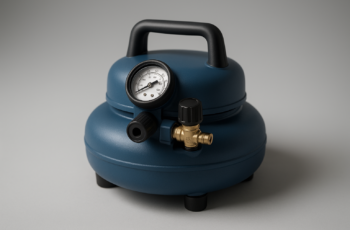
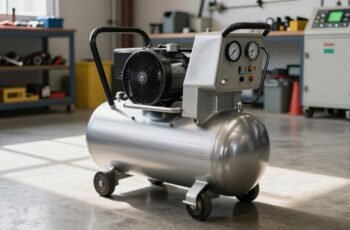
When selecting an air compressor for home use, it’s important to evaluate models that balance power, size, and noise levels to suit typical household tasks. For most applications, a portable, oil-free pancake or compact twin-stack compressor provides sufficient CFM and PSI, accommodating tasks like inflating tires, cleaning, or powering small tools. These models are lightweight, easy to store, and operate quietly, minimizing disruption. Stationary models with larger tanks and higher CFM outputs are suitable for more demanding tasks, such as spray painting or extensive DIY projects, but they tend to be bulkier and noisier. For general home use, the focus should be on models that deliver reliable performance without excessive noise or size, ensuring safety and convenience during regular operation.
How to Determine the Right Power and CFM for Your Projects
To select the appropriate power and CFM for your projects, we need to start by understanding the specific requirements of the tasks you plan to perform. Different applications demand varying levels of airflow and pressure. For example, light tasks like inflating tires require less CFM and pressure, while framing or sanding needs higher capacity. Consider the following:
| Task Type | Required Power (HP) | CFM Range |
|---|---|---|
| Inflating Tires | 0.5 – 1 | 0.5 – 1.5 |
| Finishing & Sanding | 1 – 2 | 4 – 6 |
| Framing & Heavy Duty | 2 – 3 | 8 – 12 |
| Industrial Use | 3+ | 15+ |
Matching these specs guarantees efficient, safe operation tailored to your work.
Choosing the Ideal Size and Portability for Your Space
Selecting the right size and portability of an air compressor requires evaluating the available space and how frequently you’ll need to move the unit. For stationary setups, a larger, stationary compressor with a higher tank capacity guarantees consistent performance and longer operation times. Conversely, if mobility is essential, opt for a compact, lightweight model with integrated handles or wheels, facilitating easy transport between work areas. Consider the spatial constraints of your workspace, including ceiling height and storage capacity, to prevent overcrowding. Additionally, assess your workflow to determine if a smaller, more portable unit can meet your demands without sacrificing necessary CFM and PSI. Precise sizing minimizes clutter while assures operational efficiency, aligning the compressor’s dimensions and mobility features with your project requirements.
Understanding Noise Levels and Operating Costs of Air Compressors
Have you considered how noise levels and operating costs impact the overall efficiency and suitability of an air compressor? Noise levels influence workspace comfort and compliance with noise regulations, while operating costs affect long-term affordability. Understanding these factors helps optimize your investment and operational efficiency.
- Decibel Ratings: Lower dB ratings indicate quieter operation, ideal for residential settings.
- Energy Efficiency: Compressors with high efficiency reduce electricity consumption, lowering costs over time.
- Maintenance Expenses: Regular upkeep minimizes unexpected repairs, controlling operating expenses.
- Duty Cycle: A higher duty cycle allows longer continuous operation, but may increase energy use and wear.
Key Features to Look for When Buying a Home Air Compressor
When choosing a home air compressor, identifying key features guarantees you select a model that meets your specific needs and provides reliable performance. Essential features include CFM (cubic feet per minute) ratings, which determine airflow capacity; higher CFM values support more demanding tools. PSI (pounds per square inch) indicates maximum pressure, crucial for tasks requiring high pressure levels. Tank size influences runtime and recovery time; larger tanks reduce cycling frequency and maintain consistent pressure. Motor horsepower affects startup torque and overall efficiency. Additionally, consider the compressor’s duty cycle, which indicates continuous operation capability without overheating. Portability features, such as weight and handle design, are important if mobility is needed. Finally, safety features like automatic shutoff and pressure relief valves enhance operational safety and equipment longevity.
Frequently Asked Questions
How Often Should I Perform Maintenance on My Home Air Compressor?
We recommend inspecting and replacing filters monthly, draining moisture weekly, and scheduling a professional service annually. Regular maintenance guarantees ideal compressor performance, prolongs lifespan, and prevents costly breakdowns, keeping your system reliable and efficient over time.
Can I Use a Home Air Compressor for Painting Projects?
Yes, you can use a home air compressor for painting projects; guarantee it delivers consistent pressure and adequate airflow, typically measured in CFM, and use appropriate spray guns and techniques to achieve a smooth, professional finish efficiently.
What Safety Precautions Are Essential When Operating an Air Compressor?
We always wear safety goggles, ear protection, and gloves to prevent injuries. We guarantee proper ventilation, check for leaks, and follow manufacturer instructions meticulously, knowing that strict safety protocols considerably reduce risk during compressor operation.
How Long Does It Take to Fill the Tank of a Typical Home Compressor?
It typically takes 2 to 10 minutes to fill a home air compressor tank, depending on the compressor’s horsepower, tank size, and discharge pressure. Smaller tanks fill faster, while larger tanks require more time.
Are There Energy-Efficient Options Available for Home Air Compressors?
Yes, there are energy-efficient home air compressors. We recommend models with variable speed drives and high-efficiency motors, which reduce power consumption during operation, enhancing energy savings and operational cost-effectiveness over traditional single-speed compressors.
Conclusion
Choosing the right home air compressor is like selecting a precise tool for a delicate craft. When we balance power, size, and noise, we guarantee smooth operation—much like tuning a fine instrument. A well-chosen compressor fits seamlessly into our workspace, quietly powering projects without disruption. By understanding these key features, we equip ourselves to make an informed decision, transforming a simple purchase into a reliable, efficient tool that supports our home projects with precision and confidence.