When working with garage air compressors, safety shouldn’t be an afterthought. Proper setup, maintenance, and protective gear are essential to prevent accidents and guarantee reliable operation. We recognize the importance of following strict guidelines, but the specifics can vary based on your equipment and workspace. To minimize risks and keep your compressor functioning at its best, it’s vital to identify key safety practices—details that could make all the difference in your daily use.
Key Takeaways
- Operate the compressor in a well-ventilated area and ensure all electrical connections are properly grounded.
- Regularly inspect hoses, valves, and safety features to prevent leaks and malfunctions.
- Wear appropriate PPE such as ear protection, safety glasses, and gloves during operation.
- Keep the workspace organized, free of tripping hazards, and ensure proper lighting and ventilation.
- Follow scheduled maintenance routines and keep safety devices like pressure relief valves functioning properly.
What Are the Basic Safety Rules for Using a Garage Air Compressor
To operate a garage air compressor safely, we must adhere to fundamental safety rules that minimize the risk of injury and equipment damage. Managing air compressor noise is essential; operating in a well-ventilated, sound-attenuated area reduces noise exposure. Regular air filter replacement is critical to maintain peak airflow and prevent contaminants from entering the system, which can cause malfunctions or safety hazards. We should always inspect hoses and connections for leaks or wear before use, ensuring a secure setup. Properly grounding the compressor prevents electrical hazards. Using appropriate personal protective equipment (PPE) like ear protection and safety glasses further enhances safety. Following these core rules ensures safe, efficient operation and prolongs the compressor’s lifespan.
How to Properly Set Up Your Air Compressor for Safe Operation
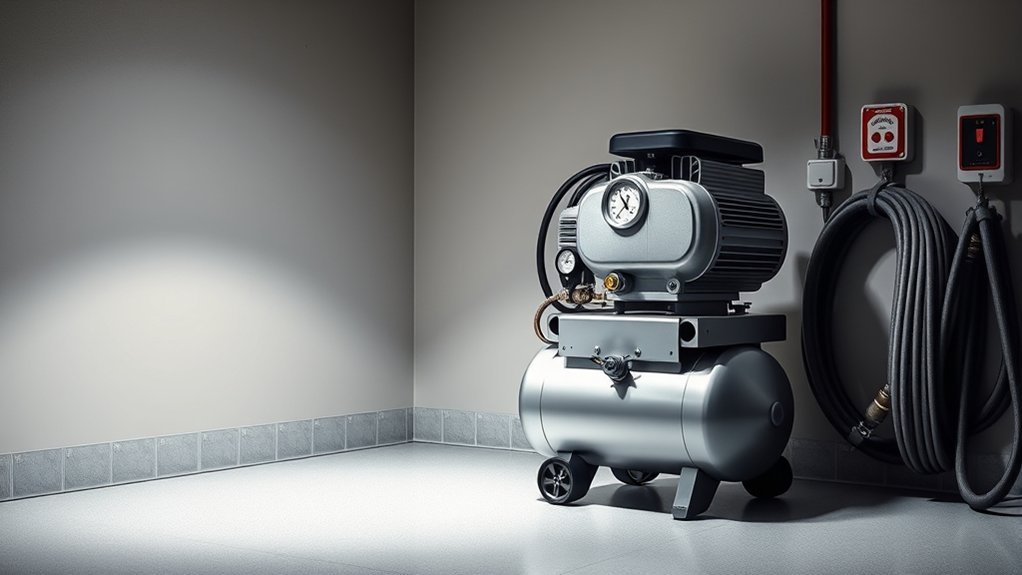
Proper setup is essential to guarantee safe and efficient operation of your air compressor. First, confirm the power source matches the compressor’s requirements—use a dedicated circuit to prevent overloads and electrical hazards. Verify that the outlet provides the correct voltage and grounding to avoid electrical shorts. Position the compressor on a stable, level surface to minimize vibration and noise levels, which enhances safety and prolongs equipment lifespan. Keep airflow clear of obstructions to prevent overheating. Check that all connections and hoses are secure before operation. Properly configuring the power source and stabilizing the unit reduces noise levels and minimizes operational risks. This precise setup creates a safe environment for continuous and reliable compressor performance.
Why Regular Maintenance Is Essential for Safety and Performance
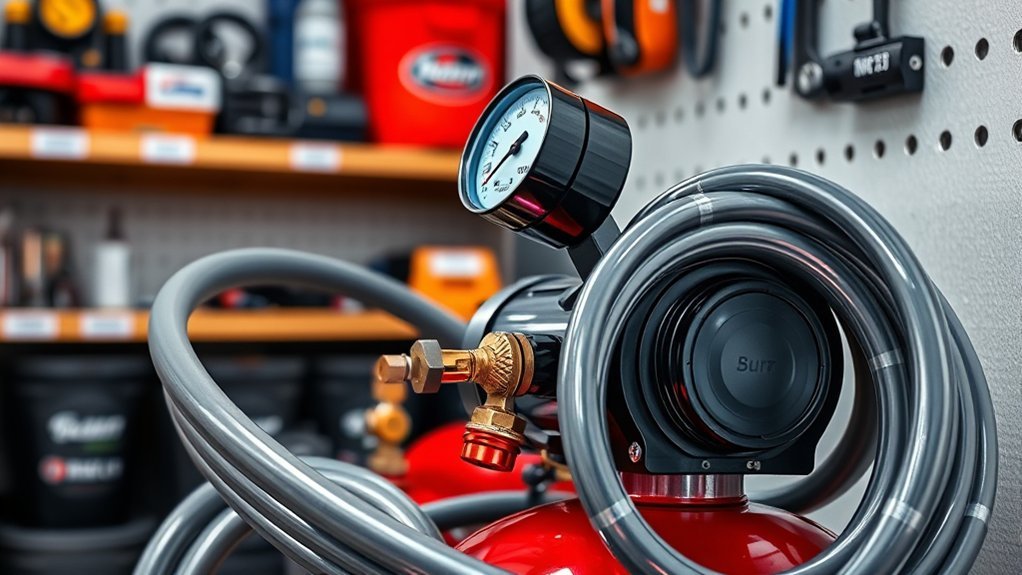
Regular maintenance is critical for guaranteeing both safety and ideal performance of your air compressor. Adhering to a thorough maintenance checklist prevents component failures and reduces risk of accidents. Regular inspections of hoses, valves, and pressure gauges are essential to detect wear or leaks early. Proper lubrication minimizes friction and wear, extending equipment lifespan. Safety training emphasizes understanding operational limits and recognizing warning signs of malfunction. Key maintenance tasks include checking air filters, draining moisture from tanks, and tightening fittings. Neglecting these steps can lead to dangerous pressure buildup or equipment failure. By routinely performing maintenance, you guarantee consistent performance, avoid costly repairs, and uphold safety standards. This disciplined approach keeps your compressor operating efficiently and minimizes hazards during usage.
How to Use Safety Gear When Operating an Air Compressor
Since operating an air compressor involves high-pressure air and moving parts, using appropriate safety gear is vital to prevent injury. Protective clothing, such as long sleeves and safety gloves, shields your skin from accidental contact with hot surfaces or flying debris. Hearing protection, like earplugs or earmuffs, reduces the risk of hearing damage caused by loud compressor noise. Proper use of safety gear guarantees that any unexpected release of compressed air or component malfunction doesn’t result in injury. Before starting, verify that all safety equipment fits correctly and is in good condition. Consistent use of protective clothing and hearing protection minimizes exposure to hazards, maintaining safety during compressor operation. This disciplined approach safeguards your health and enhances operational control.
What Are Common Hazards and How to Avoid Them
Understanding the common hazards associated with air compressor operation helps us develop effective avoidance strategies. Electrical hazards can occur from faulty wiring or damaged outlets, risking shock or fire. Fire risks also arise from overheating components or oil leaks near hot surfaces, potentially igniting combustibles. To mitigate these dangers, we must:
- Regularly inspect electrical connections for damage or corrosion
- Guarantee proper grounding and use protected outlets
- Keep flammable materials away from hot compressor parts
How to Safely Store and Handle Compressed Air Equipment
Proper storage of compressed air equipment involves securing cylinders upright in well-ventilated areas to prevent leaks and damage. Safe handling requires wearing appropriate protective gear and following manufacturer instructions during operation and transport. Regular maintenance guarantees equipment functions correctly, reducing the risk of failure or accidents.
Proper Storage Techniques
To guarantee safety when handling compressed air equipment, it’s essential to follow strict storage protocols. Proper storage minimizes risks such as chemical leaks and assures the integrity of the storage location. Equipment should be kept in a well-ventilated, dry area away from heat sources and direct sunlight. Containers must be tightly sealed to prevent contamination and chemical leaks. The storage location should be clearly labeled and organized to facilitate quick access and inspection.
- An area with secondary containment to contain potential chemical leaks
- Elevated shelving to prevent contact with water or spills
- Clear signage indicating compressed air and chemical hazard zones
Safe Handling Practices
Handling compressed air equipment safely requires strict adherence to established procedures to prevent accidents and equipment damage. Proper handling includes ensuring best air quality by using filters to remove contaminants, which maintains compressor efficiency and safety. Secure storage of hoses and accessories minimizes trip hazards and accidental disconnections. When operating, use appropriate personal protective equipment and avoid sudden pressure releases. Noise reduction is essential; employing silencers or soundproof enclosures decreases noise levels, protecting hearing and reducing disturbance. Regularly inspecting hoses, fittings, and valves for wear prevents leaks and failures. Practice controlled depressurization before disconnecting equipment to avoid injury. These safety practices ensure reliable operation while protecting users and maintaining a safe, efficient work environment.
Regular Equipment Maintenance
Regular maintenance of compressed air equipment is essential for safe storage and handling. Proper upkeep minimizes risks, facilitates emergency shutdowns, and guarantees noise reduction. To maintain peak performance, routinely inspect hoses and fittings for leaks or wear, replacing damaged components promptly. Drain moisture from tanks daily to prevent corrosion and maintain air quality. Confirm pressure gauges are calibrated correctly to avoid over-pressurization, which could trigger emergency shutdowns. Regularly clean and lubricate moving parts to reduce noise levels and enhance longevity. Implement a scheduled maintenance plan, documenting all inspections and repairs. By adhering to these practices, we promote a safer working environment, reduce unexpected equipment failures, and guarantee the compressor operates efficiently and quietly.
What Signs Indicate Your Compressor Might Be Unsafe to Use
When inspecting your air compressor, certain signs can indicate it may be unsafe to operate. Unusual compressor noise, such as knocking or grinding sounds, suggests internal component wear or damage that could lead to failure. Additionally, persistent air filter issues—such as clogged or dirty filters—can cause airflow restrictions, overheating, and reduced performance, increasing safety risks. Excessive vibration or noticeable leaks around fittings and hoses also signal potential hazards. If the compressor exhibits these signs, it’s essential to address them before use. Ignoring these indicators may result in mechanical failure or safety hazards, including pressure buildup or electrical malfunctions. Regularly monitoring for abnormal noise, air filter condition, and leaks helps guarantee safe operation and prevents costly repairs.
How to Troubleshoot Safety Issues and Maintain a Secure Workspace
To guarantee safety when working with an air compressor, we must systematically troubleshoot potential hazards and maintain a secure workspace. Regular inspection of hoses, fittings, and pressure gauges helps identify leaks, wear, or malfunction that could lead to accidents. Implementing clear emergency procedures ensures swift response during malfunctions or injuries, reducing risk. Proper organization of tools and cords minimizes tripping hazards, promoting accident prevention. Additionally, checking the compressor’s safety valves and ensuring adequate ventilation prevents overpressure situations and inhalation risks.
- Visualize an organized workspace with clearly labeled emergency shut-off switches and accessible safety gear
- Regularly reviewing safety protocols and conducting maintenance checks
- Ensuring all safety features are functional and compliant with regulations
Frequently Asked Questions
How Often Should I Inspect My Garage Air Compressor for Safety?
We recommend inspecting your garage air compressor weekly, following a detailed maintenance schedule and inspection checklist. Regular checks guarantee safety, identify leaks or wear early, and maintain ideal performance, reducing risks associated with compressor operation.
Are There Specific Safety Certifications for Air Compressors?
Think of certifications as the gold standard for safety—yes, there are specific ones like UL and CSA for air compressors. Proper compressor maintenance guarantees ideal air quality and safety, making certification vital for reliable, certified equipment.
Can Improper Grounding Cause Safety Hazards With Compressors?
Yes, improper grounding can cause safety hazards with compressors by risking electrical shock or fire. Proper electrical grounding guarantees safe operation, prevents electrical faults, and reduces the potential for dangerous electrical hazards during compressor use.
What Should I Do if I Hear Unusual Noises During Operation?
If you hear unusual noises during operation, we recommend stopping the compressor immediately, performing a noise diagnosis, and consulting your maintenance checklist. Regularly inspecting components guarantees safety and prevents potential damage or hazards from unaddressed mechanical issues.
How Do I Prevent Accidental Startup of the Compressor?
To prevent accidental startup, we recommend activating the compressor’s automatic shutoff feature and installing an emergency stop button. Regularly inspect safety mechanisms, confirm proper wiring, and keep controls clearly labeled for quick, safe shutdown during emergencies.
Conclusion
By adhering to these safety tips, we guarantee our workspace remains as secure as a well-guarded fortress, with each component functioning like a finely tuned engine. Just as a ship relies on steady navigation through turbulent waters, our consistent setup, maintenance, and protective measures steer us clear of accidents. Staying vigilant and proactive with our compressor safety practices keeps our operations smooth, efficient, and safe—guiding us safely through every project, like a lighthouse illuminating a clear path ahead.