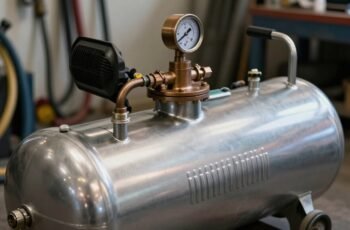
Changing the oil in an air compressor is a crucial maintenance task that guarantees peak performance and longevity. We’ll guide you through each step, from preparing the unit to verifying the oil level after the change. Proper technique prevents damage and leaks, but it’s necessary to follow precise procedures. As we get into the details, you’ll understand why proper oil management is essential and how to do it efficiently, which might reveal some common pitfalls to avoid.
Key Takeaways
- Turn off and unplug the compressor, then allow it to cool to room temperature before starting.
- Drain old oil by opening the drain valve into a proper container, ensuring no spills.
- Inspect and replace filters, seals, and drain plugs to prevent leaks and contamination.
- Add manufacturer-recommended oil gradually, checking the level with a dipstick or sight glass.
- Run the compressor briefly, then recheck the oil level and inspect for leaks or issues.
Why Regular Oil Changes Are Crucial for Your Air Compressor
Regular oil changes are essential for maintaining ideal performance and extending the lifespan of your air compressor. Proper oil viscosity ensures maximum lubrication, reducing friction and wear on internal components. Using the correct viscosity based on manufacturer specifications allows the compressor to operate efficiently across temperature ranges. Regularly replacing the oil prevents the buildup of contaminants and degraded additives, which can impair lubrication and cause damage. Additionally, filter replacement during oil changes is critical to prevent debris from circulating through the system, maintaining oil purity and protecting internal parts. Neglecting scheduled oil changes and filter replacements can lead to increased energy consumption, overheating, and premature component failure. Consistent maintenance preserves compressor reliability, efficiency, and longevity, ultimately saving costs and minimizing downtime.
Gathering the Right Tools and Supplies for the Job

Before starting the oil change process, we need to gather all necessary tools and supplies to guarantee a smooth and efficient procedure. Proper preparation guarantees safe oil disposal and effective filter replacement. We recommend assembling:
| Tool/Supply | Purpose |
|---|---|
| Wrench set | Drain plug removal |
| Oil catch container | Collecting used oil |
| New oil filter | Filter replacement |
| Replacement oil | Refilling the compressor |
| Rags or towels | Cleaning and wiping |
Having these items ready minimizes downtime, guarantees proper oil disposal, and maintains compressor performance. Confirm all tools are in good condition to avoid complications during the oil change process. Proper preparation is essential for a safe, efficient operation.
Preparing Your Air Compressor for Oil Replacement
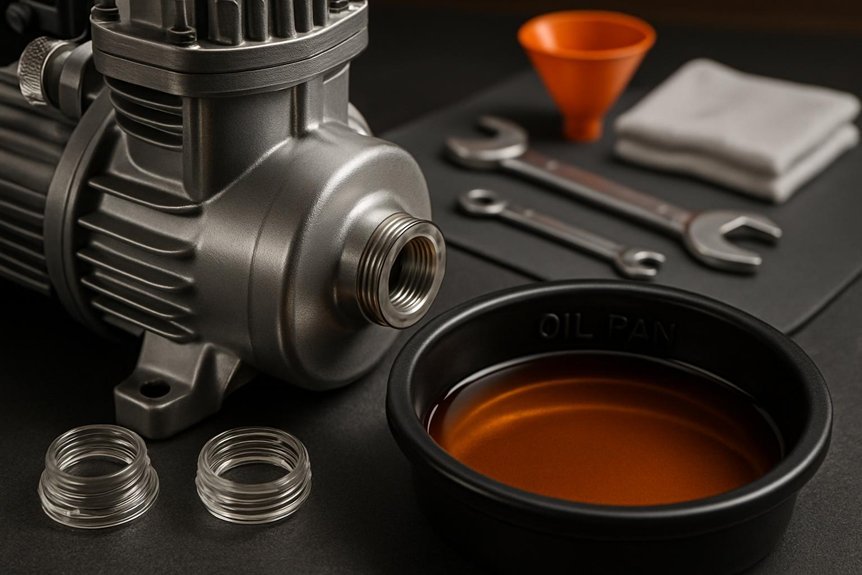
Are you ready to guarantee your air compressor is properly prepared for an oil change? Proper preparation guarantees effective oil filtration and maintains ideal compressor lubrication. Before starting, inspect the unit for any leaks or damage, and disconnect the power supply to prevent accidental operation. Ensure the compressor is at room temperature to facilitate oil flow and accurate measurement. Check the manufacturer’s manual for specific procedures related to your model. Adequate preparation minimizes contamination risk and guarantees the new oil performs efficiently.
Proper preparation ensures effective oil filtration and optimal compressor lubrication.
- Verify the compressor is turned off and unplugged
- Remove any debris or dust around the oil fill area
- Confirm the oil level and condition, noting any unusual signs
Draining Old Oil Safely and Effectively
Since old oil can contain contaminants and degrade compressor performance, we must drain it carefully to prevent spills and environmental hazards. We begin by positioning a drain pan beneath the drain valve to contain the used oil. Carefully open the valve, allowing the oil to flow steadily into the container, avoiding splashes. During this process, it’s vital to control the flow to prevent spills that could harm the environment. Proper oil disposal is essential; once drained, transfer the used oil to a sealed, labeled container designated for recycling or hazardous waste disposal. Always follow local regulations for environmental safety. Never pour old oil onto the ground or into drains, ensuring responsible handling and adherence to environmental standards throughout the process.
Choosing the Correct Oil Type and Quantity
After draining the old oil, the next step is to select the appropriate type and quantity of oil for your compressor. Choosing the right oil guarantees peak performance and longevity. For most compressors, synthetic blends offer enhanced lubrication and stability under temperature fluctuations. Consider oil additives that improve wear protection and reduce foaming. Always verify the manufacturer’s specifications for viscosity and type to avoid damage or inefficient operation. Accurate oil quantity is critical; overfilling can cause pressure issues, while underfilling reduces lubrication. Use a calibrated container or dipstick to measure precisely. Remember, using the correct oil type and quantity minimizes maintenance costs and extends the compressor’s lifespan.
- Match oil viscosity to manufacturer recommendations
- Opt for synthetic blends for better stability
- Incorporate compatible oil additives for enhanced protection
Filling and Checking the Oil Level Properly
Proper measurement of the oil level requires that we place the compressor on a level surface and use the sight glass or dipstick for accuracy. When filling, we should add oil gradually, stopping when the level reaches the specified mark without overfilling. Consistently verifying the oil level after filling ensures best lubrication and prevents operational issues.
Proper Oil Level Measurement
Accurately measuring the oil level in an air compressor is essential for peak performance and longevity. Proper measurement ensures the oil maintains ideal viscosity, preventing excessive wear or overheating. To achieve this, check the oil level when the compressor is on a level surface and after allowing it to cool, as hot oil can give a false reading. Use the sight glass or dipstick to verify the level, ensuring it’s between the minimum and maximum marks. Be vigilant for signs of oil contamination, such as discoloration or particles, which can impair measurement accuracy. Regularly inspecting the oil viscosity helps maintain proper lubrication. Remember, improper levels can lead to inefficient operation or damage, so precise measurement is critical for reliable compressor performance.
- Use the correct tools for measurement (sight glass or dipstick).
- Always check after the compressor cools down.
- Look for signs of oil contamination before measuring.
Correct Filling Procedures
To guarantee the oil level in your air compressor is filled correctly, start by preparing the necessary tools—typically a clean funnel and a suitable measuring device if specified by the manufacturer. Confirm the oil filter is clean and properly installed. Carefully pour oil into the fill port, maintaining the recommended level. Use the table below to confirm proper procedures:
| Step | Action |
|---|---|
| Check oil level | Use the sight glass or dipstick for accuracy |
| Fill with correct oil | Add oil gradually, avoiding overfill |
| Verify ventilation | Ensure ventilation system is unobstructed |
| Final inspection | Confirm oil filter is secure and oil level is ideal |
Proper filling prevents contamination and ensures efficient lubrication, especially around the oil filter and ventilation system.
Running the Compressor and Inspecting for Leaks
As we run the compressor, we closely monitor its operation for abnormal noises or vibrations that may indicate issues. We then systematically inspect all connections and seals for signs of oil leaks, guaranteeing the system maintains proper pressure and efficiency. Promptly identifying and addressing leaks helps prevent future damage and ensures reliable compressor performance.
Monitor Compressor Operation
How can we guarantee the compressor operates efficiently and safely? By closely monitoring its operation during startup and runtime, we assure optimal performance and early detection of issues. Key indicators include maintaining proper air quality and minimizing compressor noise.
- Observe fluctuations in compressor noise levels to detect abnormal vibrations or sounds indicating mechanical issues.
- Check air quality regularly; increased moisture or contaminants can impair operation.
- Monitor pressure gauges and temperature readings to ensure they stay within specified limits.
Consistent observation helps identify early signs of wear or malfunction, allowing timely intervention. This proactive approach maintains compressor reliability, reduces downtime, and guarantees safe, efficient operation.
Check for Oil Leaks
Have you checked for oil leaks during compressor operation? Leak detection is critical to verify proper oil viscosity maintains ideal performance. During operation, carefully inspect all connection points, seals, and fittings for signs of leakage. Look for oil residue or drips, especially around high-stress areas. Use a flashlight if necessary to enhance visibility. Confirm the compressor’s oil level and observe for any drops, indicating leaks. Proper leak detection prevents oil loss and potential damage. Here’s a quick reference:
| Leak Detection Area | Indicators of Oil Leak |
|---|---|
| Seals and fittings | Residue, drips, or oil pooling |
| Pump and compressor | Oil around moving parts |
| Drain points | Unusual oil splash or accumulation |
Regular inspection ensures the oil viscosity remains appropriate and leaks are promptly addressed.
Tips for Maintaining Your Air Compressor’s Oil Performance
Maintaining peak oil performance is vital for guaranteeing the efficiency and longevity of your air compressor. Proper management of oil viscosity guarantees ideal lubrication, reducing wear and preventing overheating. Regular filter maintenance is essential to prevent contaminants from compromising oil quality and performance. To maximize oil performance, monitor viscosity levels closely, especially in extreme temperatures, and replace or top up oil as needed. Keep filters clean and replace them according to manufacturer recommendations to prevent debris buildup that can impair oil flow. Additionally, regularly inspect oil for signs of degradation, such as discoloration or unusual odors, which may indicate contamination. Adhering to these practices ensures consistent lubrication, minimizes equipment downtime, and extends the lifespan of your compressor.
Troubleshooting Common Oil Change Issues
Despite careful planning, encountering issues during oil changes in your air compressor is common and can impact performance if not addressed promptly. One frequent problem is incorrect oil viscosity, which can cause inadequate lubrication or increased wear. Ensure you’re using the manufacturer-recommended oil type and viscosity to prevent operational issues. Additionally, neglecting filter replacement during oil changes can lead to contamination and reduced efficiency. A clogged filter restricts oil flow, increasing strain on the compressor’s components. Always verify the filter’s condition and replace it if necessary. Properly tightening drain plugs and ensuring no leaks are also critical. Addressing these issues promptly maintains optimal oil performance, prolongs compressor life, and prevents costly repairs.
Frequently Asked Questions
How Often Should I Change the Oil in My Air Compressor?
We recommend changing the oil every 3 to 6 months, depending on usage, oil viscosity, and filter condition. Regularly inspect and replace oil filters to maintain ideal compressor performance and prevent contamination that can damage internal components.
Can I Use Automotive or Engine Oil in My Air Compressor?
Did you know 70% of compressor failures relate to improper oil use? Using automotive or engine oil isn’t recommended; synthetic oils offer better viscosity stability, but mineral oils can suffice if they meet the compressor’s viscosity specs.
What Are Signs That My Air Compressor Needs an Oil Change Sooner?
We notice our air compressor needs an oil change sooner when oil viscosity thickens, indicating degradation, or if oil filtering shows increased debris, both signaling reduced lubrication efficiency and potential damage, prompting timely oil replacement.
Is It Necessary to Run the Compressor After Changing the Oil?
Think of your compressor as a finely tuned engine; yes, we run it after oil changes to circulate fresh oil. This maintains the maintenance schedule and guarantees oil quality, preventing wear and optimizing performance effectively.
How Do I Dispose of Used Compressor Oil Safely and Legally?
We dispose of used compressor oil through recycling methods, adhering to environmental regulations. We transfer it to certified collection centers or authorized disposal facilities, ensuring proper handling that prevents environmental contamination and complies with legal requirements.
Conclusion
Regular oil changes are crucial for maintaining ideal compressor performance and longevity. Did you know that neglecting oil maintenance can reduce efficiency by up to 20%? By following proper procedures—draining old oil, selecting the right type, and inspecting for leaks—we guarantee your compressor runs smoothly and reliably. Consistent upkeep minimizes costly repairs and extends its lifespan. Stay diligent with oil maintenance, and your compressor will deliver consistent, high-quality performance for years to come.