Ensuring safety when operating an air compressor demands meticulous attention to detail and strict adherence to established protocols. We recognize the importance of verifying safety features, conducting thorough pre-use inspections, and maintaining proper setup to prevent accidents. Overlooking even minor issues can lead to serious hazards. To truly minimize risks and guarantee reliable performance, it’s essential to follow a thorough safety checklist—a step that can make all the difference in safeguarding everyone involved.
Key Takeaways
- Verify safety features like emergency shutoffs and pressure relief valves are functional before operation.
- Conduct thorough pre-use inspections of hoses, gauges, safety devices, and oil levels.
- Ensure proper setup with stable placement, adequate ventilation, and correct power connections.
- Follow safe operating procedures, monitor air quality, and use PPE to prevent hazards.
- Regularly maintain equipment, provide safety training, and inspect PPE to ensure ongoing safety compliance.
What Are the Key Safety Features on Air Compressors?
While air compressors are crucial tools in many industrial and DIY applications, their safety features are fundamental to prevent accidents and equipment failure. Key safety components include an emergency shutoff, which allows immediate power cutoff during malfunctions or emergencies, preventing potential injuries. Additionally, a pressure relief valve is indispensable; it automatically releases excess pressure to avoid over-pressurization that could cause tank rupture or explosions. These safety features must be properly maintained and regularly tested to ensure reliable operation. Relying solely on operational procedures is insufficient without these safeguards in place. Confirming the emergency shutoff functions correctly and that pressure relief mechanisms are unobstructed is critical for safe compressor use. Prioritizing these features markedly reduces the risk of catastrophic failures or injuries.
How to Perform a Pre-Use Inspection Safely
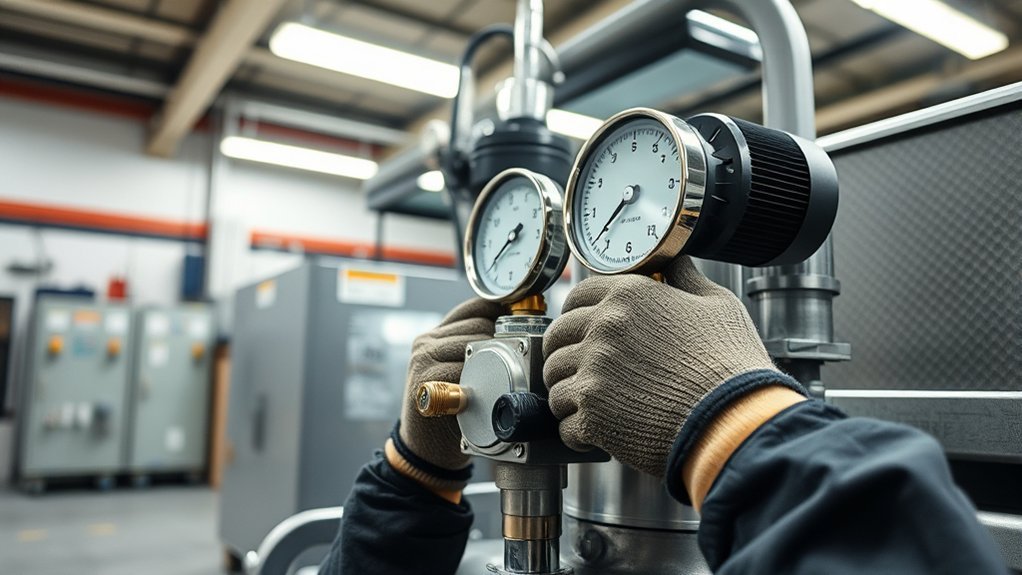
Before operating an air compressor, conducting a thorough pre-use inspection is vital to guarantee safety and proper function. We start by visually inspecting for leaks, worn hoses, or damaged fittings, paying close attention to the connections. Confirm that the pressure gauges are accurate, which involves checking if routine calibration has been performed recently. Inspect safety devices to make sure they are in place and functional, especially emergency shutdown controls. Verify that all safety valves operate smoothly and reset correctly. We also check the compressor’s oil levels and condition. Any irregularities or signs of wear demand immediate attention before use. Skipping this inspection could compromise safety, so a cautious, methodical approach is necessary to prevent accidents and guarantee reliable operation.
Checking and Maintaining Safety Devices and Controls
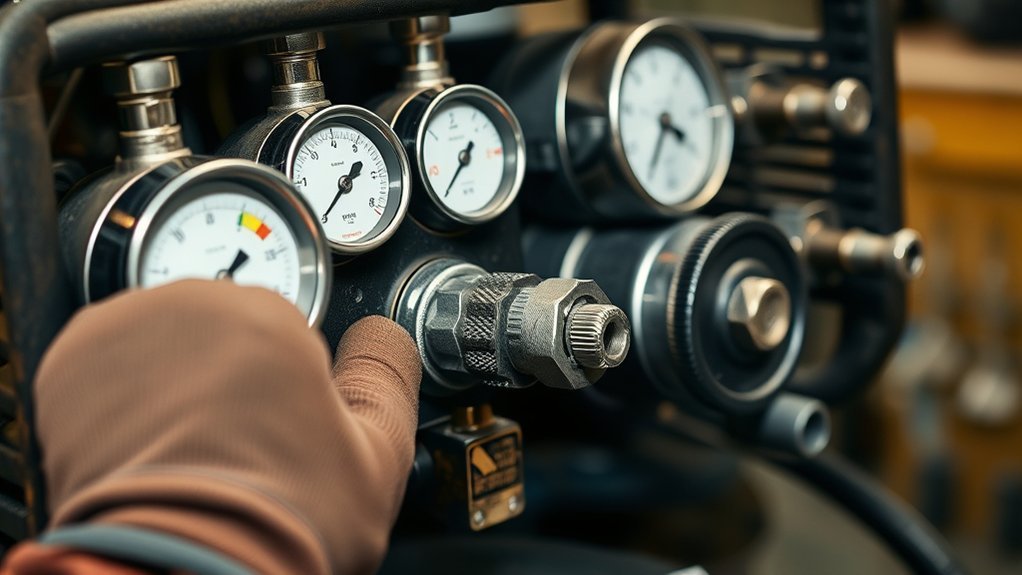
Ensuring safety devices and controls are functioning correctly is vital for safe compressor operation. Regular checks safeguard against malfunctions that could lead to accidents. Focus on these critical areas:
Regular safety device checks are essential to prevent accidents and ensure safe compressor operation.
- Verify the emergency shutdown system operates smoothly and responds promptly during tests.
- Inspect safety signage for clarity, visibility, and proper placement, ensuring all operators understand safety protocols.
- Test pressure relief valves regularly, confirming they activate at designated limits.
- Confirm that all safety controls, including alarms and cutoff switches, are functional and accurately calibrated.
Caution is essential when handling safety devices; any malfunction requires immediate repair or replacement. Maintaining these controls prevents catastrophic failures and guarantees a safer working environment. Never overlook routine safety device checks—they are your first line of defense.
Proper Setup and Placement of Your Air Compressor
Making certain your air compressor is on a stable surface prevents movement and reduces risk during operation. Adequate ventilation space is essential to prevent overheating and allow for proper airflow. Additionally, verifying a proper power connection safeguards against electrical hazards and ensures reliable functionality.
Stable Surface Placement
A stable surface is crucial for the safe and efficient operation of your air compressor. Proper surface stability minimizes vibration control issues that can lead to equipment damage or accidents. To guarantee ideal placement, consider these key points:
- Use a flat, solid surface free of debris or unevenness to prevent wobbling.
- Confirm the surface can support the compressor’s weight without shifting or sinking.
- Avoid placing the unit on inclined surfaces, which can compromise stability.
- Check that the surface absorbs vibrations, reducing noise and wear.
Prioritize stability to prevent movement during operation, which could cause hazards or damage. A secure, stable setup safeguards both the equipment and the operator, ensuring reliable, safe performance.
Adequate Ventilation Space
Proper placement of your air compressor includes providing sufficient ventilation space to prevent overheating and guarantee ideal operation. Meeting ventilation requirements is critical, as inadequate airflow can lead to overheating, reduced efficiency, and potential equipment failure. We recommend maintaining a minimum of 12 inches of clearance around all sides of the compressor, ensuring unobstructed airflow. Space optimization involves selecting a well-ventilated area that avoids confined or enclosed spaces, which can trap heat and humidity. Avoid placing the compressor near heat sources, open flames, or areas with high dust levels. Regularly inspecting ventilation paths for obstructions, such as dust buildup or debris, is essential for consistent performance. Proper setup and thoughtful placement are fundamental to safe, efficient compressor operation and longevity.
Proper Power Connection
To guarantee safe and reliable operation, we must pay close attention to how the air compressor is connected to its power source. Proper setup minimizes risks like power surges and faulty wiring, which can cause equipment damage or safety hazards.
Ascertain the following:
- Use a dedicated circuit to prevent overloads and reduce the risk of power surges.
- Inspect wiring connections regularly for signs of wear, corrosion, or faults.
- Install a surge protector to guard against voltage spikes.
- Confirm that the power switch and plug are rated for the compressor’s voltage and current requirements.
Neglecting these steps can lead to electrical failures, increased fire risk, or damage to the compressor. Always prioritize cautious, precise setup to ensure safety and longevity.
Safe Operating Procedures for Air Compressor Use
Ensuring safe operation of an air compressor requires strict adherence to established procedures that prioritize personnel safety and equipment integrity. We must regularly monitor air quality to prevent contamination and guarantee safe breathing environments. Controlling noise levels is equally critical; excessive noise can cause hearing damage and distract operators. Before starting, verify all safety devices are engaged and the area is clear. Use proper PPE, including hearing protection, especially in high noise zones.
| Procedure | Purpose |
|---|---|
| Check air quality and filters | Prevent contamination and guarantee safety |
| Confirm noise levels are controlled | Protect hearing and maintain focus |
| Inspect safety devices regularly | Ensure proper functioning |
Common Hazards and How to Avoid Them
Operating an air compressor involves more than following safety procedures; awareness of common hazards is essential to prevent accidents and injuries. We must be vigilant about specific risks:
Operating an air compressor requires awareness of hazards to ensure safety and proper functioning.
- Dust accumulation can impair compressor parts, leading to overheating or failure if not regularly cleaned and checked.
- Noise exposure from prolonged operation can cause hearing damage; always wear appropriate hearing protection.
- Overpressure risks are heightened if pressure relief valves malfunction, risking explosive failure.
- Air leaks not only waste energy but can cause unexpected pressure drops, leading to malfunctions or safety hazards.
Regular Maintenance and Inspection Checklist
Regular maintenance and inspection are critical to keeping an air compressor operating safely and efficiently. We must regularly check the air filter to guarantee it’s clean and free of debris, as a clogged filter can impair performance and introduce contaminants. Inspecting the air filter should be part of every routine to prevent unnecessary strain on the system. Additionally, monitoring oil levels is essential; low or dirty oil can cause overheating and component wear. We should verify oil levels daily, topping up with manufacturer-recommended oils as needed, and replace oil at intervals specified by the manufacturer. These steps require meticulous attention, as neglecting them can lead to equipment failure or safety hazards. Consistent, cautious inspection of the air filter and oil levels forms the backbone of a safe, reliable compressor operation.
Training and Personal Protective Equipment for Safe Operation
To safely manage an air compressor, detailed training and proper personal protective equipment (PPE) are essential components that cannot be overlooked. Adequate training ensures operators understand emergency procedures, noise control, and safe handling protocols, reducing risk. PPE is critical for protecting against flying debris, high-pressure releases, and noise hazards.
Proper training and PPE are vital for safe air compressor operation and injury prevention.
Key safety measures include:
- Extensive training on emergency procedures, including shutdown protocols.
- Use of hearing protection to mitigate noise exposure.
- Wearing eye and face protection to prevent injury from debris.
- Ensuring PPE fits correctly and is regularly inspected for damage.
Cautious adherence to these steps minimizes accidents and promotes safe operation, especially when dealing with high noise levels and potential emergency scenarios.
Frequently Asked Questions
How Often Should Air Compressors Be Professionally Inspected?
We suggest professional inspections every 12 months, aligning with maintenance scheduling and inspection procedures. Regular, detailed assessments guarantee safety, efficiency, and early detection of potential issues, helping us avoid costly repairs and maintain ideal compressor performance.
What Are the Signs of a Failing Safety Valve?
Safety valve malfunctions often show signs like unexpected pressure release issues, continuous or irregular noise, or failure to vent pressure properly, which can compromise safety. We stay alert to these signs to prevent potential accidents or equipment damage.
Can Portable Air Compressors Be Safely Used Indoors?
Using portable units indoors is like walking a tightrope—careful with ventilation. We guarantee proper indoor ventilation, use only designed-for-indoor portable air compressors, and follow safety guidelines to prevent hazards and carbon monoxide buildup.
What Is the Maximum Safe Operating Pressure for Most Compressors?
The maximum pressure for most compressors typically ranges between 125 to 150 PSI, aligning with safety standards. We always guarantee not to exceed this limit, as over-pressurization risks equipment failure and personal injury.
How Should Leaks in the System Be Safely Repaired?
We carefully conduct leak detection, then follow strict repair procedures, ensuring the system is depressurized and isolated before fixing leaks. This cautious approach prevents accidents, maintains system integrity, and guarantees safety during leak repairs in compressed air systems.
Conclusion
By following these safety protocols, we guarantee our air compressors operate reliably and safely, preventing accidents before they happen. Coincidentally, many hazards—like leaks or faulty controls—can be caught early with diligent inspections and proper setup. Staying vigilant, maintaining equipment, and adhering to safety procedures isn’t just recommended; it’s essential. Let’s prioritize safety consistently, so we can avoid costly injuries or equipment failures, keeping our work environment secure and efficient.