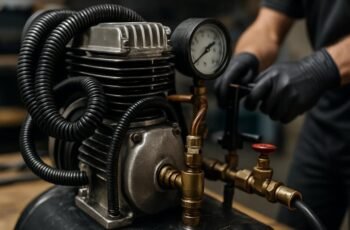
Maintaining a high-pressure air compressor is critical to ensuring consistent performance and safety, yet many overlook the complexity of its key components. Regular inspections and proper upkeep directly impact equipment longevity and operational efficiency. Proper lubrication, timely filter changes, and safety procedures are essential elements that can prevent costly downtime. As we explore further, you’ll see how systematic maintenance can optimize your compressor’s lifespan and reliability—a must for any serious operation.
Key Takeaways
- Regularly inspect and replace safety devices, filters, and oil to ensure optimal performance and safety.
- Schedule routine checks for pressure gauges, noise levels, and leaks to prevent costly failures.
- Follow manufacturer-recommended maintenance intervals for components like pistons, valves, and intercoolers.
- Properly lubricate parts with correct oil grades and monitor levels to reduce wear and thermal stress.
- Ensure strict safety protocols, including lockout/tagout and PPE, during maintenance procedures.
Understanding the Key Components of a High-Pressure Air Compressor
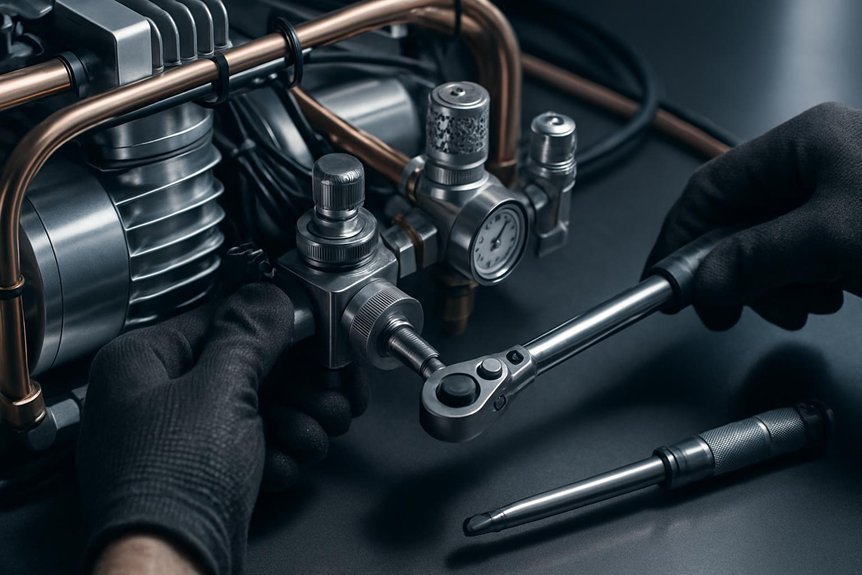
Understanding the key components of a high-pressure air compressor is essential for effective maintenance and operation. The core elements—such as the piston or rotary screw, intercoolers, and valves—directly influence compressor efficiency and component durability. High-quality, durable parts reduce wear and tear, ensuring consistent performance over time. The intercoolers, for instance, maintain ideal temperature levels, preventing overheating that can compromise efficiency and cause premature component failure. Precise alignment of pistons and valves minimizes energy loss and enhances operational stability. Recognizing how each component contributes to overall efficiency helps us identify potential issues early, prolongs equipment lifespan, and maintains peak performance. A thorough understanding of these fundamental elements is crucial for informed maintenance practices.
Regular Inspection and Preventive Maintenance Tips
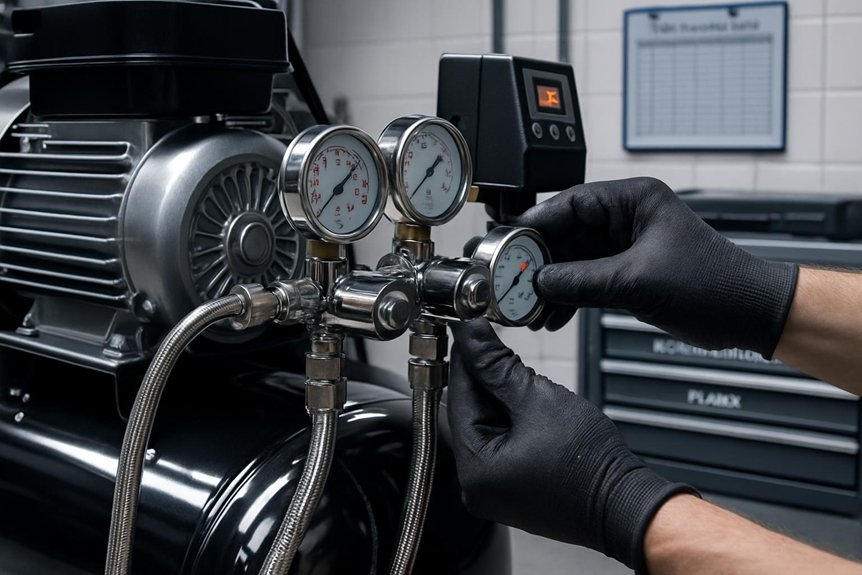
Regular inspection of safety devices and routine system checks are critical to maintaining compressor integrity and safety. We recommend scheduling systematic evaluations to identify potential issues before they escalate. Consistent adherence to these practices guarantees peak performance and reduces unplanned downtime.
Inspect Safety Devices Regularly
How often do we verify that safety devices on high-pressure air compressors are functioning correctly? Regular inspection is critical to assure operational safety and efficiency. We must check emergency shutdowns, pressure relief valves, and noise reduction systems to prevent accidents and equipment failure. These devices must respond instantly under abnormal conditions, safeguarding personnel and machinery. To visualize, consider this table:
| Safety Device | Inspection Frequency | Critical Function |
|---|---|---|
| Emergency Shutdowns | Weekly | Rapid system shutdown during faults |
| Pressure Relief Valves | Monthly | Prevent over-pressurization |
| Noise Reduction Systems | Quarterly | Minimize noise for safety and compliance |
Consistent testing ensures devices operate reliably, reducing risks of damage and enhancing overall safety.
Schedule Routine System Checks
Scheduling routine system checks is essential for maintaining ideal performance and preventing unexpected failures in high-pressure air compressors. Regular inspections should include verifying system calibration to guarantee measurement accuracy and peak operation. We recommend establishing a systematic schedule for checking pressure gauges, control systems, and safety devices, assuring they operate within specified parameters. Proper operator training is critical; trained personnel can identify early signs of wear or malfunction during inspections, reducing downtime. Preventive maintenance tasks such as inspecting filters, lubricants, and electrical connections should be incorporated into these checks. Consistent documentation of system performance and calibration adjustments enhances troubleshooting efficiency. By adhering to a disciplined schedule, we can maximize compressor reliability, extend equipment lifespan, and maintain safety standards effectively.
How to Properly Change Compressor Oil and Filters?
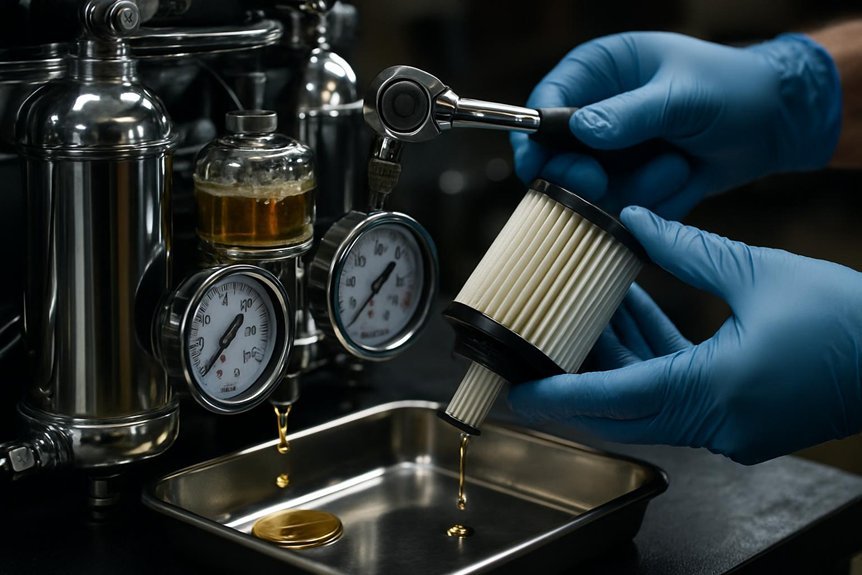
When changing compressor oil and filters, it’s essential to follow a systematic approach to guarantee peak performance and longevity of the equipment. Begin by shutting down the compressor and relieving system pressure. Drain the used oil thoroughly, ensuring proper disposal. During oil filter replacement, remove the old filter, inspect the sealing surface, and install a new filter securely to maintain ideal compressor lubrication. Always verify the correct oil grade for your compressor model before refilling. Proper lubrication is critical to reduce wear and prevent overheating. After refilling, run the compressor briefly to circulate the new oil, then check for leaks and proper operation. Regular oil and filter changes ensure efficient performance, extended lifespan, and minimized downtime.
Troubleshooting Common High-Pressure Compressor Issues
When troubleshooting high-pressure compressors, we focus on diagnosing pressure fluctuations, addressing oil leaks, and resolving power failures to guarantee peak performance. Accurate identification of issues allows for targeted repairs and reduces downtime. We’ll explore effective methods to diagnose and correct these common problems efficiently.
Diagnosing Pressure Fluctuations
Pressure fluctuations in high-pressure air compressors can indicate underlying issues that require prompt diagnosis. These variations often stem from inaccurate readings caused by improper pressure gauge calibration, which can mask true system performance. To accurately identify the problem, we must verify the calibration and confirm gauges are functioning correctly. Fluctuations may also signal airflow imbalances, so evaluating airflow enhancement is critical. Restricted or inconsistent airflow can cause pressure swings, reducing efficiency and stressing system components. By systematically checking pressure gauges and validating ideal airflow, we can pinpoint whether the fluctuations result from calibration errors, airflow restrictions, or other mechanical issues. Precise diagnosis allows for targeted corrections, maintaining stable pressure levels and guaranteeing compressor reliability.
Addressing Oil Leaks
Oil leaks are a common issue that can considerably impair compressor performance and lifespan. Detecting these leaks requires careful leak detection methods, focusing on visible signs of oil residue around seals, fittings, and valves. Persistent oil residue indicates a potential leak, which can lead to reduced lubrication and increased wear. To address oil leaks, we first identify the source through visual inspection and leak detection tools, such as UV dye or pressure testing. Once located, we replace worn seals, tighten fittings, or repair damaged components as needed. Prompt intervention minimizes oil loss, prevents contamination, and maintains ideal compressor operation. Regular inspection for oil residue and systematic leak detection are essential to sustain compressor efficiency and avoid costly downtime.
Fixing Power Failures
Power failures are among the most disruptive issues that can halt compressor operation and compromise productivity. To mitigate this, we focus on power outage prevention by inspecting electrical connections regularly and installing backup power systems such as uninterruptible power supplies (UPS). When a power failure occurs, emergency shutdown procedures must be executed immediately to prevent damage. These procedures include disconnecting power sources safely, venting pressure if necessary, and activating backup systems. Ensuring proper maintenance of electrical components and implementing real-time monitoring can identify potential faults proactively. Training personnel on emergency shutdown protocols minimizes downtime and equipment stress during outages. By emphasizing both prevention strategies and immediate responses, we maintain compressor reliability and safeguard operational continuity.
Safety Practices to Follow During Maintenance
Before beginning maintenance on a high-pressure air compressor, we must prioritize safety to prevent accidents and equipment damage. Confirm proper adherence to emergency procedures is critical; all personnel should be familiar with shutdown protocols and emergency shutoff locations. Personal protective equipment (PPE), including gloves, safety goggles, and hearing protection, must be worn at all times to mitigate hazards from high-pressure systems and moving parts. Prior to maintenance, depressurize the system completely and verify zero residual pressure. Lockout/tagout procedures should be strictly followed to prevent accidental startup. Regularly inspecting PPE and safety tools ensures their integrity. Maintaining a clear, organized work area minimizes trip hazards and facilitates swift emergency response if needed. These safety practices safeguard personnel and preserve equipment integrity during maintenance activities.
Best Practices for Extending the Lifespan of Your Compressor
Implementing regular maintenance schedules is essential for maximizing the lifespan of your compressor. Consistent inspections help identify issues like excess compressor noise early, preventing component wear. Proper lubrication techniques are crucial; using the correct oil type and maintaining ideal levels reduce friction and thermal stress, extending equipment life. Monitoring compressor noise levels can reveal mechanical problems before failure, making noise analysis a valuable diagnostic tool. Regularly replacing filters and checking for leaks further minimizes strain on the system. Adhering to manufacturer guidelines for lubrication and maintenance intervals ensures consistent performance. By proactively managing lubrication and noise, we can greatly prolong compressor service life, improve efficiency, and reduce costly downtime.
Frequently Asked Questions
How Often Should I Schedule Professional Maintenance for My Compressor?
We recommend scheduling professional maintenance every 6 to 12 months, depending on usage. We follow strict lubrication schedules and filter replacement protocols to guarantee superior compressor performance and longevity, reducing downtime and preventing costly repairs.
What Are the Signs of Imminent Compressor Failure?
We watch for failure indicators like unusual noises, overheating, pressure drops, and increased oil consumption, as these signs suggest the compressor’s lifespan is compromised and imminent failure may occur, requiring immediate inspection and maintenance to prevent catastrophic breakdowns.
Can I Perform Maintenance Tasks Myself Without Technical Training?
Managing compressor maintenance is like steering a ship; we recommend against DIY safety risks. Without proper training, handling maintenance tools could jeopardize safety and equipment. Always consult professional technicians for precise, secure upkeep.
What Are the Environmental Impacts of Compressor Oil Disposal?
Disposing of compressor oil improperly risks oil contamination of water and soil, harming ecosystems. We follow disposal regulations strictly to minimize environmental impact, ensuring responsible handling, recycling, or disposal to prevent pollution and adhere to legal standards.
How Do Ambient Temperature Changes Affect Compressor Performance?
Temperature fluctuations impact compressor performance efficiency by altering air density and cooling effectiveness. We monitor ambient conditions closely, adjusting system parameters as needed to maintain ideal operation despite environmental temperature changes.
Conclusion
Regular maintenance is vital for maximizing compressor lifespan and ensuring safety. Studies show that improper upkeep can lead to equipment failures within 1,000 hours of operation, costing thousands in repairs. By adhering to proper inspection, lubrication, and safety protocols, we can reduce downtime and extend the compressor’s reliable service life. Consistent, precise care isn’t just recommended—it’s essential for peak performance and safety in high-pressure air systems.