Did you know that selecting the wrong automotive air compressor can lead to inadequate inflation speed or even damage your vehicle’s tires? Many overlook critical specifications like CFM output and PSI ratings, which directly impact performance and safety. Understanding these technical details is essential to making an informed choice, yet the variety of models and features can be overwhelming. Exploring the key factors involved can help guarantee you choose a reliable, efficient option tailored to your specific needs.
Key Takeaways
- Consider CFM and PSI ratings to match your vehicle’s tire size and tools requirements.
- Choose the right power source (12V DC or 120V AC) for portability and installation ease.
- Evaluate duty cycle and tank capacity for continuous use and quick inflation needs.
- Decide between piston, rotary screw, or scroll types based on efficiency and noise levels.
- Prioritize maintenance features like leak prevention, cooling, and moisture drainage for durability.
What Are Automotive Air Compressors and Why Do You Need One?
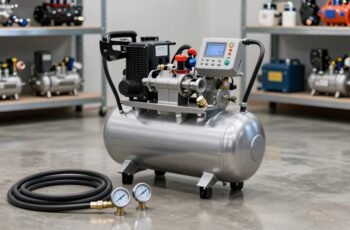
Have you ever wondered what exactly an automotive air compressor is and why it’s an essential tool for vehicle maintenance? An automotive air compressor is a device that converts power—typically from an engine or an electric motor—into compressed air. This pressurized air is used for various functions, including inflating tires, operating pneumatic tools, and cleaning components. The compressor consists of a motor, a piston or rotary screw mechanism, and a storage tank that holds the compressed air. Its efficiency and reliability are vital for maintaining ideal tire pressure, ensuring safety, and enabling quick repairs. Understanding the technical operation of these compressors helps in selecting the right model for specific vehicle needs, making them indispensable in automotive maintenance and repair tasks.
Key Features to Consider When Choosing an Air Compressor for Your Vehicle
When selecting an air compressor for your vehicle, it’s essential to evaluate specific features that directly impact performance, durability, and usability. Key specifications include CFM (cubic feet per minute) output, which determines how quickly the compressor inflates tires or powers tools. The duty cycle indicates how long the compressor can operate continuously without overheating; a higher duty cycle ensures consistent performance during extended use. Power source compatibility, such as 12V DC or 120V AC, influences installation and portability. Additionally, consider tank capacity for storage and pressure ratings (PSI) to match your vehicle’s requirements. Noise levels are also important for user comfort, especially in enclosed spaces. Prioritizing these features guarantees reliable, efficient performance tailored to your specific automotive needs.
Different Types of Automotive Air Compressors Explained
Are you aware that automotive air compressors come in various types, each designed for specific applications and performance requirements? The most common are piston, rotary screw, and scroll compressors. Piston compressors operate via reciprocating pistons within cylinders, offering high pressure suitable for tire inflation and emergency use. Rotary screw compressors utilize intermeshing helical screws, providing continuous airflow and higher efficiency, often used in workshop settings. Scroll compressors employ two spiral-shaped components that orbit to compress air, delivering quiet operation and reliability, ideal for onboard vehicle systems. Each type differs in size, power consumption, maintenance needs, and output capacity. Understanding these differences helps determine the best compressor for specific automotive tasks, ensuring best performance and longevity tailored to your vehicle’s requirements.
How to Select the Best Air Compressor Based on Your Driving and Maintenance Needs
Choosing the right air compressor depends heavily on your driving habits and maintenance routines, as these factors influence the compressor’s required capacity and features. For frequent off-road or heavy-duty use, select a high-capacity unit with a higher CFM (cubic feet per minute) rating to guarantee rapid inflation and tire pressure maintenance. If your vehicle requires regular tire checks or emergency inflation, a portable, compact compressor with sufficient PSI (pounds per square inch) capability will suffice. Consider the compressor’s duty cycle, which indicates operational duration before overheating; higher duty cycles support continuous use. Additionally, analyze your vehicle’s tire size and the types of tools you intend to power, confirming the compressor’s specifications align with these demands for ideal performance and longevity.
Tips for Maintaining Your Automotive Air Compressor and Ensuring Longevity
Regular maintenance is key to guaranteeing your automotive air compressor operates efficiently and has a long service life. We recommend regularly inspecting for leaks in fittings and hoses, as even minor leaks can reduce efficiency and cause undue wear. Keep the compressor’s cooling system clean and unobstructed to prevent overheating, which accelerates component degradation. Regularly drain moisture from the tank to prevent rust formation and corrosion, preserving structural integrity. Lubricate moving parts as specified by the manufacturer to reduce friction and wear. Additionally, monitor pressure levels to ensure they align with recommended ranges, preventing overworking the unit. Conduct periodic electrical system checks to identify any wiring or component issues early. Consistent adherence to these maintenance practices maximizes performance and extends your compressor’s operational lifespan.
Frequently Asked Questions
Can I Use an Automotive Air Compressor for Inflating Bike Tires?
Yes, you can use an automotive air compressor for inflating bike tires if it provides the appropriate pressure range, typically up to 120 PSI. Make sure it has a suitable nozzle and monitor pressure to avoid over-inflation.
How Loud Are Automotive Air Compressors During Operation?
Ever wondered how loud automotive air compressors are? They typically operate between 60-80 decibels, comparable to normal conversation noise. We find this range manageable, but noise levels can vary based on compressor size and design.
Are Portable Air Compressors Suitable for All Vehicle Types?
Portable air compressors are generally suitable for most vehicle types, including cars, motorcycles, and small trucks, because they provide versatile pressure outputs and compact sizes, but always verify compatibility with your vehicle’s specific tire pressure requirements.
What Safety Precautions Should I Follow When Using an Air Compressor?
We always wear eye protection, guarantee the compressor is on stable ground, and avoid over-inflating tires. Even if you’re experienced, following these safety steps minimizes risks, preventing accidents and equipment damage during compressor use.
Can I Operate an Air Compressor Without an External Power Source?
Yes, we can operate an air compressor without an external power source if it’s battery-powered or equipped with a portable energy supply like a generator. Guarantee proper voltage, capacity, and safety measures are in place for reliable operation.
Conclusion
In the end, choosing an automotive air compressor isn’t just about picking the loudest or the cheapest model. It’s about matching technical specs to your specific needs, which might mean balancing PSI, CFM, and duty cycle—details that often go unnoticed until you’re stranded. Ironically, the most advanced unit won’t help if it’s incompatible with your vehicle or poorly maintained. Precision and proper care are the real keys to ensuring your compressor’s longevity and reliable performance.