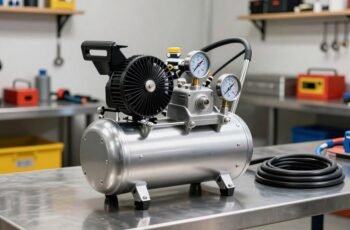
When selecting a hot dog air compressor, understanding the technical distinctions—such as piston versus rotary screw designs—and analyzing key specifications like power source, tank capacity, and airflow metrics are critical. These factors directly influence performance and longevity, yet choosing the right unit also depends on evaluating portability, noise levels, and maintenance needs within your operational environment. To make an informed, cost-effective decision, it’s essential to examine these elements closely before narrowing down your options.
Key Takeaways
- Determine your specific tool requirements by matching compressor CFM and pressure needs for optimal performance.
- Choose the appropriate power source (electric, gas, or battery) based on portability and workplace environment.
- Select a compressor with durable materials and easy maintenance features to ensure longevity and cost-effectiveness.
- Consider tank capacity and motor horsepower to meet your runtime and airflow demands efficiently.
- Evaluate compressor types (rotary screw, piston, diaphragm) for suitability with your application intensity and frequency.
What Are Hot Dog Air Compressors and How Do They Work?
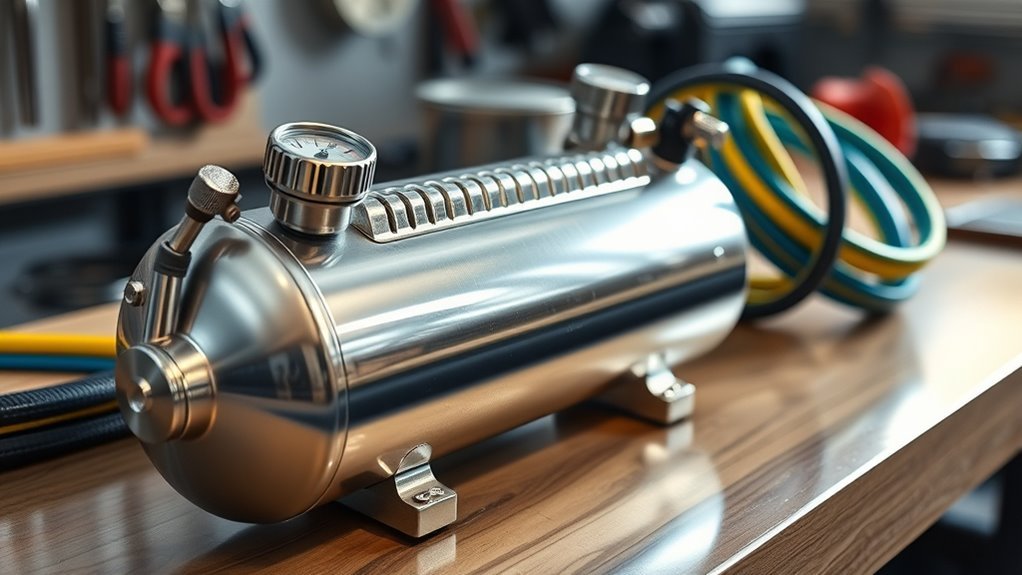
Have you ever wondered what sets hot dog air compressors apart from other types? These specialized units are compact, high-efficiency devices designed to deliver compressed air with minimal energy loss. They operate using a piston or rotary screw mechanism that compresses atmospheric air, increasing pressure for various applications. The design emphasizes rapid startup times, consistent airflow, and durability under continuous operation. Hot dog air compressors typically feature integrated cooling systems to manage heat generated during compression, ensuring stable performance. Their efficiency stems from optimized component configuration, reducing energy consumption while maintaining high output. By understanding their core operation—air intake, compression, cooling, and delivery—we see how these units provide reliable, precise airflow critical for applications demanding rapid, repeated use.
Key Factors to Consider When Choosing a Hot Dog Air Compressor
Selecting the right hot dog air compressor requires careful evaluation of several key factors that directly impact performance, efficiency, and longevity. Critical considerations include power source, tank capacity, motor horsepower, and build quality. These elements influence operational stability, maintenance, and lifespan. For example, choosing a compressor with appropriate motor horsepower ensures adequate airflow without overloading. Tank capacity affects runtime and recovery time, while build quality determines durability under heavy use. Here’s a quick comparison:
| Feature | Importance | Typical Range |
|---|---|---|
| Power Source | Affects portability and setup | Electric or gas |
| Tank Capacity | Impacts runtime and recovery | 1 to 6 gallons |
| Motor Horsepower | Influences airflow and power | 0.5 to 3 HP |
| Build Quality | Ensures durability and stability | Metal or plastic |
How Much Air Pressure and CFM Do You Need for Your Tasks?
To determine the appropriate air pressure and CFM, we need to analyze the specific requirements of each tool and task. Understanding the necessary pressure levels and airflow rates guarantees compatibility and efficiency. Accurate measurement of your air flow needs helps optimize compressor performance for your applications.
Task-Specific Pressure Requirements
Understanding the specific air pressure and CFM requirements for your tasks is essential to choosing the right compressor. Different applications demand precise parameters; for example, spray painting needs higher pressure but moderate CFM, while sanding or grinding may require sustained CFM at lower pressures. Accurately evaluating the operational specifications of your tools ensures compatibility and efficiency. Overestimating pressure can lead to unnecessary equipment costs and energy consumption, while underestimating may cause performance issues or tool damage. It’s critical to identify the maximum pressure and airflow your tools require during typical operation, not just the peak or maximum ratings. This analytical approach ensures that the compressor provides consistent, reliable performance tailored to your specific tasks, optimizing both productivity and equipment longevity.
CFM and Tool Compatibility
Accurately matching your air compressor’s output to the specific air pressure and CFM (cubic feet per minute) needs of your tools guarantees ideal performance and longevity. To guarantee compatibility, we analyze each tool’s rated CFM at its operating pressure, typically specified by the manufacturer. If your compressor’s CFM exceeds the tool’s requirement, it can operate efficiently with minimal strain, reducing wear and tear. Conversely, undersized compressors will struggle to maintain consistent airflow, leading to performance issues and potential damage. Precise matching involves considering the highest CFM demand during continuous operation, not just peak values. By aligning compressor output with these parameters, you optimize both tool functionality and compressor durability, avoiding performance bottlenecks or unnecessary equipment stress.
Measuring Air Flow Needs
Determining the right air pressure and CFM for your tasks requires a precise assessment of your tools’ operational demands. Start by reviewing each tool’s specifications, focusing on the recommended PSI (pounds per square inch) and CFM (cubic feet per minute). For continuous operation, add the CFM requirements of all tools in use simultaneously to guarantee your compressor can sustain peak demand. It’s essential to distinguish between starting and running requirements, as startup demands are often higher. Use this data to select a compressor with a slightly higher CFM capacity than your total needs, providing a buffer for efficiency and future expansion. Accurate measurement guarantees peak performance, prevents underpowered setups, and prolongs equipment lifespan.
Which Power Source and Portability Features Suit Your Environment?
Choosing the appropriate power source and portability features is vital for ensuring your compressor meets operational demands and environmental constraints. We analyze options like electric, gas-powered, and battery models, considering their impact on energy requirements and mobility. Understanding these factors helps optimize performance and efficiency in your specific setting.
Power Source Options
When selecting a power source for an air compressor, it’s important to take into account how the environment and intended use will influence your choice. Electric compressors typically provide consistent power and quieter operation, making them suitable for indoor or stationary applications. They require access to electrical outlets, limiting mobility but offering reliable performance. Gas-powered models, on the other hand, deliver portability and independence from power outlets, ideal for remote or outdoor tasks. However, they generate more noise and emissions, which can impact indoor use. Diesel-powered compressors are less common but provide high power for industrial environments. Ultimately, the decision hinges on the operational environment, power availability, and noise considerations, enabling an informed choice aligned with specific application demands.
Portability and Design
The selection of a power source and portability features directly influences how well an air compressor integrates into your operational environment. Electric models, often compact and lightweight, excel in indoor settings with stable power supplies, offering ease of movement and minimal noise. Gas-powered units, while heavier, provide greater mobility in remote or outdoor locations by eliminating dependency on electrical outlets. Consider the environment’s space constraints and mobility needs: wheeled designs enhance transportability for job sites requiring frequent relocation, whereas stationary units suit fixed installations. Material construction also impacts durability and weight—steel frames offer robustness but add weight, while aluminum reduces overall mass. Ultimately, matching the power source and portability features to your specific operational demands guarantees efficiency, ease of use, and seamless integration into your workflow.
How Noise Levels Impact Your Workplace and How to Minimize Them
Excessive noise levels from air compressors can substantially disrupt workplace productivity and pose health risks to employees. Elevated noise can lead to hearing loss, increased stress, and decreased concentration, ultimately impairing operational efficiency. From an analytical perspective, noise pollution can also cause communication breakdowns, increasing safety risks during critical tasks. To minimize these impacts, selecting compressors with lower decibel ratings is essential. Incorporating sound attenuation solutions, such as enclosures and mufflers, further reduces noise emissions. Regular maintenance also prevents unnecessary noise caused by worn components or air leaks. By understanding the relationship between compressor noise levels and workplace safety, we can implement targeted mitigation strategies, fostering a safer, more productive environment while complying with occupational health standards.
What Are the Best Types of Hot Dog Air Compressors for Different Jobs?
Selecting the appropriate hot dog air compressor depends on the specific requirements of each job, as different applications demand varying levels of power, portability, and operational efficiency. For high-demand tasks like powering pneumatic tools or industrial applications, rotary screw compressors offer continuous operation and high efficiency, making them ideal. Portable jobs, such as roadside repairs or small-scale tasks, benefit from lightweight, piston-style compressors that provide sufficient pressure with ease of transport. For intermittent or low-pressure needs, diaphragm compressors deliver reliability without excessive energy consumption. Additionally, oil-free models are preferable in food processing environments to prevent contamination. Understanding these distinctions enables us to match compressor types with job-specific demands, optimizing performance and ensuring operational success across diverse applications.
How to Evaluate Durability and Maintenance Requirements
Evaluating durability and maintenance needs requires a thorough understanding of a compressor’s build quality and operational design. Focus on key factors such as material strength, component quality, and ease of access for routine servicing.
- Material Quality: High-grade metals like cast iron enhance longevity and resist wear under continuous use.
- Component Design: Durable parts, such as sealed bearings and corrosion-resistant finishes, reduce breakdowns and extend lifespan.
- Maintenance Accessibility: Easy-to-reach filters, drain valves, and lubrication points streamline upkeep, minimizing downtime.
Assessing these elements helps guarantee the compressor withstands operational stresses and remains cost-effective over time. Prioritizing robust construction and thoughtful design minimizes unexpected failures, ultimately supporting reliable performance and lower maintenance costs.
Tips for Finding the Best Price and Value for Your Budget
While it’s tempting to focus solely on the upfront cost, achieving the best value for your budget requires a careful comparison of features, performance, and long-term expenses. We should analyze operational efficiency—such as CFM output relative to power consumption—and consider the compressor’s duty cycle, which impacts continuous use. Evaluating initial purchase price alongside maintenance costs, including parts and potential downtime, guarantees a thorough cost assessment. Additionally, examining warranty coverage and the availability of replacement components can reduce unexpected expenses. It’s essential to balance affordability with reliability, as cheaper units may incur higher operational or repair costs over time. By conducting a detailed cost-benefit analysis, we can select a model that optimizes performance for our specific needs within our budget constraints.
Next Steps: Comparing Top Models and Making the Final Choice
Once we’ve identified the key features and value factors that align with our needs, the next step is to systematically compare the top models available on the market. This involves analyzing specifications, performance metrics, and user reviews to guarantee the compressor meets operational demands and reliability standards. Critical aspects include CFM ratings, tank size, and motor power, which directly impact efficiency and application suitability. To streamline our evaluation, we focus on:
- Performance consistency across different workloads
- Durability and build quality for long-term use
- Ease of maintenance and availability of replacement parts
Frequently Asked Questions
What Safety Precautions Should I Follow When Using a Hot Dog Air Compressor?
When using a hot dog air compressor, we always wear protective gear, guarantee proper ventilation, check for leaks, and follow manufacturer instructions meticulously. Regular maintenance and safety checks help prevent accidents, ensuring safe, efficient operation for everyone involved.
How Do I Properly Maintain and Store My Air Compressor?
We regularly check and change the oil, drain moisture, and inspect hoses for wear. Store in a clean, dry environment, and disconnect power when not in use to guarantee peak performance and longevity of the compressor.
Can a Hot Dog Air Compressor Be Used for Residential and Commercial Tasks?
Yes, hot dog air compressors are versatile, suitable for both residential and commercial tasks. They provide reliable air pressure for various applications, but users should assess specific power and capacity requirements to guarantee ideal performance across different settings.
What Accessories or Attachments Are Compatible With Hot Dog Air Compressors?
We recommend compatible accessories like spray guns, nail guns, and inflation kits, which connect via standard quick-connect fittings. Visualize these attachments seamlessly snapping onto your compressor, enabling efficient shifts between tasks with minimal downtime, enhancing productivity.
How Long Is the Typical Lifespan of a Hot Dog Air Compressor?
Typically, hot dog air compressors last around 5 to 10 years with proper maintenance. We recommend regular oil changes, filter replacements, and inspections to extend lifespan, ensuring reliable performance and minimizing downtime for industrial or personal use.
Conclusion
In summary, choosing the right hot dog air compressor is akin to selecting the perfect tool for a surgical operation—precision, reliability, and efficiency are paramount. Overlooking key factors is like ignoring essential signs; it might seem fine until the device flatlines mid-job. By meticulously analyzing your needs and matching specifications, we guarantee your investment won’t turn into a paperweight. After all, in the world of compressed air, only the well-calibrated survive the test of time.