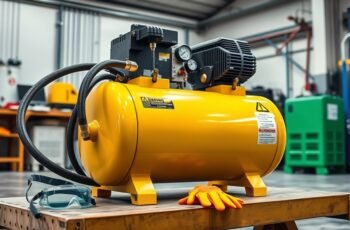
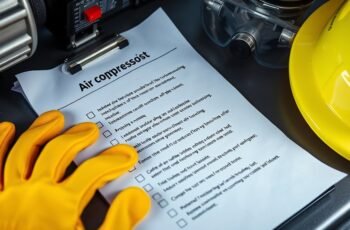
Many operators overlook the vital importance of properly inspecting safety devices before use, yet neglecting this step can lead to serious accidents. Understanding the precise safety rules for air compressor operation isn’t just recommended—it’s essential for preventing injuries and equipment damage. Without adhering to best practices, even routine tasks can turn hazardous unexpectedly. To guarantee you stay safe and compliant, it’s important to recognize what might go wrong and how to prevent it.
Key Takeaways
- Always wear appropriate personal protective equipment, including goggles, hearing protection, gloves, and steel-toe boots.
- Conduct weekly inspections of hoses, gauges, and pressure regulation systems for leaks and wear.
- Ensure safety devices, emergency shutoff, and protective barriers are operational and properly maintained.
- Verify pressure settings before use and avoid over-pressurizing to prevent accidents.
- Shut down immediately and follow repair protocols if leaks, damage, or safety system failures occur.
How Do Air Compressors Work and Why Safety Matters
Air compressors operate by converting power—usually from electricity, gas, or diesel—into compressed air that can be used for various tools and industrial processes. This process generates significant air compressor noise, which can be disruptive and poses safety concerns if not properly managed. Additionally, the environmental impact of air compressors is a critical consideration; high energy consumption contributes to greenhouse gas emissions. Proper maintenance and noise reduction measures are essential to minimize these effects, ensuring safer and more environmentally friendly operation. Recognizing how air compressors work helps us appreciate the importance of safety protocols, not only to prevent accidents but also to reduce noise pollution and environmental harm. Effective safety practices are integral to responsible and sustainable use of these powerful tools.
Essential Safety Gear for Operating Air Compressors
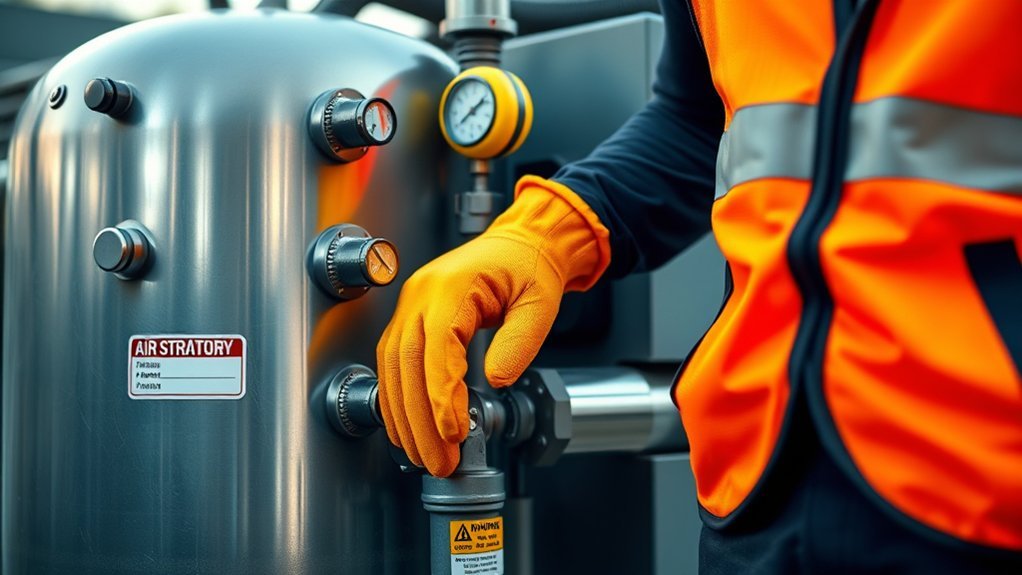
Operating an air compressor safely requires more than just understanding how it functions; it also demands proper protective gear to prevent injuries. Essential safety gear includes safety goggles, hearing protection, gloves, and respiratory masks to shield against debris, noise, and compressed air hazards. Wearing the right gear minimizes risk during operation and supports adherence to emergency protocols.
| Protective Gear | Purpose | Key Consideration |
|---|---|---|
| Safety goggles | Eye protection | Fit securely, impact-resistant |
| Hearing protection | Noise reduction | Earplugs or earmuffs |
| Gloves | Hand safety | Non-slip, chemical-resistant |
| Respiratory masks | Prevent inhalation of particles | Proper fit, filter type |
| Steel-toe boots | Foot safety | Reinforced toes |
How to Inspect and Maintain Your Air Compressor Safely
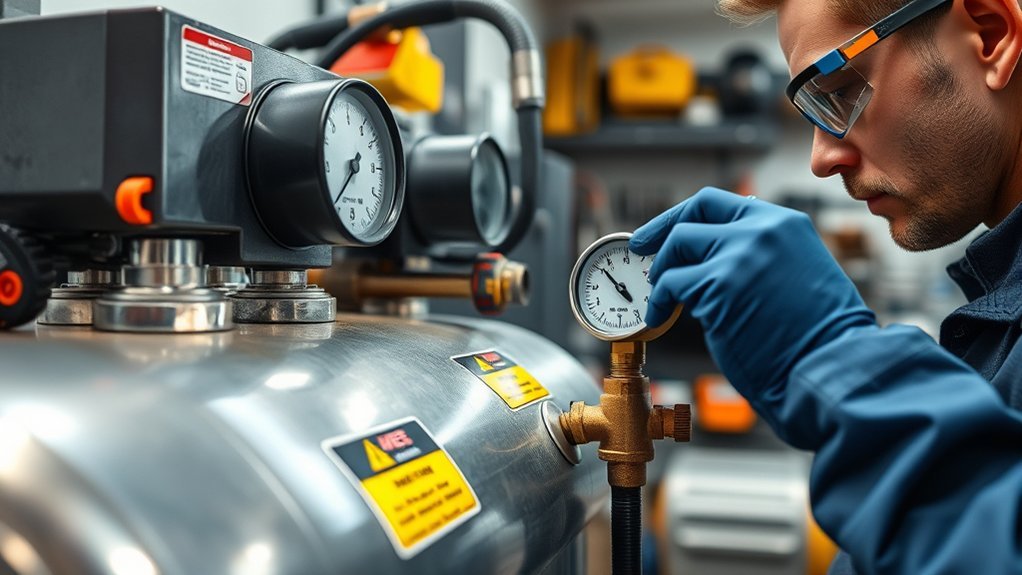
Regular inspections are essential to identify potential issues before they become hazards, and proper maintenance guarantees the compressor operates safely and efficiently. We must follow established procedures for checking components and replace worn parts promptly. Always use the appropriate safety equipment during inspections and maintenance to protect yourself from injury.
Regular Inspection Procedures
How often should we inspect and maintain our air compressor to guarantee safe operation? Regular inspections are crucial, ideally weekly, to ensure all components function properly. During these inspections, check the pressure regulation system for leaks or irregularities that could affect safety and performance. Verify that pressure gauges are accurate and functioning correctly. Address noise control issues promptly by inspecting for loose or worn parts that could increase noise levels or signal underlying problems. Examine hoses and fittings for wear or damage, replacing any compromised components. Regularly cleaning cooling vents prevents overheating. These steps help maintain ideal pressure regulation, reduce noise, and identify potential hazards early. Consistent inspections are essential to safe, efficient operation and prolonging the compressor’s lifespan.
Proper Maintenance Practices
Maintaining your air compressor safely requires a systematic approach to inspecting and servicing its components. Regular maintenance guarantees peak performance and prevents accidents. We recommend performing routine calibration to verify pressure settings and operational accuracy, avoiding over-pressurization and mechanical failure. Filter replacement is equally critical; clogged filters reduce efficiency and increase the risk of overheating. Always check and replace air intake filters according to the manufacturer’s schedule. Inspect hoses, valves, and safety relief devices for leaks, wear, or damage. Ensure lubrication levels are adequate and apply oil as specified. Keeping detailed maintenance records helps track service intervals and early detection of issues. Consistent adherence to these practices guarantees safe, reliable operation of your air compressor.
Safety Equipment Usage
Have you thoroughly inspected your air compressor’s safety equipment before operation? Verifying the proper function of protective barriers and emergency shutoffs is critical for safe use. Protective barriers prevent accidental contact with moving parts, so check that they are intact, securely mounted, and free of damage. Emergency shutoffs must be easily accessible and tested regularly to confirm they activate immediately when needed. Confirm that all safety devices are in place, operational, and clearly marked. Regular inspections prevent malfunctions that could lead to injury or equipment damage. Never operate the compressor if any safety equipment shows signs of wear or failure. Maintaining these systems ensures a swift response to emergencies, minimizing risks and safeguarding personnel.
Best Practices for Safe Air Compressor Usage
To guarantee safe air compressor operation, we must adhere to established best practices that minimize risks and prevent accidents. Proper placement is essential; stationary units should be secured on stable surfaces, while portable compressors require careful handling to avoid tipping or damage. Managing air compressor noise is also crucial, especially in shared workspaces—install soundproof enclosures or use quieter models when possible. When choosing between portable and stationary units, consider the environment: portable compressors offer flexibility but may generate more noise and require frequent inspections, whereas stationary compressors provide durability and stability but need proper ventilation. Regularly inspecting hoses, fittings, and gauges ensures safe operation. Following these best practices helps maintain maximum performance and reduces safety hazards.
Common Mistakes That Lead to Air Compressor Accidents
Many accidents involving air compressors stem from common mistakes that can be easily avoided with proper awareness. One frequent error is neglecting proper pressure regulation, which can cause over-pressurization and equipment failure. Additionally, failing to implement noise reduction measures can lead to dangerous health risks and distraction. Users also often overlook regular maintenance, increasing the risk of leaks or malfunction. Finally, improper handling of hoses and fittings can result in sudden disconnections or injuries. To prevent accidents, always verify pressure settings before use, incorporate noise reduction techniques, perform routine maintenance, and secure hoses properly. Recognizing and avoiding these mistakes enhances safety and guarantees ideal compressor performance. Proper awareness of these pitfalls is essential for maintaining a safe working environment.
What to Do in Case of an Air Compressor Emergency
In the event of an air compressor emergency, prompt and informed action is critical to prevent injury and minimize damage. First, initiate an emergency shutdown immediately to halt compressor operation. This prevents further mechanical failure or pressure escalation. Next, conduct leak detection to identify any ruptures or leaks that could compromise safety or cause inefficient operation. Use appropriate leak detection methods, such as soapy water or electronic sensors, to locate leaks quickly. Once identified, isolate the affected area and follow proper repair protocols. Always ensure the compressor is fully depressurized before performing maintenance. Training staff to recognize signs of emergencies and respond swiftly is essential. Quick, decisive actions protect personnel and equipment during critical situations.
Frequently Asked Questions
How Often Should I Replace Air Compressor Safety Valves?
We recommend replacing air compressor safety valves annually, following maintenance schedules and safety inspections. Regular checks guarantee ideal performance, prevent failures, and maintain safety standards, so don’t skip these essential maintenance steps for reliable, safe operation.
Are There Specific Certifications Required for Air Compressor Operators?
Think of operator training like a compass guiding safety; certification standards guarantee we’re on the right path. We require specific certifications for air compressor operators, emphasizing precise, authoritative training to keep safety at the forefront of every task.
Can I Use an Air Compressor Outdoors in Rain or Snow?
We advise against using an air compressor outdoors in rain or snow because outdoor weather can compromise compressor safety. Moisture risks electrical hazards and damage, so always guarantee proper protection and follow safety guidelines for safe operation in adverse conditions.
What Is the Maximum Safe Operating Pressure for Most Air Compressors?
We understand the maximum safe operating pressure for most air compressors is around 120 PSI, but always check pressure gauges and ensure safety shields are in place—it’s better to play it safe than sorry, after all.
How Do I Properly Dispose of Old or Damaged Compressor Parts?
We follow strict disposal procedures, ensuring old or damaged compressor parts comply with environmental regulations. We responsibly dispose of these components at authorized facilities, preventing environmental contamination and adhering to legal requirements for hazardous waste management.
Conclusion
By following these safety rules, we can protect ourselves and keep our equipment running smoothly. Some might think safety measures slow us down, but in reality, they prevent costly accidents and downtime. Prioritizing safety isn’t just about compliance; it’s about ensuring everyone goes home safe at the end of the day. Let’s stay vigilant, use the right gear, and always maintain our compressors properly. Safety isn’t optional—it’s essential for success.