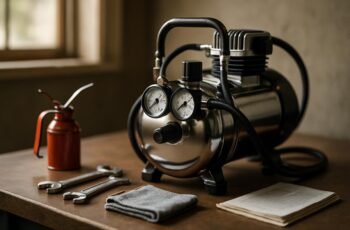
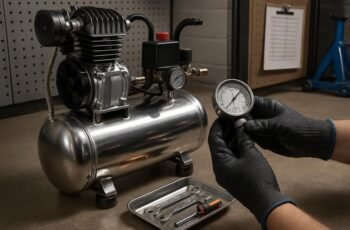
Did you know that improper use of air compressors accounts for a significant number of workplace injuries each year? We recognize the importance of safety, yet many overlook essential precautions that could prevent accidents. Ensuring proper preparation, protective gear, and regular inspections is essential, but even experienced operators can miss critical steps. To truly safeguard yourself and others, it’s imperative to follow thorough safety guidelines—so let’s explore how to do this effectively.
Key Takeaways
- Conduct thorough pre-operation inspections for damage, secure connections, and proper pressure settings.
- Always wear appropriate PPE, including safety goggles, ear protection, and gloves.
- Follow manufacturer guidelines for proper use, securing portable units and stable placement for stationary models.
- Regularly check for leaks, electrical safety, and maintain a clean workspace to prevent hazards.
- Perform routine maintenance and safety device inspections to ensure optimal and safe compressor operation.
How to Prepare Your Air Compressor for Safe Operation
Have you properly prepared your air compressor before use? Making certain a safe compressor startup begins with inspecting the equipment thoroughly. Check for any signs of wear or damage, and confirm that all connections are secure. Proper pressure regulation is critical; verify that the pressure gauge is functioning correctly and set within the manufacturer’s recommended range. Before powering on, release any residual pressure and ensure the tank and hoses are free of debris. Always follow the manufacturer’s guidelines for startup procedures, paying close attention to pressure settings. This cautious approach minimizes the risk of sudden pressure surges or malfunctions. Taking these steps helps guarantee a safe, controlled operation, preventing accidents caused by overlooked issues during the initial setup.
Essential Safety Gear and Protective Equipment

To operate an air compressor safely, wearing the appropriate safety gear and protective equipment is essential. Proper personal protective equipment (PPE) minimizes injury risk during operation. First, safety goggles or a face shield protect your eyes from debris and pressurized air. Second, hearing protection such as earplugs or earmuffs guards against noise-induced hearing loss. Third, gloves are indispensable for handling parts and preventing cuts or abrasions. Additionally, understanding emergency shutdown procedures is critical; always make sure that you can quickly deactivate the compressor if needed. This equipment and knowledge form a fundamental safety foundation, reducing hazards and guaranteeing safe operation. Prioritizing PPE and emergency protocols helps maintain a secure environment around the air compressor at all times.
Proper Use and Handling of Air Compressors
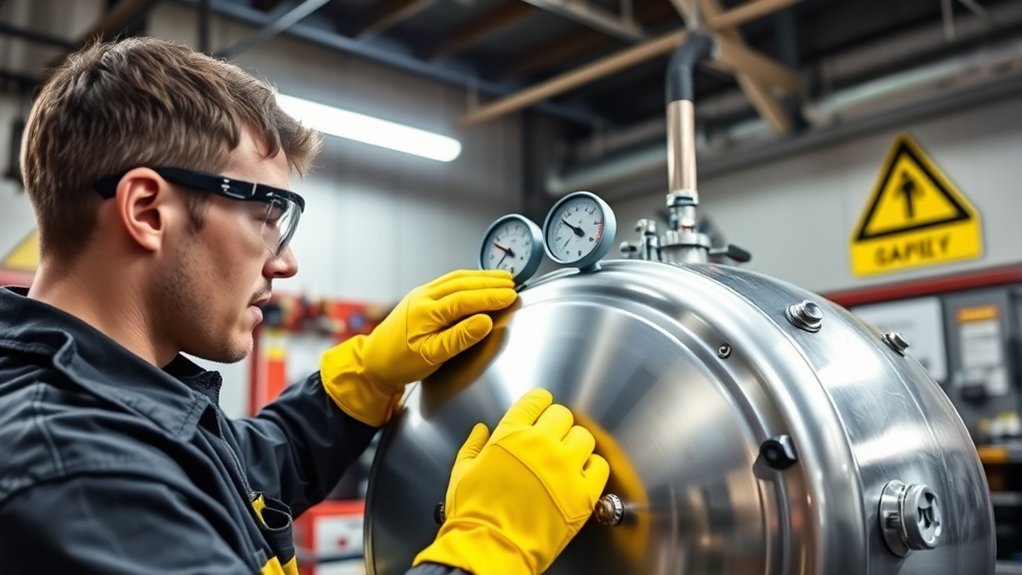
Proper use and handling of air compressors require careful attention to operational procedures to guarantee safety and efficiency. We must always follow manufacturer guidelines, making sure the compressor is properly maintained before use. Be aware that air compressor noise levels can vary; portable units tend to produce less noise than stationary models, which might operate continuously in workshops. When handling portable compressors, secure them during operation to prevent movement, and avoid overloading the system. Stationary compressors should be placed on stable, level surfaces to minimize vibration. Always check for leaks, and ensure air pressure settings are correct. Proper handling minimizes risks, prevents damage, and promotes safe, efficient operation, especially when managing different types of units and controlling noise levels.
Recognizing and Preventing Common Safety Hazards
Recognizing and preventing common safety hazards is essential to maintaining a safe working environment with air compressors. Hazards like hazardous leaks pose serious risks, including potential injuries and equipment damage. Electrical risks are also significant; faulty wiring or exposed components can lead to shocks or fires. To mitigate these hazards, we must:
- Regularly inspect for hazardous leaks and repair any found promptly.
- Ensure all electrical connections are secure and properly insulated.
- Maintain a clean, dry workspace to minimize the risk of electrical accidents.
Remaining vigilant and cautious when operating and inspecting air compressors helps prevent accidents. Addressing these hazards proactively protects both personnel and equipment, guaranteeing a safer work environment.
Regular Maintenance and Inspection to Ensure Safety
Routine maintenance and thorough inspections are vital components of a safety-focused approach to operating air compressors. Adhering to established maintenance schedules ensures that critical components are checked regularly, reducing the risk of failure. Inspection procedures should be detailed and systematic, involving checks for leaks, worn belts, and proper pressure levels. It’s essential to follow manufacturer guidelines to identify potential issues before they escalate. Regularly inspecting safety devices, such as pressure relief valves, helps prevent accidents caused by over-pressurization. Consistent maintenance not only prolongs equipment life but also minimizes safety hazards. By integrating meticulous inspection procedures into routine operations, we can create a safer working environment and guarantee the reliable performance of the air compressor system.
Frequently Asked Questions
What Are the Signs of an Air Compressor Malfunction?
We watch for signs of malfunction like unusual leaks detected through leak detection, abnormal temperature rises during operation, strange noises, and pressure drops, which all indicate potential issues. Always monitor closely and address problems promptly for safety.
How Do I Safely Shut Down an Emergency Compressor Failure?
When faced with an emergency compressor failure, we promptly perform an emergency shutdown, following strict safety protocols. We guarantee everyone evacuates or stays clear, then disconnect power and vent pressure carefully—treating the situation like a ticking time bomb.
Can I Modify Safety Features on My Air Compressor?
We advise against modifying safety features on your air compressor, as safety feature modifications can compromise compressor safety enhancements. Always consult the manufacturer or a qualified technician before making any adjustments to guarantee safe operation and compliance.
What Training Is Required for Operating Industrial Air Compressors?
Just as a skilled captain navigates treacherous waters, operators must complete proper maintenance procedures and obtain necessary certifications. We require specialized training to guarantee safety, precision, and awareness when operating industrial air compressors, avoiding risks and ensuring smooth operation.
How Should I Store Compressed Air Equipment Long-Term?
We store compressed air equipment long-term in a dry, secure area, following storage precautions to prevent corrosion or damage. We also guarantee proper equipment labeling for quick identification and safety, maintaining a cautious approach at all times.
Conclusion
By following these focused safety fundamentals, we can foster a secure, sound, and smooth operation environment. Staying vigilant, verifying vulnerabilities, and valuing protective gear are crucial. Let’s lead with caution, maintain meticulous maintenance, and prevent potential problems before they arise. Prioritizing preparedness and prudence isn’t just prudent—it’s paramount for protecting ourselves and promoting productive, problem-free compressor use. Safety isn’t just a suggestion; it’s a steadfast and essential standard.