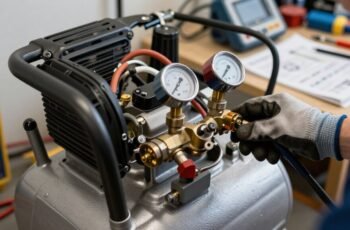
Understanding the full lifecycle cost of an air compressor is vital for making informed investment decisions. From initial purchase and installation to ongoing maintenance and energy consumption, each phase impacts total expenses. By analyzing these factors systematically, we can identify cost drivers and opportunities for optimization. Recognizing how usage patterns and hidden costs influence overall economics guarantees we select and operate compressors that deliver maximum value over their service life—an indispensable consideration for responsible management.
Key Takeaways
- Total lifecycle costs include initial purchase, installation, maintenance, energy consumption, and disposal expenses.
- Proper sizing and quality parts optimize performance, reduce breakdowns, and lower long-term maintenance costs.
- Energy efficiency measures, like variable speed drives, significantly impact ongoing operational expenses.
- Regular maintenance and monitoring extend compressor lifespan and prevent costly repairs or replacements.
- Evaluating total costs and usage patterns aids informed investment decisions and operational cost management.
Understanding the Total Cost of Ownership for Air Compressors
Understanding the total cost of ownership (TCO) for air compressors is essential for making informed purchasing and maintenance decisions. TCO encompasses not only initial investment but also ongoing operational and maintenance expenses. A critical factor affecting overall costs is air quality; high-quality compressors with advanced filtration systems reduce contamination risks, minimizing downtime and equipment wear. Additionally, compressor branding plays a role in TCO, as reputable brands often offer superior reliability, energy efficiency, and support services, which lower long-term costs. By evaluating these elements—air quality standards and brand reliability—we can better predict maintenance needs and optimize operational efficiency. This thorough approach ensures that we select a compressor aligned with both performance expectations and lifecycle cost considerations, ultimately leading to more sustainable investment decisions.
Initial Purchase and Installation Expenses: What to Expect
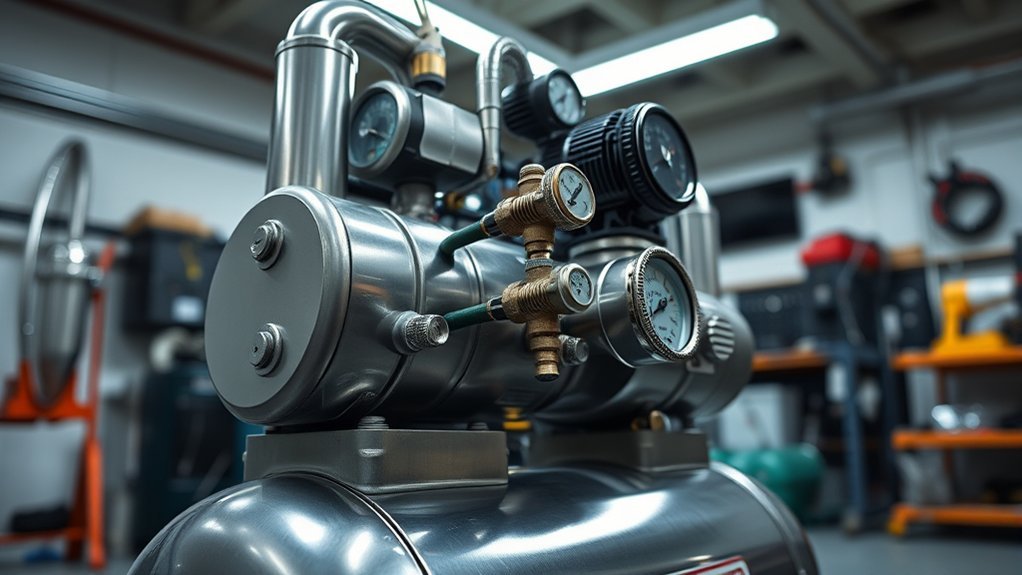
Initial purchase and installation expenses form a significant portion of an air compressor’s lifecycle cost, requiring careful estimation to guarantee budget accuracy. Factors influencing these costs include equipment pricing negotiations, which can optimize overall expenditure, and strategic supplier selection to assure quality and reliability. During procurement, we evaluate:
- Equipment base price and optional features
- Cost of necessary accessories and peripheral components
- Installation costs, including labor and site modifications
- Potential expenses related to permits and compliance requirements
Maintenance and Operating Costs Over the Compressor’s Lifecycle
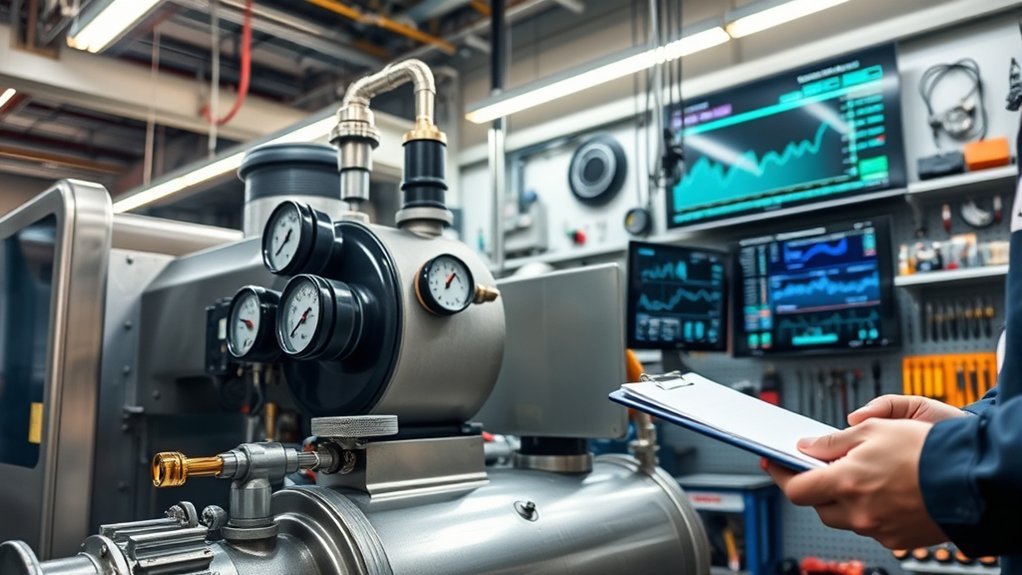
Once the air compressor is installed, managing ongoing expenses becomes a key factor in determining its overall lifecycle cost. Maintenance tasks such as filter replacements, lubrication, and system checks directly impact operational efficiency and guarantee ideal air quality. Consistent attention to air quality standards reduces contamination risks that can lead to equipment damage or product defects. Operating costs, including energy consumption, fluctuate based on compressor load and efficiency; optimizing these parameters minimizes energy expenses over time. Additionally, noise levels are a critical consideration—not only for compliance with regulations but also for worker safety and comfort. Regular maintenance helps control noise emissions, prolongs equipment lifespan, and sustains performance, ultimately reducing long-term costs and supporting reliable, efficient operation.
Factors That Influence Lifespan and Replacement Timing
Several factors directly influence the lifespan of an air compressor and determine ideal replacement timing. Key considerations include lubrication efficiency, ambient conditions, workload intensity, and maintenance practices. Poor lubrication can accelerate component wear, reducing operational life. Ambient conditions, such as temperature and humidity, impact both corrosion rates and cooling efficiency, affecting durability. Excessive workload or frequent cycling can induce stress on critical parts, hastening failure. Conversely, consistent maintenance can extend lifespan, but neglecting these factors leads to premature replacement. Understanding these variables allows for proactive planning, optimizing operational reliability and minimizing unexpected downtime. Monitoring lubrication systems and environmental conditions closely forms the basis for accurate lifespan assessments, enabling strategic replacement schedules aligned with operational demands.
How to Choose an Energy-Efficient Air Compressor to Reduce Long-Term Costs
Choosing an energy-efficient air compressor requires a careful analysis of operational performance and energy consumption metrics to guarantee long-term cost savings. Critical factors include evaluating air quality; compressors with advanced filtration ensure contaminants are minimized, reducing system wear and maintaining output integrity. Noise reduction features also play a crucial role, as quieter units often incorporate better sound insulation and variable speed drives, which lower energy use during fluctuating workloads. Assessing compressor efficiency involves examining power draw relative to airflow output, ensuring minimal energy wastage. Additionally, selecting models with integrated controls enables optimized operation, further reducing energy consumption. By prioritizing units that balance air quality, noise reduction, and energy efficiency, we can considerably lower operational costs over the compressor’s lifespan.
The Impact of Usage Patterns and Workload on Total Lifecycle Costs
We observe that operating hours and usage frequency directly influence compressor wear and energy consumption, impacting lifecycle costs. Fluctuations in workload intensity can lead to inefficient operation and increased maintenance expenses. Analyzing these patterns allows us to optimize performance and extend equipment lifespan effectively.
Operating Hours and Frequency
Operating hours and usage frequency directly influence the total lifecycle costs of an air compressor, as higher workloads accelerate wear and increase maintenance requirements. Frequent operation often leads to diminished air quality due to filter fatigue and potential contamination, while elevated noise levels can impact workplace safety and compliance. Extended running times also result in higher energy consumption, raising operational expenses. Factors affecting costs include:
- Increased component fatigue, necessitating more frequent part replacements
- Deterioration of air filtration systems, impacting air quality
- Elevated noise levels, requiring additional soundproofing measures
- Higher energy use, raising utility bills over the compressor’s lifespan
Understanding these variables helps optimize maintenance schedules and select appropriate equipment to balance operational demands with lifecycle costs, ensuring longevity and efficiency.
Workload Intensity Fluctuations
Fluctuations in workload intensity considerably influence the total lifecycle costs of an air compressor by affecting its wear patterns, maintenance needs, and energy consumption. Load variability, especially during periods of peak demand, causes frequent cycling and increased mechanical stress, accelerating component fatigue. These fluctuations demand more robust maintenance schedules and can lead to higher repair costs. Additionally, compressors operating under variable load conditions often consume more energy due to inefficient cycling, raising operational expenses. Understanding the workload profile helps optimize compressor selection and control strategies, reducing the impact of peak demand periods. By analyzing load variability, we can better predict lifecycle costs, improve equipment reliability, and implement operational adjustments to mitigate the financial effects of workload fluctuations.
Common Hidden Costs That Can Increase Your Air Compressor Expenses
Maintenance and repair costs, along with unexpected energy consumption spikes, often go unnoticed but substantially impact the total lifecycle expenses. These hidden costs can escalate quickly if not properly managed, reducing overall efficiency and increasing downtime. Understanding and controlling these factors is essential for accurate cost analysis and ideal compressor operation.
Maintenance and Repair Costs
While routine upkeep is essential for ensuring reliable performance, hidden maintenance and repair costs can considerably inflate the overall lifecycle expenses of an air compressor. These costs often stem from overlooked factors such as lubrication requirements and noise management. Improper lubrication can lead to increased wear and premature component failure, escalating repair expenses. Additionally, noise mitigation measures, like soundproof enclosures or vibration dampers, add to maintenance costs over time. Other hidden expenses include:
- Frequent replacement of worn seals and filters
- Unexpected downtime due to component failure
- Costly repairs from neglected vibration or noise issues
- Increased labor for troubleshooting intricate mechanical problems
Addressing these hidden costs proactively helps optimize lifecycle expenses, ensuring the compressor’s longevity and operational efficiency.
Energy Consumption Expenses
Have we fully considered how energy consumption can silently escalate the total cost of operating an air compressor? Energy expenses often represent the largest ongoing operational cost, directly impacted by compressor efficiency and load management. Poor energy efficiency not only increases electricity bills but can also compromise air quality, as inefficient systems may produce inconsistent air output, affecting downstream processes. Noise reduction strategies, while primarily aimed at minimizing disturbance, also influence energy use; well-designed noise control can improve airflow dynamics, reducing unnecessary energy drain. Additionally, monitoring and optimizing compressor cycles help prevent excessive energy consumption. Recognizing these hidden costs enables us to implement targeted solutions that balance air quality, noise reduction, and energy efficiency, ultimately lowering long-term expenses.
Strategies for Extending Your Compressor’s Service Life and Saving Money
Implementing proactive strategies can considerably extend the lifespan of your air compressor and reduce overall costs. Maintaining ideal air quality minimizes wear on internal components, preventing costly breakdowns. Regular maintenance, including filter replacements and lubrication, guarantees consistent performance and reduces strain on the system. Partnering with reputable suppliers enhances reliability, as their products typically meet higher standards for durability and quality. Additionally, monitoring compressor operating parameters helps detect early signs of degradation.
Key strategies include:
- Ensuring high air quality through effective filtration
- Selecting suppliers with strong reputation for quality parts
- Conducting routine inspections and preventive maintenance
- Tracking operational data for early fault detection
These approaches collectively maximize service life, improve efficiency, and lower lifecycle expenses.
Calculating and Comparing Lifecycle Costs to Make Smarter Investment Decisions
To make informed investment decisions regarding air compressors, it is essential to accurately calculate and compare their lifecycle costs, which encompass initial purchase price, maintenance expenses, energy consumption, and eventual disposal or replacement costs. Precise compressor sizing guarantees maximum performance, reducing unnecessary energy use and enhancing air quality by maintaining consistent pressure and flow. When evaluating lifecycle costs, consider how larger or smaller units impact energy efficiency and maintenance frequency over time. Factoring in air quality standards can influence compressor selection, as cleaner, well-maintained systems prevent contamination and downtime. Comparing total costs with attention to these elements enables smarter investments, securing long-term operational efficiency and cost savings while meeting industry standards for air quality and performance.
Frequently Asked Questions
How Do Warranty Terms Affect Overall Lifecycle Costs?
Warranty conditions considerably influence overall lifecycle costs, as extensive warranties reduce repair expenses and downtime, positively impacting total cost implications. We analyze warranty terms carefully to optimize long-term investment and minimize unexpected expenses throughout the compressor’s operational life.
What Are the Environmental Impacts of Different Compressor Types?
We analyze compressor types based on environmental impacts, considering recycling programs and emission standards; electric compressors generally produce fewer emissions, while oil-lubricated models may pose recycling challenges, influencing overall sustainability and compliance with evolving environmental regulations.
How Do Supplier Support and Service Influence Total Costs?
Imagine a finely tuned engine; supplier support and service quality are its oil, reducing friction and preventing breakdowns. Strong support minimizes downtime, lowers repair costs, and guarantees reliable performance, ultimately reducing total lifecycle costs through proactive maintenance and swift issue resolution.
Can Upgrading Parts Extend the Compressor’s Lifespan?
Upgrading parts can extend a compressor’s lifespan if combined with proactive maintenance scheduling and quality spare parts, ensuring reliability and reducing downtime. Regular upgrades prevent wear, optimize performance, and ultimately lower long-term lifecycle costs.
What Training Is Needed to Optimize Compressor Operation Costs?
Studies show proper operator training reduces energy costs by up to 30%. We emphasize maintenance protocols and operator training to optimize compressor operation costs, ensuring efficiency, minimizing downtime, and extending equipment lifespan through skilled handling and proactive maintenance.
Conclusion
By understanding the full lifecycle costs of air compressors, we can navigate the complex terrain of investment with the precision of a seasoned engineer. Like a well-tuned machine, each component and decision influences long-term performance and cost-efficiency. When we analyze energy use, maintenance, and replacement timing, we guarantee our choices are as calculated as a scientific formula—maximizing reliability while safeguarding our bottom line in the ever-evolving landscape of industrial operations.