Reducing compressed air system costs requires identifying inefficiencies, minimizing leaks, and optimizing operational parameters. We must analyze system performance, implement targeted upgrades, and adopt advanced control technologies to guarantee energy is used effectively. Each step involves careful assessment and strategic decision-making, which can considerably impact operational expenses. Understanding these critical factors helps us develop a thorough approach that ultimately enhances system reliability and reduces overall costs, making it vital to explore further.
Key Takeaways
- Properly size and adjust compressors to match demand, avoiding overcapacity and unnecessary energy consumption.
- Conduct regular leak detection and repair to minimize compressed air losses.
- Maintain high-quality filtration and drying systems to improve air quality and system efficiency.
- Implement advanced control and monitoring technologies for real-time optimization and energy savings.
- Invest in energy-efficient equipment and adopt a comprehensive maintenance strategy for long-term cost reduction.
How Inefficient Compressed Air Systems Drive Up Costs
Have you ever considered how inefficiencies in compressed air systems directly escalate operational costs? Poor air quality, characterized by moisture, particulates, and oil carryover, forces compressors to work harder, increasing energy consumption. Inadequate compressor sizing exacerbates this issue, leading to overcapacity or undercapacity problems. Oversized compressors cycle less frequently but consume excess energy during idle periods, while undersized units struggle to meet demand, causing pressure drops and system strain. Both scenarios result in higher energy bills and increased wear and tear. Ensuring ideal compressor sizing aligned with system demand improves air quality by reducing contamination risks and minimizes unnecessary energy use. Addressing these factors is essential for controlling costs, extending equipment lifespan, and maintaining system efficiency.
Conducting a Comprehensive System Audit to Identify Losses
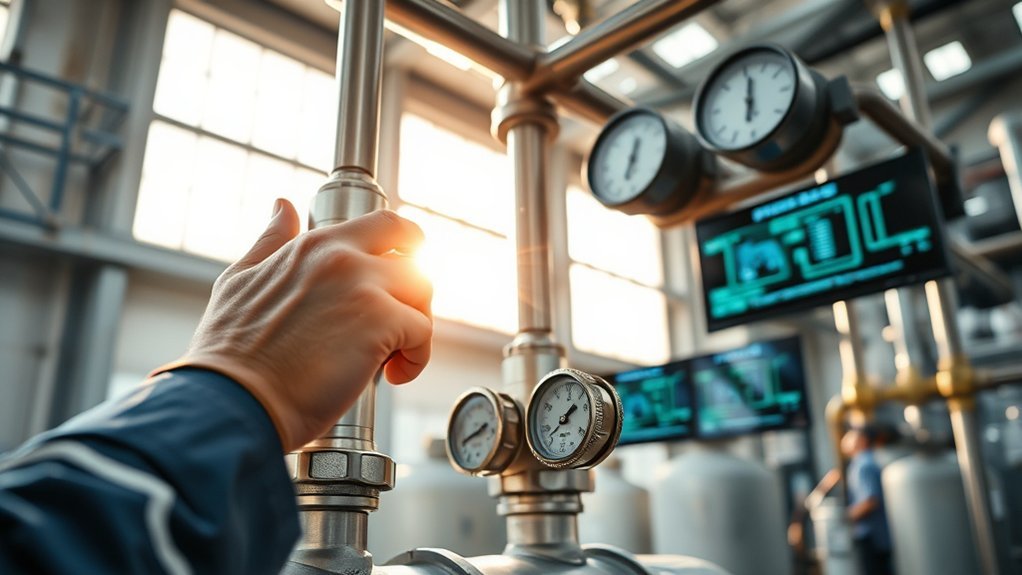
Conducting a thorough system audit allows us to pinpoint inefficiencies and quantify energy losses. By analyzing pressure drops throughout the network, we can identify areas where pressure is lost and efficiency declines. This precise assessment helps us target specific issues that, when addressed, markedly reduce operational costs.
Identifying System Inefficiencies
To effectively identify inefficiencies within a compressed air system, we start with a thorough system audit that pinpoints energy losses and operational bottlenecks. This involves analyzing key factors such as air quality, which impacts compressor performance and system longevity, and evaluating how employee training influences system operation. During the audit, we examine compressor runtime, leak rates, and pressure consistency to detect inefficiencies. The following table summarizes common issues and their root causes:
| Issue | Root Cause |
|---|---|
| Excessive leaks | Poor connections, aging equipment |
| Pressure variability | Inadequate control settings |
| Contaminated air | Insufficient filtration |
Addressing these areas helps optimize system performance and reduces costs effectively.
Analyzing Pressure Drops
Analyzing pressure drops throughout the compressed air system is essential for identifying energy losses that undermine efficiency. Pressure loss indicates where air pressure diminishes due to friction, leaks, or restrictions, revealing potential system bottlenecks. During a detailed audit, we measure pressure at various points to pinpoint significant drops that contribute to inefficiency. Recognizing these pressure drops helps us target specific issues such as undersized piping, faulty valves, or blocked filters. System bottlenecks caused by excessive pressure loss increase energy consumption, as compressors work harder to maintain desired pressure levels. By systematically analyzing these pressure trends, we can implement corrective actions—replacing restrictive components or optimizing layout—to reduce losses and enhance overall system performance. This approach guarantees energy is used effectively, lowering operational costs.
Implementing Leak Detection and Repair Strategies
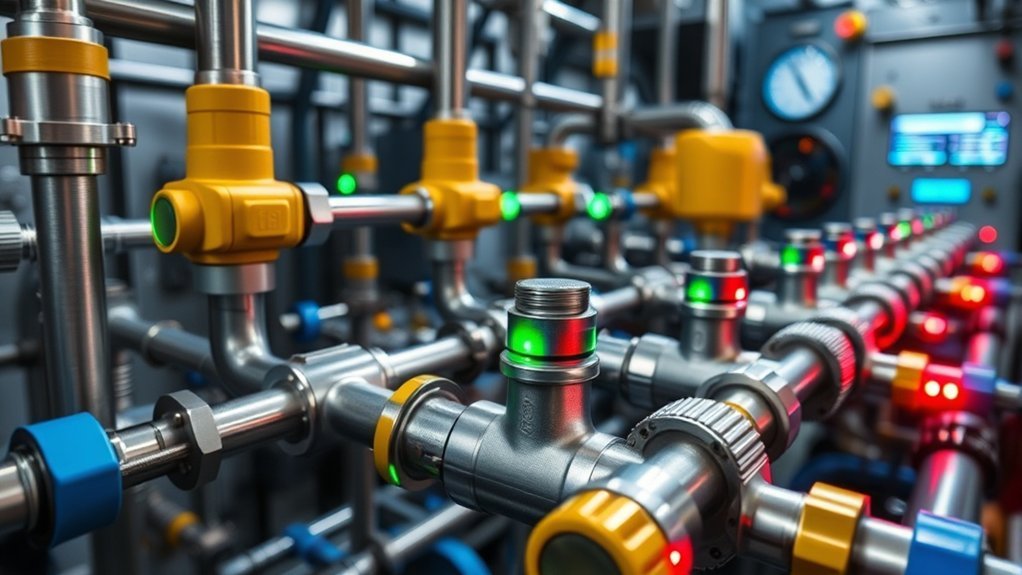
Effective leak detection and repair are essential for minimizing compressed air losses and reducing costs. Rapid identification of leaks enables us to address issues promptly, preventing unnecessary energy consumption. Implementing efficient repair processes guarantees system integrity and peak performance over time.
Detecting Air Leaks Quickly
Since air leaks can substantially inflate operating costs, implementing rapid detection methods is essential for maintaining system efficiency. Effective air leak detection enables us to identify leaks promptly, reducing wasted energy and preventing pressure drops that compromise productivity. Quick response is critical; the sooner a leak is detected, the less compressed air is lost, and the lower the financial impact. Techniques such as ultrasonic leak detectors or portable acoustic devices allow us to pinpoint leaks accurately and efficiently. Regular monitoring and real-time detection systems enhance our ability to act swiftly, minimizing downtime and repair costs. By prioritizing rapid detection, we optimize system performance, reduce energy consumption, and ensure a more cost-effective operation overall.
Repairing Leaks Efficiently
Implementing leak detection and repair strategies requires a systematic approach to guarantee leaks are addressed promptly and effectively. Once leaks are identified, selecting appropriate repair strategies is critical to prevent recurrence and optimize savings. Prioritizing leaks by size and location ensures efficient resource allocation. Repair methods range from tightening fittings to replacing damaged components, emphasizing durable solutions to prevent future leaks. Regular monitoring and documentation support continuous improvement. To assist in decision-making, consider this overview:
| Leak Size | Repair Strategy | Priority Level |
|---|---|---|
| Small | Tightening fittings or sealing | Low |
| Moderate | Component replacement | Medium |
| Large | Complete system repair | High |
| Persistent | System overhaul or redesign | Critical |
Optimizing Pressure Settings for Energy Savings
Have you considered how adjusting pressure settings can substantially reduce energy consumption in your compressed air system? Effective pressure regulation is essential for minimizing unnecessary energy use. Operating at higher pressure than needed forces compressors to work harder, increasing power consumption without proportional productivity gains. By carefully analyzing system demands, we can set ideal pressure levels that meet operational requirements without excess. This targeted approach ensures that pressure is maintained at the lowest safe level, directly contributing to cost reduction. Regularly monitoring and adjusting pressure settings allows us to fine-tune performance, avoiding wasteful over-pressurization. Implementing these adjustments not only enhances system efficiency but also delivers measurable savings, reinforcing the importance of precise pressure regulation as a key strategy for reducing overall compressed air costs.
Investing in Energy-Efficient Air Compressors
Investing in energy-efficient air compressors offers a direct pathway to reducing operational costs and enhancing system performance. These compressors are designed with advanced motor technology, variable speed drives, and improved thermal management, all contributing to greater energy conservation. Proper air compressor maintenance guarantees peak efficiency, minimizing leaks and unnecessary energy expenditure. By selecting units with high efficiency ratings, we can lower energy consumption and extend equipment lifespan. Additionally, integrating these compressors into existing systems can reduce strain on ancillary components, further decreasing maintenance costs. The upfront investment in energy-efficient models often results in significant long-term savings, making them a strategic choice for cost-effective, sustainable operations.
- Reduced energy consumption via optimized motor operation
- Lower maintenance needs through improved design
- Enhanced system reliability and lifespan
- Alignment with sustainability and cost-saving goals
Installing Air Dryers and Filters to Improve System Efficiency
Installing air dryers and filters plays a critical role in enhancing overall system efficiency by ensuring the compressed air remains dry and free of contaminants. Proper moisture control prevents corrosion, protects downstream equipment, and maintains consistent air quality, reducing maintenance costs and downtime. Air dryers remove excess humidity, which can cause rust and microbial growth, while filters eliminate particulates and oil aerosols that compromise air quality. Integrating these components optimizes system performance by minimizing pressure drops and energy consumption associated with moisture-related issues. Additionally, high-quality filtration enhances the longevity of compressors and pneumatic tools. By implementing effective drying and filtration solutions, we can notably reduce operational costs and improve reliability, ensuring the compressed air system operates at peak efficiency with reduced energy waste.
Regular Maintenance Practices to Prevent Costly Downtime
Regular maintenance is essential for preventing costly downtime in compressed air systems, as it guarantees all components operate within ideal parameters. Conducting scheduled inspections allows us to identify wear, leaks, or inefficiencies early, minimizing unexpected failures. Proper employee training ensures personnel understand maintenance protocols, promoting consistent system oversight. To optimize reliability, we focus on:
Regular maintenance prevents costly downtime by ensuring optimal system performance and early issue detection.
- Performing routine inspections of filters, valves, and belts
- Monitoring system pressure and temperature for anomalies
- Training staff on troubleshooting and maintenance procedures
- Keeping detailed maintenance logs for trend analysis
These practices enable us to proactively address potential issues, reduce unplanned downtime, and extend equipment lifespan. Consistent, well-informed maintenance is key to controlling costs and maintaining system performance over the long term.
Using Advanced Control Systems for Better Air Management
Advanced control systems play an essential role in optimizing compressed air management by providing real-time monitoring and precise regulation of system parameters. By integrating smart sensors, these systems detect pressure fluctuations, leaks, and demand changes instantaneously, enabling immediate adjustments. Automated controls process this data to optimize compressor operation, reducing unnecessary energy consumption and preventing over-pressurization. This technological approach minimizes waste and enhances system efficiency, ensuring consistent air quality and pressure stability. The deployment of advanced controls also facilitates demand-based operation, aligning compressor activity directly with actual process needs. Overall, leveraging smart sensors and automated controls allows us to fine-tune air management, lower operational costs, and extend equipment lifespan, forming an integral part of a thorough strategy to reduce compressed air system costs.
Monitoring and Analyzing System Performance for Continuous Improvement
To achieve continuous improvement in compressed air systems, we must actively monitor and analyze performance data to identify inefficiencies and opportunities for optimization. Accurate sensor calibration is vital to guarantee reliable data collection, which forms the basis for meaningful analysis. Data visualization tools help us interpret complex datasets quickly, revealing patterns and anomalies that indicate system issues or potential energy savings. Regularly reviewing these visualizations allows us to make informed decisions about system adjustments or maintenance needs.
Continuous improvement relies on accurate data, visual insights, and proactive adjustments for optimized compressed air systems.
- Implement real-time sensors with rigorous calibration protocols
- Use advanced data visualization for performance tracking
- Identify inefficiencies through trend analysis
- Prioritize corrective actions based on data insights
Frequently Asked Questions
What Are the Common Signs of an Inefficient Compressed Air System?
We notice signs like inconsistent pressure, excessive energy use, and frequent breakdowns, indicating inefficient air system maintenance or poor compressor selection. Regular monitoring and proper equipment choices help optimize performance and reduce operational costs effectively.
How Often Should Leak Detection Be Performed for Optimal Savings?
We recommend leak detection every three months for maximum savings, as studies show leaks can account for up to 30% of compressed air loss. Regular detection ensures efficiency, minimizes costs, and maintains system performance effectively.
Can Upgrading to Variable Speed Drives Reduce System Costs Significantly?
Upgrading to variable speed drives can considerably reduce system costs by optimizing energy savings through precise airflow control; a thorough cost analysis confirms these drives’ long-term financial benefits, especially in fluctuating demand scenarios.
What Are the Typical Costs Associated With Air System Upgrades?
We find that air system upgrade costs typically include extensive energy audits, equipment replacements, and updated maintenance schedules, with expenses varying based on system size, complexity, and efficiency improvements pursued, ultimately affecting long-term operational savings.
How Do Ambient Conditions Affect Compressed Air System Efficiency?
Ambient fluctuations and temperature impacts considerably influence compressed air system efficiency; higher temperatures increase energy consumption, while fluctuations cause pressure drops, prompting us to implement climate control and monitor ambient conditions to optimize system performance consistently.
Conclusion
By implementing these strategies, we can greatly reduce compressed air system costs and enhance operational efficiency. Regular audits, leak repairs, and advanced controls are crucial for sustainable savings. But the real question remains: are we fully leveraging technological advancements to optimize our systems continuously? Embracing a proactive, data-driven approach ensures ongoing improvement, minimizes waste, and maximizes ROI—making it necessary to stay ahead in efficient system management.