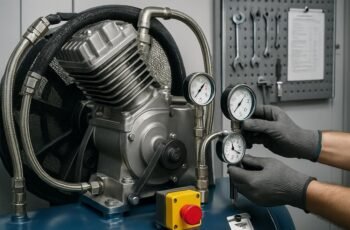
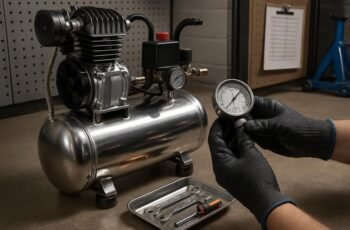
Maintaining an air compressor requires attention to detail, as even small oversights can lead to significant equipment failures or inefficiencies. We’ve observed that common mistakes—such as neglecting inspections, using improper lubricants, or ignoring filter maintenance—often go unnoticed until costly issues arise. Understanding these pitfalls is essential for peak performance and longevity, but many operators overlook the subtle signs of wear and miscalibration that could prevent downtime. Recognizing these errors early can save time and resources, so let’s examine the most frequent ones in detail.
Key Takeaways
- Neglecting routine inspections and calibration can lead to undetected issues and system inefficiencies.
- Failing to regularly maintain and replace air filters reduces airflow and increases energy consumption.
- Ignoring proper lubrication management causes excessive wear and overheating of compressor components.
- Not draining condensate buildup promotes corrosion and reduces equipment lifespan.
- Using incorrect parts or improper settings during repairs risks leaks, damage, and reduced system performance.
How Neglecting Routine Inspections Can Damage Your Compressor
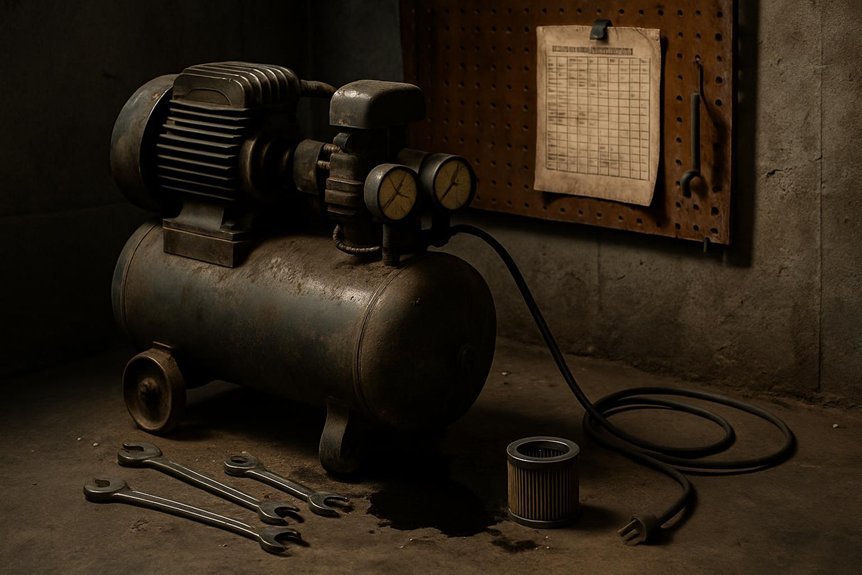
Neglecting routine inspections of an air compressor can lead to undetected issues that progressively cause significant damage and reduce operational efficiency. Regular vibration analysis is essential for early fault detection, as abnormal vibrations often indicate bearing wear, misalignment, or rotor imbalance. Over time, these issues can escalate if not identified promptly. Oil contamination is another critical factor; contaminated oil impairs lubrication, accelerates component wear, and can cause overheating. Routine inspections allow for monitoring oil quality and detecting contamination early, preventing damage to pistons, cylinders, and valves. Without these proactive checks, minor issues can develop into costly failures, decreasing compressor lifespan and increasing maintenance costs. Consistent, precise inspections safeguard against hidden faults and optimize compressor performance.
The Mistake of Ignoring Proper Lubrication and Its Consequences
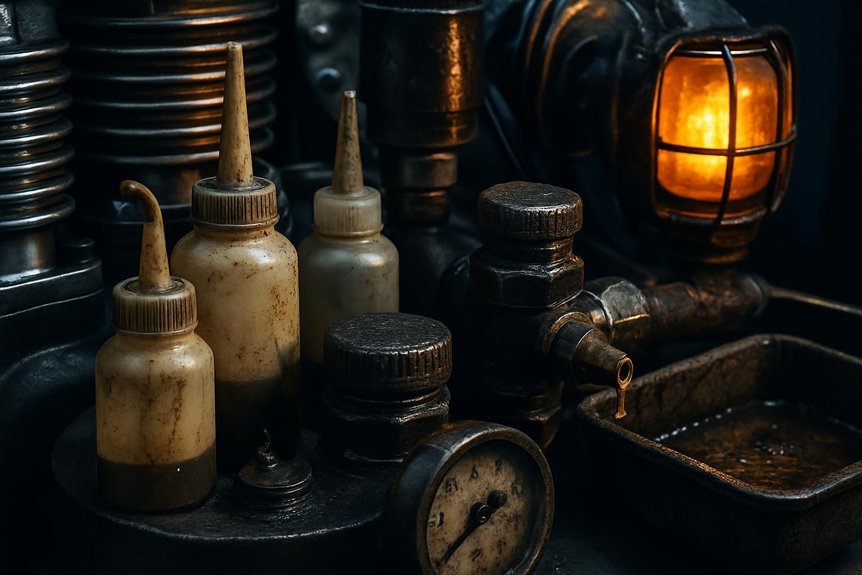
Proper lubrication is fundamental to maintaining an air compressor’s efficiency and longevity, yet it is often overlooked or improperly managed. Lubrication neglect can cause increased friction, heat buildup, and accelerated component wear. Improper oil application—such as using the wrong type or failing to maintain proper oil levels—compromises the protective film essential for reducing metal-to-metal contact. This can lead to bearing damage, piston scoring, and eventual compressor failure. Regular oil checks and using manufacturer-recommended lubricants are critical. Ignoring lubrication protocols increases the risk of costly repairs and unscheduled downtime. Ensuring proper lubrication isn’t just a routine task; it’s a crucial preventive measure that preserves compressor performance and extends operational lifespan.
Overlooking Air Filter Maintenance and Why It Matters

Neglecting air filter maintenance allows contaminants to accumulate, considerably reducing compressor efficiency. Clogged filters increase pressure drop, forcing the system to work harder and risking component wear. Regular filter replacement is essential to prevent damage and maintain ideal performance.
Filter Clogging Reduces Efficiency
When air filters become clogged, the compressor’s overall efficiency declines considerably because restricted airflow forces the system to work harder, increasing energy consumption and wear on components. This impairs air quality and shortens filter lifespan, leading to more frequent replacements. To prevent this:
- Reduced airflow causes pressure drops, decreasing compressor output.
- Increased energy use results from the system compensating for airflow restriction.
- Elevated wear accelerates component fatigue and potential failure.
- Contaminants bypass clogged filters, compromising air quality and risking damage downstream.
Regular inspection and cleaning of filters maintain ideal airflow, ensuring sustained efficiency and prolonging filter lifespan. Addressing clogging promptly minimizes operational costs and protects crucial system components from unnecessary stress.
Neglecting Filter Replacement Causes Damage
Failing to replace air filters regularly allows contaminants to accumulate and bypass the filtration system, leading to significant damage within the compressor assembly. Air filter materials, such as pleated paper or synthetic fibers, trap dust, dirt, and oil particles; over time, these materials become clogged or degraded, reducing filtration efficiency. If the filter isn’t replaced at the proper filter replacement frequency, contaminants can infiltrate critical components like pistons and valves, causing accelerated wear and potential failure. Neglecting timely filter changes also increases pressure drop, forcing the compressor to work harder and consume more energy. Precise maintenance schedules based on manufacturer guidelines and operating conditions are vital to prevent damage, preserve compressor lifespan, and guarantee peak performance.
Failing to Monitor and Control Operating Conditions Correctly
Proper monitoring and control of operating conditions are essential for maintaining ideal air compressor performance and preventing equipment failure. Failure to do so can lead to overheating, inefficient pressure regulation, and increased wear. To guarantee peak operation:
Effective monitoring of operating conditions ensures optimal compressor performance and prevents costly failures.
- Continuously track operating temperature to prevent overheating and thermal stress.
- Adjust pressure regulation settings based on load demands to avoid over-pressurization.
- Use reliable sensors to monitor real-time data, enabling prompt adjustments.
- Regularly verify that safety valves and pressure controls are functioning within specified parameters.
Maintaining precise control over these factors minimizes the risk of component damage, improves energy efficiency, and extends compressor lifespan. Diligent monitoring of operating temperature and pressure regulation is critical for top-notch compressor performance.
Skipping Regular Drainage of Condensate and Its Risks
Have we overlooked the importance of regular condensate drainage in maintaining compressor health? Failing to perform consistent condensate drainage allows moisture buildup within the tank and compressor components, leading to corrosion and internal damage. Moisture accumulation can cause rust formation on critical parts, impairing heat transfer and increasing wear. Over time, this compromises the compressor’s efficiency and shortens its lifespan. Regular condensate drainage prevents the accumulation of water, ensuring ideal lubrication and reducing the risk of internal freezing or hydraulic failure. Neglecting this simple maintenance step can lead to costly repairs and unscheduled downtime. Precise, scheduled condensate drainage is essential for maintaining the compressor’s integrity, efficiency, and longevity by effectively managing moisture buildup and preventing internal corrosion.
Using Incorrect Parts or Settings During Repairs and Maintenance
Using incorrect parts or settings during repairs and maintenance can considerably compromise compressor performance and longevity. Substituting incompatible components, such as improper valves or seals, risks leaks, overheating, and reduced efficiency. Similarly, employing improper settings—like incorrect pressure or speed adjustments—can cause mechanical stress and accelerate wear.
- Using incorrect parts, such as non-standard filters, can lead to contamination and system failure.
- Setting pressure levels beyond manufacturer specifications increases risk of component damage.
- Ignoring recommended lubrication parameters causes excessive friction and heat buildup.
- Adjusting motor speeds improperly strains electrical components and shortens lifespan.
Adhering strictly to manufacturer specifications for parts and settings guarantees ideal operation, prevents costly repairs, and preserves compressor reliability. Proper attention to these details is essential for sustained, efficient performance.
Neglecting to Keep Accurate Maintenance Records
Neglecting to maintain accurate and thorough maintenance records can lead to overlooked service intervals, missed diagnostic opportunities, and ultimately, equipment failures. Proper recordkeeping accuracy ensures all maintenance activities—filter replacements, lubrication schedules, and inspections—are systematically documented. Without extensive maintenance documentation, it’s challenging to track component lifespan, identify recurring issues, or plan preventative tasks efficiently.
| Date | Service Performed | Technician | Parts Replaced | Next Due Date |
|---|---|---|---|---|
| 2023-07-15 | Oil change | Tech A | Oil filter | 2023-10-15 |
| 2023-07-15 | Belt inspection | Tech A | N/A | 2023-10-15 |
| 2023-07-15 | Safety valve check | Tech A | Safety valve | 2024-01-15 |
| 2023-07-15 | Air filter replacement | Tech A | Air filter | 2023-10-15 |
| 2023-07-15 | Pressure gauge calibration | Tech A | N/A | 2024-01-15 |
Consistent, detailed records enable precise maintenance scheduling, prevent costly oversights, and optimize compressor longevity.
Underestimating the Importance of Professional Servicing
Neglecting routine checkups, expert inspections, and system calibration can lead to undetected issues that compromise compressor performance and safety. Professional servicing guarantees critical components are accurately assessed and calibrated to manufacturer specifications, preventing costly failures. Underestimating these services risks inefficiency and increased downtime, undermining long-term reliability.
Ignoring Routine Checkups
Have you ever overlooked the necessity of professional servicing when performing routine checkups on your air compressor? Neglecting scheduled maintenance can compromise system reliability. Specifically, skipping routine calibration can lead to inaccurate pressure regulation, causing inefficiencies and potential damage. Failing to verify safety features increases the risk of emergency shutdowns, which can halt operations unexpectedly.
Key points include:
- Conducting precise routine calibration ensures pressure accuracy and ideal performance.
- Regularly inspecting safety valves prevents unexpected emergency shutdowns.
- Monitoring motor and compressor temperatures avoids overheating and failure.
- Checking for leaks in hoses and fittings maintains system integrity and efficiency.
Ignoring these steps might seem minor but can result in costly downtime and compromised safety. Consistent, professional checkups preserve compressor longevity and operational safety.
Overlooking Expert Inspections
While routine maintenance tasks can be handled in-house, overlooking the critical importance of professional inspections can lead to overlooked issues that compromise compressor performance and safety. Expert inspections provide a comprehensive assessment, identifying hidden wear, misalignments, or potential failure points that routine checks may miss. Effective maintenance scheduling hinges on these inspections to prevent costly breakdowns and extend equipment lifespan. Neglecting this step risks undetected problems escalating, causing inefficiencies and safety hazards.
| Aspect | Benefits of Expert Inspections |
|---|---|
| Detection Accuracy | Identifies issues early, avoiding costly repairs |
| Safety & Compliance | Ensures adherence to safety standards |
| Maintenance Planning | Facilitates precise scheduling for repairs |
| Equipment Longevity | Prolongs compressor lifespan through proactive care |
Neglecting System Calibration
System calibration is a critical aspect of maintaining ideal compressor performance, yet it is often underestimated or delayed in routine maintenance schedules. Proper calibration ensures compressor accuracy, optimizing efficiency and preventing costly downtime. Neglecting this process can lead to inaccurate pressure readings, inconsistent output, and increased wear on components. To avoid these issues:
- Regularly verify calibration settings against manufacturer specifications.
- Schedule professional calibration at recommended intervals, not just when problems arise.
- Use calibrated reference tools to assess compressor gauges and control systems.
- Document calibration results to track performance trends and identify potential deviations early.
Frequently Asked Questions
How Often Should I Perform Routine Inspections on My Air Compressor?
We recommend performing routine inspections weekly, following a detailed maintenance schedule and inspection checklist. Regular checks guarantee ideal compressor performance, identify potential issues early, and extend equipment lifespan through precise, timely maintenance actions.
What Are the Signs of Improper Lubrication Affecting Compressor Performance?
When lubrication fails, your compressor’s performance falters like a misfiring engine; signs include increased noise, overheating, and oil contamination, which can cause wear and tear. Regular checks catch these issues before they escalate.
How Can I Tell if My Air Filter Needs Replacement?
We check filtration efficiency regularly by inspecting the filter for visible dirt or clogging; if airflow decreases or pressure drops, it’s time for filter replacement to maintain peak compressor performance and prevent contamination.
What Are the Best Practices for Monitoring Compressor Operating Conditions?
Imagine a finely tuned instrument—vibration analysis and temperature monitoring serve as our gauges, allowing us to precisely track compressor conditions, detect anomalies early, and guarantee ideal performance through consistent, detailed observation of operational metrics.
How Does Condensate Drainage Impact Compressor Lifespan?
Condensate buildup, if not properly drained, accelerates corrosion and reduces compressor lifespan. Ensuring efficient drainage prevents moisture accumulation, maintains ideal operating conditions, and prolongs equipment life through consistent drainage efficiency and moisture control.
Conclusion
Neglecting maintenance is like ignoring the engine warning lights on our vehicles—eventually, small issues escalate into costly failures. We’ve seen firsthand how routine inspections and precise adjustments can prevent catastrophic breakdowns, saving both time and money. Regular upkeep isn’t just about compliance; it’s about safeguarding your investment through meticulous attention to detail. When we prioritize proper maintenance, we guarantee our compressors operate at peak efficiency—prolonging lifespan and reducing unforeseen expenses.