Ensuring safety around air compressors is critical for preventing accidents and maintaining operational integrity. We recognize that proper maintenance, employee training, and effective safety policies are fundamental. However, identifying the common causes of failures and implementing preventive measures require a detailed, disciplined approach. To develop an all-encompassing safety strategy, it’s essential to examine each component and process thoroughly—because overlooking even minor details can lead to significant risks.
Key Takeaways
- Regularly inspect and maintain safety devices like relief valves, gauges, and filters to prevent malfunctions.
- Train employees thoroughly on proper operation, safety protocols, and emergency response procedures.
- Monitor air quality, noise levels, and equipment performance continuously to identify early hazards.
- Enforce strict safety policies, proper labeling, and routine inspections to ensure compliance and hazard mitigation.
- Conduct thorough incident investigations and implement corrective actions to prevent future accidents.
Understanding the Common Causes of Air Compressor Accidents
Understanding the common causes of air compressor accidents is essential for implementing effective prevention strategies. Air compressor hazards often stem from mechanical failures, improper use, or inadequate safety measures, increasing occupational risks. These hazards include over-pressurization, leaks, and component failures, which can lead to sudden bursts or explosions. Operator errors, such as improper setup or neglecting safety protocols, further elevate risks. Malfunctions caused by wear and tear or insufficient maintenance can also trigger accidents. Recognizing these factors allows us to identify high-risk scenarios and implement targeted controls. Addressing occupational risks associated with air compressor hazards is vital to prevent injuries, equipment damage, and downtime. A thorough understanding of these causes underpins a proactive safety approach in any air compressor operation.
Implementing Proper Maintenance and Inspection Procedures
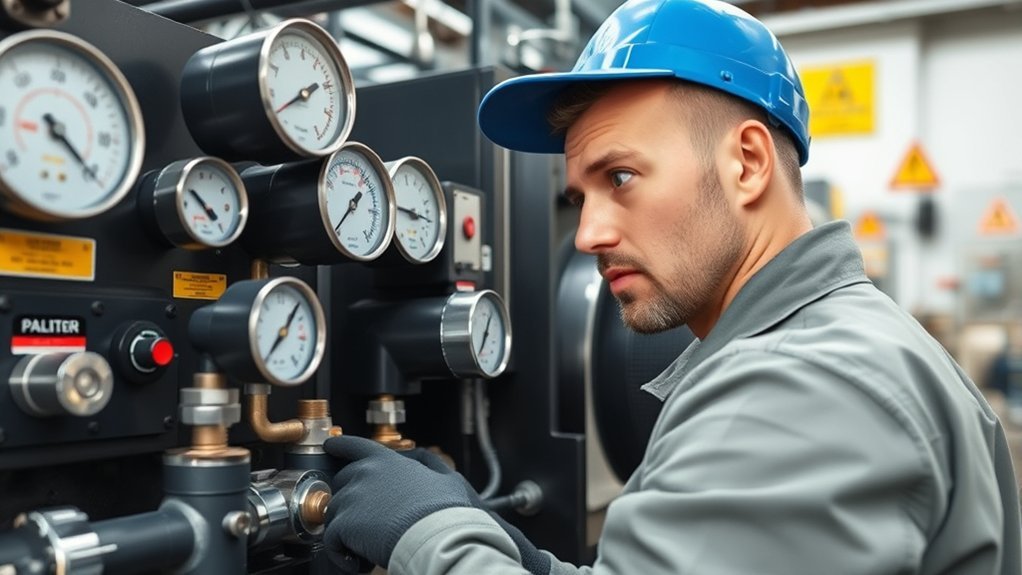
Regular maintenance and thorough inspection are critical components of preventing air compressor accidents, as they guarantee all parts operate within safe parameters. Consistent checks on air quality ensure contaminants like oil, dirt, and moisture are minimized, reducing the risk of equipment failure. Inspecting filters, valves, and pressure gauges allows us to detect wear or damage early, preventing potential hazards. Additionally, monitoring noise levels helps identify abnormalities indicating misalignment or mechanical issues. Proper lubrication and timely replacement of worn components maintain peak performance and safety. Routine inspections also confirm that safety devices, such as pressure relief valves, function correctly. By systematically implementing these procedures, we reduce risks associated with compromised air quality and excessive noise, ultimately enhancing operational safety and extending the lifespan of the compressor.
Training Employees on Safe Operation Practices
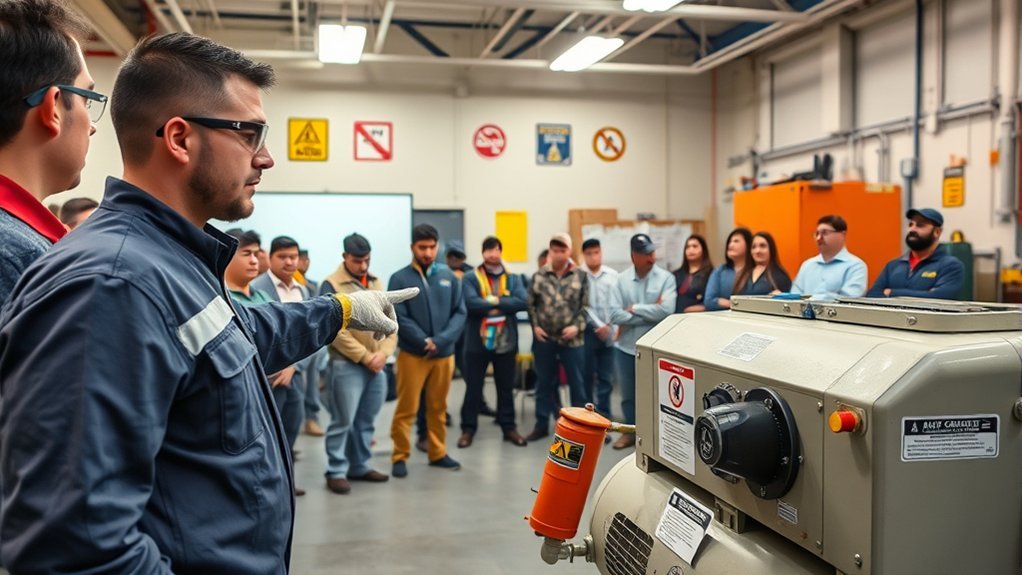
Training employees on safe operation practices is essential to minimize risks associated with air compressors. We focus on proper equipment handling techniques and clear emergency response procedures to guarantee safety. Well-trained personnel can effectively prevent accidents and respond swiftly if issues arise.
Proper Equipment Handling
How can we guarantee that employees operate air compressors safely and effectively? Proper equipment handling is essential, requiring training on components like air filters and pressure gauges. First, ensure operators understand how to regularly inspect and replace the air filter to prevent contamination and system failure. Second, emphasize accurate reading of pressure gauges to monitor safe operating levels, avoiding overpressure risks. Third, train employees on correct startup, shutdown, and adjustment procedures, including verifying that all safety devices are functional. These steps reduce the likelihood of accidents caused by improper handling. Consistent training and adherence to manufacturer guidelines promote safe, efficient operation—minimizing hazards related to equipment misuse or failure. Proper handling, thus, hinges on technical knowledge and disciplined execution.
Emergency Response Procedures
Because emergencies involving air compressors can escalate rapidly, implementing thorough response procedures is critical to guaranteeing employee safety and equipment integrity. Training employees on emergency communication protocols guarantees swift and clear dissemination of crucial information during incidents. Immediate activation of first aid protocols is essential to mitigate injuries, requiring familiarity with shutdown procedures and emergency contacts. Employees must be trained to identify signs of equipment failure or injury, initiate alarm systems, and coordinate with emergency responders effectively. Regular drills reinforce these procedures, minimizing response time and reducing escalation risks. Clear documentation of emergency protocols, including first aid steps and communication channels, guarantees consistency and preparedness. Proper training in these areas enhances overall safety, operational resilience, and compliance with safety standards.
Using Safety Devices and Equipment Correctly
Proper use of safety devices and equipment is essential to prevent accidents when operating air compressors. Regular maintenance routines ensure that safety features function correctly and reduce failure risks. Proper equipment labeling provides clear instructions and hazard warnings, facilitating correct operation. To maximize safety:
- Verify that safety devices, such as pressure relief valves, are correctly installed, maintained, and tested regularly.
- Follow maintenance routines strictly, including inspecting hoses and gauges for wear or damage.
- Guarantee all safety equipment is properly labeled with clear, visible instructions and hazard warnings to prevent misuse.
Adhering to these practices minimizes operational errors and enhances safety. Correct use of safety devices and equipment depends on consistent maintenance routines and clear equipment labeling, which are critical for accident prevention.
Developing and Enforcing Effective Safety Policies
Effective safety policies require clear communication of expectations and procedures to all personnel. We must implement regular safety training sessions and enforce compliance through strict measures. Consistent application of these policies minimizes risks and guarantees a safe working environment around air compressors.
Clear Policy Communication
Clear communication of safety policies is essential for preventing air compressor accidents, as it guarantees every employee understands the procedures and risks involved. To ensure effective policy dissemination, we focus on three key aspects:
- Use clear, concise language emphasizing noise reduction strategies and ergonomic design features to minimize injury risks.
- Implement visual aids and signage that highlight safety procedures related to noise control and ergonomic considerations.
- Regularly verify comprehension through feedback and practical demonstrations, ensuring policies are understood and correctly applied.
Precise communication fosters a safety-conscious environment, reduces ambiguities, and promotes adherence. It ensures employees recognize hazards associated with noise and ergonomic issues, enabling timely and appropriate responses that prevent accidents.
Regular Safety Training
How can ongoing safety training reinforce and guarantee the enforcement of safety policies related to air compressor operation? Continuous training ensures workers understand and adhere to procedures, emphasizing hazard identification and workplace ergonomics. Regular updates reinforce policy compliance and highlight evolving risks. This approach fosters a safety-first culture and reduces accidents.
| Aspect | Focus Area | Outcome |
|---|---|---|
| Hazard Identification | Recognizing potential risks | Minimized incident occurrence |
| Workplace Ergonomics | Proper equipment use | Reduced fatigue and injury |
| Policy Reinforcement | Ongoing education | Consistent safety practices |
Through targeted training, we promote precise hazard recognition and ergonomic awareness, guaranteeing policies are effectively integrated into daily operations.
Strict Enforcement Measures
Building a robust safety framework requires not only thorough policies but also strict enforcement to guarantee compliance. Effective enforcement ensures adherence to safety protocols that maintain ideal air quality and maximize energy efficiency. To achieve this, we focus on:
- Implementing regular inspections and audits to verify equipment safety standards and air quality parameters.
- Enforcing disciplinary measures for violations, emphasizing accountability in maintaining safety and operational integrity.
- Utilizing monitoring systems that track compressor performance, ensuring energy efficiency and identifying unsafe deviations promptly.
These measures promote a safety culture that minimizes risks, preserves air quality, and optimizes energy consumption. Strict enforcement underpins the entire safety policy, ensuring that safety procedures are not just documented but actively followed, ultimately reducing accidents and enhancing operational sustainability.
Responding to Emergencies and Preventing Future Incidents
When an air compressor accident occurs, prompt and effective emergency response is critical to minimize injuries and damage. Immediate actions should focus on isolating the equipment, controlling air quality hazards, and reducing noise levels to prevent further escalation. Ensuring proper ventilation minimizes the risk of toxic inhalants, while sound attenuation measures help contain noise pollution. Clear communication of emergency procedures accelerates response times and prevents confusion. After stabilizing the situation, a thorough investigation identifies root causes, such as inadequate maintenance or safety lapses, enabling targeted improvements. Preventative strategies include regular monitoring of air quality and noise levels, coupled with staff training on emergency protocols. These measures foster a safer environment and help prevent future incidents, ensuring operational integrity and personnel safety.
Frequently Asked Questions
How Often Should Air Compressors Be Inspected for Safety Hazards?
We recommend inspecting air compressors weekly, aligning with maintenance schedules and safety procedures, to identify hazards early, guarantee peak operation, and prevent accidents. Regular inspections are essential for maintaining safety and compliance standards effectively.
What Are the Signs of Imminent Air Compressor Failure?
We detect imminent compressor failure through vibration analysis and oil condition monitoring, noticing increased vibrations, unusual noises, or oil degradation, which signal mechanical issues needing prompt maintenance to prevent catastrophic breakdowns and guarantee operational safety.
Are There Industry Standards for Air Compressor Safety Certifications?
We understand industry standards for safety certifications, including certification requirements like ASME and OSHA compliance, guarantee safety compliance. These standards establish rigorous technical criteria, promoting consistent safety practices and reducing risks associated with air compressor operation.
How Can Remote Monitoring Improve Air Compressor Safety?
By implementing remote sensors and safety alerts, we can catch issues early and prevent accidents, keeping operations running smoothly. This technology acts as our safety net, ensuring prompt responses and minimizing risks in air compressor management.
What Personal Protective Equipment Is Essential During Compressor Maintenance?
During compressor maintenance, we always wear protective gloves to prevent injuries and ear protection to guard against noise exposure. These PPE items are essential for ensuring safety while handling high-pressure systems and noisy equipment.
Conclusion
In conclusion, neglecting safety protocols is like playing Russian roulette with high-pressure equipment—except instead of a bullet, you risk catastrophic failure. By diligently maintaining, training, and enforcing safety measures, we turn potential disasters into mere data points in our safety logs. Let’s not wait for an accident to teach us a lesson; instead, let’s proactively prevent them and keep our work environment as safe as a vault—no surprises, just precision.