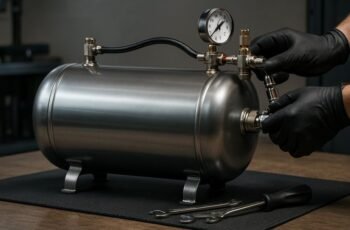
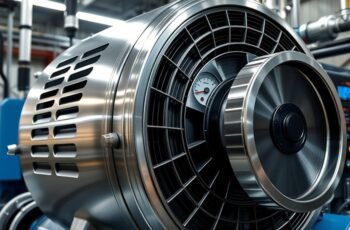
An air compressor regulator plays a vital role in ensuring safe and efficient operation of pneumatic tools by controlling the output pressure. It automatically adjusts to maintain consistent airflow, preventing pressure fluctuations that could damage equipment or impair performance. Understanding how this component functions is key to optimizing your compressor’s performance. As we explore its mechanisms and features, you’ll see why proper regulation is essential for reliable, safe use of compressed air systems.
Key Takeaways
- Maintains a consistent output pressure to ensure optimal tool performance and safety.
- Modulates airflow to prevent over-pressurization and protect connected tools.
- Adjusts pressure settings for different applications and tasks.
- Responds quickly to pressure fluctuations using internal diaphragms or pistons.
- Helps prevent leaks and malfunctions through proper regulation and maintenance.
What Is an Air Compressor Regulator and Why Is It Important?
Have you ever wondered how air tools operate consistently and efficiently? An air compressor regulator is a critical component that maintains a steady output pressure from the compressor to the tools. It functions by modulating the flow of compressed air, ensuring that the pressure remains within specified limits regardless of fluctuations in the supply or demand. This control prevents over-pressurization, which can damage tools or cause safety hazards, and under-pressurization, which reduces performance. The regulator is typically adjustable, allowing operators to set ideal pressure levels for different applications. Its precision ensures reliable operation, prolongs tool lifespan, and improves safety. Without an effective regulator, maintaining consistent air delivery becomes challenging, risking equipment failure and compromised work quality.
How Does an Air Compressor Regulator Work to Control Pressure?
An air compressor regulator controls pressure by adjusting the flow of compressed air as it leaves the tank. It typically employs a diaphragm or piston mechanism connected to a spring-loaded valve. When the downstream pressure drops below the set point, the spring compresses, opening the valve to allow more air to flow, increasing pressure. Conversely, when pressure exceeds the set point, the spring compresses further, closing the valve to restrict airflow. This continuous feedback loop maintains a consistent output pressure. The regulator’s internal components, including the sensing element and control valve, work together to respond rapidly to pressure fluctuations, ensuring precise regulation. This mechanism prevents over-pressurization, protecting tools and ensuring ideal performance of the compressed air system.
Key Features and Types of Air Compressor Regulators
Understanding the key features and types of air compressor regulators is essential for selecting the appropriate control device for specific applications. Regulators typically feature adjustable knobs or screws for precise pressure setting, internal diaphragms or pistons for pressure modulation, and a gauge to monitor output pressure. There are two primary types: single-stage regulators, which provide a steady, consistent pressure suitable for most standard applications, and two-stage regulators, offering more refined control and stability at higher pressures. Some regulators include additional features like built-in filters or safety relief valves. Material construction varies—metal for durability and corrosion resistance, plastic for lightweight needs. Selecting the right type depends on application demands, required precision, and environmental conditions, ensuring ideal performance and safety.
How to Install and Adjust Your Air Compressor Regulator for Optimal Performance
To guarantee your air compressor regulator functions efficiently, proper installation and precise adjustment are crucial. Begin by turning off the compressor and releasing residual pressure. Securely connect the regulator to the air line, ensuring tight fittings to prevent leaks. Adjust the regulator’s knob incrementally, monitoring the output pressure with a calibrated gauge. For ideal performance, set the pressure slightly above your tool’s required operating range. Use the following table to refine your adjustment process:
| Step | Action | Measurement |
|---|---|---|
| 1 | Connect regulator | Ensure secure attachment |
| 2 | Turn adjuster clockwise | Increase pressure |
| 3 | Monitor gauge | Confirm target PSI |
| 4 | Lock adjustment | Prevent drift during use |
Precision in these steps guarantees consistent, safe operation.
Troubleshooting Common Issues With Air Compressor Regulators
When an air compressor regulator malfunctions, it can disrupt your workflow and compromise safety. Common issues include inconsistent pressure output, which often results from a clogged or faulty pressure relief valve or debris in the regulator. Leaking air is another sign of internal seal failure or a damaged diaphragm, leading to pressure instability. Additionally, difficulty adjusting the pressure setting may stem from a defective adjustment knob or worn-out internal components. To troubleshoot, first verify the power source and confirm connections are secure. Inspect for visible damage or debris within the regulator. If pressure inconsistencies persist, replace faulty parts or the entire regulator. Regular maintenance, including cleaning and inspecting seals, helps prevent these issues and maintains peak regulator performance.
Frequently Asked Questions
Can an Air Compressor Regulator Increase Pressure Beyond Its Maximum Setting?
No, an air compressor regulator can’t increase pressure beyond its maximum setting. It precisely controls downstream pressure within its rated limits, ensuring safety and equipment protection, but cannot surpass its designed maximum output, maintaining system integrity.
How Often Should I Replace or Service My Air Compressor Regulator?
We recommend replacing or servicing our air compressor regulator every 1-2 years, or sooner if you notice pressure fluctuations. For example, after five years of operation, a client experienced inconsistent pressure, prompting early maintenance to prevent system failure.
Are There Specific Regulators for Different Types of Pneumatic Tools?
Yes, we select specific regulators tailored to each pneumatic tool’s pressure and flow requirements, ensuring ideal performance and safety. Different tools demand precise regulation, so matching regulator specifications to tool specifications is essential for effective operation.
What Safety Precautions Should I Follow When Adjusting the Regulator?
When adjusting the regulator, we guarantee the compressor is off, wear safety goggles, turn the pressure slowly, and verify pressure readings carefully. This prevents accidental releases, equipment damage, and ensures safe, precise control during operation.
How Does Ambient Temperature Affect Regulator Performance?
Ambient temperature influences regulator performance markedly; a 10°C increase can cause pressure fluctuations of up to 5%, due to changes in air density. We observe these effects to guarantee precise, consistent regulation in varying environmental conditions.
Conclusion
In conclusion, an air compressor regulator is essential for maintaining consistent pressure and ensuring tool safety. Studies show that improper pressure regulation can lead to equipment failure, with up to 30% of pneumatic tool issues traced back to regulator problems. By understanding and properly adjusting your regulator, you optimize performance and extend tool lifespan. Precise control isn’t just recommended—it’s critical for efficient, safe operation in any pneumatic system.