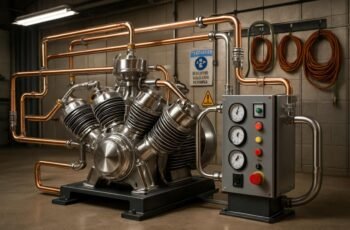
Maintaining an air compressor requires understanding key components and identifying common issues early on. Proper inspection and timely repairs can prevent costly downtime and extend the equipment’s lifespan. We’ll cover practical steps for troubleshooting and fixing typical problems, starting with essential tasks like checking the air filter and sealing leaks. Staying proactive ensures maximum performance, but knowing when to call in a professional can save you time and expense. Let’s explore these critical repair tips.
Key Takeaways
- Regularly inspect and replace the air filter to ensure optimal airflow and prevent debris buildup.
- Check the pressure switch for proper operation and adjust or replace if unresponsive.
- Examine intake valves for cracks, corrosion, and sealing issues; clean or replace as needed.
- Use soapy water or ultrasonic detectors to identify and seal air leaks around fittings and hoses.
- Listen for unusual noises and monitor pressure fluctuations to diagnose internal compressor problems early.
How to Identify Common Air Compressor Problems
Understanding the signs of common air compressor problems is essential for effective troubleshooting and maintenance. We begin by monitoring operational noise; unusual sounds like knocking or rattling often indicate internal component wear or misalignment. Next, observe pressure fluctuations—if the compressor struggles to reach or maintain set pressure levels, it suggests potential issues with valves or seals. Excessive heat buildup can signal overheating due to insufficient airflow or faulty cooling components. Additionally, frequent cycling or inability to start may point to electrical faults or pressure switch failures. Leaks around fittings or hoses are clear indicators of seal or connection problems. Regularly inspecting these signs allows us to pinpoint issues early, minimizing downtime and preventing further damage to the compressor.
Checking and Replacing the Air Filter
A key step in maintaining ideal compressor performance is regularly checking the air filter. A clean filter guarantees maximum airflow, prevents debris from entering the compression chamber, and maintains efficient operation. To inspect, turn off and disconnect the compressor, then locate the filter housing—usually near the intake. Remove the filter carefully, inspecting for excessive dirt, dust, or damage. If the filter appears clogged or worn, replace it with an exact match specified by the manufacturer. When installing a new filter, ensure it fits securely and seals properly to avoid unfiltered air bypass. Regularly scheduled checks—every 50 to 100 hours of use—are essential for consistent performance. Proper maintenance of the air filter prolongs compressor lifespan and enhances overall efficiency.
How to Inspect and Fix the Pressure Switch
We start by inspecting the pressure switch for signs of malfunction, such as inconsistent pressure readings or visible damage. If issues are detected, we can replace the switch entirely or adjust its calibration to guarantee proper operation. Precise testing and careful adjustment are essential to maintain ideal compressor performance.
Identifying Switch Malfunctions
When diagnosing pressure switch malfunctions, the first step is to visually inspect the switch for obvious signs of damage or wear, such as corrosion, broken wires, or burnt contacts. Look for corrosion buildup on terminals, which can impede electrical flow. Check for frayed or disconnected wires that may interrupt circuit continuity. Examine the contacts for signs of burning or pitting, indicating overheating or arcing. Additionally, verify the switch housing for cracks or deformation, which could alter its function.
To summarize:
- Corrosion on terminals or contacts
- Frayed, broken, or disconnected wires
- Burn marks or pitting on contacts
- Cracks or deformation in the switch housing
This thorough visual inspection helps pinpoint potential switch malfunctions accurately.
Replacing or Adjusting Switch
To replace or adjust the pressure switch effectively, begin by disconnecting the compressor from its power source to guarantee safety. Next, locate the switch, typically mounted on the compressor tank or motor assembly. Inspect the switch for visible damage, corrosion, or debris, and verify that the wiring connections are secure. To adjust the pressure settings, use a screwdriver to turn the external adjustment screw—clockwise to increase cut-in pressure, counterclockwise to decrease it. If the switch appears faulty or unresponsive after adjustments, replace it by disconnecting wiring terminals, removing mounting screws, and installing a compatible new switch. Reconnect the wiring, set the desired pressure, and restore power to test functionality. Precise adjustments ensure peak compressor operation and longevity.
Troubleshooting and Repairing the Intake Valve
Troubleshooting and repairing the intake valve begins with a thorough inspection to identify common issues such as leaks, debris, or damage to the valve seat. We start by removing the valve cover and examining the valve for physical damage or carbon buildup. Next, check for debris obstructing the valve seat. Then, test the valve’s seating integrity by applying light pressure to see if it remains sealed. Finally, inspect the spring and hinge mechanism for wear or misalignment. Visualize these steps:
Inspect, clean, and test the intake valve for leaks, debris, and spring wear to ensure optimal engine performance.
- Removing the valve cover and inspecting for cracks or corrosion.
- Clearing any debris or carbon deposits around the valve seat.
- Applying gentle pressure to verify a secure seal.
- Examining the spring for signs of fatigue or deformation.
This precise approach allows us to pinpoint issues affecting airflow and compression, ensuring effective repairs.
How to Detect and Seal Air Leaks
Detecting air leaks in an air compressor requires a systematic approach to guarantee all potential escape points are identified accurately. We begin by visually inspecting hoses, fittings, and seals for obvious signs of damage or looseness. Next, we use soapy water applied to joints and connections; bubbling indicates leaks. For more precise detection, we employ a leak detection spray or a ultrasonic leak detector. Once identified, sealing leaks involves tightening fittings, replacing damaged hoses, or sealing small gaps with appropriate thread sealant or Teflon tape. For larger or persistent leaks, replacing faulty components is essential. This methodical process ensures all air escapes are pinpointed and effectively sealed, restoring compressor efficiency while preventing undue wear on internal parts.
Maintaining and Replacing Compressor Oil
Proper maintenance of compressor oil is essential to ensuring ideal performance and longevity of your air compressor. Regularly checking oil levels helps prevent overheating and component wear. When replacing oil, first shut off the compressor and allow it to cool. Then, follow these steps:
- Remove the drain plug or oil fill cap, draining the old oil into a suitable container.
- Clean the oil reservoir to remove sludge and debris.
- Refill with manufacturer-recommended compressor oil, ensuring correct level.
- Run the compressor briefly to circulate the new oil, then recheck the level.
Consistent oil maintenance maintains maximum lubrication, reduces friction, and prevents corrosion, ultimately extending your compressor’s service life and maintaining peak efficiency.
When to Know It’s Time to Seek Professional Help
While many minor issues with your air compressor can be addressed through routine maintenance, there are specific signs indicating it’s time to seek professional assistance. If you notice persistent abnormal noises, such as knocking or grinding, it suggests internal component failure requiring expert diagnosis. Significant pressure fluctuations or inability to reach designated PSI levels often indicate internal leaks or faulty valves, which demand specialized inspection. Additionally, if the compressor overheating or experiencing electrical problems persists despite troubleshooting, professional intervention is necessary to prevent further damage or safety hazards. Unusual vibrations, excessive oil consumption, or failure to start after basic checks also signal underlying mechanical or electrical issues beyond the scope of DIY repair. Recognizing these signs guarantees safe operation and prevents costly damage.
Frequently Asked Questions
What Safety Precautions Should I Take Before Starting Repairs?
We guarantee the compressor is unplugged, release stored pressure, wear safety goggles and gloves, verify proper grounding, and keep the workspace clear of hazards before starting repairs; these steps minimize risk of injury and equipment damage.
How Often Should I Perform Routine Maintenance on My Compressor?
Like tending a garden, we perform routine maintenance on our compressor every 1 to 3 months, inspecting filters, lubricating moving parts, and checking for leaks, ensuring peak performance and preventing costly breakdowns.
Can I Repair a Compressor With an Electrical Fault Myself?
Yes, you can repair an electrical fault yourself if you have proper knowledge, safety equipment, and follow wiring diagrams carefully. We recommend disconnecting power and consulting the manufacturer’s guidelines before attempting repairs to prevent injury or further damage.
What Tools Are Essential for DIY Air Compressor Repairs?
We primarily need screwdrivers, pliers, multimeters, and wrenches for DIY air compressor repairs. An anachronism like a vintage compass can sometimes help with alignment; precision tools guarantee safety and accuracy during troubleshooting and component replacement.
How Do I Dispose of Old Compressor Parts Responsibly?
We dispose of old compressor parts responsibly by following local hazardous waste regulations, recycling metal components at certified scrap facilities, and properly sealing any residual oils or chemicals before disposal, ensuring environmental safety and regulatory compliance.
Conclusion
Regular maintenance is the compass guiding our compressor’s longevity, much like a steady hand steering a ship through turbulent waters. By diligently inspecting filters, fixing leaks, and monitoring essential components, we guarantee peak performance and prevent costly repairs. Remember, while DIY fixes can navigate us through common issues, recognizing when professional expertise is needed is vital—like knowing when to call in a seasoned captain to avoid treacherous waters. Stay vigilant, and your compressor will serve you reliably for years to come.