Did you know that neglecting proper maintenance can compromise your air compressor tank’s structural integrity long before visible damage appears? Many operators overlook routine checks, risking costly failures or safety hazards. Ensuring your tank remains in ideal condition requires more than just occasional inspection; it demands a systematic approach. Understanding the key steps involved can greatly enhance safety and performance, but what exactly should you focus on to keep your system reliable?
Key Takeaways
- Regularly drain moisture and debris to prevent corrosion and internal deterioration.
- Conduct periodic inspections for leaks, rust, dents, and structural damage.
- Verify the accuracy of pressure gauges and switches to ensure safe operation.
- Perform tank pressure testing to detect leaks and verify integrity.
- Follow safety protocols: depressurize tank, wear PPE, and ensure proper signage.
Why Regular Maintenance Matters for Your Air Compressor Tank
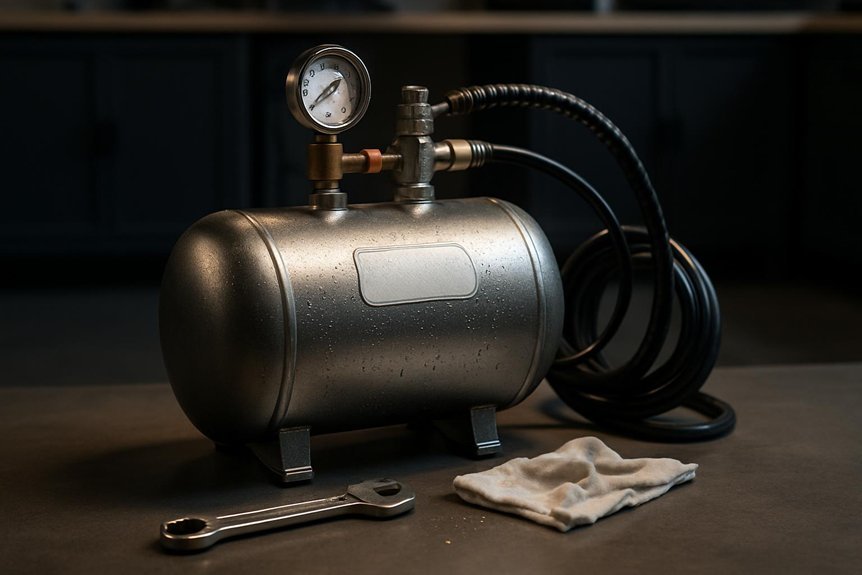
Regular maintenance is essential for ensuring the ideal performance and longevity of your air compressor tank. Proper upkeep directly influences air quality by preventing contamination and moisture buildup, which can compromise downstream equipment and product integrity. Additionally, routine maintenance maximizes energy efficiency by reducing unnecessary strain on the compressor motor, minimizing power consumption. When the tank is well-maintained, it operates more smoothly, with fewer leaks and blockages that can cause fluctuations in air pressure. Consistent inspections, cleaning, and part replacements help sustain optimal airflow and prevent corrosion or damage that could impair functionality. Ultimately, diligent maintenance not only prolongs the tank’s lifespan but also enhances operational reliability, ensuring your system runs at peak efficiency while maintaining high air quality standards.
How to Inspect Your Air Tank for Rust, Leaks, and Damage

We begin by checking the tank surface for rust spots that could compromise its integrity. Next, we carefully inspect for any leaks around fittings, welds, and valves, ensuring airtight seals. Finally, we examine the structural components for signs of damage, such as dents or cracks that may require immediate attention.
Check for Rust Spots
Inspecting your air compressor tank for rust spots is a critical step in guaranteeing its structural integrity. Early detection of rust allows for targeted rust prevention measures, preventing further corrosion. When examining the surface, look for discoloration, flaking paint, or rough patches indicating corrosion initiation. Surface treatment involves removing rust with wire brushes or sandblasting, followed by applying rust-inhibitive primer and protective paint to halt progression. Proper inspection and surface treatment not only extend the tank’s lifespan but also maintain ideal performance. Regularly monitoring the tank’s surface ensures any corrosion is promptly addressed, safeguarding against potential failures. Incorporating these practices into routine maintenance preserves the tank’s integrity and minimizes downtime.
Inspect for Leaks
To guarantee your air compressor tank operates safely and efficiently, it’s essential to thoroughly check for leaks and damage. Leaks can compromise air quality by allowing contaminants or moisture ingress, which impacts system performance. Begin by visually inspecting the tank’s seams, fittings, and valves for signs of moisture, oil, or corrosion. Use a soapy water solution on joints and connections—bubbles indicate leaks. Listen carefully for hissing sounds, which also signal air escape. Persistent leaks can increase noise levels, reduce efficiency, and cause pressure inconsistencies. Regularly monitoring these areas ensures early detection, preventing further damage. Maintaining a leak-free tank not only preserves air quality but also sustains ideal noise control and system longevity.
Examine Structural Damage
How can you effectively identify structural damage on your air compressor tank? We focus on inspecting for rust, leaks, and deformation that compromise structural integrity. Look for obvious signs like corrosion, blistering paint, or pitting, which indicate material degradation. Also, examine welds and seams for cracks or separation. To assist, here’s a quick overview:
| Inspection Focus | Indicators of Damage |
|---|---|
| Rust & Corrosion | Surface rust, pitting, flaky paint |
| Leaks & Deformation | Visible fluid leaks, dents, bulges |
| Material Compatibility | Compatibility issues causing cracking or corrosion |
| Structural Integrity | Cracks, warping, or compromised welds |
Consistent inspection ensures material compatibility and maintains the tank’s structural integrity, preventing catastrophic failure.
Draining Moisture and Removing Debris From the Tank
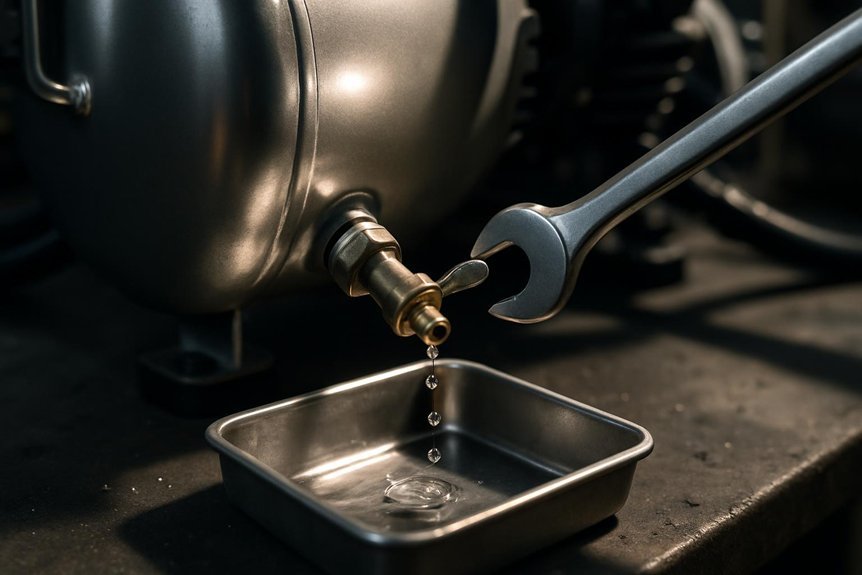
Regularly draining moisture and removing debris from the air compressor tank is essential to prevent corrosion and guarantee peak performance. Water accumulation occurs naturally during compression, leading to rust and structural deterioration if not regularly expelled. Debris buildup, such as dirt and oil residues, can clog drain valves and hinder moisture removal. We recommend inspecting the tank’s drain valve after each use and opening it to evacuate accumulated water and debris. Using a moisture trap or drain valve with a shut-off feature can improve drainage efficiency. Ensuring complete drainage of water and removal of debris minimizes the risk of corrosion, extends tank lifespan, and maintains ideal compressor operation. Consistent maintenance prevents costly repairs and preserves system integrity over time.
Steps to Prevent Corrosion and Extend Tank Lifespan
To prevent corrosion and prolong the tank’s lifespan, we emphasize the importance of regularly draining accumulated moisture, which can accelerate rust formation. Applying appropriate protective coatings creates a barrier against environmental elements that cause corrosion. Consistent maintenance of these steps guarantees the tank remains structurally sound and operational over time.
Regularly Drain Moisture
Have you noticed moisture accumulating inside your air compressor tank? Regularly draining this moisture is essential to prevent corrosion, which can compromise air quality and increase noise levels. Moisture buildup promotes rust formation, reducing tank lifespan and affecting output. To control this, we recommend draining the tank daily or after each use, especially in high-humidity environments. Proper drainage maintains ideal air quality and minimizes internal corrosion. Here’s a quick reference:
| Action | Frequency | Effect |
|---|---|---|
| Drain moisture | Daily or after use | Prevents rust, maintains air quality |
| Inspect drain valve | Monthly | Ensures proper operation |
| Remove sediment | Quarterly | Reduces corrosion risk |
| Check for leaks | Weekly | Maintains pressure integrity |
| Maintain drain valve | Annually | Ensures long-term functionality |
Apply Protective Coatings
Applying protective coatings to your air compressor tank is a critical step in preventing corrosion and extending its operational lifespan. Proper surface preparation is essential before applying protective coatings; this involves cleaning the tank thoroughly to remove dirt, rust, and grease. Surface preparation guarantees the coating adheres effectively and creates a barrier against moisture and corrosive elements. We recommend using abrasive blasting or wire brushing to achieve a smooth, clean surface. Once prepared, apply a compatible protective coating designed for metal tanks, such as epoxy or enamel-based paints. These coatings provide a durable, corrosion-resistant surface that withstands environmental exposure. Regular inspection and reapplication as needed will maintain the tank’s integrity, ultimately prolonging its service life and ensuring safe, efficient operation.
When and How to Perform a Tank Pressure Test
Regularly performing a tank pressure test is essential to guarantee the integrity and safety of your air compressor tank, especially before and after periods of extended use or maintenance. Tank pressure testing should be conducted when the tank shows signs of corrosion, or after repairs, to verify structural soundness. Initiate the test by isolating the tank from the compressor and pressurizing it to the manufacturer’s recommended maximum working pressure. Use a calibrated pressure gauge to monitor the pressure over a set period, typically 24 hours, ensuring no significant pressure loss occurs. This process also aids in compressor calibration, confirming that the pressure readings are accurate. Proper timing and methodical execution of tank pressure testing are crucial for early detection of leaks or weaknesses, preventing potential failures.
Common Issues and Troubleshooting Tips for Air Tanks
Identifying and addressing common issues with air tanks can prevent costly repairs and downtime. Poor air quality can result from moisture buildup or contamination, affecting compressor efficiency. To troubleshoot effectively, consider these points:
- Corrosion or rust inside the tank—regular draining of moisture prevents deterioration.
- Leaking valves or fittings—inspect for leaks, which reduce pressure and efficiency.
- Pressure inconsistencies—verify pressure switches and gauges for accuracy.
- Sediment or debris accumulation—cleaning the tank ensures optimal air quality and performance.
Addressing these issues promptly maintains compressor efficiency and air quality, reducing operational costs and prolonging tank lifespan. Regular inspections and maintenance are essential for preventing minor issues from escalating into major failures.
Safety Precautions and Best Practices for Air Compressor Tank Maintenance
Ensuring safety during air compressor tank maintenance is essential to prevent accidents and equipment damage. We recommend implementing clear safety signage around the work area to alert personnel of potential hazards. Before maintenance, depressurize and drain the tank completely, and inspect for corrosion or structural weaknesses. Proper tank painting with corrosion-resistant coatings enhances durability and visual inspection accuracy, making signs of deterioration more evident. Always wear appropriate personal protective equipment (PPE) and follow manufacturer guidelines. Regularly check safety signage to ensure visibility and clarity. Additionally, confirm that all safety protocols are posted and understood. These best practices minimize risk, maintain tank integrity, and promote a safe working environment during maintenance procedures.
Frequently Asked Questions
How Often Should I Replace the Air Compressor Tank?
We recommend replacing the air compressor tank every 10 to 15 years, after regular tank inspections for corrosion and structural integrity. Consistent corrosion prevention measures extend tank lifespan, ensuring safety and peak performance.
Can I Paint or Coat My Air Tank for Protection?
Yes, you can apply a tank coating or paint for protection, but guarantee proper surface preparation and use a compatible, corrosion-resistant paint. This enhances durability and prevents rust, maintaining the tank’s integrity and performance over time.
What Are the Signs of Tank Over-Pressurization?
We notice over-pressurization signs through frequent pressure relief activations and safety valve releases, indicating excess pressure buildup. Regularly monitoring pressure gauges and ensuring safety valves function correctly helps prevent dangerous over-pressurization, maintaining system integrity and safety.
How Do Environmental Conditions Affect Tank Maintenance?
Environmental conditions influence tank maintenance by requiring diligent corrosion prevention and temperature regulation; high humidity accelerates corrosion, while extreme temperatures cause material stress, so regular inspections and protective measures are essential to guarantee safety and longevity.
Are There Specific Maintenance Routines for Different Tank Sizes?
Like a well-oiled machine, we tailor maintenance routines to tank sizes, inspecting tank insulation and safety valves regularly. Larger tanks demand thorough checks, while smaller ones focus on corrosion prevention and ensuring safety valve functionality.
Conclusion
Regular maintenance is vital for extending the life of your air compressor tank and ensuring safe operation. Studies show that improperly maintained tanks are 4 times more likely to experience failures. By inspecting, draining moisture, preventing corrosion, and following safety protocols diligently, we can minimize downtime and costly repairs. Staying proactive in tank upkeep not only enhances performance but also safeguards personnel and equipment—making it an indispensable aspect of responsible compressor management.