Ensuring the safe operation of industrial air compressors is essential for minimizing risks and maintaining productivity. We recognize that thorough safety procedures, from regular inspections to effective emergency responses, are critical components of a reliable system. By adhering to established protocols and integrating advanced safety measures, we can protect personnel and equipment alike. The complexities involved demand a detailed understanding of safety practices—so, let’s explore the key strategies that underpin a secure and efficient compressor environment.
Key Takeaways
- Regularly inspect safety devices, pressure relief valves, and venting systems to ensure proper functioning and prevent accidents.
- Provide comprehensive operator training, including emergency response, certification, and hands-on simulations.
- Enforce the use of PPE and display safety signage to promote PPE compliance and hazard awareness.
- Follow established startup, shutdown, and pressure management protocols to avoid system stress and failures.
- Implement proactive safety measures like auto-shutdown systems and real-time monitoring to detect anomalies early.
Understanding the Risks of Industrial Air Compressors
While industrial air compressors are essential for many manufacturing processes, they pose significant safety risks if not properly managed. One primary concern is air compressor noise, which can cause hearing damage if exposure is prolonged without adequate hearing protection. Additionally, compressor lubrication is critical; insufficient lubrication can lead to overheating, component wear, and potential mechanical failure. Proper lubrication ensures smooth operation and prevents metal-on-metal contact that could result in catastrophic breakdowns. Excessive noise levels often indicate underlying issues like misalignment or mechanical degradation, emphasizing the need for regular monitoring. Failing to address noise and lubrication concerns increases the risk of accidents, equipment damage, and operational downtime. Understanding these risks helps us implement effective safety measures to protect personnel and prolong compressor lifespan.
Performing Regular Inspections and Maintenance Checks

Regular inspections and maintenance checks are essential for ensuring compressor safety and ideal performance. We follow strict inspection protocols and meticulously document all maintenance activities to track system health. Consistent record-keeping enables us to identify potential issues before they escalate, maintaining operational integrity.
Scheduled Inspection Protocols
To assure the safe and efficient operation of industrial air compressors, we prioritize scheduled inspection protocols that involve performing regular inspections and maintenance checks. Adhering to defined inspection intervals ensures early detection of potential issues, preventing costly downtime. These protocols include systematic visual assessments, component diagnostics, and functional tests. Strictly following scheduled maintenance schedules helps maintain peak performance and prolongs equipment lifespan.
- Establish clear inspection intervals based on manufacturer recommendations and operational demands
- Conduct detailed checks of safety devices, pressure vessels, and cooling systems
- Document inspection results to identify trends and inform future maintenance planning
Maintenance Record Keeping
Accurate maintenance record keeping is essential for guaranteeing that inspection and maintenance activities are properly documented and traceable. We emphasize record accuracy to maintain a reliable history of compressor performance and service. Effective documentation methods include detailed logs, digital record systems, and standardized forms that capture inspection dates, findings, repairs, and parts replacements. Precise records enable timely identification of recurring issues and facilitate compliance with safety standards. Consistent updates after each maintenance activity ensure data integrity and support accountability. By adhering to rigorous documentation methods, we improve maintenance planning, reduce downtime, and enhance safety protocols. Clear, accurate records are crucial for evaluating compressor reliability and ensuring ongoing compliance with industrial safety procedures.
Proper Training for Safe Operation of Compressors
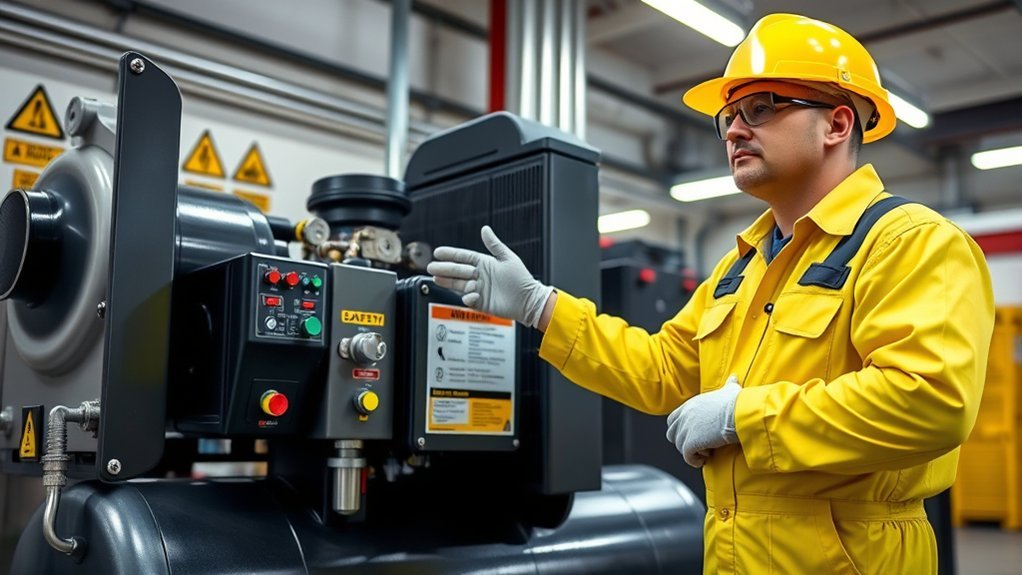
Ensuring that operators are properly trained is essential for the safe and efficient use of industrial air compressors. Proper training includes obtaining operator certification, which verifies competence in handling equipment safely. Hands-on training simulations are critical for developing real-world skills and understanding emergency procedures. This approach minimizes operational errors and enhances safety awareness. Thorough training programs should cover system components, safety protocols, and troubleshooting techniques. Regular refresher courses ensure operators stay current with evolving standards and technological updates. Clear documentation of training and certification records supports compliance with safety regulations. By emphasizing targeted education, organizations reduce accident risks and improve compressor performance. Properly trained operators are crucial to maintaining a safe working environment and optimizing compressor efficiency.
Using Personal Protective Equipment (PPE) Effectively
Using Personal Protective Equipment (PPE) effectively is essential for safeguarding personnel from potential hazards associated with industrial air compressors. Proper use of protective clothing, such as flame-resistant suits and gloves, minimizes injury risks from high-pressure leaks or unexpected releases. Clear safety signage must be visible at all compressor stations, reinforcing PPE requirements and hazard awareness. We must guarantee PPE fits correctly and is maintained regularly to provide maximum protection. Training personnel to recognize when and how to use PPE correctly enhances safety protocols. Consistent adherence to PPE procedures prevents contact with moving parts, compressed air, or hazardous contaminants. By integrating protective clothing standards with prominent safety signage, we establish a robust safety culture that reduces occupational injuries and promotes a secure working environment.
Implementing Safe Startup and Shutdown Procedures
Implementing safe startup and shutdown procedures is critical to preventing equipment damage and ensuring personnel safety. Proper execution of startup procedures involves verifying system readiness, ensuring all safety interlocks are engaged, and gradually increasing pressure to avoid sudden stress on components. During shutdown procedures, it’s essential to depressurize the system correctly, disconnect power safely, and inspect for any irregularities before maintenance. Adherence to established protocols reduces the risk of mechanical failure and personal injury. To enhance safety, consider these key points:
Prioritize proper startup and shutdown procedures to ensure safety and prevent equipment damage.
- Pre-start checks to confirm system integrity
- Sequencing steps to prevent pressure surges
- Post-shutdown inspections to identify potential issues
Following these procedures guarantees the compressor operates reliably and safely throughout its lifecycle.
Managing Pressure and Venting Safely
Effective management of pressure and venting is vital for safe compressor operation. We emphasize proper pressure monitoring techniques, ensuring pressure levels are consistently within safe limits, and following established venting procedures to prevent accidental releases. In addition, implementing emergency pressure release protocols safeguards personnel and equipment during unexpected pressure surges.
Proper Pressure Monitoring Techniques
To guarantee safe operation of industrial air compressors, it’s essential that we closely monitor pressure levels at all times. Accurate pressure measurement relies on proper pressure calibration and ensuring gauge accuracy. Regular calibration verifies that gauges reflect true pressure values, reducing the risk of over- or under-pressurization. Gauge accuracy must be checked against certified standards periodically, especially after maintenance or repairs. We should also verify that pressure sensors are functioning correctly and replace faulty gauges immediately. Proper monitoring involves not only reading pressure indicators but also understanding the potential for calibration drift. Implementing routine calibration schedules and using reliable, traceable gauges ensures precise pressure control, minimizing safety hazards associated with pressure anomalies.
- Routine calibration intervals and procedures
- Cross-verification with secondary measurement devices
- Maintenance of calibration records for compliance
Safe Venting Procedures
Managing pressure and venting safely is critical to preventing equipment damage and ensuring personnel safety during compressor operation. Proper venting allows excess pressure to be released in a controlled manner, reducing risk of rupture or failure. We emphasize maintaining ventilation safety by guaranteeing exhaust systems are unobstructed and functioning correctly. Regular inspections verify that venting pathways are clear and that vent valves operate smoothly. Here is a visual overview:
| Venting Components | Functionality Check |
|---|---|
| Pressure relief valves | Confirm they open at set pressure levels |
| Exhaust systems | Ensure no blockages or leaks |
| Ventilation fans | Verify operational status and airflow capacity |
| Piping and ducts | Inspect for corrosion or damage |
| Control panels | Confirm proper signaling and alarm functions |
These measures maintain safe venting, preventing pressure buildup and safeguarding equipment and personnel.
Emergency Pressure Release
When pressure levels exceed safe limits despite regular venting procedures, immediate action is required to prevent equipment failure or safety hazards. Proper emergency pressure release involves activating the emergency vent, designed to handle sudden pressure surges. Guaranteeing accurate pressure readings through regular pressure gauge calibration is essential for timely intervention. An effective emergency vent design incorporates safety features such as pressure relief valves and automatic shutoff mechanisms. To optimize safety:
- Verify the emergency vent’s functionality periodically through controlled testing.
- Maintain calibration records for pressure gauges to ensure accurate readings.
- Implement standardized procedures for manual venting during high-pressure scenarios.
These measures help prevent catastrophic failures, ensuring safe operation and compliance with safety standards.
Responding to Emergencies and Preventing Accidents
In the event of an emergency involving an industrial air compressor, prompt and effective response is critical to minimizing injury, equipment damage, and operational downtime. We prioritize the integration of innovative safety technology, such as auto-shutdown systems and real-time monitoring, to detect anomalies early. Proper training ensures quick, precise actions during crises. Preventative measures include maintaining ergonomic design features that facilitate safer, more efficient responses, reducing worker fatigue and error. Regularly inspecting safety devices and emergency controls ensures peak performance. Clear communication protocols enable coordinated responses, minimizing risks. By combining advanced safety technology with ergonomic considerations, we enhance overall safety, reduce incident severity, and promote a proactive safety culture that prevents accidents before they occur.
Frequently Asked Questions
How Often Should Safety Training Be Refreshed for Compressor Operators?
We recommend invigorating safety training annually, incorporating maintenance schedules and emergency protocols, to ensure compressor operators stay current with best practices, recognize hazards, and respond effectively, minimizing risks and maintaining a safe, compliant work environment.
What Are the Signs of Imminent Compressor Failure?
We notice signs like abnormal compressor vibration and oil contamination, indicating imminent failure. These symptoms signal mechanical imbalance or lubricant breakdown, requiring immediate inspection to prevent costly downtime and guarantee safety.
How Can Noise Levels Be Effectively Reduced During Operation?
We reduce noise levels during operation through noise reduction techniques like installing sound enclosures and mufflers, maintaining equipment properly, and using hearing protection. These strategies minimize auditory exposure, ensuring a safer, quieter working environment for everyone involved.
Are There Specific Environmental Conditions That Increase Safety Risks?
Are environmental hazards and weather considerations increasing safety risks? Absolutely. We must monitor conditions like humidity, temperature, and air quality, as these factors can lead to equipment malfunctions or accidents, demanding strict safety protocols and real-time environmental assessments.
What Are Best Practices for Storing and Disposing of Compressor Lubricants?
We prioritize storage safety by keeping lubricants in sealed, labeled containers away from heat sources, and guarantee proper lubricant disposal by following environmental regulations, preventing leaks, and using designated containers to avoid contamination and environmental harm.
Conclusion
By following these safety procedures, we greatly reduce risks and guarantee reliable compressor operation. However, overlooking even a small detail can lead to serious consequences. The importance of vigilance, proper maintenance, and emergency preparedness cannot be overstated. As we implement these measures, we stay one step ahead—yet, unforeseen challenges may still arise. Are we truly prepared to handle the unexpected? Continuous diligence is essential to safeguard personnel and equipment in every critical moment.