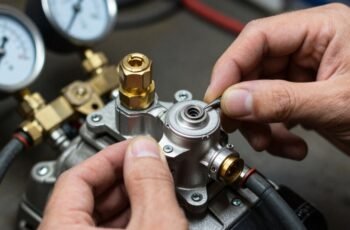
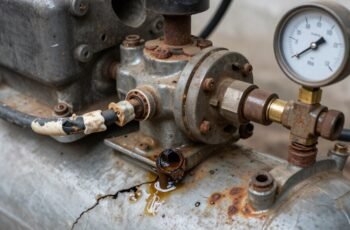
Making safety during air compressor maintenance crucial to prevent accidents and maintain reliable operation. We recognize the importance of thorough safety checks, proper procedures, and training, but it’s easy to overlook key steps that could compromise safety. As we explore these protocols, you’ll see how cautious practices protect everyone involved and guarantee compliance. Staying vigilant is necessary—so, let’s examine the critical safety measures that keep maintenance safe and effective.
Key Takeaways
- Conduct thorough safety inspections for leaks, damage, and hazards before servicing the compressor.
- Follow lockout/tagout procedures to ensure the compressor is fully isolated from energy sources.
- Wear appropriate PPE, including gloves, goggles, and hearing protection, during maintenance activities.
- Properly handle and dispose of hazardous fluids and parts in accordance with environmental regulations.
- Regularly train personnel on emergency procedures and safe maintenance protocols.
Why Regular Maintenance Is Crucial for Air Compressors
Regular maintenance is essential for ensuring the safe and efficient operation of air compressors. Without regular checks, components can wear prematurely, reducing the overall air compressor lifespan. Proper maintenance helps identify early signs of deterioration, preventing costly breakdowns and downtime. It also plays a vital role in efficiency optimization, ensuring the compressor operates at peak performance. When parts are clean, lubricated, and properly calibrated, energy consumption decreases, and productivity increases. Neglecting maintenance can lead to increased wear and decreased reliability, risking safety and operational costs. Consequently, a consistent maintenance routine isn’t just about prolonging equipment life; it’s about maintaining safe, efficient, and reliable performance at all times.
Essential Safety Checks Before Servicing the Compressor
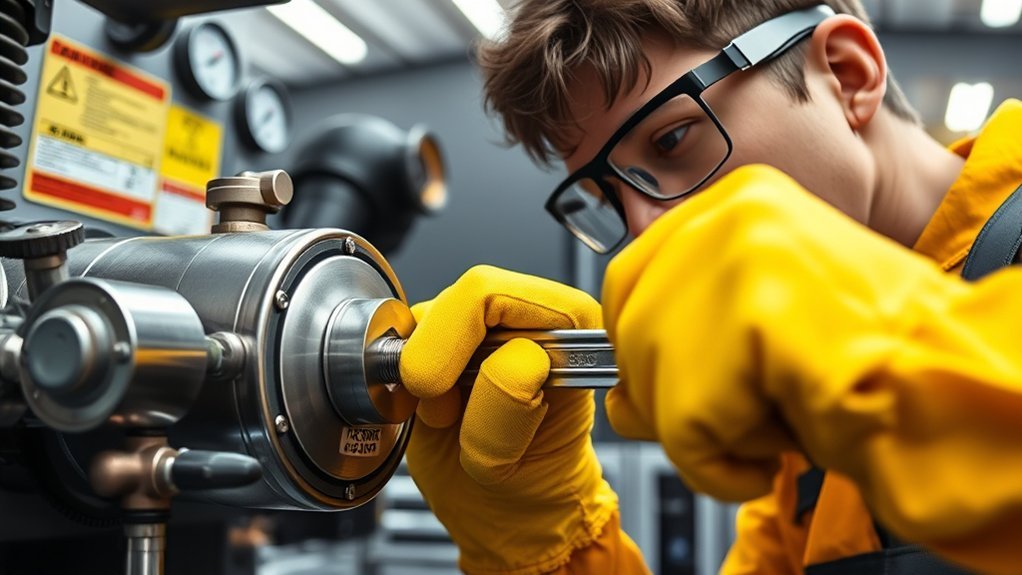
Before beginning any maintenance or servicing on an air compressor, it’s essential to perform thorough safety checks to prevent accidents and damage. We start with a detailed compressor inspection, ensuring all parts are in proper condition and there are no leaks or damage. Double-check that safety equipment, such as gloves, goggles, and hearing protection, is available and in good condition. We also verify that the compressor is turned off and unplugged before proceeding. Proper safety checks help identify potential hazards early, reducing risks during maintenance. Use the following table to guide your inspection:
| Safety Check | Description |
|---|---|
| Compressor Inspection | Look for leaks, wear, or damage |
| Safety Equipment | Confirm availability and condition |
| Power Isolation | Ensure compressor is unplugged |
Proper Lockout/Tagout Procedures to Prevent Accidents
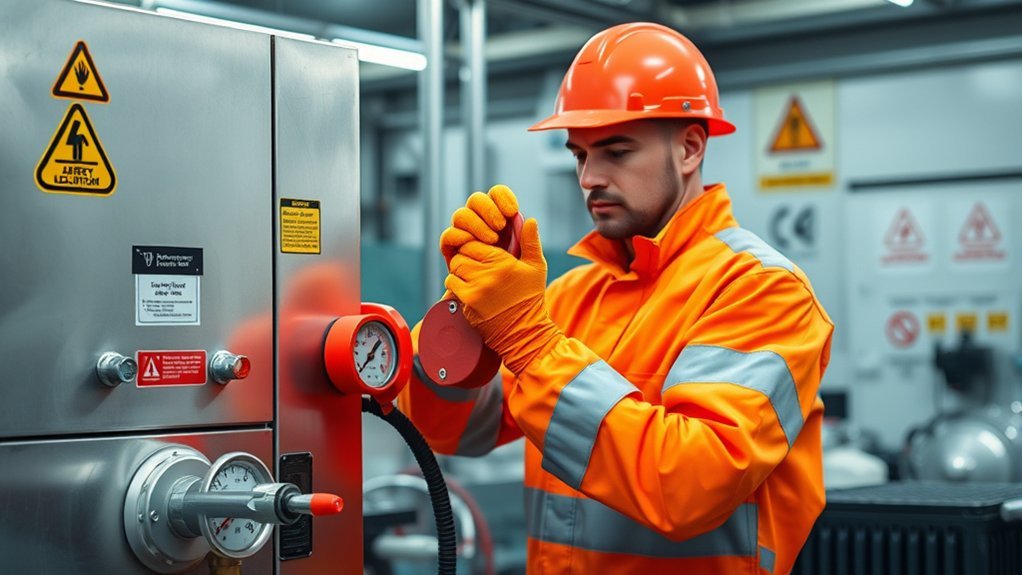
To prevent accidental startup or release of stored energy during maintenance, we must follow strict lockout/tagout procedures. These procedures guarantee safety by systematically isolating the compressor from energy sources.
Following lockout/tagout procedures ensures safe maintenance by isolating the compressor from energy sources.
Key steps include:
- Lockout procedures: Secure all energy isolating devices with locks to prevent operation.
- Tagging protocols: Clearly label the locked-out equipment with warning tags to inform others of ongoing maintenance.
- Verification: Confirm that the energy has been fully isolated and no residual energy remains before starting work.
Adhering to these protocols minimizes risk, but it’s crucial to double-check each step carefully. Precision and caution during lockout/tagout are essential to prevent accidents and ensure a safe maintenance environment.
Safe Handling and Disposal of Compressor Fluids and Parts
Once we’ve properly isolated the compressor during maintenance, attention must turn to handling and disposing of fluids and parts safely. Fluid leakage poses significant hazards, so we must carefully contain and clean any spills immediately, using appropriate protective gear. Used compressor fluids, such as oils and coolants, are hazardous waste and require proper disposal according to local regulations. We should avoid pouring these into drains or onto the ground. Instead, we can recycle components like metal parts through certified recycling programs, minimizing environmental impact. When removing parts, make sure they’re drained of fluids first, reducing risk of leaks. Proper handling and disposal prevent accidents, environmental contamination, and ensure compliance with safety standards. Vigilance and adherence to procedures are essential throughout this process.
Training Tips to Promote Safe Maintenance Practices
Effective training is essential to guarantee that maintenance personnel understand and follow safety protocols consistently. Proper instruction emphasizes the importance of emergency preparedness and PPE use during maintenance tasks. We recommend emphasizing the following points:
Regular training ensures safety protocols are understood and followed during maintenance.
- Regularly review emergency procedures, ensuring everyone knows how to respond quickly and safely in case of accidents.
- Stress the importance of PPE, such as gloves, eye protection, and hearing safeguards, to prevent injuries.
- Conduct hands-on demonstrations to reinforce correct maintenance techniques and safety measures.
Frequently Asked Questions
How Often Should Air Compressors Be Inspected for Safety Risks?
We recommend inspecting air compressors weekly for safety risks, focusing on air quality and noise levels, to guarantee peak operation. Regular checks help detect issues early, preventing potential hazards and maintaining safe, efficient workplace conditions.
What Are Common Signs of Air Compressor Malfunction?
A stitch in time saves nine, so watch for signs like unusual noises, oil leakage, or decreased compressor lifespan. These often indicate malfunctions that require prompt inspection to prevent costly damage and guarantee safety.
Are There Specific Safety Certifications Required for Maintenance Personnel?
We guarantee maintenance personnel have proper certification requirements and maintenance qualifications, as these are vital for safety and compliance. It’s important to verify that all workers are trained and qualified before performing any compressor maintenance tasks.
How Do Weather Conditions Affect Compressor Safety During Maintenance?
Weather impact, especially temperature fluctuations, can compromise compressor safety during maintenance. We stay cautious by monitoring weather conditions, avoiding work in extreme heat or cold, and ensuring proper equipment adjustments to prevent accidents and equipment damage.
What Emergency Procedures Should Be Followed if an Accident Occurs?
If an accident occurs, we immediately follow emergency response procedures, alerting others, shutting down equipment, and applying safety protocols. For example, in a case of sudden pressure release, quick action minimizes injury risks and secures safety.
Conclusion
By following these safety protocols, we can prevent accidents that feel as catastrophic as a volcano erupting or a tornado tearing through. Regular maintenance, thorough checks, and proper procedures are our shields against disaster. When we handle fluids and parts responsibly, we avoid environmental chaos like oil spills in oceans. Proper training transforms us into safety superheroes, ensuring our work environment remains safe and reliable—because one mistake shouldn’t turn our workplace into a disaster zone.