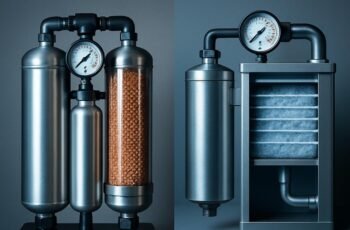
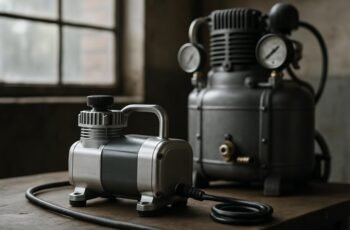
At the heart of a reliable pneumatic system lies a delicate balance—much like a finely tuned instrument—that hinges on understanding the roles of an air compressor regulator and a pressure switch. Both components serve critical functions, yet their operational differences can considerably impact system performance. As we explore their distinct roles, you’ll see how choosing the right component can influence efficiency, stability, and maintenance. The decision isn’t always straightforward, prompting us to examine their mechanics more closely.
Key Takeaways
- Regulators provide continuous, precise pressure control for sensitive applications, while pressure switches turn the compressor on/off based on pressure thresholds.
- Regulators improve air quality, reduce noise, and stabilize downstream pressure; pressure switches primarily manage compressor cycling.
- Use regulators for delicate tools and environments needing steady pressure; pressure switches are ideal for automatic compressor operation.
- Regulators require regular calibration and maintenance for consistent performance; pressure switches focus on reliable cycling and safety.
- Choosing depends on whether precise pressure stability (regulator) or automated system control (pressure switch) is your priority.
Understanding the Roles of Air Compressor Regulators and Pressure Switches
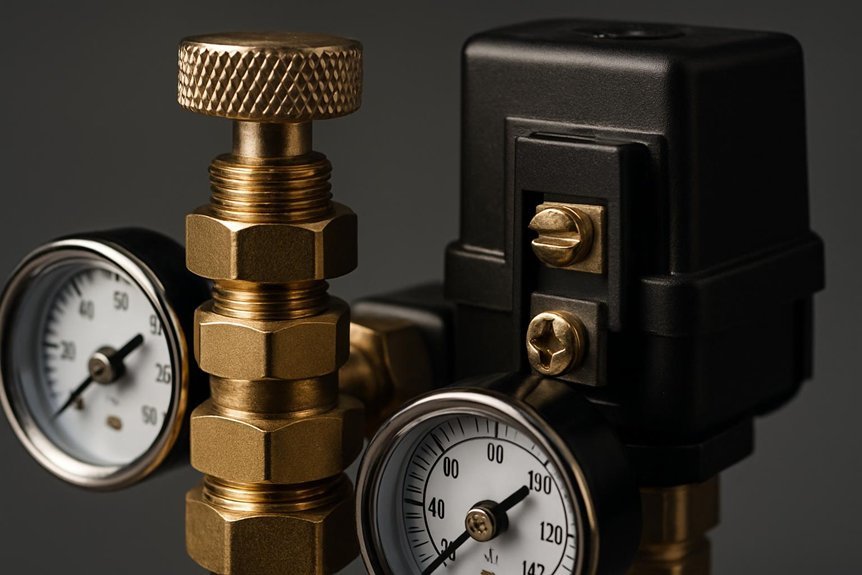
While both air compressor regulators and pressure switches play crucial roles in managing compressed air systems, they serve distinct functions that guarantee ideal operation. Regulators primarily guarantee consistent air pressure, which directly influences air quality by reducing contaminants and moisture that can compromise system performance. They also contribute to noise reduction by smoothing airflow fluctuations, resulting in quieter operation. Conversely, pressure switches monitor system pressure levels and trigger compressor cycles to maintain desired thresholds, indirectly affecting noise levels and air quality. Accurate regulation prevents pressure surges that can generate excess noise or introduce impurities. Together, these components optimize system stability, promote cleaner output, and minimize operational noise, ensuring the compressed air system functions efficiently and reliably.
How Does an Air Compressor Regulator Work to Maintain Consistent Pressure?
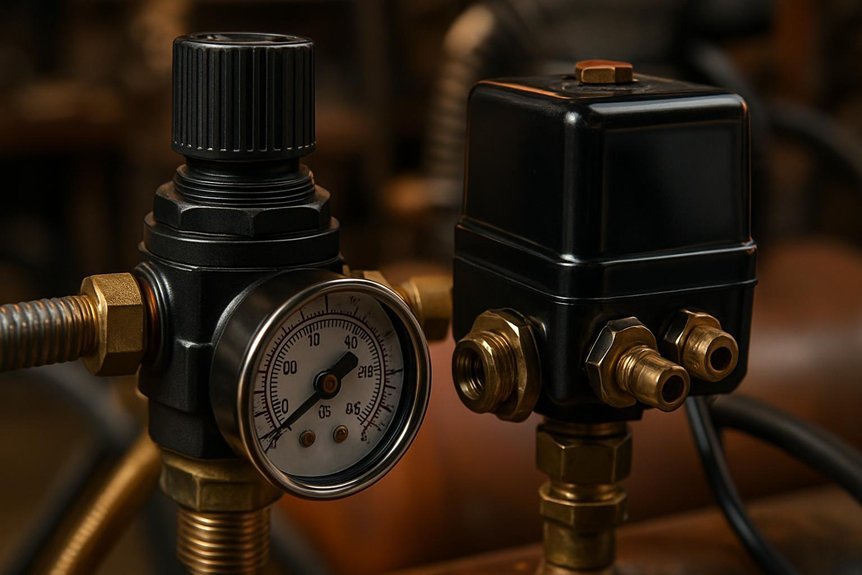
An air compressor regulator functions by continuously adjusting the flow of compressed air to maintain a stable output pressure, regardless of fluctuations in system demand or input pressure. It achieves this through a diaphragm or piston mechanism that responds to downstream pressure changes, modulating a valve to either increase or decrease airflow accordingly. This regulation ensures consistent air quality by preventing pressure surges that could introduce contaminants or moisture, thereby enhancing overall air purity. Additionally, maintaining steady pressure minimizes the need for excessive airflow, which helps reduce noise levels and operational vibrations. As a result, the regulator not only stabilizes pressure but also contributes to quieter operation and improved air quality, guaranteeing ideal performance and safety in compressed air systems.
What Function Does a Pressure Switch Serve in Your Compressor System?
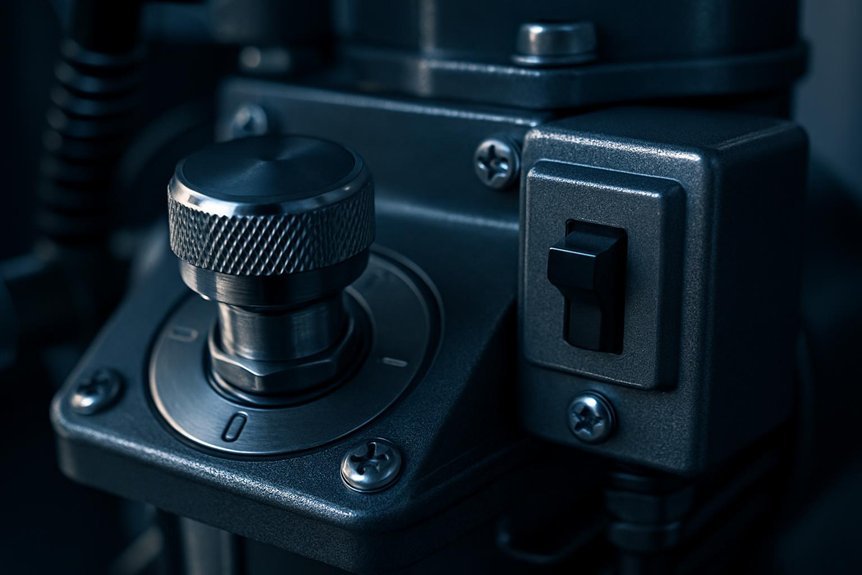
A pressure switch plays a critical role in monitoring the system’s pressure levels and ensuring safe operation. It automatically activates or deactivates the compressor based on predefined pressure thresholds. This function helps maintain consistent pressure and prevents system over-pressurization.
Monitors System Pressure
The pressure switch plays a critical role in maintaining system stability by actively monitoring the compressor’s pressure levels. It functions as an essential safety device, ensuring the system operates within designated pressure limits. When pressure reaches preset thresholds, the switch signals the compressor to turn on or off, preventing over-pressurization and potential equipment damage. Regular maintenance tips include inspecting electrical connections and testing switch responsiveness to avoid malfunctions. Safety considerations are paramount; a faulty pressure switch can lead to pressure buildup risks or system failure. Accurate calibration and timely replacements enhance reliability, ensuring consistent performance. By reliably monitoring system pressure, the switch safeguards the compressor’s integrity, optimizing both safety and operational efficiency in demanding applications.
Controls Compressor Activation
Since maintaining appropriate pressure levels is crucial for efficient compressor operation, the pressure switch actively controls when the compressor activates and deactivates. Its primary function is to guarantee consistent air quality by preventing pressure fluctuations that could compromise downstream tools. Additionally, it regulates noise levels by reducing unnecessary compressor run times, minimizing sound disturbances.
- It triggers compressor start-up at the lower pressure setpoint, ensuring system readiness.
- It halts operation at the upper pressure threshold, conserving energy.
- It maintains stable pressure, protecting components from pressure surges.
- It influences noise levels and air quality by controlling compressor cycling frequency.
Understanding this control mechanism is essential for optimizing system efficiency and maintaining consistent air quality.
Key Differences Between a Regulator and a Pressure Switch Explained
Understanding the core distinctions between a regulator and a pressure switch is essential for optimizing air compressor systems. A regulator maintains consistent downstream pressure, enhancing air quality and minimizing fluctuations that can lead to inconsistent tool performance. Conversely, a pressure switch controls the compressor’s activation and deactivation based on preset pressure thresholds, influencing system efficiency.
| Feature | Regulator | Pressure Switch |
|---|---|---|
| Function | Maintains steady pressure | Turns compressor on/off |
| Response | Continuous adjustment | Discrete activation |
| Impact | Noise reduction, air quality | System efficiency |
| Control | Fine-tuning downstream pressure | System cycling |
| Application | Precision tools, air quality | Large-scale systems |
When Should You Use a Regulator Instead of a Pressure Switch?
Determining whether to implement a regulator instead of a pressure switch depends on the specific demands of your air system. Regulators are ideal when precise control over air quality and pressure stability is essential, especially in sensitive applications. Consider using a regulator when:
- Consistent Air Quality is required for downstream processes, as regulators can filter and maintain stable pressure, reducing contaminants.
- Noise Reduction is a priority, since regulators operate more quietly than pressure switches that cycle frequently.
- Precise Pressure Control is necessary for delicate tools or equipment, ensuring ideal performance.
- Reducing System Fluctuations minimizes pressure spikes that could lead to wear, leaks, or inefficiency.
Choosing a regulator over a pressure switch enhances system stability, air quality, and noise control, aligning with specific operational needs.
Common Applications for Compressors With Regulators Versus Pressure Switches
We consider how precision in air delivery, automatic pressure control, and task-specific requirements influence the choice between compressors with regulators or pressure switches. Regulators excel in applications demanding consistent pressure levels, while pressure switches are better suited for automatic shutoff and simple control. Understanding these core differences helps identify the most suitable component for each specific application.
Precision in Air Delivery
How vital is precision in air delivery for various applications, and how do regulators and pressure switches influence this accuracy? Precise control guarantees ideal air quality and minimizes noise, essential in sensitive environments. Regulators provide steady, adjustable pressure levels, guaranteeing consistent airflow tailored to specific tasks. Conversely, pressure switches activate or deactivate compressors based on preset thresholds, offering less fine-tuning.
Key considerations include:
- Maintaining consistent air quality for delicate manufacturing processes.
- Reducing noise levels for operator safety and comfort.
- Achieving exact pressure requirements in precision tools.
- Guaranteeing minimal fluctuations that could compromise product quality or safety.
Understanding these differences helps select the appropriate device for applications demanding high precision, balancing efficiency with accuracy in air delivery.
Automatic Pressure Control
Automatic pressure control plays a vital role in optimizing compressor performance across various applications. It maintains consistent pressure levels, which directly impacts air quality by minimizing fluctuations that can introduce contaminants or moisture. In systems with regulators, automatic control guarantees stable output, reducing the need for manual adjustments and promoting cleaner, more reliable air delivery. Additionally, automatic control methods contribute to noise reduction by preventing rapid pressure swings and compressor cycling, which generate excess sound. This is particularly important in sensitive environments like laboratories or manufacturing facilities. Overall, automatic pressure control enhances operational efficiency, air quality, and acoustic comfort, making it indispensable in applications where precise pressure regulation, air purity, and noise management are critical.
Suitability for Specific Tasks
Choosing between compressors equipped with regulators or pressure switches depends heavily on the specific application requirements. Regulators excel in tasks demanding precise air quality control and consistent pressure, such as fine painting or laboratory operations, where air purity is critical. Pressure switches are better suited for repetitive, high-volume tasks like pneumatic tools, where maintaining maximum pressure is essential.
Key considerations include:
- Air Quality Control: Regulators offer finer adjustment for cleaner, more stable output.
- Noise Reduction: Regulators generally produce less noise during operation, beneficial in sensitive environments.
- Flow Consistency: Pressure switches maintain set pressure levels, ideal for continuous processes.
- Application Specificity: Regulators suit delicate operations; pressure switches excel in high-demand, rugged tasks.
Troubleshooting Pressure Issues: Is It the Regulator or the Pressure Switch?
When diagnosing pressure fluctuations in an air compressor system, it’s essential to determine whether the issue stems from the regulator or the pressure switch, as each component influences system performance differently. A malfunctioning regulator may cause inconsistent pressure delivery, impacting air quality and potentially increasing noise levels due to pressure surges. Conversely, a faulty pressure switch often results in cycling issues, where the compressor turns on or off irregularly, affecting system stability. Troubleshooting involves checking for leaks, inspecting gauge readings, and listening for abnormal noises that could indicate pressure inconsistencies. Proper identification ensures targeted repairs, restoring ideal air quality and noise reduction. Recognizing the distinct roles of these components helps maintain efficient operation and prevents unnecessary downtime.
How to Properly Install and Maintain Your Compressor’s Regulator and Pressure Switch
Ensuring your compressor operates efficiently begins with proper installation and ongoing maintenance of its regulator and pressure switch. Correct setup guarantees air compressor safety and peak performance. First, verify the regulator and pressure switch are correctly calibrated according to manufacturer specifications before installation. Second, securely connect components, ensuring tight fittings to prevent leaks that could compromise safety. Third, establish a regular maintenance schedule, including inspecting for corrosion, wear, and calibration drift. Fourth, test the system periodically under load conditions to confirm accurate pressure regulation and switching. Proper installation minimizes risks associated with pressure fluctuations, while consistent maintenance preserves component integrity. Adhering to these steps ensures safe operation, reduces downtime, and extends the lifespan of your compressor system.
Pros and Cons of Using a Regulator and Pressure Switch in Your Pneumatic System
Using a regulator and pressure switch in a pneumatic system offers clear advantages in controlling air pressure, but it also introduces certain limitations that must be carefully considered. Regulators improve air compressor efficiency by maintaining consistent pressure, reducing energy wastage. Pressure switches automate system operation, preventing over-pressurization. However, adding these components can increase system complexity and maintenance requirements. Noise reduction may also be achieved through proper regulation, minimizing pressure fluctuations that generate noise.
| Advantage | Limitation | Impact on System |
|---|---|---|
| Improved pressure control | Increased complexity | Enhances efficiency |
| Energy savings | Additional maintenance | Reduces noise levels |
| Consistent operation | Potential failure points | Ensures reliable performance |
Choosing the Right Components for Your Air Compressor Setup
Selecting the appropriate components for your air compressor setup is essential to optimizing system performance and longevity. Proper component selection directly influences air quality, noise reduction, and overall efficiency. Consider these key factors:
- Air Quality Compatibility: Ensure filters and dryers are suited to your application’s air purity requirements, minimizing contaminants.
- Regulation Precision: Choose regulators that provide stable pressure control to prevent fluctuations affecting equipment lifespan.
- Noise Reduction Features: Incorporate silencers or soundproof enclosures to reduce operational noise, enhancing safety and comfort.
- Durability and Compatibility: Select pressure switches and regulators with materials resistant to corrosion and compatible with your system’s pressure range.
Frequently Asked Questions
Can a Compressor Operate Effectively Without a Regulator or Pressure Switch?
Yes, a compressor can operate without a regulator or pressure switch, but it risks damage and inefficiency. Proper maintenance tips and installation procedures recommend using these components to guarantee safe, ideal performance and prevent pressure fluctuations.
How Do Temperature Changes Affect Regulator and Pressure Switch Performance?
Temperature sensitivity impacts regulator and pressure switch performance, causing calibration adjustments to drift with temperature changes. We recommend regularly monitoring and recalibrating these components to guarantee consistent operation, especially in environments with significant temperature fluctuations.
Are There Specific Safety Concerns Related to Regulators Versus Pressure Switches?
Like vigilant guardians, regulators demand strict safety protocols to prevent overpressure, while pressure switches’ component durability guarantees reliable shutdowns. Both require careful analysis and maintenance to mitigate safety risks, safeguarding equipment and personnel effectively.
What Are the Signs Indicating a Regulator or Pressure Switch Needs Replacement?
We identify signs needing replacement through unusual pressure fluctuations, inconsistent operation, or failure to maintain set pressure. Regular maintenance tips and troubleshooting techniques help detect these issues early, ensuring ideal performance and preventing system damage.
Can Regulators and Pressure Switches Be Used Interchangeably in All Systems?
Like puzzle pieces, regulators and pressure switches aren’t universally compatible; system compatibility issues arise because each component plays a distinct role. We must assess specific system requirements before interchangeability, ensuring best performance without risking damage or inefficiency.
Conclusion
In conclusion, selecting between a regulator and a pressure switch depends on your system’s specific needs for stability or efficiency. While some may worry about added complexity, integrating both components thoughtfully enhances system reliability and performance. Proper understanding and maintenance ensure optimal operation, even in demanding environments. Ultimately, balancing precise pressure control with efficient system cycling allows us to achieve both high-quality airflow and operational longevity, making informed choices essential for advanced pneumatic applications.