Did you know that rubber and polyurethane hoses, though both used for air compressors, differ markedly in their molecular structure and performance characteristics? While rubber hoses excel in high-temperature environments and heavy-duty applications, polyurethane hoses offer enhanced flexibility and chemical resistance. Understanding these differences can directly influence your choice based on specific operational demands, but it’s not always straightforward which material suits your needs best. Let’s examine how these materials compare across key performance factors to help you make an informed decision.
Key Takeaways
- Rubber hoses are more durable in high-temperature environments, while polyurethane hoses excel in flexibility and lightweight handling.
- Polyurethane hoses offer better chemical resistance and wider temperature tolerance compared to rubber hoses.
- Rubber hoses are generally heavier and more kink-resistant, whereas polyurethane hoses are lighter and easier to maneuver.
- Rubber hoses are usually more cost-effective initially but have a shorter lifespan than polyurethane hoses.
- Polyurethane hoses resist abrasion and weathering better, making them suitable for demanding or outdoor applications.
How Do Rubber and Polyurethane Hoses Differ in Material and Construction?
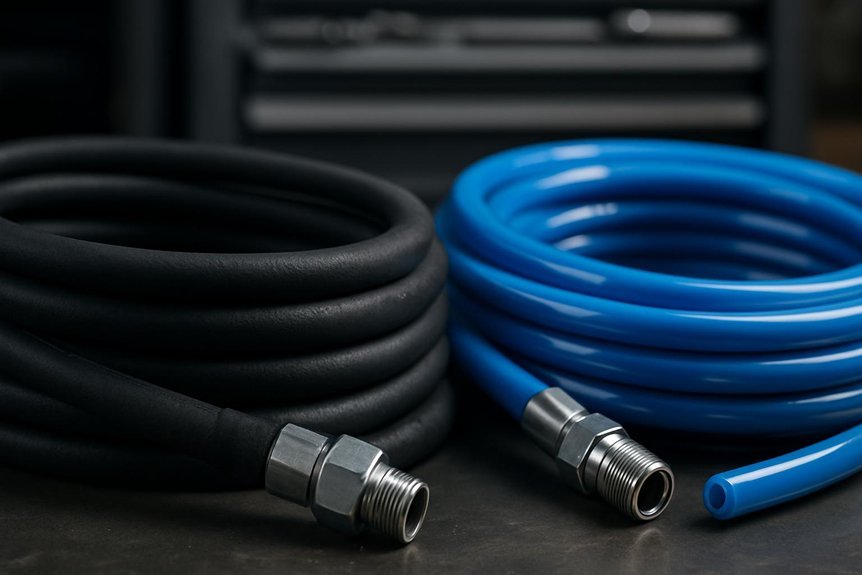
Although both rubber and polyurethane hoses serve essential roles in air compressor systems, their material compositions and manufacturing processes differ considerably. Rubber hoses are primarily composed of natural or synthetic rubber, providing elasticity and resilience. The manufacturing process involves vulcanization, where rubber is heated with sulfur to enhance durability and flexibility. Conversely, polyurethane hoses are made from thermoplastic polyurethane (TPU), created through polymerization of diisocyanates and polyols. This process results in a lightweight, rigid structure with high tensile strength. The production of polyurethane hoses involves extrusion or casting, producing a uniform, smooth surface. These fundamental differences in material composition and manufacturing processes influence each hose’s physical properties, including flexibility, resilience, and resistance to environmental factors, which are critical in selecting the appropriate hose for specific applications.
Which Hose Offers Greater Durability and Flexibility?
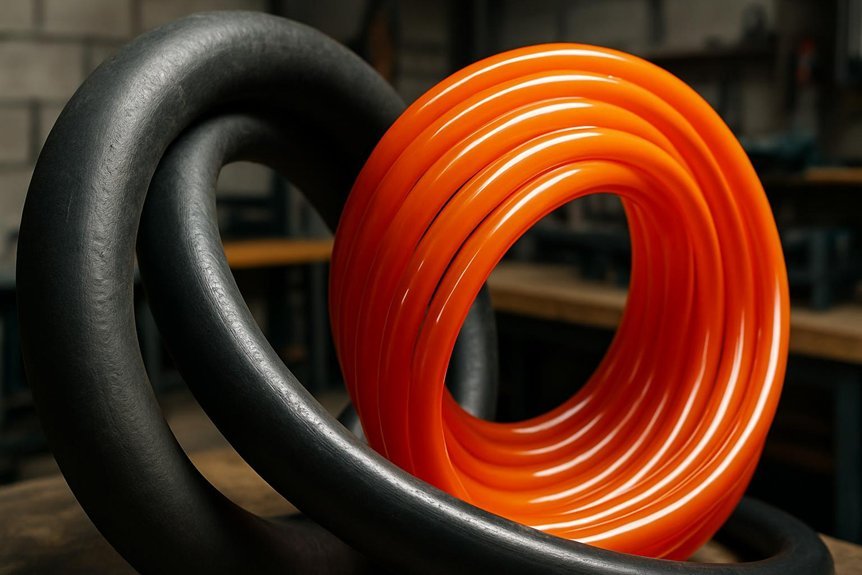
When evaluating durability and flexibility, rubber hoses generally excel in resilience due to their elastic properties, allowing them to withstand repeated bending, stretching, and exposure to harsh environmental conditions without cracking or deterioration. Rubber hoses typically feature a darker hose color, such as black or dark gray, indicating their robustness. Conversely, polyurethane hoses are lighter, often translucent or bright-colored, enhancing visibility but sometimes sacrificing long-term durability. Cost considerations also differ, with rubber hoses tending to be more cost-effective upfront but less flexible over time. The table below highlights key differences:
| Feature | Rubber Hose | Polyurethane Hose |
|---|---|---|
| Hose color | Dark, muted tones | Bright, translucent tones |
| Durability | High, resistant to wear | Moderate, susceptible to abrasion over time |
| Flexibility | Excellent, elastic properties | Good, but less elastic |
How Do Weight, Handling, and Kink Resistance Compare?
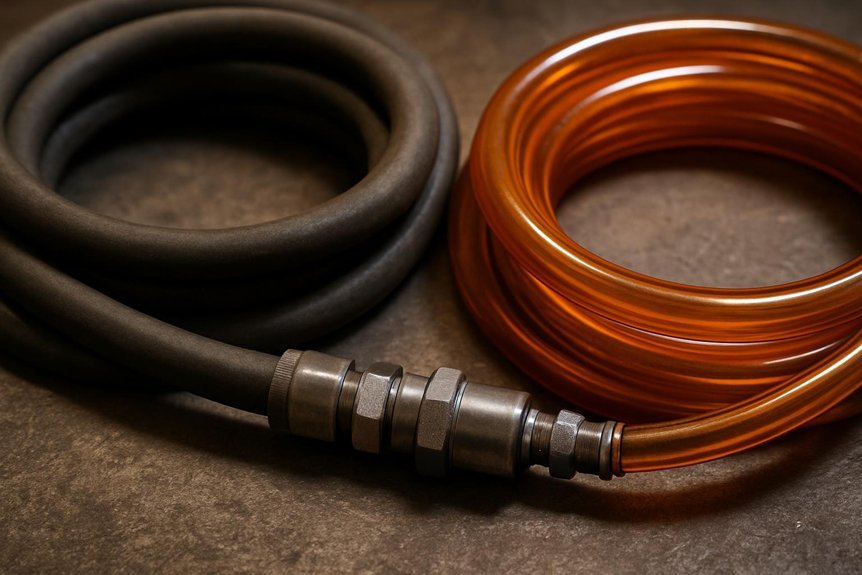
Rubber hoses are typically heavier than polyurethane hoses due to their dense, rubber composition, which can impact ease of handling during installation and use. This increased weight generally enhances kink resistance, as the hose maintains shape more effectively under pressure. Polyurethane hoses, being lighter, offer superior handling and flexibility, facilitating easier maneuvering in tight spaces. Kink resistance varies; rubber hoses resist kinking better due to their rigidity, but polyurethane hoses, with appropriate specifications, can also perform well. Color options are more diverse in polyurethane hoses, aiding identification and safety, though this may come with higher costs. Cost considerations favor polyurethane for lightweight, flexible applications, while rubber hoses are often more economical but less manageable in complex setups.
Which Hose Performs Better in Different Environments and Use Cases?
Polyurethane hoses tend to excel in environments requiring high flexibility and lightweight handling, such as automotive repair shops or mobile pneumatic setups, where ease of maneuverability is essential. They generally offer superior chemical resistance, making them suitable for applications involving exposure to oils, solvents, or other chemicals. Additionally, polyurethane hoses typically demonstrate better temperature tolerance, functioning effectively across a wider range of operational conditions without degrading. This makes them ideal for environments with fluctuating temperatures, whether hot or cold. However, their performance can diminish in extreme heat or UV exposure over time. In contrast, rubber hoses may provide more consistent durability in harsher, high-temperature environments. Ultimately, the choice depends on specific use case requirements, including chemical exposure and temperature ranges.
What Factors Should You Consider When Choosing Between Rubber and Polyurethane Hoses?
Choosing the right hose depends on evaluating several critical factors that align with your specific operational needs. Cost considerations are paramount; rubber hoses typically have a lower initial purchase price but may incur higher long-term costs due to increased weight and shorter lifespan. Polyurethane hoses, while more expensive upfront, often offer longer durability and resistance to wear, potentially reducing replacement frequency. Maintenance requirements also influence selection: rubber hoses generally demand more frequent inspection for cracks or leaks, whereas polyurethane hoses are more resistant to abrasion and weathering, reducing upkeep. Additionally, consider flexibility and handling—polyurethane hoses are lighter and more flexible, easing maneuverability in tight spaces. Balancing these factors—cost, maintenance, durability, and flexibility—ensures ideal hose selection for your specific application.
Frequently Asked Questions
How Do Cost Differences Impact Long-Term Maintenance Expenses?
We find that polyurethane hoses offer cost savings over time through superior durability compared to rubber, reducing replacement frequency and long-term maintenance expenses. Our durability comparison shows polyurethane’s resilience minimizes downtime and repairs, optimizing operational efficiency and overall cost-effectiveness.
Are There Environmental Concerns Associated With Each Hose Type?
We recognize environmental impact and disposal concerns differ between rubber and polyurethane hoses; rubber may release toxins if improperly disposed of, while polyurethane’s biodegradability is limited. Proper disposal and recycling are essential to minimize ecological footprint for both types.
What Are the Safety Considerations for Users Handling These Hoses?
Handling these hoses requires awareness of material flexibility and chemical resistance; rubber hoses offer superior flexibility, reducing strain injuries, while polyurethane hoses resist chemicals better, minimizing degradation risks. Always inspect for damage before use to guarantee safety.
How Do Hose Compatibility and Fittings Vary Between Rubber and Polyurethane?
We find that material flexibility influences hose compatibility, with rubber offering superior flexibility and polyurethane providing rigid fittings. Fitting durability varies, as rubber connectors resist wear better, while polyurethane fittings often require precise installation for secure, lasting connections.
Can These Hoses Be Repaired or Recycled After Damage?
We find that damaged hoses, like a polyurethane example, often can’t be repaired due to their material’s limited durability, but rubber hoses can sometimes be patched using specialized repair methods, though recycling options remain limited for both materials.
Conclusion
In the end, choosing between rubber and polyurethane hoses is less about magical properties and more about matching material traits to your specific needs. Rubber’s rugged durability might seem appealing until you realize its weight hampers maneuverability. Meanwhile, polyurethane’s flexibility and lighter weight come with a higher price tag. So, whether you prioritize resilience or agility, remember: selecting the right hose is about understanding your environment—because no hose is perfect, just perfectly suited or poorly suited for the task.