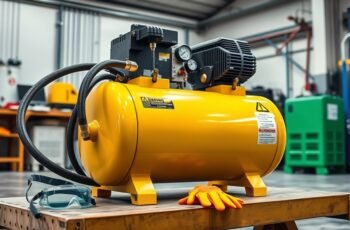
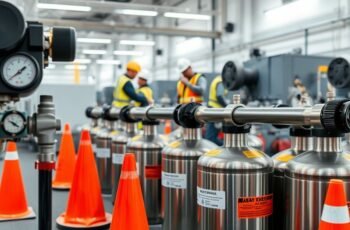
Like the steady pulse of a well-maintained engine, safe operation of workshop air compressors relies on precise practices and attention to detail. Ensuring proper setup, routine inspections, and the use of appropriate PPE keeps risks at bay and machinery running smoothly. Yet, even with precautions in place, unforeseen issues can arise—understanding how to respond effectively can be the difference between safety and disaster. Let’s explore how to keep your workspace secure and efficient.
Key Takeaways
- Conduct thorough pre-use inspections of hoses, safety devices, and gauges to prevent leaks and malfunctions.
- Always wear appropriate PPE, including safety goggles and hearing protection, to safeguard against hazards.
- Position the compressor on a stable, well-ventilated surface away from heat, moisture, and flammable materials.
- Follow proper emergency shutdown procedures and have first aid and fire safety measures in place.
- Regularly maintain and service the compressor, checking safety relief valves and leak detection to ensure safe operation.
What Are the Common Risks of Using Air Compressors in Workshops
Using air compressors in workshops presents several inherent risks that can lead to serious injuries or equipment damage if not properly managed. Recognizing air compressor hazards is essential for maintaining workshop safety. High-pressure air can cause serious lacerations, injection injuries, or equipment rupture if hoses or fittings fail. Over-pressurization or improper maintenance can lead to sudden bursts, posing danger to operators. Noise levels from compressors also contribute to hearing loss without proper protection. Additionally, leaks or improper venting of compressed air can introduce hazardous fumes or dust. Ensuring safety protocols, regular inspections, and correct operation of air compressors are crucial to mitigate these risks. Prioritizing workshop safety with awareness of these hazards helps prevent accidents and preserves both personnel well-being and equipment integrity.
How to Perform a Safety Inspection Before Operating an Air Compressor
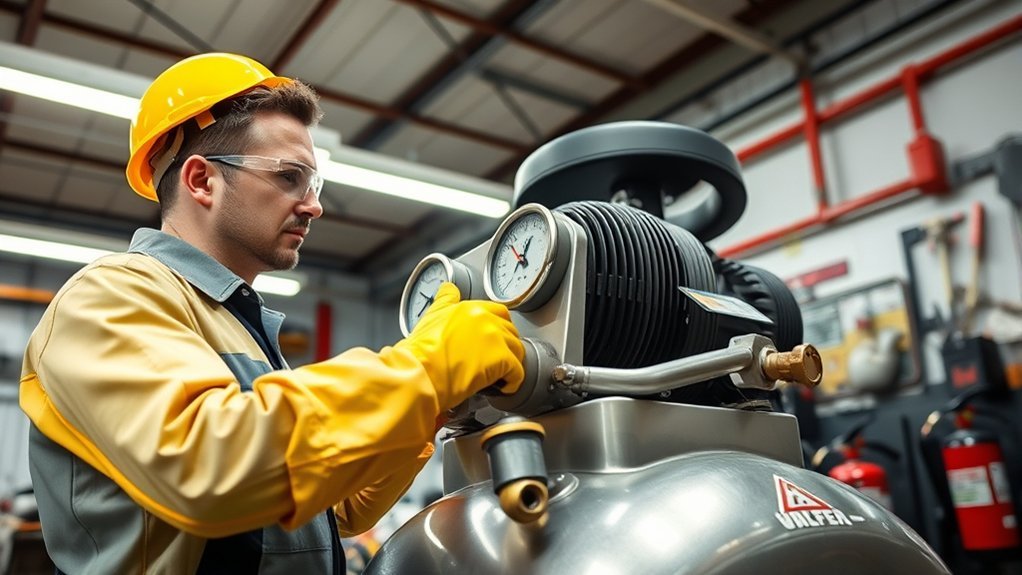
Before operating an air compressor, we must thoroughly check for leaks in hoses and fittings to prevent pressure loss and accidents. We also need to verify that all safety devices—such as pressure relief valves and emergency shutoffs—are functional and properly installed. Ensuring these components are in prime condition is essential for safe, efficient operation.
Check for Leaks
A thorough inspection for leaks is a critical step in guaranteeing the safe operation of an air compressor. Leak detection begins with a systematic hose inspection, focusing on all connections, fittings, and hoses for signs of wear, cracking, or damage. Use a soap solution or leak detection spray to identify even the smallest leaks—bubbles will form at the leak site, confirming its location. It’s essential to verify that all fittings are tight and that hoses are free of abrasions or deterioration. Ignoring leaks can lead to reduced efficiency, increased energy costs, and potential safety hazards. Regularly performing leak detection checks ensures that the system remains sealed, maintaining safe, ideal operation and preventing unexpected failures.
Inspect Safety Devices
Conducting a thorough inspection of safety devices is an essential step to guarantee the air compressor operates safely. During safety device inspection, we verify that all safety mechanisms are functional and properly calibrated. Focus on the emergency shutoff, ensuring it responds promptly when activated and is free of obstructions. Check pressure relief valves for signs of corrosion or damage, confirming they release pressure correctly. Inspect safety guards and covers to ensure they are secure and intact, preventing accidental contact with moving parts. Test pressure gauges for accuracy, and confirm that safety switches engage at designated thresholds. Regularly scheduled safety device inspections help prevent malfunctions that could lead to accidents, assure reliable operation and safeguarding personnel.
Proper Setup and Placement of Your Air Compressor for Safety
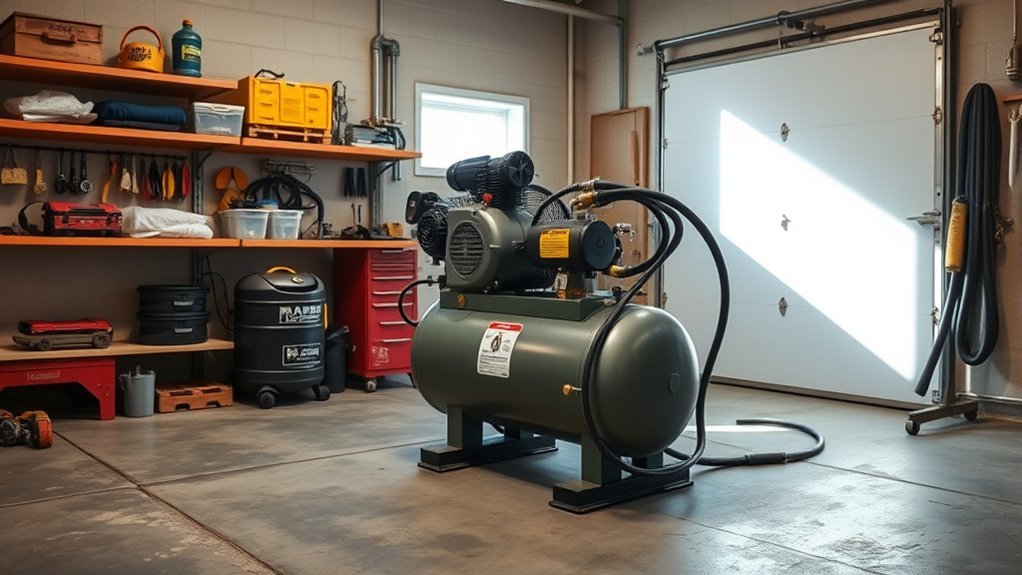
Ensuring the proper setup and placement of your air compressor is crucial for safe operation. Correct compressor placement involves selecting a stable, level surface that can support the weight and vibrations of the unit. It’s essential to maintain adequate clearance around the compressor to prevent overheating and facilitate maintenance. A well-organized, safe workspace arrangement minimizes trip hazards and allows for easy access to controls and safety devices. Position the compressor in a well-ventilated area, away from sources of moisture, heat, or flammable materials. Proper placement reduces noise and vibration transmission, enhancing safety and comfort. Overall, an effective setup ensures reliable performance and mitigates risks associated with improper installation, promoting a safer working environment.
Essential Personal Protective Equipment for Air Compressor Use
Proper personal protective equipment is essential for safe air compressor operation. We must prioritize eye protection to guard against flying debris and hearing safety gear to prevent noise-induced damage. Ensuring these safeguards are in place minimizes risks and maintains a safe working environment.
Proper Eye Protection
Why is wearing proper eye protection essential when operating an air compressor? Air compressors generate high-pressure air and potential debris that can cause serious eye injuries. Proper eye protection, such as safety goggles, creates a barrier against flying particles, dust, and accidental fluid sprays. Safety goggles are designed to fit snugly and provide a sealed environment, preventing contaminants from reaching the eyes. They are a critical component of personal protective equipment because even small debris can cause damage or impair vision. Using appropriate eye protection ensures compliance with safety standards and minimizes risk during compressor operation. Always select goggles that meet relevant safety certifications and inspect them regularly for damage, guaranteeing maximum protection at all times.
Hearing Safety Gear
Because air compressors often operate at high noise levels, wearing hearing safety gear is essential to prevent hearing loss or damage. Proper hearing protection, such as earplugs or earmuffs, provides effective noise reduction critical for prolonged exposure. These devices are designed to attenuate sound levels to a safe threshold, guaranteeing that operators can work safely without risking permanent auditory impairment. When selecting hearing safety gear, consider the noise reduction rating (NRR) to match the compressor’s decibel output. Consistent use of high-quality hearing protection minimizes the risk of noise-induced hearing loss, especially during extended or repetitive tasks. Incorporating reliable hearing safety gear into your safety protocol ensures compliance with occupational health standards and promotes long-term auditory health.
Best Practices for Operating and Handling Air Compressors Safely
To guarantee safe operation and handling of air compressors, it is essential to adhere to established best practices that minimize risk and prevent accidents. Proper air compressor lubrication is critical to assure smooth performance, reduce wear, and prevent overheating, which could lead to component failure. Regularly check and maintain lubrication levels according to manufacturer specifications. Additionally, noise reduction techniques, such as installing silencers or sound barriers, help minimize sound levels and protect operators’ hearing. Always operate the compressor within its recommended pressure and temperature ranges, and avoid sudden pressure fluctuations. Using protective covers and enclosures can also reduce noise exposure and safeguard moving parts. Following these best practices ensures safe, efficient operation, prolongs equipment lifespan, and maintains a safer workshop environment.
How to Maintain and Troubleshoot Your Air Compressor to Prevent Accidents
Regular maintenance and diligent troubleshooting are essential to guarantee your air compressor operates safely and efficiently. Implementing consistent maintenance routines, such as inspecting and replacing worn components, lubricating moving parts, and checking for leaks, helps prevent potential hazards. Troubleshooting techniques include monitoring pressure fluctuations, listening for abnormal noises, and examining safety valves for proper function. Regularly cleaning filters and verifying electrical connections reduce the risk of malfunctions. A systematic approach ensures early detection of issues before they escalate into safety hazards or equipment failures. By adhering to structured maintenance routines and applying effective troubleshooting techniques, we can minimize accidents, prolong compressor lifespan, and guarantee peak performance in our workshop environment.
What to Do in Case of an Air Compressor Emergency or Malfunction
When an air compressor malfunctions or an emergency situation arises, prompt and decisive action can prevent injuries and minimize damage. The first step is to initiate an emergency shutdown immediately to halt operation and reduce risk. After shutting down, assess the situation: if there’s a leak, fire, or injury, follow established first aid procedures promptly. Always guarantee the area is evacuated if necessary, and alert trained personnel or emergency services. Use the table below for quick reference:
| Emergency Situation | Immediate Action | Follow-up Procedures |
|---|---|---|
| Air leak | Shut down compressor | Inspect and repair |
| Fire | Use fire extinguisher | Evacuate area |
| Injury | Administer first aid | Seek medical help |
| Overpressure | Release pressure safely | Check pressure relief valve |
| Electrical fault | Disconnect power | Have certified electrician inspect |
Adhering to these steps ensures safety and minimizes damage.
Frequently Asked Questions
How Often Should I Schedule Professional Safety Inspections for My Air Compressor?
We recommend scheduling professional safety inspections for your air compressor annually, aligning with maintenance protocols and inspection frequency standards. Regular inspections guarantee peak performance, safety, and compliance, preventing costly failures and maintaining a safe workshop environment.
Are There Specific Safety Features to Look for When Purchasing an Air Compressor?
Did you know that improper compressor safety features cause over 1,000 injuries annually? When buying, prioritize safety feature considerations like automatic shutoff, pressure relief valves, and compressor safety certifications to guarantee reliability and user protection.
Can Using an Extension Cord Affect the Safety of My Air Compressor Operation?
Using an extension cord can introduce hazards like overheating and voltage drops, compromising safety. We emphasize cord length safety and proper gauge selection to prevent extension cord hazards and guarantee reliable, secure compressor operation.
What Are the Environmental Risks Associated With Improper Air Compressor Disposal?
Improper disposal of air compressors risks hazardous waste contamination, leading to environmental pollution. We must adhere to proper disposal regulations to prevent hazardous substances from leaching into ecosystems, safeguarding public health and maintaining environmental integrity.
How Does Humidity Impact the Safety and Performance of Air Compressors?
Humidity effects greatly influence compressor performance by causing moisture buildup, leading to corrosion and decreased efficiency. We emphasize proper moisture control and maintenance to guarantee safety, ideal operation, and longevity of air compressors in humid environments.
Conclusion
By adhering to these safety guidelines, we create a more harmonious environment where potential hazards become manageable. While the path to seamless operation may seem intricate, diligent attention to setup, maintenance, and protective measures guarantees our shared workspace remains secure. Embracing these practices not only safeguards our well-being but also cultivates a culture of responsibility and expertise, subtly guiding us toward consistently safe and efficient workshop experiences.