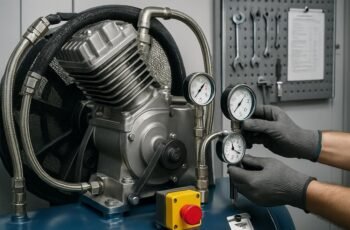
Maintaining industrial air compressors isn’t just about routine checks; it’s a strategic effort that directly impacts operational efficiency and equipment longevity. A well-structured maintenance plan combines detailed inspections, predictive analytics, and safety protocols to preempt failures before they occur. Understanding the nuances of component wear and performance metrics can be complex, but mastering these aspects is vital for minimizing downtime. Explore how a thorough approach can transform your maintenance practices and guarantee reliability across your operations.
Key Takeaways
- Develop a preventive maintenance schedule based on manufacturer recommendations and operational data to ensure optimal performance.
- Regularly inspect and troubleshoot key components like filters, belts, and cooling systems to prevent issues and maintain airflow.
- Utilize real-time monitoring and data analysis of KPIs such as pressure, temperature, and vibration for early fault detection.
- Implement proper lubrication, cooling, and safety procedures, including PPE use and lockout/tagout protocols.
- Keep detailed records of inspections, repairs, and performance metrics to optimize maintenance planning and equipment lifespan.
Why Regular Maintenance Matters for Industrial Air Compressors
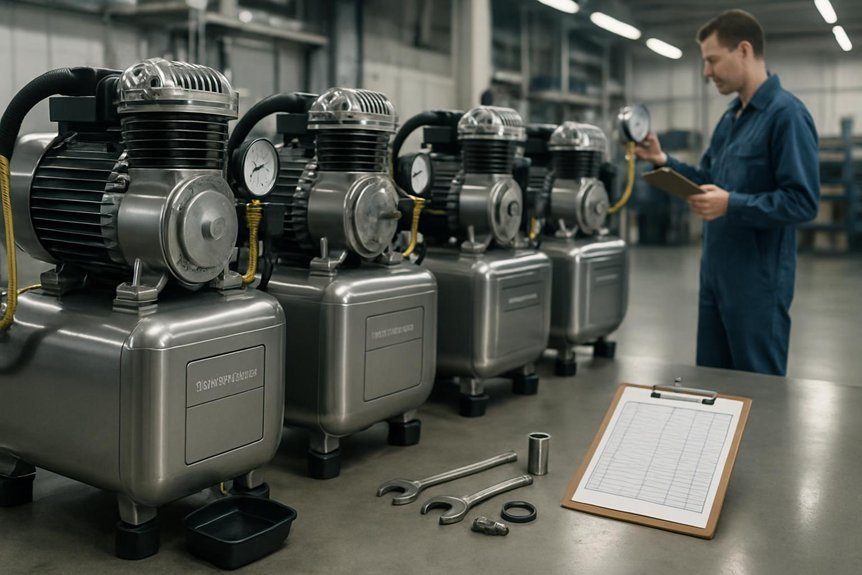
Regular maintenance is vital for guaranteeing the ideal performance and longevity of industrial air compressors. Consistent upkeep directly influences air quality by preventing contaminants and moisture buildup, which can compromise system integrity and product quality. Additionally, well-maintained compressors operate more efficiently, reducing energy consumption and lowering operational costs. By inspecting filters, lubricants, and pressure controls regularly, we minimize the risk of airflow restrictions and equipment strain. This proactive approach prevents unexpected breakdowns and maintains maximum airflow, essential for consistent production. Proper maintenance also guarantees the compressor runs at peak energy efficiency, reducing waste and environmental impact. Fundamentally, diligent maintenance safeguards both air quality and energy efficiency, ultimately extending equipment lifespan and enhancing overall process reliability.
Key Components to Inspect During Maintenance
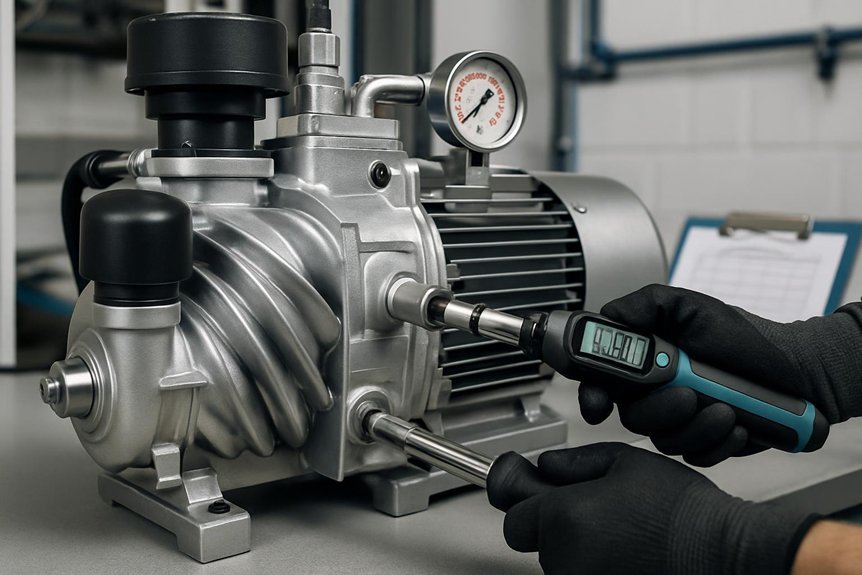
To guarantee peak performance and extend the lifespan of an industrial air compressor, we must focus on inspecting key components during each maintenance session. Vibration analysis is critical; it helps us detect misalignments, bearing wear, or imbalance early, preventing costly failures. We should monitor vibration patterns regularly and compare them to baseline readings. Lubricant testing is equally essential, as it reveals contamination, degradation, or insufficient lubrication that can cause component wear. We need to analyze oil samples for viscosity, contamination, and additive depletion. Additionally, inspecting filters, belts, and cooling systems ensures superior operation. These targeted inspections allow us to identify potential issues proactively, maintain efficiency, and avoid unexpected downtime. Precise attention to these components ensures the compressor runs reliably and efficiently over time.
Creating a Preventive Maintenance Schedule
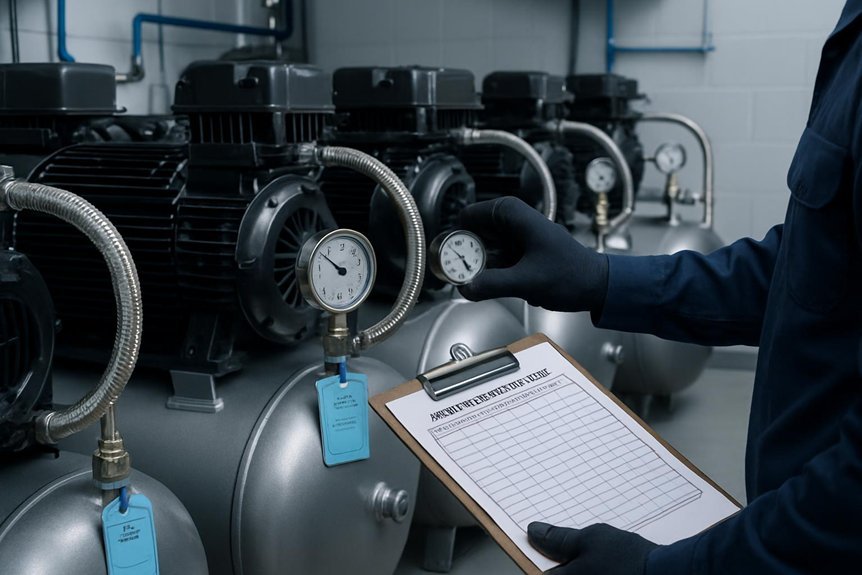
How can we develop an effective preventive maintenance schedule that maximizes compressor uptime and minimizes unexpected failures? We start by analyzing manufacturer recommendations and operational data to identify critical intervals for inspections, lubrication, and component replacements. Incorporating energy efficiency considerations guarantees that maintenance tasks optimize compressor performance, reducing energy consumption and operational costs. We also evaluate supplier reliability to ensure replacement parts are available when needed, preventing delays that could compromise uptime. Scheduling routine checks—such as filter changes, belt tension adjustments, and oil analysis—should be aligned with usage patterns and environmental factors. A well-structured schedule balances proactive interventions with operational needs, ensuring equipment longevity while maintaining peak energy efficiency and supplier support for seamless maintenance execution.
Troubleshooting Common Compressor Issues
When troubleshooting compressor issues, we focus on diagnosing unusual noises that may indicate bearing or valve problems, as well as pressure fluctuations that can signal leaks or control system failures. Addressing overheating involves inspecting cooling systems and ensuring proper ventilation, while persistent temperature increases often point to bearing wear or lubrication issues. By systematically analyzing these symptoms, we can implement targeted repairs that restore ideal compressor performance.
Identifying Unusual Noises
Unusual noises during compressor operation often signal underlying mechanical issues that require immediate attention. Effective noise source identification involves systematic acoustic diagnostics to pinpoint the origin of the sound. Variations in pitch, volume, and rhythm can indicate specific problems, such as bearing wear, valve defects, or airflow obstructions. Use a combination of listening devices and visual inspections to analyze sound patterns. Here’s a guide to common noises:
| Noise Type | Possible Cause | Diagnostic Tip |
|---|---|---|
| High-pitched squeal | Worn bearings or misaligned belts | Use acoustic sensors to locate source |
| Rumbling or grinding | Gear or rotor imbalance | Check for metal debris or vibrations |
| Hissing or whistling | Air leaks in fittings or valves | Inspect for loose connections |
| Clanking or banging | Valve or piston issues | Monitor for irregular vibration |
| Whining or screeching | Lubrication failure or contamination | Conduct oil analysis and inspections |
Addressing Pressure Fluctuations
Pressure fluctuations in an industrial air compressor can markedly hinder system performance and indicate underlying issues that demand prompt diagnosis. These fluctuations often stem from inaccurate pressure gauge calibration, which can mislead operators into incorrect adjustments. To address this, we verify and calibrate pressure gauges regularly, ensuring precise readings. Additionally, airflow optimization plays a critical role; inconsistent airflow can cause pressure instability. We inspect for obstructions, leaks, or compressor wear that impair airflow, then adjust inlet valves or filters accordingly. Monitoring compressor load and duty cycle helps identify if the system is overworking or underperforming, contributing to pressure swings. Implementing these strategies enhances pressure stability, improves efficiency, and extends compressor lifespan, ensuring reliable operation without unnecessary downtime.
Fixing Overheating Problems
Have you ever noticed your compressor running hotter than usual, risking damage or shutdown? Overheating causes often stem from inadequate cooling, clogged air filters, or malfunctioning temperature sensors. First, we check the temperature sensors to verify they’re functioning correctly, as faulty sensors can give false readings or fail to trigger cooling mechanisms. Next, we inspect the cooling system—cleaning or replacing air filters, verifying coolant levels, and confirming fans operate efficiently. It’s essential to confirm that the ambient temperature isn’t excessively high, as external heat can influence compressor temperature. Monitoring temperature data closely allows us to identify trends and prevent critical failures. Addressing these issues promptly helps maintain ideal operating temperatures, prolongs equipment life, and prevents costly downtime.
Best Practices for Compressor Lubrication and Cooling
Effective lubrication and cooling are critical components of compressor maintenance, as they directly influence equipment longevity and operational efficiency. Implementing proper lubrication techniques guarantees ideal film thickness, reducing wear and preventing metal-to-metal contact. Regular oil analysis helps identify contamination or viscosity breakdown, enabling timely oil changes. Cooling system design should prioritize efficient heat dissipation, incorporating adequate airflow and effective heat exchangers. We recommend monitoring coolant levels and checking for blockages in cooling pathways to prevent overheating. Using synthetic lubricants can improve thermal stability, especially under high loads. Consistent maintenance of lubrication and cooling systems minimizes downtime, reduces energy consumption, and extends compressor lifespan. Strategic planning of lubrication schedules and cooling system inspections ensures reliable, peak performance of your compressor.
How to Monitor Compressor Performance Effectively
To monitor compressor performance effectively, we focus on tracking key performance indicators like pressure, flow rates, and power consumption to identify deviations early. Regular inspections of components and system conditions help detect wear or potential failures before they escalate. Additionally, integrating advanced monitoring technologies enables real-time data collection and analysis, supporting proactive maintenance decisions.
Track Key Performance Indicators
Monitoring key performance indicators (KPIs) is vital for maintaining ideal compressor operation and preempting potential failures. By tracking metrics like energy efficiency, we can identify inefficiencies early and optimize performance. Regularly analyzing power consumption relative to output helps pinpoint equipment that’s consuming excess energy, indicating potential issues or misalignments. Effective operator training is essential here, as skilled operators can interpret KPI data accurately and respond swiftly. Establishing benchmarks for compressor runtime, pressure stability, and downtime allows us to set targeted improvement goals. Continuous KPI monitoring enables us to implement data-driven adjustments, ensuring best energy use, reducing operational costs, and extending equipment lifespan. Strategic KPI tracking forms the backbone of a proactive maintenance approach, safeguarding compressor reliability and efficiency.
Conduct Regular Inspections
How can we guarantee that our compressor operates at peak efficiency through diligent oversight? Regular inspections are vital. We need to systematically assess air quality to prevent contamination that can impair performance or cause damage. Monitoring for unusual noise levels helps identify mechanical issues early, aiding noise reduction efforts and ensuring smooth operation. We should check for leaks, pressure drops, and signs of wear on belts and filters, documenting deviations from baseline parameters. Visual inspections of components, lubrication points, and cooling systems allow us to catch potential failures before they escalate. These inspections also help us verify that the compressor maintains ideal air quality standards and noise levels. Consistent, detailed assessments form the backbone of a proactive maintenance strategy.
Utilize Monitoring Technologies
Implementing advanced monitoring technologies allows us to track compressor performance in real-time with greater accuracy and efficiency. By leveraging remote monitoring systems, we can continuously gather data on parameters such as pressure, temperature, vibration, and power consumption. Integrating predictive analytics enables us to identify potential issues before they escalate, optimizing maintenance schedules and reducing downtime. These technologies provide actionable insights, allowing us to detect abnormal trends early and respond proactively. Additionally, remote monitoring facilitates centralized oversight across multiple units, streamlining operations and ensuring consistent performance. The combination of real-time data collection, predictive analytics, and remote access empowers us to make informed decisions, improve reliability, and extend the lifespan of our compressors.
Safety Tips for Compressor Maintenance Tasks
Because compressor maintenance involves working with high-pressure systems and electrical components, adhering to strict safety protocols is essential to prevent accidents and equipment damage. First, always wear appropriate personal protective equipment, including gloves, safety glasses, and ear protection, to shield against potential hazards. Second, guarantee electrical safety by disconnecting power sources and verifying the absence of voltage before beginning any work. Third, follow lockout/tagout procedures diligently, preventing accidental startup during maintenance. Additionally, use insulated tools and inspect all safety devices regularly. These steps create a safer work environment, reducing risks of injury and equipment failure during maintenance. By prioritizing electrical safety and PPE, we maintain both personnel safety and operational integrity.
Selecting the Right Replacement Parts and Accessories
Have you considered the importance of selecting compatible and high-quality replacement parts to guarantee the longevity and peak performance of your air compressor? Precise choices, such as choosing filters that match your compressor’s specifications, directly impact operational efficiency and reduce downtime. When selecting lubricants, it’s essential to opt for products with the right viscosity and additive package tailored to your compressor’s design and workload. Using OEM parts ensures compatibility, durability, and peak performance. Proper filters prevent contaminants from entering sensitive components, while quality lubricants minimize wear and heat buildup. Always verify part specifications against manufacturer recommendations and consider operational conditions. Making informed decisions in selecting filters and lubricants not only extends component life but also maintains compressor reliability and energy efficiency.
Evaluating Maintenance Effectiveness and Planning for Upgrades
To effectively evaluate maintenance practices and plan for future upgrades, we must systematically analyze operational data, maintenance logs, and equipment performance metrics. This approach helps us identify patterns in appraising energy efficiency and pinpoint areas needing improvement.
- Review performance trends to determine if energy consumption aligns with operational benchmarks, highlighting inefficiencies.
- Analyze maintenance logs to track recurring issues, informing targeted upgrades and optimizing planning upgrade timelines.
- Use performance metrics to forecast potential failures, enabling proactive interventions and ensuring equipment reliability.
Frequently Asked Questions
How Often Should Compressor Filters Be Replaced?
We recommend replacing compressor filters every 500 to 1,000 hours of operation or as needed based on filter efficiency decline. Our replacement schedule guarantees peak performance, preventing contaminants from compromising compressor function and extending equipment lifespan efficiently.
What Are Early Signs of Compressor Wear?
We notice early compressor wear through increased vibrations and lubrication issues, like unusual noise or overheating, which vibration monitoring can detect early. Regular checks help us prevent breakdowns and guarantee ideal performance.
How Does Ambient Temperature Affect Maintenance?
Ambient temperature impacts maintenance by affecting ambient cooling and temperature regulation, which influence compressor efficiency and lifespan. We monitor environmental conditions closely, adjusting cooling systems proactively to prevent overheating and guarantee ideal operation in varying temperature environments.
Can Maintenance Extend Compressor Lifespan?
Think of the compressor as a finely-tuned engine—regular lubrication schedules and vibration analysis act as its pulse checks, extending lifespan by preventing wear, ensuring peak performance, and catching issues early before costly failures occur.
What Training Is Required for Maintenance Personnel?
We train maintenance personnel in safety protocols and troubleshooting techniques, ensuring they understand compressor mechanics, emergency procedures, and preventative measures, which minimizes risks, optimizes performance, and extends equipment lifespan through precise, strategic interventions.
Conclusion
Together, we safeguard the heartbeat of our operations—our compressors—by maintaining their importance like a skilled gardener tending a delicate bloom. Every inspection, every adjustment is a strategic act of nurturing, ensuring resilience against wear and unforeseen failures. When we commit to diligent upkeep, we don’t just preserve equipment; we cultivate trust and stability in our industrial landscape, transforming routine maintenance into a powerful act of stewardship that fuels progress and innovation.