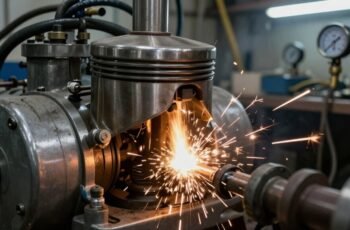
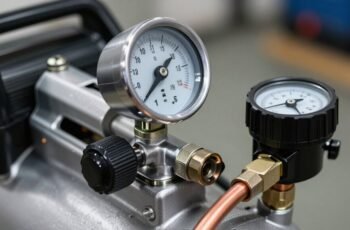
Maintaining reciprocating air compressors is critical to ensuring reliable operation and extending equipment lifespan. Regular inspections, proper lubrication, and timely component replacements are essential to prevent costly downtime. However, the specific procedures and schedules can vary depending on usage and environment. Understanding these key maintenance practices allows us to optimize performance and preempt potential failures, making it indispensable to approach each aspect with precision. Let’s explore the most effective strategies to keep your compressor running smoothly.
Key Takeaways
- Regularly inspect and replace compressor filters to maintain airflow and air quality.
- Perform routine lubrication of pistons and valves every 100-200 hours of operation.
- Conduct periodic checks for leaks, vibrations, and temperature fluctuations to identify issues early.
- Clean cooling fins and airflow paths to prevent overheating and ensure efficient operation.
- Document inspection results and troubleshoot abnormal noises or pressure fluctuations promptly.
How Often Should You Inspect Your Reciprocating Air Compressor?
Regular inspections of your reciprocating air compressor are crucial to guarantee peak performance and prevent unexpected failures. Establishing a clear maintenance schedule is essential, with inspection frequency tailored to operational demands and usage intensity. For most industrial applications, daily visual checks of gauges, belts, and safety devices are recommended, while thorough inspections should occur weekly or monthly. These inspections should include evaluating for leaks, abnormal vibrations, and temperature fluctuations. Consistent adherence to maintenance schedules ensures early detection of potential issues, minimizing downtime. Precise documentation of inspection results allows for trend analysis and proactive maintenance adjustments. By maintaining a disciplined inspection routine, you optimize compressor longevity, efficiency, and safety, ultimately reducing repair costs and operational disruptions.
The Importance of Proper Lubrication and Oil Changes
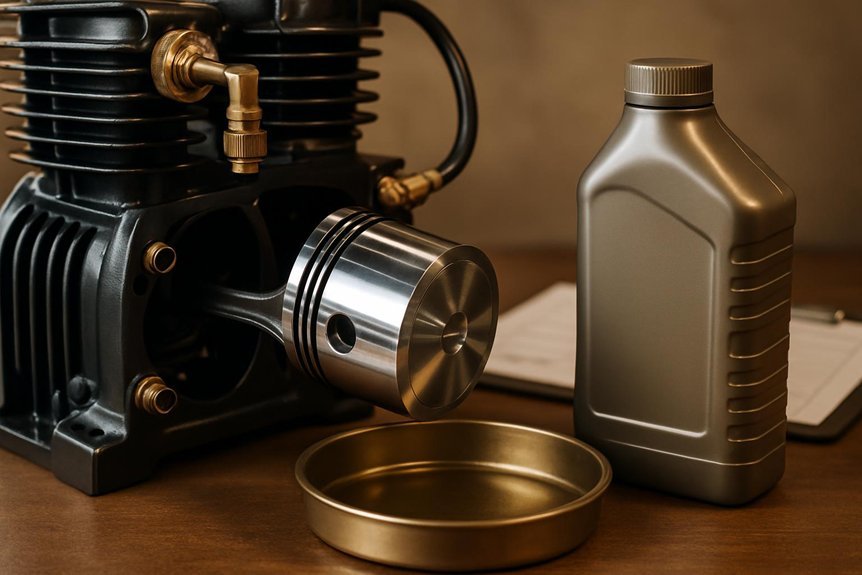
Proper lubrication and timely oil changes are essential to maintaining the efficiency and longevity of a reciprocating air compressor. Selecting the correct oil viscosity ensures ideal film strength and thermal stability, reducing wear on piston rings and cylinders. Adhering to recommended lubrication intervals prevents oil degradation, which can lead to increased friction, overheating, and component failure. Regular oil analysis can help determine the appropriate timing for changes, especially under varying operating conditions. Using the proper grade of lubricant minimizes corrosion and sludge buildup, maintaining compressor performance. Precise monitoring and scheduled oil replacements are crucial for avoiding costly repairs and downtime, ultimately extending the compressor’s service life. Consistent maintenance of lubrication practices guarantees reliable operation and peak efficiency.
How to Clean and Replace Compressor Filters Effectively
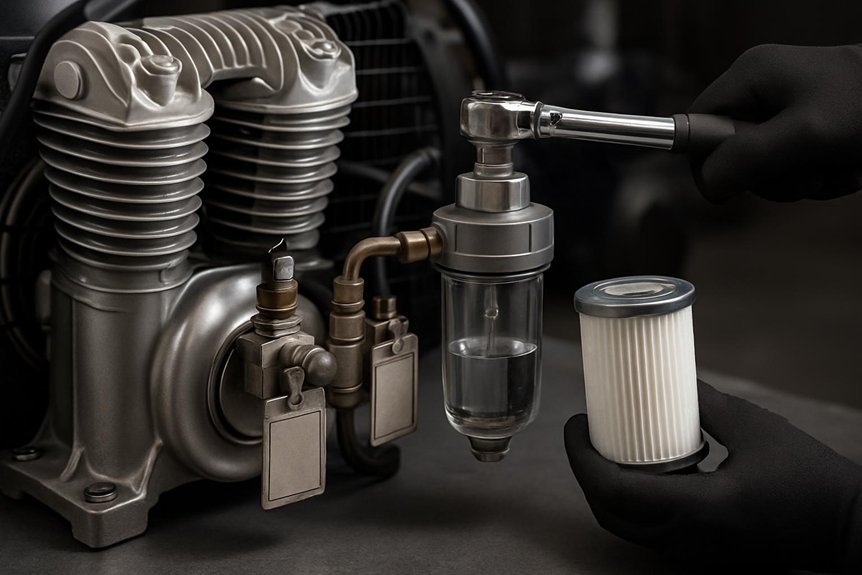
Regular inspection of compressor filters is crucial to guarantee ideal airflow and prevent contamination. We should apply appropriate cleaning methods based on filter type and replace filters promptly when cleaning no longer restores their effectiveness. Maintaining a strict schedule for these tasks minimizes compressor wear and operational downtime.
Inspect Filter Condition Regularly
How often should we inspect the condition of compressor filters to guarantee peak performance? Regular inspections, at least monthly, are essential to maintain ideal air quality and maximize filter lifespan. Clogged or dirty filters impair air flow, reducing compressor efficiency and increasing wear. During inspections, check for visible dirt, dust accumulation, and any damage or deformation. A decline in air quality, such as increased particulates or moisture, often indicates the need for cleaning or replacement. Maintaining a strict inspection schedule ensures filters operate effectively, preventing contaminants from entering the system. Consistent monitoring allows us to identify early signs of deterioration, prolong filter lifespan, and uphold compressor performance, ultimately minimizing downtime and operational costs.
Use Appropriate Cleaning Methods
When cleaning or replacing compressor filters, selecting the appropriate method is essential to guarantee effective removal of contaminants without damaging the filter media. Proper cleaning techniques ensure contaminants are dislodged while maintaining filter integrity. Surface preparation involves removing loose debris and dust before cleaning, which minimizes residual buildup and enhances cleaning efficiency. For reusable filters, we recommend gentle brushing or low-pressure compressed air to clear dust and dirt; avoid harsh chemicals that could degrade the media. When necessary, washing with a mild detergent and thoroughly drying maintains filter performance. For disposable filters, surface preparation includes inspecting for damage and debris before disposal. Using the correct cleaning techniques and thorough surface preparation preserves filter functionality, extending service life and securing optimal compressor operation.
Replace Filters Promptly
Proper maintenance of compressor filters involves not only cleaning but also timely replacement to prevent performance degradation. Different air filter types—such as element filters, panel filters, and HEPA filters—require specific handling and replacement schedules. Recognizing the most suitable filter replacement frequency depends on operating conditions, air quality, and usage intensity. Regular inspection is essential; if filters appear clogged, dirty, or damaged, replacement is necessary regardless of elapsed time. Neglecting prompt filter replacement can lead to reduced airflow, increased energy consumption, and potential damage to compressor components. To guarantee peak efficiency, establish a routine schedule based on manufacturer recommendations and monitor filter condition regularly. Prompt filter replacement maintains ideal airflow, protects internal parts, and sustains compressor performance over time.
Troubleshooting Common Reciprocating Compressor Problems
Reciprocating compressors can encounter a variety of issues that impair performance and efficiency, making troubleshooting an essential step in maintenance. Common problems include abnormal compressor noise and pressure fluctuations. Excessive noise often indicates worn or loose components, such as valves, pistons, or bearings, which can cause vibrations and reduce operational stability. Pressure fluctuations typically result from issues like unbalanced valves, improper lubrication, or air leaks, leading to inconsistent output pressure. To diagnose these problems, we recommend inspecting valve clearances, verifying lubrication levels, and checking for leaks in fittings and seals. Addressing these root causes promptly helps restore compressor efficiency, prolongs component lifespan, and prevents costly downtime. Accurate troubleshooting guarantees reliable operation and peak performance.
Best Practices for Safe and Efficient Compressor Operation
Maintaining safe and efficient compressor operation requires adherence to established protocols and proactive practices. To optimize energy efficiency, we guarantee proper load management, regular system calibration, and timely maintenance of components. Proper lubrication reduces friction, enhancing performance and prolonging equipment lifespan. Noise reduction is achieved through sound-dampening enclosures and vibration isolators, which minimize operational disturbances and improve workplace safety. Consistent monitoring of operating parameters—such as pressure, temperature, and vibration levels—helps detect anomalies early, preventing costly failures. Additionally, training personnel on safe operating procedures and emergency protocols ensures adherence to safety standards. By systematically applying these best practices, we maximize compressor reliability, reduce energy consumption, and create a safer, more efficient working environment.
How to Check and Maintain Compressor Valves and Pistons
We need to regularly inspect the condition of compressor valves to guarantee proper sealing and airflow. Proper lubrication of the pistons minimizes wear and prevents overheating, which extends component lifespan. Additionally, checking for signs of wear or damage allows us to address issues before they cause failure or efficiency loss.
Inspect Valve Condition Regularly
How can we guarantee peak performance and prevent costly repairs? Regular inspection of valve condition is crucial. We need to verify the integrity of the valves, confirming proper valve adjustment to maintain ideal airflow regulation. Wear or damage to the valves can lead to inefficient compression, increased energy consumption, and potential piston damage. During inspections, check for signs of pitting, warping, or carbon buildup that could impair sealing. Proper valve adjustment ensures consistent airflow, preventing pressure fluctuations that compromise compressor operation. By maintaining precise valve clearance and addressing any irregularities promptly, we maximize airflow regulation and extend component lifespan. Consistent valve condition checks are an essential part of preventive maintenance, ensuring the compressor runs reliably and efficiently.
Lubricate Pistons Properly
Proper lubrication of pistons is essential for superior compressor performance and longevity. Effective piston lubrication minimizes friction, prevents overheating, and reduces wear, ensuring smooth operation. To enhance Piston lubrication, select oil with the appropriate Oil viscosity for your compressor’s operating conditions. Regularly check oil levels and quality, replacing or topping up as needed. Use clean tools to avoid contamination. Here’s a quick reference:
| Parameter | Specification |
|---|---|
| Oil viscosity | As recommended by manufacturer |
| Lubrication interval | Every 100-200 hours of operation |
| Oil quality check | Visual inspection for debris |
| Oil level | Maintain within specified range |
| Contamination check | Look for sludge or metal particles |
Maintaining correct oil viscosity and timely lubrication ensures ideal piston function and compressor efficiency.
Check for Wear and Damage
Regularly inspecting compressor valves and pistons for signs of wear and damage is essential to maintaining peak performance. Effective wear assessment and damage detection guarantee early identification of issues that could compromise efficiency or lead to failure. During inspections, look for pitting, scoring, or cracks on the piston surface, and check the valve seats for irregular wear or deformation. Also, assess piston rings for proper sealing and signs of excessive wear. Pay attention to any abnormal vibrations or noises during operation, which can indicate internal damage.
- Examine piston surfaces for scoring or corrosion
- Inspect valve seats for pitting or cracks
- Check piston rings for wear gaps
- Look for leaks around seals and gaskets
- Monitor for unusual vibrations or noises
Recognizing Signs of Wear and When to Schedule Repairs
Identifying early signs of wear in a reciprocating air compressor is crucial to prevent costly breakdowns and extend equipment lifespan. Unusual compressor noise, such as knocking or hissing, often indicates internal component issues like worn pistons or valves. Vibration analysis serves as a critical diagnostic tool; increased or irregular vibrations suggest misaligned parts or bearing deterioration. Regularly monitoring these symptoms allows us to detect issues before they escalate. Additionally, a sudden rise in temperature or a drop in output pressure can signal underlying mechanical problems. Addressing these signs promptly by scheduling repairs ensures peak performance and minimizes downtime. Consistent inspection of compressor noise and vibration metrics is essential for effective maintenance and prolonging compressor efficiency.
Tips for Extending the Longevity of Your Air Compressor
To maximize the lifespan of your air compressor, implementing proactive maintenance strategies is essential. Regular inspections, timely filter replacements, and proper lubrication enhance operational reliability. Maintaining ideal operating conditions improves energy efficiency by reducing unnecessary load on components. Confirming proper ventilation minimizes heat buildup, which can accelerate wear. Additionally, addressing noise sources promptly contributes to noise reduction and prevents further mechanical issues.
- Schedule routine oil analysis to monitor lubricant condition
- Tighten fittings and check for leaks to maintain efficiency
- Clean cooling fins and airflow paths regularly
- Use vibration analysis tools to detect imbalances early
- Implement soundproof enclosures or barriers to reduce noise levels
These practices extend compressor longevity, maximize energy use, and ensure quieter operation.
Frequently Asked Questions
What Are the Signs of Compressor Overloading?
We notice compressor overloading through lubrication issues, like increased temperature and oil degradation, and vibration analysis reveals abnormal patterns. These signs indicate the compressor is strained, prompting us to inspect for underlying causes and prevent damage.
How Does Ambient Temperature Affect Compressor Performance?
Ambient temperature profoundly influences compressor performance; higher temperatures hinder ambient cooling, increasing the risk of overheating. Effective temperature regulation is crucial to maintain ideal operation, prevent thermal stress, and guarantee compressor longevity under varying environmental conditions.
Can Improper Maintenance Void the Compressor Warranty?
Did you know 40% of warranty claims are denied due to improper maintenance? Yes, neglecting maintenance requirements can void your warranty validity, so adhering to recommended service schedules is essential to protect your compressor’s warranty coverage.
What Safety Precautions Should Be Taken During Maintenance?
We recommend always wearing personal protective gear, such as gloves and safety glasses, during maintenance, and guarantee an emergency shutdown procedure is in place to prevent accidents, minimizing risks associated with high-pressure components and moving parts.
How Often Should Compressor Belts Be Replaced?
We recommend replacing compressor belts every 6 to 12 months, depending on belt condition. Regularly check belt alignment and tension adjustment to prevent premature wear, ensuring peak performance and avoiding unexpected breakdowns.
Conclusion
Regular maintenance is essential; neglecting it can reduce compressor lifespan by up to 50%. By following our tips—inspecting, lubricating, and replacing components proactively—we guarantee maximum performance and safety. Consistent care not only prevents costly breakdowns but also extends the compressor’s service life, saving you time and money. Staying vigilant and adhering to maintenance schedules keeps your equipment running efficiently, supporting your operations with reliable, high-quality compressed air.