Regular inspection, proper cleaning, and diligent maintenance are essential for ensuring the best performance and longevity of your electric air compressor. Monitoring noise levels and power consumption helps detect mechanical issues early, while maintaining clean filters and draining moisture prevent corrosion and inefficiency. Checking hoses and lubrication points further safeguards your equipment against unexpected failures. Understanding these critical steps is crucial for reliable operation, but there are specific practices that can make all the difference in keeping your compressor running smoothly.
Key Takeaways
- Regularly inspect and tighten fittings, belts, and hoses to prevent leaks and mechanical issues.
- Check and replace air filters according to schedule to ensure optimal airflow and efficiency.
- Drain moisture from tanks daily to prevent corrosion and maintain compressor longevity.
- Monitor and maintain proper oil levels; change oil as recommended to reduce wear and overheating.
- Conduct routine noise and power consumption checks to identify and address potential mechanical problems early.
How to Perform Routine Inspections on Your Electric Air Compressor
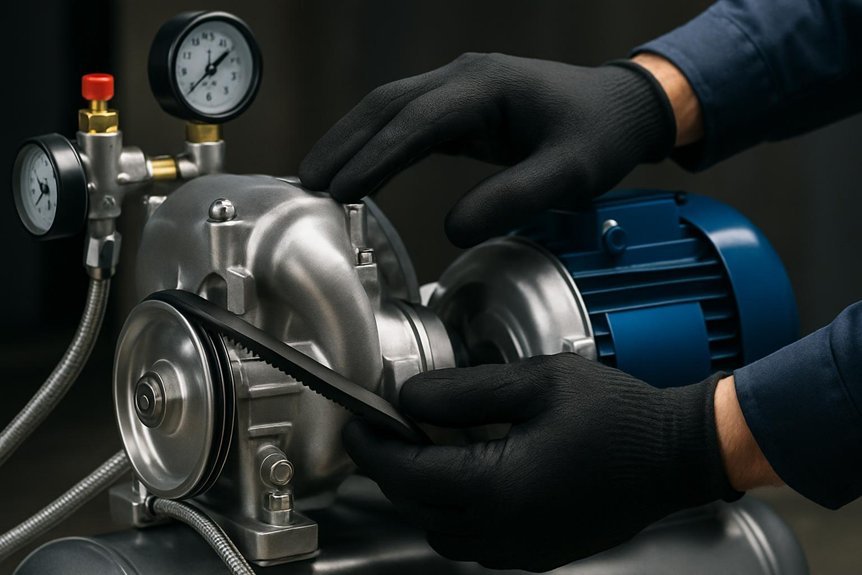
Regular inspections are essential to guarantee the peak performance and longevity of your electric air compressor. During routine checks, focus on monitoring compressor noise levels, as abnormal sounds can indicate mechanical issues or worn components. Excessive noise often correlates with increased power consumption, signaling inefficiency and potential failure. Measure and document power consumption to establish baseline performance; deviations may reveal motor strain or electrical issues. Inspect air intake vents and cooling systems to prevent overheating, which can elevate noise and energy use. Tighten any loose fittings and inspect belts and pulleys for wear, ensuring smooth operation. By systematically evaluating these parameters, you maintain *best* efficiency, reduce unexpected downtime, and extend your compressor’s service life.
Cleaning and Replacing Air Filters for Optimal Performance
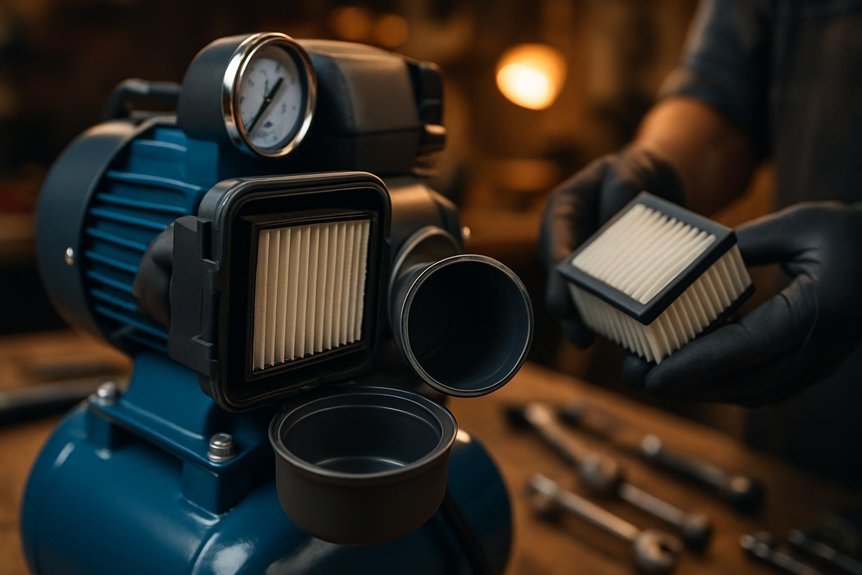
Maintaining clean air filters is essential for sustaining ideal compressor performance and preventing unnecessary strain on the motor. Regular air filter replacement or filter cleaning ensures maximum airflow, reduces motor load, and minimizes wear. When inspecting filters, check for visible dirt, dust buildup, or damage. If filters are reusable, clean them with compressed air or mild detergent; if disposable, replace them promptly. Proper maintenance prevents clogging, maintains efficiency, and extends equipment lifespan.
| Filter Condition | Action Required | Frequency |
|---|---|---|
| Dusty or clogged | Filter cleaning | Every 50-100 hours |
| Damaged or worn | Air filter replacement | Every 200-300 hours or annually |
| Clean and intact | No action needed | Routine inspections |
Draining and Moisture Management in Compressor Tanks
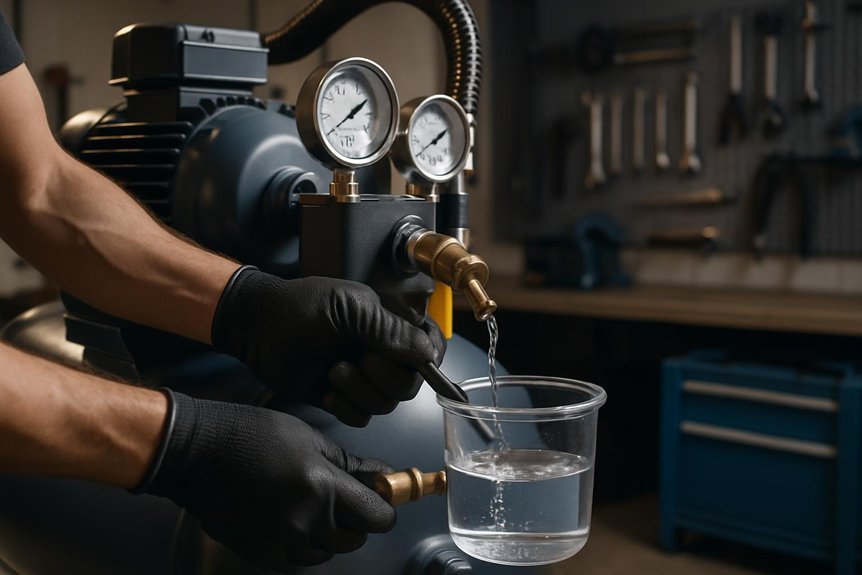
Since moisture can accumulate inside compressor tanks during operation, it’s essential to effectively drain and manage this water to prevent corrosion and damage. Moisture condensation naturally occurs as the compressed air cools within the tank, leading to water buildup. Regularly draining the tank removes accumulated water and minimizes the risk of tank corrosion. Using a manual or automatic drain valve ensures consistent moisture management, reducing downtime and maintenance costs. Failure to remove moisture can accelerate corrosion, weakening the tank’s structural integrity and risking failure. Maintaining proper drainage practices preserves compressor longevity and performance. It’s critical to inspect and drain the tank daily, especially after periods of intense use or high humidity, to prevent moisture-related issues and extend equipment lifespan.
Checking and Tightening Hoses and Connections
After draining the compressor tank to prevent moisture buildup and corrosion, it’s important to verify that all hoses and connections are secure and free of leaks. We focus on evaluating hose durability by inspecting for cracks, brittleness, or signs of wear that could compromise performance. Ensuring connection security involves tightening fittings and couplings to prevent air leaks, which can reduce efficiency and increase energy consumption. Use appropriate tools to avoid over-tightening, which might damage fittings or hoses. Regularly checking for any signs of deterioration or looseness helps maintain system integrity. Properly secured hoses and connections optimize airflow and prevent pressure drops, ensuring consistent operation. Routine inspection and tightening are essential to prolong hose lifespan and uphold safe, efficient compressor performance.
Monitoring and Maintaining Proper Lubrication and Oil Levels
Regularly monitoring and maintaining proper lubrication and oil levels is essential for ideal compressor performance. Consistent checks prevent lubricant contamination, which can impair moving parts and reduce efficiency. We recommend inspecting oil levels daily, ensuring they meet manufacturer specifications, and topping up with the correct grade to maintain proper oil viscosity. Inappropriate viscosity can cause inadequate lubrication, leading to increased wear and potential overheating. We also advise changing oil at recommended intervals to remove contaminants and degraded oil that compromises lubrication quality. Proper oil management preserves compressor longevity and prevents costly breakdowns. Remember, maintaining clean, correctly viscous oil directly impacts compressor reliability and efficiency, making diligent monitoring a vital aspect of routine maintenance.
Frequently Asked Questions
How Often Should I Schedule Professional Maintenance for My Compressor?
We recommend scheduling professional maintenance every 6 to 12 months, aligning with lubrication schedules and filter replacements, to guarantee peak compressor performance, prevent breakdowns, and extend equipment lifespan through precise, proactive care.
What Are Common Signs of Compressor Malfunction to Watch For?
We notice compressor malfunctions through lubrication issues, like unusual oil consumption or contamination, and abnormal vibration patterns indicating imbalance or mechanical wear. Monitoring these signs helps us prevent failures and maintain ideal compressor performance efficiently.
Can I Upgrade Parts to Improve Compressor Performance?
We can upgrade components like valves or motors for performance enhancements, often coincidentally aligning with increased efficiency. These component upgrades help optimize compressor operation, ensuring precise, technical improvements tailored to specific needs without compromising reliability or longevity.
How Do Temperature Fluctuations Affect Compressor Operation?
Temperature fluctuations markedly impact compressor operation due to temperature sensitivity, causing pressure instability and potential component stress. Fluctuation impacts include increased wear and decreased efficiency, so maintaining stable temperatures is vital for ideal performance and longevity of the compressor.
What Safety Precautions Should I Follow During Maintenance?
Safety during maintenance is paramount; we wear personal protective equipment, including gloves and eye protection, and guarantee an emergency shutdown is readily accessible. These precautions prevent accidents, acting as a shield against potential hazards during compressor servicing.
Conclusion
By following these maintenance tips, we keep our compressors running smoothly like a well-oiled machine. Regular inspections and diligent care prevent breakdowns and extend equipment life, saving us time and money. Think of maintenance as the heartbeat of your compressor—keeping it strong and reliable. Staying proactive with these practices ensures peak performance, energy efficiency, and longevity, making our systems resilient against the wear and tear of daily operation.