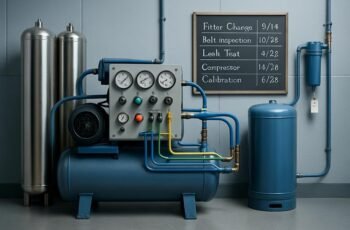
Many users overlook that proper maintenance of a gas-powered air compressor extends beyond basic checks and can greatly impact safety and efficiency. Small issues like unnoticed leaks or degraded filters often lead to costly repairs or downtime. Understanding the precise procedures for routine inspections and timely part replacements ensures reliable operation. To keep your equipment performing at its best, it’s essential to follow a systematic maintenance approach—something we’ll explore further.
Key Takeaways
- Perform regular inspections of safety features, pressure gauges, filters, and cooling systems to ensure proper operation.
- Check and change oil and filters at recommended intervals to prevent contamination and maintain efficiency.
- Inspect hoses, fittings, and drainage systems for leaks, damage, and moisture buildup to ensure safety and longevity.
- Troubleshoot unusual noises, performance drops, or leaks promptly, and seek professional repairs if needed.
- Store the compressor in a clean, dry place, drain moisture regularly, and follow proper storage procedures during off-seasons.
How to Perform Routine Inspections on Your Gas-Powered Air Compressor
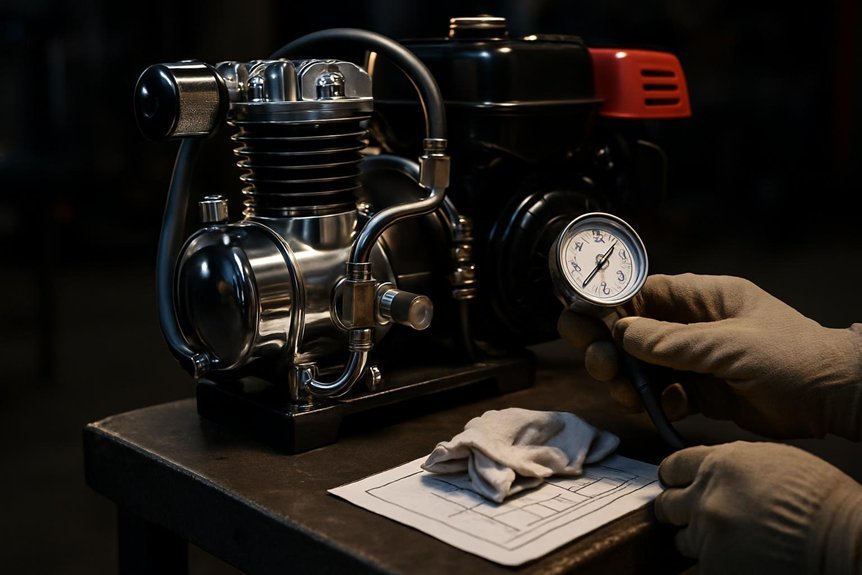
Performing routine inspections on your gas-powered air compressor is essential for maintaining peak performance and preventing costly breakdowns. Adhering to established maintenance schedules guarantees all components function at their best, reducing unexpected failures. During inspections, verify that safety precautions are strictly followed; this includes checking for fuel leaks, inspecting hoses for wear, and ensuring safety guards are in place. Regularly examine pressure gauges, filters, and cooling systems for proper operation. Record inspection findings to track wear patterns and schedule preventative maintenance accordingly. Precise attention to detail during these checks minimizes risk and extends equipment lifespan. Consistent inspections aligned with safety protocols enable early detection of issues, ensuring safe operation and reliable performance in demanding environments.
Changing and Maintaining Compressor Oil for Optimal Performance
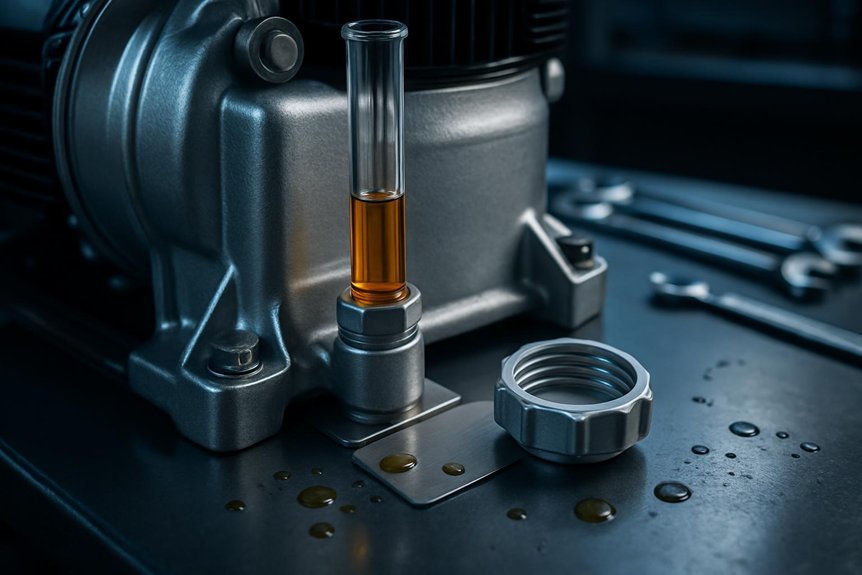
Maintaining proper compressor oil levels and quality is critical for ensuring ideal performance and prolonging the lifespan of your gas-powered air compressor. Regularly checking and changing the oil prevents contamination and degradation, which can impair internal components. Fresh, high-quality oil enhances fuel efficiency by reducing internal friction, allowing the engine to operate more smoothly with less fuel consumption. Additionally, proper oil maintenance minimizes noise levels by ensuring *superior* lubrication, leading to quieter operation. We recommend adhering to the manufacturer’s intervals for oil changes and using the specified oil type to maintain performance standards. Consistent oil maintenance not only sustains efficiency but also reduces wear and tear, ultimately extending the compressor’s service life and ensuring reliable operation in demanding applications.
Cleaning and Replacing Air Filters to Prevent Damage
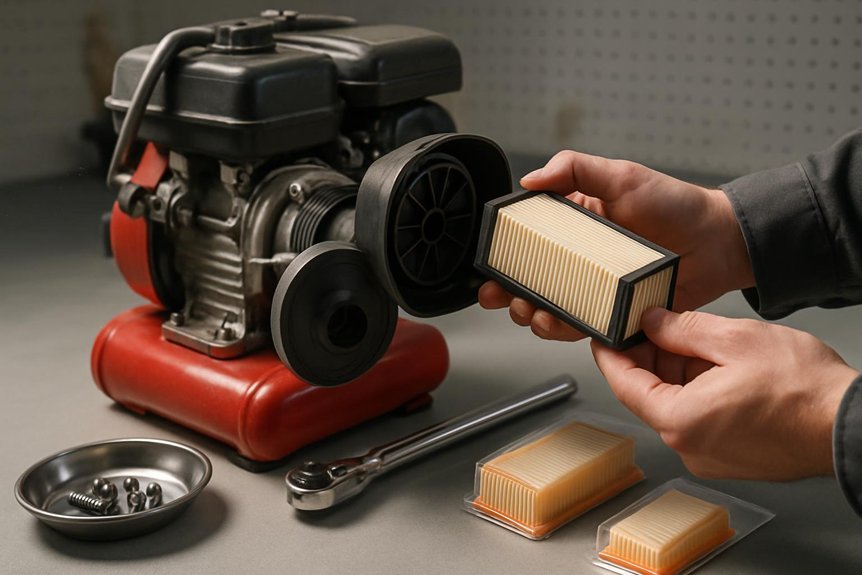
Regularly cleaning and replacing air filters is vital for maintaining compressor efficiency and preventing internal damage. We will outline a step-by-step process for filter replacement and identify common signs indicating filter deterioration. Proper maintenance guarantees ideal airflow and prolongs the lifespan of your compressor.
Importance of Clean Filters
Why is it vital to keep air filters clean in a gas-powered air compressor? Clean filters guarantee maximum airflow, preventing strain on the compressor’s motor and prolonging its lifespan. Over time, the air filter lifespan decreases as debris and particulates accumulate, reducing efficiency and risking damage. Different filter material types—such as paper, foam, or gauze—have unique maintenance requirements; some clog faster and need more frequent cleaning or replacement. Dirty filters restrict airflow, leading to increased fuel consumption and overheating, which can cause internal component wear. Regular inspection and maintenance of filters based on their material type are essential for maintaining compressor performance, preventing costly repairs, and ensuring consistent operation. Proper filter upkeep is a key element of reliable, efficient compressor functionality.
Step-by-Step Replacement Process
To guarantee peak performance and prevent damage, we must carefully follow the proper steps to clean or replace air filters in a gas-powered air compressor. First, turn off the compressor and disconnect it from power. Remove the filter housing cover using the appropriate tools, ensuring to keep track of all fasteners. Carefully extract the air filter, inspecting it for excessive dirt or damage. If the filter is reusable, clean it with compressed air or a mild solvent, allowing it to dry thoroughly before reinstalling. If damaged or excessively dirty, replace it with a new filter, ensuring proper fit. Proper filter maintenance enhances fuel efficiency and noise reduction by preventing restricted airflow, reducing strain on the engine, and minimizing operational noise. Always verify the seal after reassembly.
Common Signs of Filter Issues
Recognizing the signs of a clogged or damaged air filter is vital to maintaining the compressor’s maximum function. Filter contamination, such as dust, debris, or oil buildup, leads to airflow restriction, which impairs compressor efficiency. A primary indicator is a noticeable drop in airflow output, causing the system to work harder and increasing energy consumption. Additionally, increased pressure drop across the filter suggests significant contamination. Unusual noise levels or overheating may also indicate airflow restriction caused by a compromised filter. Regular inspection for visible dirt or damage is essential, and if airflow resistance is evident during operation, it’s time to clean or replace the filter. Addressing these signs promptly prevents damage, extends compressor lifespan, and guarantees optimal performance.
Checking and Tightening Hoses and Fittings for Safety and Efficiency
We begin by inspecting hoses and fittings for leaks, as even minor drips can compromise safety and performance. Next, we verify that all connections are properly tightened to prevent pressure loss and potential failures. Finally, we replace any damaged components to maintain the compressor’s integrity and guarantee reliable operation.
Inspect for Leaks
Regularly inspecting hoses and fittings for leaks is essential to guarantee the compressor operates safely and efficiently. Leak detection begins with a thorough visual scan for obvious cracks, holes, or deterioration. During seal inspection, look for signs of wear or damage that could compromise pressure integrity. Use a soap solution to identify minor leaks—bubbles indicate escaping air. Pay close attention to connection points and fittings, as these areas are most susceptible to leaks. Proper identification allows targeted repairs, preventing pressure loss and potential safety hazards. Maintaining tight, intact seals ensures *ideal* performance and prolongs component lifespan.
| Inspection Step | Key Focus |
|---|---|
| Visual Leak Detection | Cracks, holes, seal deterioration |
| Soap Solution Application | Identifies minor air leaks |
| Connection Point Examination | Tightness and integrity of fittings |
| Seal Inspection | Wear, cracks, or damage to seals |
Ensure Proper Tightening
Ensuring that hoses and fittings are properly tightened is essential for maintaining both safety and ideal compressor performance. Loose connections can lead to air leaks, reducing fuel efficiency and increasing operational costs. Proper tightening prevents pressure drops that compromise compressor output and can cause fluctuations in noise levels, affecting noise reduction efforts. Use a calibrated wrench to secure fittings without over-tightening, which can damage threads or create weak points. Regularly inspect connections for signs of wear or looseness, especially after prolonged use or transport. Maintaining tight fittings minimizes vibrations and noise, enhancing overall efficiency. Prioritizing correct tightening ensures the compressor runs smoothly, conserves fuel, and maintains safer operating conditions, directly supporting maximum performance and longevity.
Replace Damaged Components
Damaged hoses and fittings can substantially impair compressor safety and efficiency, making their timely identification and replacement crucial. Cracks, leaks, or corrosion in hoses compromise fuel efficiency by causing unnecessary energy loss. Loose or damaged fittings can lead to pressure drops and increased noise levels, reducing noise reduction effectiveness. Regular inspection allows us to detect these issues early, guaranteeing ideal operation. When replacing components, precision is key: we select compatible, high-quality parts to maintain system integrity. Properly tightened fittings prevent leaks and minimize vibration, which further enhances fuel efficiency and noise reduction. Addressing damage promptly not only boosts compressor performance but also extends its lifespan, reduces operational costs, and ensures safer, smoother operation.
Draining Moisture From the Tank to Avoid Corrosion and Malfunctions
Moisture accumulation inside the air compressor tank can lead to corrosion and equipment failure if not properly managed. Regularly draining the tank eliminates excess moisture, preventing tank corrosion that compromises structural integrity. Moisture collects as the compressed air cools, forming water that settles at the tank’s lowest point. To effectively remove it, we recommend opening the drain valve at the end of each workday or after extended use, ensuring all accumulated water is expelled. Using a manual or automatic drain valve can streamline this process. Consistent moisture removal preserves the tank’s longevity and maintains ideal compressor performance. Neglecting this step risks internal rust, reduced efficiency, and potential malfunction, emphasizing the importance of routine drainage in your maintenance protocol.
Troubleshooting Common Compressor Issues and When to Seek Repairs
When a compressor exhibits performance issues, quick and accurate troubleshooting is vital to prevent further damage and costly repairs. Unusual compressor noise often indicates internal component wear or misalignment, which can compromise efficiency. Excessive noise may also signal air leaks or insufficient lubrication, reducing fuel efficiency. If you notice a decline in performance or increased fuel consumption, inspect the intake valves, belts, and connections for leaks or damage. Low compressor pressure or inconsistent airflow can point to faulty valves or clogged filters. When issues persist despite basic troubleshooting, it’s essential to seek professional repairs to prevent escalation. Addressing these signs promptly guarantees peak performance, preserves fuel efficiency, and extends the compressor’s operational lifespan.
Best Practices for Storing Your Gas-Powered Air Compressor During Off-Season
Proper storage of your gas-powered air compressor during the off-season is essential to maintain its performance and extend its lifespan. Prior to storage, perform fuel stabilization by adding a fuel stabilizer to the tank and running the engine for several minutes to circulate it through the system. This prevents fuel degradation and carburetor gumming. Choose a suitable storage location that is cool, dry, and well-ventilated, avoiding areas prone to extreme temperatures or moisture. Drain the oil if recommended by the manufacturer, and clean the compressor thoroughly to remove dirt and debris. Guarantee the unit is placed upright to prevent oil or fuel leaks. Regularly inspect the storage area for pests or corrosion risks, and cover the compressor with a breathable cover to protect against dust and dust buildup.
Frequently Asked Questions
How Often Should I Schedule Professional Maintenance for My Compressor?
We suggest arranging expert upkeep yearly, adhering to a thorough maintenance checklist and troubleshooting advice. Routine inspections guarantee ideal performance, avoid failures, and prolong your compressor’s lifespan, maintaining its efficiency and dependability throughout its service life.
What Are the Signs of Compressor Overheating?
Overheat indicators, like excessive heat or unusual noises, signal a need for cool down procedures. We monitor temperature gauges closely and address overheating promptly, ensuring the compressor cools down effectively to prevent damage and maintain ideal performance.
Can I Use Synthetic Oil in My Gas-Powered Air Compressor?
Yes, we can use synthetic oil in our gas-powered air compressor because its ideal oil viscosity enhances lubrication, reduces wear, and potentially extends compressor lifespan, ensuring efficient operation and long-term reliability.
What Safety Gear Should I Wear During Compressor Maintenance?
We wear protective gloves and hearing protection during compressor maintenance to guarantee safety, to prevent injuries, and to minimize noise exposure. Protective gloves safeguard against sharp parts, while hearing protection reduces the risk of hearing damage.
How Do I Determine the Correct Pressure Settings for Different Tasks?
We determine the correct pressure settings by consulting manufacturer guidelines, adjusting for task-specific settings, and utilizing pressure regulation features. Always verify ideal pressure for each application to guarantee safety, efficiency, and equipment longevity during compressor operation.
Conclusion
Just as a vigilant guardian shields its charge, regular maintenance safeguards our compressor’s longevity. Through diligent inspections, timely oil changes, and moisture drainage, we nurture its core strength and reliability. Proper storage acts as a protective sheath during downtime, ensuring readiness for future demands. By treating our compressor with precision and care, we keep its performance steady—an unwavering beacon of efficiency in our toolkit, ready to meet every challenge with unwavering resilience.