Ensuring safety when operating air compressors is a critical responsibility that demands our full attention and adherence to established protocols. Proper training helps us recognize potential hazards, prevent accidents, and maintain compliance with industry standards. As we explore the key safety practices, it becomes clear that a thorough understanding and consistent application of safety measures aren’t optional—they’re essential for protecting everyone involved and keeping operations running smoothly. The importance of this cannot be overstated.
Key Takeaways
- Recognize and address hazards such as high-pressure leaks, electrical faults, and moving parts through thorough inspections and proactive measures.
- Use appropriate PPE like safety glasses, hearing protection, gloves, and respirators to minimize risks during operation.
- Follow proper setup, maintenance, and inspection routines to ensure equipment safety and prevent accidents.
- Align training with industry standards (OSHA, ANSI) and customize programs to address specific equipment and safety policies.
- Promote a strong safety culture by conducting regular training, emergency drills, and maintaining updated safety protocols.
Understanding the Risks of Operating Air Compressors Safely
While operating air compressors may seem straightforward, it’s vital to recognize the significant risks involved if safety protocols are not strictly followed. Developing risk awareness is essential to prevent accidents, injuries, or equipment failure. Hazard identification involves understanding potential dangers such as high-pressure leaks, electrical faults, and moving parts that can cause severe injuries. We must thoroughly inspect the compressor before use, identifying any signs of wear, damage, or malfunction. Recognizing these hazards allows us to implement proper safety measures and avoid complacency. Being cautious and vigilant ensures we address risks proactively rather than reactively, safeguarding ourselves and others. Effective hazard identification forms the foundation of safe operation, reducing the likelihood of accidents caused by overlooked dangers.
Essential Personal Protective Equipment for Air Compressor Use
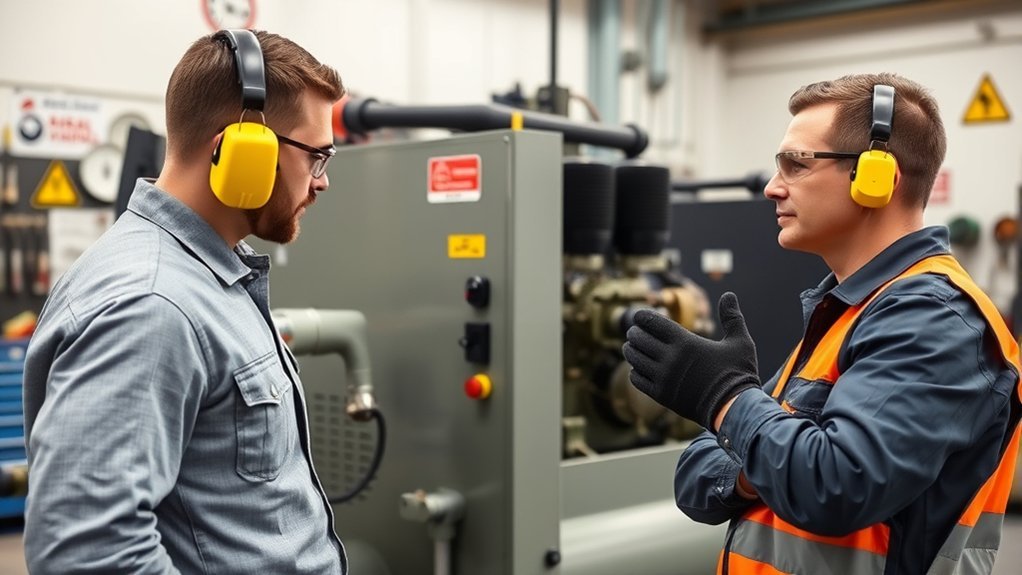
Proper personal protective equipment (PPE) is crucial when operating air compressors, as it provides a critical barrier against potential hazards. Safety gear such as safety glasses or goggles shields your eyes from flying debris or compressed air blasts. Hearing protection, like earplugs or earmuffs, is essential to prevent hearing damage in noisy environments. Respirators or dust masks are necessary when working with materials that produce harmful particles or fumes. Gloves protect your hands from sharp edges, hot surfaces, and pinches, but must be used carefully around moving parts. Wearing the right safety gear ensures you minimize risks associated with high-pressure systems, airborne contaminants, and physical injuries. Using proper PPE is a fundamental step in maintaining a safe working environment during air compressor operations.
Proper Setup and Maintenance Procedures to Prevent Accidents
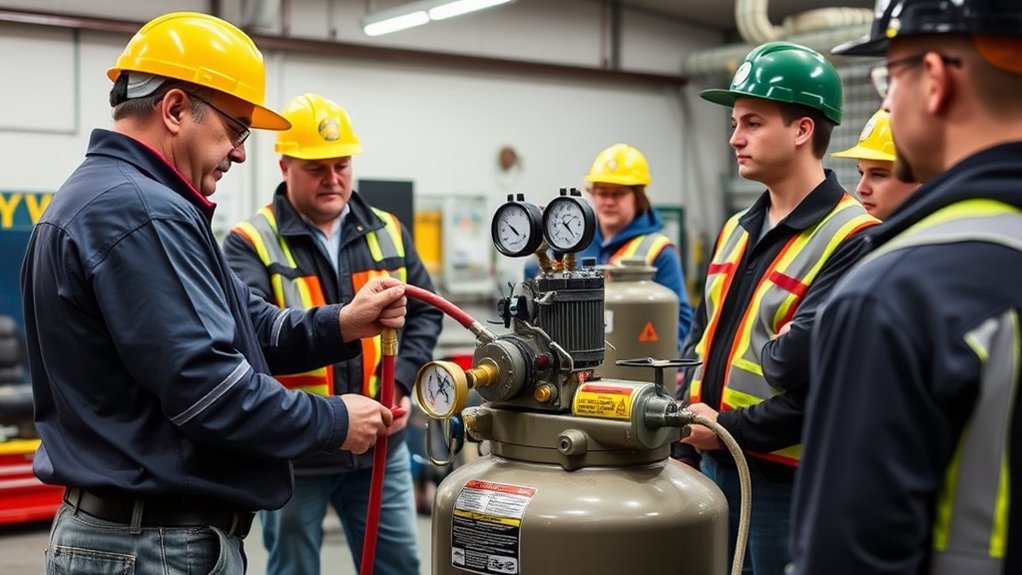
Proper setup and ongoing maintenance are essential to prevent accidents with air compressors. We must conduct regular inspection checks, follow correct installation practices, and adhere to scheduled maintenance routines. These steps guarantee safe operation and help avoid potentially dangerous system failures.
Regular Inspection Checks
Have you ever considered how critical routine inspection checks are to maintaining safe compressor operation? Regular inspections are essential for early detection of potential issues, preventing costly failures or accidents. Adhering to strict maintenance schedules ensures that all components—such as belts, hoses, and pressure gauges—remain in peak condition. Proper inspection techniques involve checking for leaks, corrosion, unusual noises, and wear that could compromise safety. We must be meticulous and cautious during each check, documenting findings to track patterns over time. Skipping or rushing these inspections increases risks considerably. By implementing disciplined, thorough inspection routines, we uphold safety standards and prolong equipment life. Consistent, detailed inspections are the backbone of a safe, reliable compressor operation.
Correct Installation Practices
How can we guarantee that an air compressor is installed correctly from the start to prevent accidents? Proper installation begins with selecting an appropriate location, considering factors like ventilation, accessibility, and proximity to power sources. The installation location must minimize air compressor noise, reducing disturbance and potential safety hazards for workers. Secure mounting on a stable, level surface prevents vibrations and movement that could lead to mechanical failure. We must assure all connections, including air lines and electrical wiring, meet manufacturer specifications and safety standards. Regularly inspecting the setup after installation helps identify issues early. Overall, cautious planning and adherence to manufacturer guidelines are essential to establish a safe, efficient environment that mitigates risks and promotes long-term operation.
Scheduled Maintenance Routines
Regularly scheduled maintenance is essential to guarantee air compressor safety and prevent accidents. Proper setup and routine checks help maintain optimal operation, reduce noise levels, and improve energy efficiency. Neglecting maintenance can lead to increased noise, which may cause hearing damage or distraction, and decreased efficiency, raising operational costs. To ensure safety, we must:
- Regularly inspect and clean filters to prevent clogging and maintain airflow.
- Monitor and adjust pressure settings to avoid overworking the system.
- Check for leaks and worn components to prevent sudden failures and ensure quiet operation.
These precautions help keep noise levels manageable and preserve energy efficiency, minimizing risks and extending the compressor’s lifespan. Consistent maintenance is a critical component of a safe, reliable workplace environment.
Recognizing and Addressing Common Safety Hazards
Understanding common safety hazards associated with air compressors is essential for preventing accidents and ensuring a secure working environment. Hazard identification involves knowing key risks like high-pressure leaks, electrical faults, and moving parts. Recognizing safety signage helps alert us to potential dangers and necessary precautions.
| Hazard | Preventive Measure |
|---|---|
| High-pressure leaks | Regular inspection and maintenance |
| Electrical faults | Proper grounding and wiring |
| Moving parts | Guarding and safety covers |
| Inadequate signage | Clear safety signage installation |
Best Practices for Safe Operation During Daily Use
To guarantee safe operation during daily use, we must adhere to strict practices that minimize risks and maintain equipment integrity. Consistently monitor air compressor noise levels to identify abnormal vibrations or sounds, which could indicate mechanical issues. Proper lubricant selection is critical; using the correct lubricant ensures smooth operation, reduces wear, and prevents overheating. Regularly check and top off lubricants, avoiding over- or under-lubrication that can compromise safety. Additionally, ensure the compressor environment is clean and free of obstructions to facilitate proper airflow and cooling.
Ensure safe compressor operation by monitoring noise, using proper lubricants, and maintaining a clean environment.
- Maintain ideal lubricant levels and choose high-quality lubricants suited for your compressor
- Regularly inspect and address any unusual air compressor noise or vibrations
- Keep the workspace clean and free of debris to prevent overheating and maintain airflow
Emergency Response Steps for Air Compressor Incidents
In the event of an air compressor incident, immediate and precise action is vital to minimize hazards and prevent escalation. Our response must be swift, based on established protocols, and supported by regular emergency drills that reinforce readiness. First aid procedures should be readily accessible and well-practiced, ensuring quick implementation if injuries occur. Always prioritize shutting down the compressor safely to prevent further damage or injury. Communicate clearly with team members to coordinate rescue efforts and alert emergency services if necessary. Document all incidents thoroughly for review and training purposes. Remember, a calm, disciplined response minimizes risks and stabilizes the situation. Proper preparation, including routine emergency drills and first aid training, is essential to safeguard everyone involved.
Investing in Effective Air Compressor Safety Training Programs
Implementing exhaustive air compressor safety training programs is a strategic investment that greatly enhances workplace safety. Proper training reduces accidents, minimizes downtime, and ensures compliance with safety standards. When developing these programs, we prioritize industry certifications to validate the training’s credibility and effectiveness. Incorporating air compressor branding elements helps reinforce safety protocols and company standards.
Implementing comprehensive air compressor safety training boosts safety, reduces downtime, and ensures compliance with industry standards.
Key components include:
- Guaranteeing training aligns with recognized industry certifications such as OSHA or ANSI standards.
- Customizing programs to reflect specific equipment, emphasizing safe operation and maintenance.
- Regularly updating content to incorporate technological advancements and evolving safety regulations.
Investing in comprehensive safety training demonstrates a commitment to employee well-being and operational excellence, establishing your organization as a safety-conscious leader in the industry.
Frequently Asked Questions
How Often Should Safety Training Be Refreshed for Air Compressor Operators?
We recommend refresher safety training annually, covering maintenance protocols and emergency procedures, to guarantee operators stay vigilant, updated on safety standards, and prepared to handle potential hazards effectively, minimizing risks and promoting a safe work environment.
Are There Specific Certifications Required for Air Compressor Safety Training?
Are specific certifications required for air compressor safety training? Yes, certification standards vary by industry and region, so we recommend thorough training programs that meet or exceed these standards to ensure safety and compliance for operators.
How Can I Assess the Safety Compliance of My Existing Air Compressor Setup?
We assess safety compliance by reviewing maintenance procedures and emergency protocols, guaranteeing adherence to standards, conducting regular inspections, and training staff thoroughly. Vigilance and strict adherence to safety guidelines are essential to prevent accidents and secure operational safety.
What Are the Most Common Safety Violations in Air Compressor Operation?
We often see hazard awareness neglect and missing personal protective gear as the most common violations, risking serious injury. Stay cautious, prioritize safety protocols, and always guarantee proper training and equipment to prevent accidents and protect everyone involved.
Can Safety Training Reduce the Risk of Equipment Downtime or Damage?
Yes, safety training markedly reduces equipment downtime and damage by emphasizing proper equipment maintenance and emergency procedures, ensuring our team responds promptly and correctly, preventing costly failures and prolonging compressor lifespan through cautious, informed operation.
Conclusion
By prioritizing proper preparation, persistent vigilance, and proactive prevention, we can substantially enhance air compressor safety. Staying steadfast in safety standards, scrutinizing equipment, and swiftly addressing hazards safeguards our teams and assets. Remember, diligent training delivers dependable, danger-free operations. Let’s commit to continuous learning, cautious conduct, and thorough compliance to create a secure, sound, and sustainable workplace environment. Safety isn’t just a standard—it’s our steadfast, shared responsibility.