Studies show that electrical faults and overheating account for over 60% of air compressor fires. These incidents can cause significant damage if not properly managed. Ensuring correct installation, routine inspections, and effective safety protocols are vital for prevention. Understanding these risks and implementing thorough safety measures can make a substantial difference. However, many facilities overlook essential factors that could prevent fires—so, exploring these aspects thoroughly is essential for effective safety management.
Key Takeaways
- Regularly inspect and maintain electrical components, safety devices, and ventilation systems to prevent overheating and electrical faults.
- Ensure proper placement on non-combustible surfaces with adequate spacing for heat dissipation and airflow.
- Train personnel on emergency shutdown procedures, fire extinguisher use, and fire safety protocols.
- Store flammable materials in fire-resistant areas away from compressor units and fuel sources.
- Develop and practice comprehensive fire safety plans, including emergency routes, fire suppression systems, and safety drills.
Understanding the Fire Risks of Air Compressors
While air compressors are essential tools in many industrial and commercial settings, they inherently pose fire risks due to their mechanical and electrical components. The primary concern is fire ignition, which can occur from electrical faults, overheating, or friction within moving parts. Overheat prevention measures are critical, as excessive temperatures can compromise insulation, causing sparks or electrical failures that ignite nearby combustibles. Components like pressure switches, motors, and cooling systems must be monitored and maintained to prevent overheating. Proper ventilation and regular inspections help mitigate heat buildup, reducing the risk of fire ignition. Implementing these measures guarantees the compressor operates within safe temperature ranges, considerably lowering fire hazards associated with electrical and mechanical failures.
Proper Installation and Placement to Minimize Fire Hazards
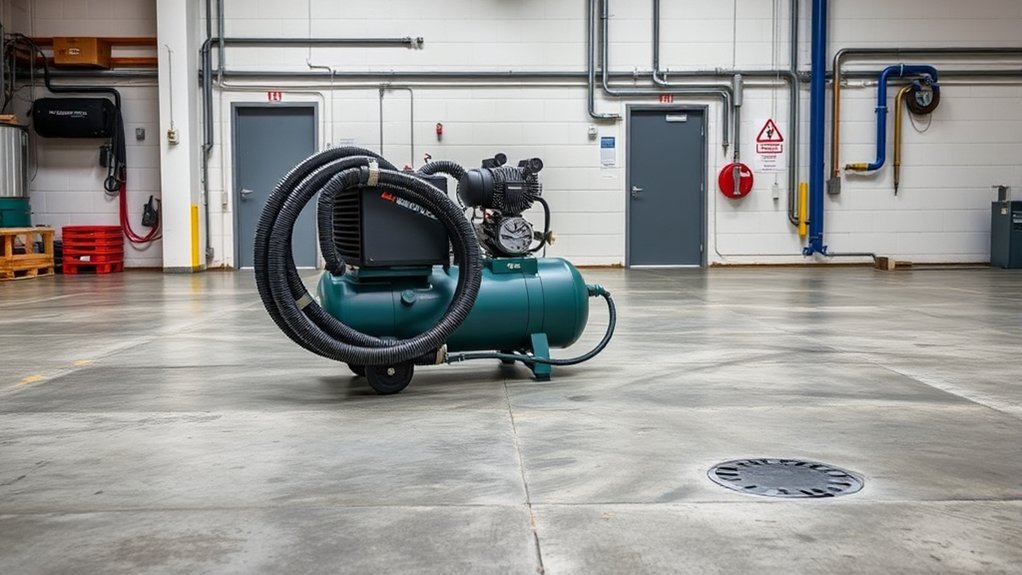
Proper installation and placement are crucial in minimizing fire hazards associated with air compressors. Correct positioning ensures adequate ventilation, reducing heat buildup and preventing overheating. It’s important to select a location with sufficient ventilation systems to dissipate heat effectively. Keep the compressor away from combustible materials and ensure clear access to emergency exits for quick evacuation if needed. Additionally, position the unit on a stable, non-combustible surface to prevent accidental tipping or damage. Adequate spacing around the compressor allows for proper airflow and prevents overheating. Regularly verify that ventilation systems are operational and unobstructed. Maintaining clear pathways to emergency exits ensures safety during an emergency, reducing the risk of fire-related injuries. Proper placement ultimately helps mitigate fire hazards and enhances operational safety.
Regular Inspection and Maintenance for Fire Prevention
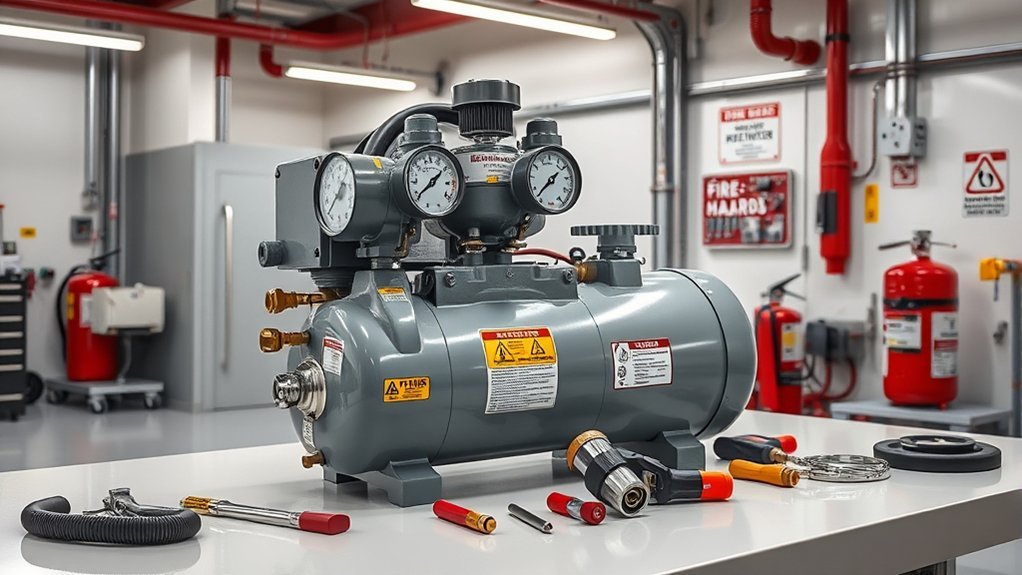
How often do we inspect our air compressors to guarantee they remain safe from fire hazards? Routine checks should be conducted at least monthly to identify potential issues early. During these inspections, we focus on verifying electrical connections, inspecting for signs of wear or overheating, and ensuring no leaks or corrosion are present. Component cleaning is essential; regular removal of dust, dirt, and debris prevents buildup that could ignite or cause overheating. We must also examine safety devices such as pressure relief valves and thermostats for proper operation. Maintaining a detailed log of inspections and maintenance activities helps track the compressor’s condition over time. Consistent, meticulous inspection and component cleaning are crucial practices for minimizing fire risks and ensuring operational safety.
Safe Handling and Storage of Compressor Components and Fuel
Handling and storing compressor components and fuel safely is vital to prevent fire hazards in the workplace. Proper procedures reduce risks associated with compressor lubrication and fuel storage, guaranteeing safe operations. Components should be stored in well-ventilated, fire-resistant areas away from heat sources. Fuel containers must be sealed tightly, labeled clearly, and placed on non-combustible surfaces. Regular inspection of storage areas for leaks or deterioration is essential. Keep ignition sources, such as open flames or sparks, strictly isolated from compressor parts and fuel supplies. Use appropriate containers designed for flammable liquids, and ensure that maintenance activities follow strict safety protocols. Adopting these measures minimizes the risk of ignition and maintains a safe working environment.
Implementing Effective Electrical Safety Measures
To minimize electrical fire hazards, we must conduct regular inspections of all electrical components to identify potential faults early. Proper grounding techniques are essential to prevent electrical shocks and reduce the risk of sparks that could ignite flammable materials. Additionally, using certified equipment guarantees compliance with safety standards and enhances overall electrical system reliability.
Regular Electrical Inspections
Regular electrical inspections are essential for maintaining the safety and reliability of air compressor systems. These inspections identify potential electrical hazards before they cause damage or fire. We focus on verifying compliance with wiring standards, ensuring all wiring is properly rated, secured, and insulated.
Key elements include:
- Checking for signs of wear, corrosion, or damage to wiring and connectors
- Ensuring circuit breakers and fuses operate correctly and are appropriately rated
- Confirming adherence to wiring standards and electrical codes
- Inspecting for loose connections or exposed conductors
- Testing insulation resistance to prevent electrical hazards
Regular assessments help us prevent electrical faults that could lead to fires, safeguarding personnel and equipment while maintaining system integrity.
Proper Grounding Techniques
Why is proper grounding critical for air compressor safety? Proper grounding guarantees that any stray electrical current is safely directed to the ground, reducing the risk of electrical faults that can cause fires or equipment damage. Effective electrical safety depends on a well-designed grounding system, which minimizes the potential for electrical shock and prevents voltage buildup. Correct grounding techniques involve connecting the compressor’s grounding terminal to a low-resistance earth ground, verified through regular testing. This process helps maintain system stability and safeguards personnel. Proper grounding also facilitates the operation of safety devices, such as circuit breakers and ground fault interrupters, which activate during faults. In essence, proper grounding is essential for reliable electrical safety, protecting both personnel and equipment from potential fire hazards.
Use of Certified Equipment
Using certified equipment is essential for guaranteeing electrical safety in air compressor systems. Certified equipment meets strict equipment standards, reducing risks associated with electrical faults and fires. These standards verify the integrity, durability, and safety features of components, ensuring reliable operation under demanding conditions. To maximize safety, we recommend:
- Selecting equipment with recognized safety certifications from reputable agencies
- Regularly verifying compliance with current equipment standards
- Avoiding uncertified or homemade electrical components
- Ensuring all wiring and connections meet certified specifications
- Maintaining documentation of certification for audits and inspections
Adhering to these practices ensures that electrical systems operate within safe parameters, minimizing the risk of fire and electrical failure. Using certified equipment is a proactive step toward a safer, more reliable air compressor environment.
Using Fire-Resistant Materials and Protective Devices
Implementing fire-resistant materials and protective devices is essential for enhancing safety around air compressors. Fire-resistant materials, such as fireproof insulation and non-combustible enclosures, minimize the risk of ignition and contain potential fires. Protective devices, including thermal cut-offs, pressure relief valves, and automatic shutoff systems, serve as critical safety measures by preventing overheating and pressure buildup. These components work together to reduce the likelihood of fire initiation and limit damage if a fire occurs. Proper installation and regular maintenance of fire-resistant materials and protective devices guarantee their effectiveness. By integrating these safety features, we create a safer environment, reducing the potential for catastrophic fire incidents related to air compressor operation.
Emergency Preparedness: Fire Safety Plans and Equipment
Effective fire safety plans and equipment are vital components of a thorough approach to protecting personnel and property around air compressors. A detailed plan includes clear procedures for immediate response, regular fire safety drills, and accessible emergency escape routes. Essential equipment involves fire extinguishers suited for electrical fires, emergency alarms, and readily available fire suppression systems. Key elements include:
- Regularly scheduled fire safety drills to guarantee preparedness
- Clearly marked emergency escape routes
- Properly maintained fire extinguishers
- Installation of automatic fire suppression systems
- Training personnel on response protocols and equipment use
Implementing these measures guarantees swift action during an incident, minimizes damage, and enhances safety. Preparedness fosters a quick, organized response, reducing risks to personnel and property during a fire event around air compressors.
Training Personnel on Air Compressor Fire Safety Protocols
To guarantee a rapid and organized response during a fire incident involving air compressors, personnel must receive extensive training on fire safety protocols. Effective fire safety training ensures workers understand the specific hazards associated with compressor operation, such as flammable lubricants, electrical components, and compressed air systems. Hazard awareness is integral, enabling staff to identify potential ignition sources and high-risk situations proactively. Training should include detailed procedures for emergency shutdowns, fire suppression system activation, and evacuation protocols. Regular drills reinforce knowledge, ensuring personnel are prepared for real incidents. Precise understanding of fire safety protocols minimizes response time and mitigates damage. Continuous education and assessment are essential to maintain a high level of hazard awareness and operational safety standards.
Common Mistakes That Increase Fire Risks and How to Avoid Them
Many fire risks associated with air compressors stem from common operational mistakes that can be easily overlooked or ignored. Overloading compressors increases internal pressure, causing excessive heat and potential ignition sources. Ignoring safety warnings, such as neglecting maintenance schedules or bypassing safety devices, compromises system integrity and safety. To minimize fire hazards, avoid these pitfalls:
Overloading, neglecting safety warnings, and skipping maintenance heighten fire risks in air compressor operation.
- Overloading compressors beyond manufacturer specifications
- Ignoring or disabling safety warnings and devices
- Skipping routine maintenance and inspections
- Using damaged or incompatible components
- Operating in poorly ventilated or cluttered environments
Frequently Asked Questions
How Often Should Fire Safety Drills Be Conducted for Compressor Operators?
We recommend conducting fire safety drills, including fire extinguisher training and emergency evacuation, at least quarterly. Regular practice guarantees compressor operators maintain readiness, understand safety procedures, and respond swiftly to fire incidents, minimizing risks effectively.
What Are the Most Common Causes of Air Compressor Fires?
We find that electrical faults, overheating, and improper maintenance are the most common causes of air compressor fires. Implementing strict fire prevention measures and safety protocols considerably reduces risks, ensuring safer operation and minimizing potential fire hazards.
Are Specific Fire Suppression Systems Recommended for Compressor Areas?
Absolutely, we recommend fire suppression systems in compressor areas to mitigate risks, alongside diligent equipment maintenance. These measures guarantee safety by promptly addressing fires, preventing damage, and maintaining operational integrity through reliable, targeted fire suppression solutions.
How Can Ventilation Reduce Fire Risks Associated With Compressors?
We believe effective ventilation reduces fire risks by improving airflow management and increasing ventilation efficiency, which helps disperse heat, remove flammable vapors, and prevent accumulation of combustible gases around compressors, consequently minimizing ignition sources and fire hazards.
What Are Legal Requirements for Fire Safety Documentation for Compressors?
Like a carefully crafted map, fire safety regulations demand detailed documentation compliance for compressors. We must guarantee our safety plans align with legal requirements, providing clear, precise records to prevent hazards and meet all regulatory standards effectively.
Conclusion
By following these fire safety measures, we can build a fortress of protection around our air compressors. Regular inspections, proper installation, and trained personnel form the shield that keeps hazards at bay. Remember, neglecting these protocols is like leaving the door open for disaster. Let’s stay vigilant and proactive—because when it comes to fire safety, prevention is our strongest line of defense, ensuring safety for everyone and everything we work hard to protect.