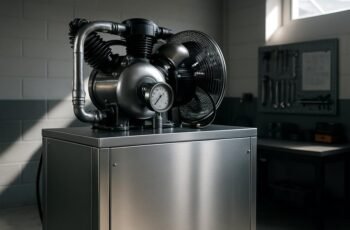
Imagine a small manufacturing facility where a neglected compressor led to unexpected downtime due to overheating and leaks, highlighting the importance of consistent maintenance. Proper upkeep guarantees reliable performance, safety, and extended equipment life, but many overlook routine tasks that prevent costly repairs. To avoid similar issues, it’s essential to understand the key steps involved in maintaining your portable air compressor effectively, which can make a significant difference in operational efficiency.
Key Takeaways
- Regularly inspect and clean filters, hoses, and vents to prevent debris buildup and airflow restrictions.
- Check oil levels and lubricate moving parts quarterly for smooth operation and longevity.
- Drain moisture from the tank after each use to prevent rust and corrosion.
- Verify pressure gauges and safety valves periodically to ensure accurate readings and safe pressure release.
- Inspect electrical components for damage and test safety switches to maintain safe operation.
How to Inspect and Clean Your Portable Air Compressor Regularly
Regular inspection and cleaning are essential to maintaining the ideal performance of your portable air compressor. We recommend routinely examining key components such as air compressor accessories, including filters, hoses, and gauges, to guarantee peak operation. Clean filters and replace worn accessories promptly to prevent airflow restrictions and pressure drops. During inspections, check for debris, dust, and dirt buildup, especially around cooling fins and intake vents. Proper cleaning reduces environmental considerations by minimizing contaminants that could affect compressor efficiency or contaminate the compressed air. Use compressed air or a soft brush to clear debris without damaging sensitive parts. Consistent maintenance not only prolongs equipment lifespan but also ensures safety and efficiency, making your portable air compressor reliable for ongoing use.
Changing the Oil and Lubrication Tips for Smooth Operation
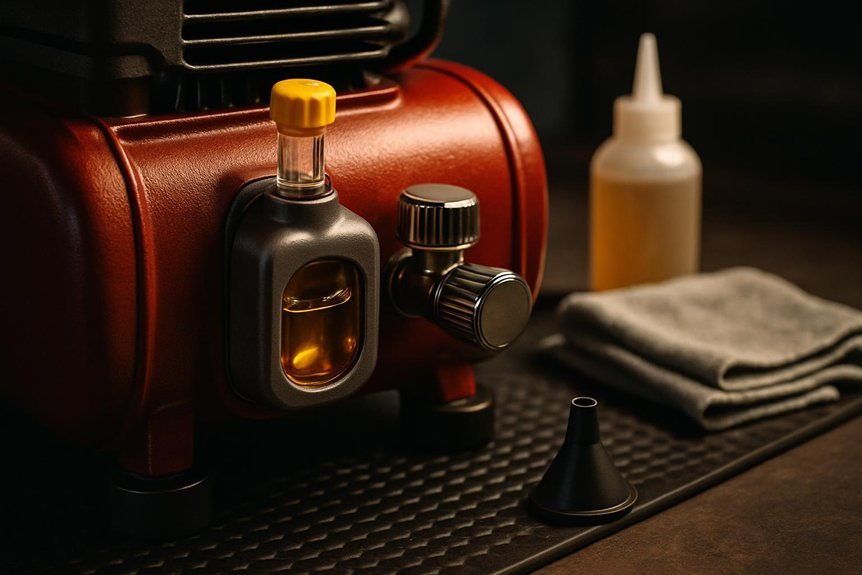
Maintaining proper oil levels and applying the correct lubricant are essential for ideal compressor performance. We recommend conducting regular oil checks to prevent inadequate lubrication, which can lead to component wear. Ensuring proper lubricant application minimizes friction and extends the lifespan of your compressor.
Regular Oil Checks
Ensuring proper lubrication and timely oil checks are essential for the smooth operation of your portable air compressor. Regularly inspecting oil levels helps prevent component wear and overheating. Maintaining appropriate oil levels involves checking the reservoir before each use and topping up if necessary, following the manufacturer’s recommended lubrication frequency. Neglecting this can result in increased friction and potential damage. To optimize performance, consider these practices:
- Use manufacturer-approved lubricants to ensure compatibility
- Check oil levels with the compressor off and on a level surface
- Replace oil at recommended intervals, even if levels appear sufficient
- Clean the oil fill cap and dipstick to prevent contamination
- Monitor for signs of oil degradation, such as discoloration or viscosity changes
Consistent oil checks ensure reliable operation and prolong your compressor’s lifespan.
Proper Lubricant Application
Proper lubricant application is critical for ideal compressor performance and longevity. Selecting the correct lubricant viscosity ensures proper film formation, reducing metal-to-metal contact and minimizing wear. Regularly check the oil level and replace it before contamination levels become excessive, as oil contamination can impair lubrication and lead to component failure. When changing the oil, drain the old lubricant completely, ensuring no residual contaminants remain. Use manufacturer-recommended lubricants to maintain best viscosity and performance. Avoid overfilling, which can cause increased pressure and overheating. Proper lubrication practices extend compressor life, prevent overheating, and ensure smooth operation. Consistently monitoring and maintaining the correct lubricant viscosity and cleanliness are essential for reliable, efficient compressor functioning.
Checking and Replacing Air Filters for Optimal Performance
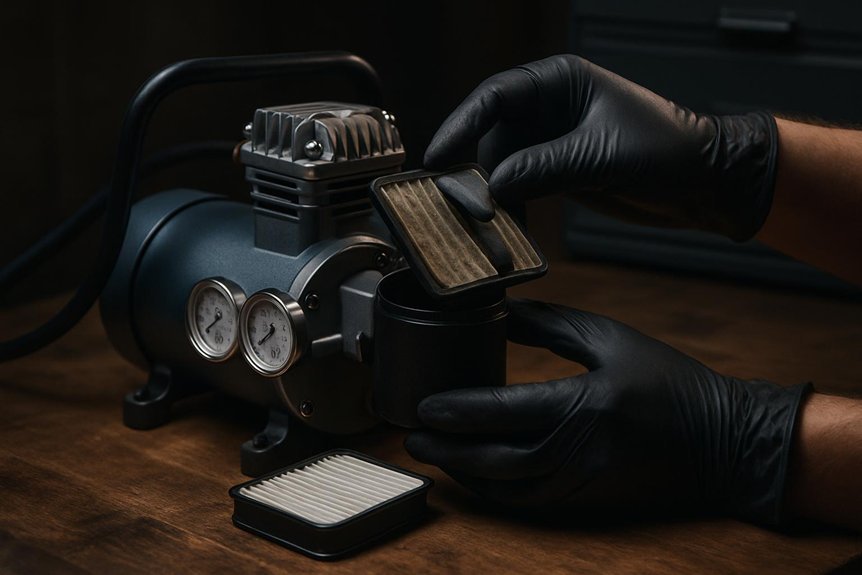
Because air filters play a critical role in preventing debris from entering the compressor, regularly inspecting and replacing them is essential for peak operation. Proper air filter replacement involves evaluating filter condition, removing accumulated debris, and ensuring a tight seal upon reinstallation. When filters appear clogged or dirty, perform filter cleaning or replace them entirely to maintain airflow efficiency. Neglecting this maintenance can lead to reduced performance and increased wear on internal components.
Regularly inspect and replace air filters to ensure optimal compressor performance and prevent internal wear.
Key steps include:
- Visual inspection for dirt and damage
- Cleaning filters with compressed air or appropriate solvent
- Replacing filters if cleaning proves ineffective
- Confirming proper fit and seal after installation
- Documenting maintenance for operational records
Adhering to these practices optimizes compressor longevity and performance.
Draining Moisture From the Tank to Prevent Corrosion
Moisture accumulation inside the compressor tank can lead to corrosion and damage if not regularly removed. Moisture buildup results from compressed air cooling and condensing within the tank, increasing the risk of tank corrosion over time. To prevent this, we recommend regularly draining the tank after each use. Proper drainage minimizes moisture retention, extending compressor lifespan and maintaining performance.
| Action | Purpose |
|---|---|
| Drain valve operation | Remove accumulated moisture efficiently |
| Regular intervals | Prevent moisture buildup and corrosion |
| Visual inspection | Detect signs of corrosion early |
| Proper storage | Reduce moisture ingress during idle periods |
Consistent drainage is essential to avoid tank corrosion caused by residual moisture.
Inspecting Hoses and Connections for Leaks and Wear
We should regularly examine hoses and connections for any visible damage, such as cracks, cuts, or bulges, which could compromise system integrity. Ensuring fittings are tight and properly secured prevents leaks that reduce efficiency and pose safety risks. Addressing issues promptly keeps the compressor operating reliably and extends its service life.
Checking for Visible Damage
Regularly inspecting hoses and connections for visible damage is essential to maintaining a portable air compressor’s safety and performance. This step is a critical part of our maintenance checklist and guarantees early detection of potential issues. Look for cracks, cuts, or abrasions on hoses, and check fittings for corrosion or deformation. Tighten loose connections to prevent leaks. Also, examine the following:
- Cracks or bulges in hoses
- Signs of abrasion or chafing
- Corrosion or rust on fittings
- Loose or missing clamps
- Discoloration or burn marks at connections
These visual cues can indicate compromised components that may lead to failures or safety hazards. Implementing this inspection routine helps uphold peak operation and extends the lifespan of your portable compressor.
Ensuring Secure Fittings
To guarantee the safety and peak performance of your portable air compressor, it’s essential to verify that all fittings and connections are secure and free from leaks or wear. Properly secured fittings ensure consistent pressure regulation and prevent air loss, which can compromise tool operation and safety. Regularly inspect hoses and fittings for signs of deterioration, such as cracks, bulges, or corrosion. Tighten loose connections with appropriate tools, avoiding over-tightening that could damage components. Use thread sealant or tape where necessary to improve sealing integrity. Maintaining secure fittings minimizes leaks that may lead to pressure fluctuations, ensuring ideal compressor function. Consistent inspection and maintenance of these connections are critical for safe, efficient operation and prolonging the lifespan of your equipment.
Monitoring Pressure Gauges and Safety Valves for Accurate Readings
Monitoring pressure gauges and safety valves is essential for maintaining accurate readings and ensuring safe operation of a portable air compressor. Regularly verifying gauge calibration guarantees measurement precision, preventing over-pressurization or under-pressurization. When gauges become inaccurate, gauge replacement is necessary to restore reliability. Safety valves must be inspected for proper function, releasing excess pressure effectively to prevent system failure. To optimize performance, we recommend:
- Conducting periodic pressure calibration checks
- Replacing faulty or damaged gauges promptly
- Inspecting safety valves for corrosion or debris
- Testing safety valve release pressure against manufacturer specifications
- Documenting all calibration and maintenance activities
Implementing these practices guarantees accurate readings, enhances safety, and maintains compressor efficiency.
Maintaining the Power Source and Electrical Components
Ensuring the integrity of the power source and electrical components is critical for safe and reliable operation. We recommend regularly inspecting the power cord for damage, examining wiring connections for wear or corrosion, and testing the safety switch for proper functionality. These steps help prevent electrical failures and maintain ideal compressor performance.
Check Power Cord Integrity
Have you ever considered how a damaged power cord can compromise your compressor’s safety and performance? Regular power cord inspection is essential to identify signs of wear such as cuts, frays, or exposed wires that may lead to electrical failure or hazards. When inspecting, focus on:
- Checking for visible damage or cracks
- Ensuring the plug connections are secure
- Inspecting insulation integrity throughout the cord
- Testing for continuity if necessary
- Replacing the cord promptly if any damage is detected
Cord replacement should be performed with a compatible, high-quality power cord to maintain electrical safety standards. Maintaining the cord’s integrity prevents short circuits, electrical shocks, and operational interruptions, ensuring reliable performance and safety during compressor use.
Inspect Electrical Wiring
How can we confirm that the electrical wiring connected to our compressor remains safe and reliable? First, visually inspect wiring types for signs of damage such as fraying, cracks, or burn marks, which compromise electrical safety. Make certain all connections are secure and free of corrosion. Check for loose terminals or exposed conductors that could lead to shorts or electrical shock. Use a multimeter to verify continuity and proper insulation resistance, especially on high-voltage wiring. Affirm that the wiring adheres to manufacturer specifications and local electrical codes. Regular inspections help prevent electrical failures, reduce fire hazards, and maintain compressor performance. By maintaining meticulous control over wiring condition, we ensure a safe, reliable power supply for excellent compressor operation.
Test Safety Switch Function
Testing the safety switch function is a key step in maintaining a reliable power supply to your portable air compressor. To effectively test safety, guarantee the switch responds properly to electrical faults or overloads.
When performing a test safety, observe these critical aspects:
- Confirm the switch trips during simulated fault conditions
- Verify the switch resets correctly after testing
- Check for signs of physical damage or corrosion
- Ensure electrical contacts are clean and secure
- Use a multimeter to measure continuity and proper operation
This process is essential for safety and prevents electrical failures. Regular testing of the switch function helps identify potential issues early, ensuring your compressor operates safely and reliably. Proper maintenance of electrical components extends your compressor’s lifespan and minimizes downtime.
Troubleshooting Common Issues Before They Escalate
Addressing potential issues early can prevent costly repairs and downtime. Troubleshooting common problems with your portable air compressor involves inspecting key components like air compressor accessories to identify leaks, blockages, or wear. For example, if the compressor isn’t reaching ideal pressure, check the intake filter and verify no debris obstructs airflow. Unusual noises can indicate loose fittings or failing motor parts, which should be tightened or replaced promptly. Recognizing these issues before they escalate preserves the portable compressor benefits, such as mobility and quick setup. Regularly monitoring pressure gauges and listening for abnormal sounds allows us to catch problems early. This proactive approach minimizes operational interruptions and extends the lifespan of your compressor, guaranteeing reliable performance when you need it most.
Storing Your Compressor Properly for Long-Term Use
Proper storage is essential to maintain your portable air compressor’s performance and extend its lifespan during periods of inactivity. Ideal storage conditions prevent corrosion, moisture buildup, and component degradation, ensuring long-term preservation. To achieve this, consider the following:
- Store in a clean, dry environment with stable temperatures
- Drain moisture from the tank before storage
- Cover the compressor to protect against dust and debris
- Keep it upright to prevent oil and lubricant leakage
- Disconnect power sources to avoid accidental activation
Adhering to these practices ensures your compressor remains in excellent condition, ready for use when needed. Proper storage not only safeguards internal components but also minimizes the risk of corrosion and deterioration, maximizing the device’s operational lifespan.
Creating a Regular Maintenance Schedule to Keep Your Compressor in Top Shape
Establishing a consistent maintenance schedule is essential for guaranteeing your portable air compressor operates efficiently and reliably over time. Regular checks prevent excessive compressor noise and sustain peak performance. Focus on inspecting and replacing air filters, draining moisture from tanks, and lubricating moving parts. By adhering to a scheduled routine, you preserve portability features and minimize downtime. Maintenance intervals should be based on usage intensity and manufacturer recommendations. Tracking your maintenance activities ensures consistent care, reduces wear, and prolongs lifespan. Use the following schedule for guidance:
| Task | Frequency | Purpose |
|---|---|---|
| Check for compressor noise | Weekly | Identify abnormal operation |
| Inspect portability features | Monthly | Maintain ease of transport |
| Drain tank moisture | After each use | Prevent corrosion |
| Lubricate moving parts | Quarterly | Reduce wear and noise |
Frequently Asked Questions
How Often Should I Perform Maintenance on My Portable Air Compressor?
We recommend performing routine inspections and adhering to cleaning schedules weekly or after heavy use, ensuring the best performance. Regular maintenance prevents breakdowns, prolongs lifespan, and maintains safety, making it essential to follow manufacturer guidelines closely.
Can I Use Alternative Lubricants for My Compressor?
Yes, we can use alternative oil types, but only if lubricant compatibility is confirmed with the compressor manufacturer. We guarantee the alternative lubricants meet specific viscosity and additive requirements to maintain ideal compressor performance and longevity.
What Safety Precautions Should I Take During Maintenance?
“Safety first,” we remind you—always wear personal protective gear and guarantee safe handling during maintenance. Disconnect power, depressurize the system, and follow manufacturer instructions to prevent accidents and ensure the best compressor performance.
How Do I Identify if My Compressor Needs Replacement Parts?
We identify if our compressor needs replacement parts by checking oil levels and filter condition; if oil is low or dirty, or filters are clogged or damaged, it indicates parts require replacement to maintain peak performance and prevent damage.
Are There Specific Maintenance Tips for Different Compressor Models?
We follow model-specific maintenance manuals closely, understanding that precision is key. While tips vary, adhering to manufacturer instructions guarantees ideal performance; it’s the best way to keep your compressor running smoothly and avoid unnecessary repairs.
Conclusion
By following these maintenance tips, we can keep our portable air compressors running smoothly, much like a well-oiled machine. Regular inspections, timely replacements, and proper storage are essential for longevity and peak performance. Think of it as tending to a high-precision instrument—consistent care ensures reliability and safety. Staying proactive with maintenance not only extends the lifespan but also guarantees efficient operation, saving us time and money in the long run.