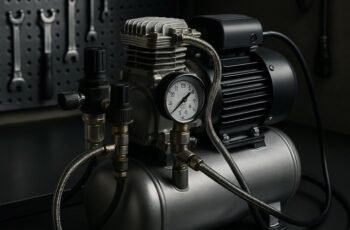
Maintaining an air compressor requires a systematic approach to guarantee reliable operation and longevity. We need to focus on regular inspections, proper lubrication, and timely filter replacements, all while monitoring for signs of wear or damage. Addressing issues early can prevent costly repairs and downtime. To achieve this, understanding the specific maintenance needs and establishing a consistent schedule is essential—something that becomes clearer as we explore each step in detail.
Key Takeaways
- Regularly inspect for leaks, corrosion, and loose fittings to prevent system failures.
- Monitor and change oil filters and lubricants according to manufacturer guidelines.
- Conduct vibration and noise analysis to identify early signs of internal issues.
- Replace air intake and moisture filters before clogging to ensure optimal airflow.
- Schedule routine maintenance based on operating hours to prolong compressor lifespan.
Understanding the Basics of Air Compressors and Their Maintenance Needs
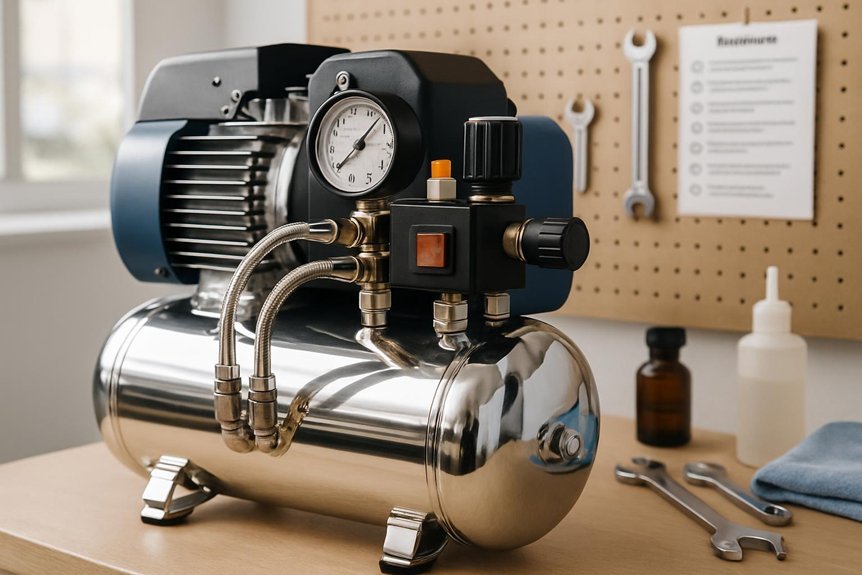
While understanding the fundamental components of an air compressor is essential for effective maintenance, it also helps us identify potential issues before they escalate. Knowing the different air compressor types—reciprocating, rotary screw, and centrifugal—guides us in selecting appropriate maintenance routines. Each type has specific needs, such as lubricating moving parts or monitoring airflow and pressure levels. Safety precautions are critical; we must guarantee proper ventilation, avoid over-pressurization, and regularly inspect safety valves. Recognizing how these components function and interact allows us to prevent failures, reduce downtime, and maintain peak performance. Proper knowledge of air compressor basics ensures safe operation and effective upkeep, ultimately extending the equipment’s lifespan and enhancing efficiency.
Performing Regular Inspections and Identifying Common Issues
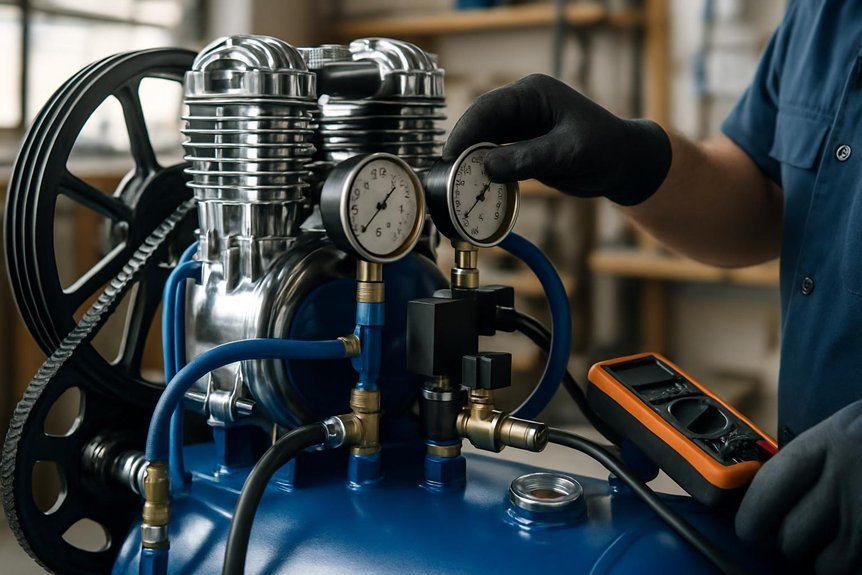
Regular inspections are vital for maintaining ideal air compressor performance and preventing unexpected failures. During inspections, we focus on key indicators that signal potential issues. First, conduct vibration analysis to detect imbalances or bearing wear, which often cause excessive vibration and can lead to component failure. Second, monitor noise levels; unusual sounds may indicate misaligned parts or air leaks. Third, visually inspect for leaks, corrosion, or loose fittings that compromise efficiency or safety. These steps help us identify early signs of common issues and address them promptly. By systematically performing these inspections, we guarantee the compressor operates smoothly, extend its lifespan, and minimize downtime caused by avoidable failures.
Maintaining Proper Lubrication and Changing Filters Effectively
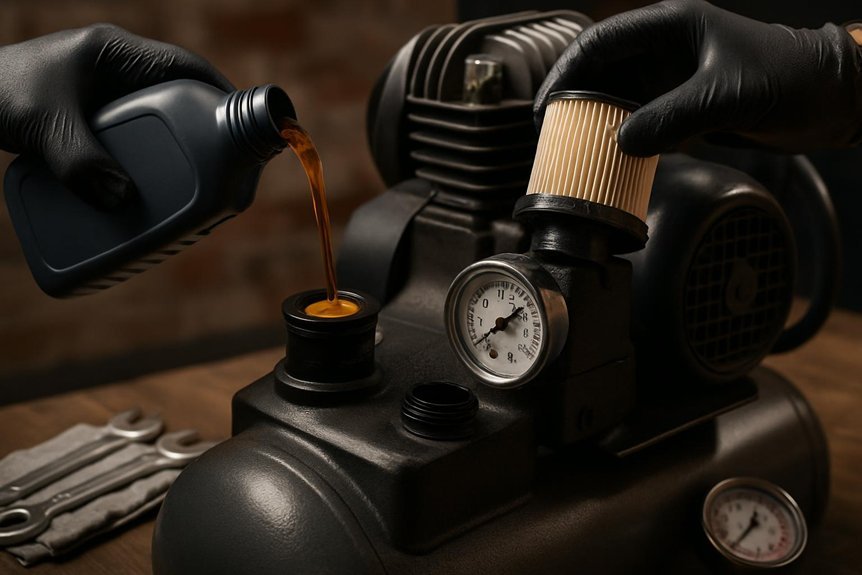
Maintaining proper lubrication and changing filters effectively are crucial for guaranteeing ideal air compressor performance and longevity. Selecting the correct lubricant types—such as synthetic or mineral oils—depends on your compressor’s specifications and operating conditions. Consistent lubrication minimizes friction, reduces wear, and prevents overheating. Regularly checking oil levels and replacing oil filters according to manufacturer guidelines is essential; neglecting this accelerates component degradation. Filters, including air intake and moisture filters, have specific lifespans determined by operating hours and environmental conditions. Monitoring filter condition and replacing them before they clog ensures peak airflow and prevents contaminants from entering the system. Precise adherence to lubrication schedules and filter replacement intervals maintains efficiency, reduces downtime, and extends the compressor’s service life.
Troubleshooting Common Air Compressor Problems and When to Seek Professional Help
Understanding common air compressor problems and recognizing when to seek professional assistance are essential for maintaining system efficiency and preventing costly repairs. Noise reduction issues often indicate worn or misaligned components, which can compromise energy efficiency. When troubleshooting, consider these key indicators:
Recognizing compressor issues early helps prevent costly repairs and maintains optimal system performance.
- Excessive noise or vibration, suggesting imbalance or damaged internal parts.
- Fluctuating pressure levels, which may point to leaks or faulty pressure regulators.
- Increased power consumption, indicating inefficiency due to worn bearings or compressor inefficiencies.
If these symptoms persist despite basic troubleshooting—such as inspecting for leaks or cleaning filters—professional help is necessary. Addressing these problems promptly helps optimize noise reduction, maintains energy efficiency, and extends the compressor’s lifespan.
Creating a Maintenance Schedule to Keep Your Air Compressor Running Smoothly
How can we guarantee our air compressor operates efficiently over time? Creating a detailed maintenance schedule is essential. Regular inspections and scheduled servicing, such as checking for leaks, oil levels, and filter cleanliness, directly impact air compressor efficiency. By establishing routine maintenance tasks, we reduce unexpected breakdowns and maximize performance. Incorporating a maintenance cost analysis helps prioritize tasks that deliver the greatest return on investment, minimizing expenses while preserving reliability. Precise scheduling ensures critical components are serviced at ideal intervals, preventing excessive wear and energy waste. A well-structured plan allows for proactive adjustments based on operating hours and environmental conditions. Consistent adherence to this schedule maintains peak efficiency, prolongs equipment lifespan, and minimizes downtime, ensuring the compressor functions smoothly and cost-effectively over its service life.
Frequently Asked Questions
How Do I Choose the Right Air Compressor for My Needs?
We choose the right air compressor by analyzing our needs based on air compressor types, considering portability, power, and usage frequency, while ensuring we have appropriate maintenance tools for ideal performance and longevity in our specific applications.
What Safety Precautions Should I Follow During Maintenance?
We always wear appropriate safety gear, like gloves and eye protection, and guarantee an emergency shutdown procedure is in place before maintenance. These steps protect us from risks, ensuring a safe, efficient process during compressor upkeep.
Can I Upgrade Parts of My Air Compressor for Better Performance?
Yes, we can upgrade parts of our air compressor through precise parts replacement, such as high-efficiency valves or upgraded motors, which markedly boosts performance and reliability, ensuring ideal operation tailored to specific industrial or workshop requirements.
How Do Environmental Factors Affect Air Compressor Longevity?
Environmental impact profoundly influences air compressor longevity, as corrosion prevention becomes critical in humid or salty conditions. Ignoring these factors accelerates wear and damage, risking costly repairs and reduced lifespan for your equipment over time.
What Are Signs of Imminent Air Compressor Failure?
We notice signs of imminent failure through excessive vibration analysis, which indicates imbalance or misalignment, and oil contamination, suggesting seal leaks or lubrication issues, both of which require prompt inspection and maintenance to prevent catastrophic breakdowns.
Conclusion
By adhering to these maintenance practices, we keep our air compressors humming smoothly, like a finely tuned engine. Regular inspections, timely filter changes, and vigilant leak detection act as the nervous system, alerting us to potential issues before they escalate. Think of it as tending a delicate yet powerful machine—each step ensuring it runs efficiently, quietly, and reliably, ready to perform at its peak whenever we need it. Proper upkeep transforms a complex system into a steadfast workhorse.