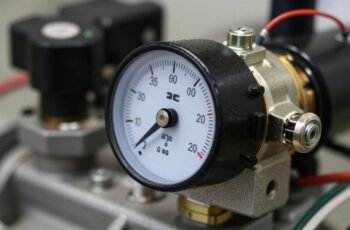
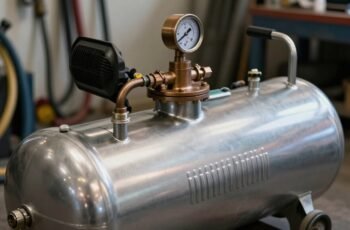
Think of your air compressor filter as the lungs of your system—crucial for clean, efficient operation. Just like breathing clean air is essential for health, maintaining your filter guarantees peak performance and prevents costly damage. Neglecting this fundamental component can lead to internal wear, reduced efficiency, and increased operational costs. Understanding when and how to properly service your filters is key to long-term reliability, but many overlook these critical steps—so, let’s explore the details that keep your compressor running smoothly.
Key Takeaways
- Regularly inspect and clean or replace filters to prevent clogging and maintain optimal airflow.
- Monitor pressure differentials and visual signs to determine when filters need servicing.
- Use compatible, high-quality filter materials like pleated paper or synthetic media for better performance.
- Turn off the compressor and follow proper procedures before replacing filters to avoid system damage.
- Keep detailed maintenance logs and schedule routine filter checks based on operational conditions.
Why Regular Air Filter Maintenance Matters for Your Compressor
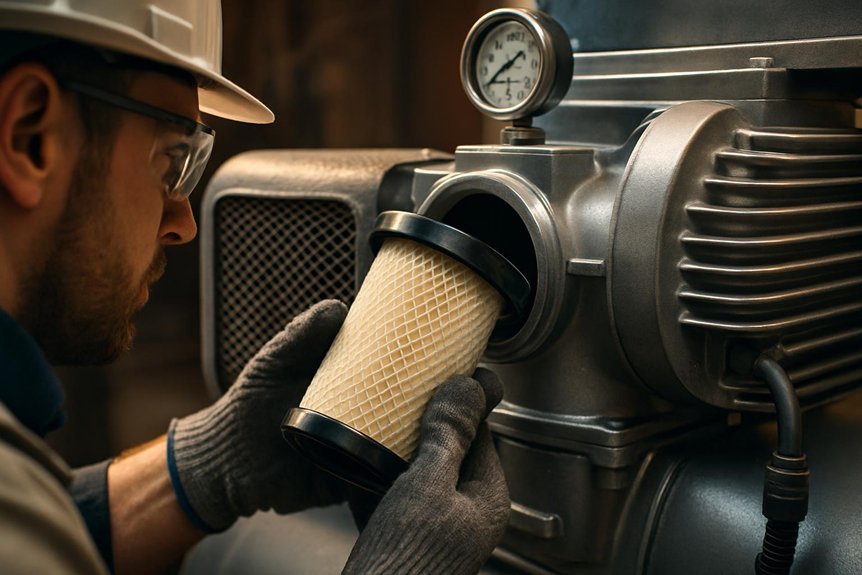
Regular air filter maintenance is essential for guaranteeing ideal compressor performance and longevity. Proper upkeep directly impacts air quality, as clean filters prevent contaminants from entering the system, reducing wear on internal components. The choice of filter materials—such as cellulose, synthetic fibers, or pleated media—determines filtration efficiency and resistance to airflow restriction. Regular inspection and cleaning of these materials prevent clogging, which can cause pressure drops and reduce compressor efficiency. Maintaining peak air quality also minimizes the risk of dust, oil aerosols, and other particles damaging sensitive parts. By consistently monitoring and maintaining filter materials, we guarantee the compressor operates within specified parameters, extending its service life, improving output quality, and reducing energy consumption.
Identifying When Your Air Compressor Filters Need Replacing
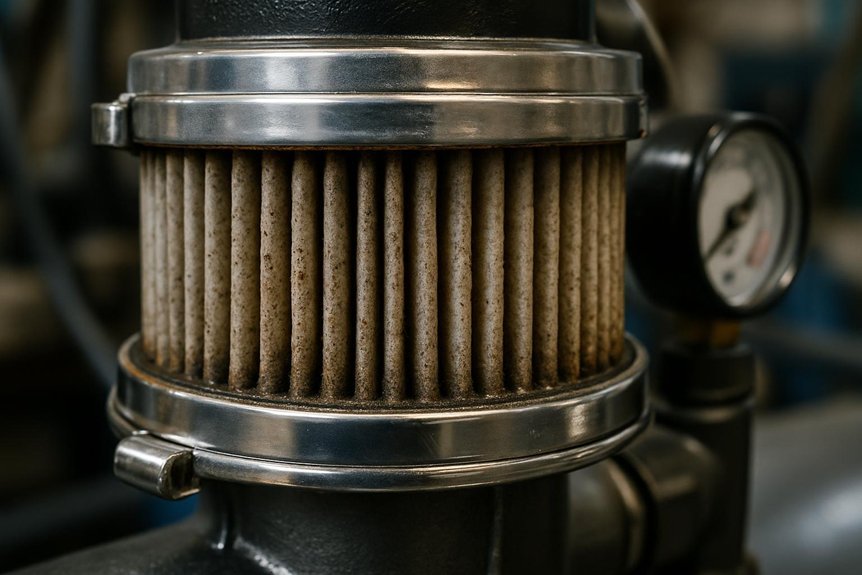
Monitoring the condition of your air compressor filters is essential to maintaining peak system performance. When filters become clogged or dirty, air quality declines, and filtration efficiency drops, risking equipment damage and compromised output. Key indicators include increased pressure differential across the filter, visible dirt accumulation, and a noticeable decline in system performance. Regularly check pressure gauges; a sustained rise indicates filter restriction. Additionally, reduced airflow or inconsistent operation signals filter deterioration. The following table summarizes these signs:
| Indicator | Effect on System |
|---|---|
| Increased pressure differential | Reduced airflow, higher energy use |
| Visible dirt or debris | Lower air quality, contamination |
| Decreased airflow or efficiency | Equipment stress, potential failure |
Recognizing these signs guarantees timely filter replacement, safeguarding filtration efficiency and air quality.
How to Properly Inspect and Clean Your Compressor Filters
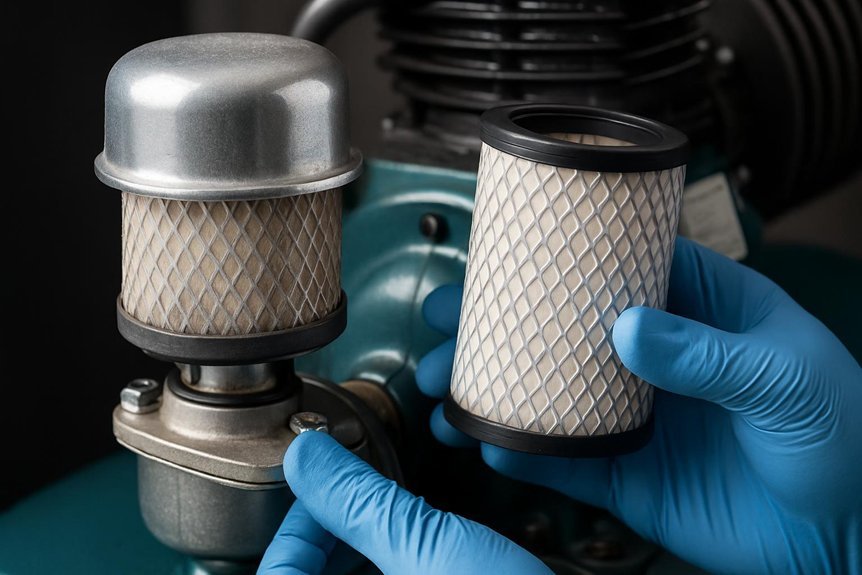
To guarantee your compressor filters are functioning at their best, we must carefully inspect and clean them according to manufacturer guidelines. Begin by examining the filter material for signs of clogging, tears, or excessive dirt buildup, which can impede airflow efficiency. Remove the filter carefully to avoid dislodging debris into the compressor. Use compressed air to blow out dust and particles from the filter material, always directing airflow from the clean side outward. For washable filters, gently rinse with a mild detergent and allow it to dry completely before reinstalling. Regular inspection and cleaning ensure the filter maintains peak airflow efficiency, preventing pressure drops and reducing strain on the compressor. Consistent maintenance preserves filter integrity, prolongs lifespan, and supports efficient operation.
Step-by-Step Guide to Replacing Air Compressor Filters
When replacing an air compressor filter, precision and adherence to proper procedures are essential to guarantee ideal performance and prevent damage. Begin by turning off the compressor and relieving air pressure. Carefully remove the existing filter, noting its orientation for correct installation of the new one. Examine the filter materials for clogging or damage, and confirm that the replacement filter matches the specifications for your unit. Prioritize filters designed to maximize air quality, ensuring they effectively trap contaminants without restricting airflow. Clean the filter housing thoroughly to prevent debris from contaminating the new filter. Install the new filter securely, ensuring proper fit and seal to maintain maximum air quality. Finally, restore power and run the compressor briefly to verify proper operation.
Common Mistakes to Avoid During Filter Maintenance
Failing to adhere to proper procedures during filter maintenance can lead to decreased compressor efficiency, increased wear, and potential damage to internal components. One common mistake is improper filter disposal; disposing of used filters without following environmental regulations can cause contamination and legal issues. Additionally, neglecting proper filter storage before installation or disposal can introduce dirt or moisture, compromising filter integrity and performance. Handling filters with dirty gloves or storing them in dusty environments should be avoided. Proper disposal procedures and clean, designated storage areas help prevent cross-contamination. Ensuring filters are stored in sealed containers and disposed of in accordance with local regulations maintains system cleanliness and longevity. Avoiding these mistakes guarantees ideal compressor operation and reduces maintenance costs.
Best Practices for Scheduling Regular Filter Checks
Establishing consistent inspection intervals guarantees filters are checked before performance declines, and maintaining detailed maintenance logs helps track inspection history and filter lifespan. We recommend adjusting check frequency based on operational demands and environmental conditions to prevent unanticipated failures. Precise scheduling and documentation optimize filter performance and prolong equipment lifespan.
Set Regular Inspection Intervals
How often should we inspect air compressor filters to guarantee peak performance? Regularly scheduled inspections are crucial for maintaining excellent air quality and filter efficiency. We recommend establishing specific intervals based on operational conditions and filter type.
Consider these guidelines:
- Operational hours: Inspect after every 500-1,000 hours of use, depending on workload.
- Environmental factors: Increase frequency in dusty or polluted environments.
- Filter type: Heavier-duty filters may require less frequent checks than fine particulate filters.
- Performance indicators: Monitor pressure drop gauges; a significant increase signals the need for immediate inspection.
Setting precise intervals ensures consistent air quality, minimizes downtime, and maximizes filter effectiveness. Regular inspections are essential for maintaining reliable compressor operation and extending equipment lifespan.
Use Clear Maintenance Logs
Maintaining clear and detailed maintenance logs is essential for effective scheduling of filter inspections, as they provide a systematic record of service history, inspection dates, and filter performance metrics. Precise maintenance recordkeeping enables us to track air filter efficiency over time, identifying trends that may indicate declining performance or impending failure. By documenting each inspection, cleaning, or replacement, we guarantee consistency and accountability. This detailed log allows us to analyze intervals between filter changes, optimizing maintenance schedules and reducing downtime. Clear records also facilitate troubleshooting, as we can quickly reference past issues or performance anomalies. Ultimately, rigorous maintenance recordkeeping enhances filter reliability, prolongs component lifespan, and ensures that our air compressor operates at peak efficiency.
Adjust Based on Usage
Adjusting filter check schedules based on actual usage patterns guarantees peak performance and minimizes unnecessary maintenance. Regularly evaluating the filter material’s condition in relation to operational hours ensures ideal maintenance frequency. Heavy usage or dusty environments accelerate filter clogging, requiring more frequent inspections. Conversely, lighter usage may allow extended intervals between checks. To maximize maintenance, consider these factors:
- Measure operating hours to determine when filter material begins to show significant contamination.
- Track pressure differential readings across the filter to identify increased resistance indicating saturation.
- Adjust inspection schedules based on environmental dust levels and compressor load.
- Document filter condition and maintenance history to refine future scheduling.
This approach guarantees that filter replacement aligns with actual demand, preserving performance and extending component lifespan.
Choosing the Right Replacement Filters for Your Compressor
Selecting the appropriate replacement filters for your air compressor is crucial to guarantee peak performance and longevity. When choosing filters, consider the filter material—whether pleated paper, synthetic, or activated carbon—as each offers different filtration efficiencies and dust-holding capacities. The filter material directly influences the replacement frequency; more efficient materials may require more frequent changes, especially in dusty environments. Consult your compressor’s specifications and operational conditions to determine ideal replacement intervals. Additionally, verify compatibility with your model’s size and connection type. Proper selection reduces contamination risks and maintains airflow quality. Regularly evaluating filter performance and adhering to manufacturer recommendations helps prevent pressure drops and compressor strain, ultimately extending the unit’s service life and ensuring consistent, high-quality operation.
Troubleshooting Performance Issues Caused by Dirty Filters
When filters become clogged with dirt and debris, we observe a significant reduction in airflow and pressure, which hampers overall compressor efficiency. This increased resistance causes additional strain on the equipment, leading to accelerated wear on critical components. Consequently, energy consumption rises as the compressor works harder to maintain performance levels, highlighting the importance of timely filter maintenance.
Reduced Airflow and Pressure
Have you noticed a drop in your air compressor’s performance, such as decreased airflow or lower pressure readings? This issue often stems from reduced filter efficiency caused by accumulated dirt and debris, which impairs airflow and compromises air quality. To troubleshoot, consider these factors:
- Clogged Filter Media: Dirt buildup restricts airflow, forcing the compressor to work harder and reducing output.
- Increased Differential Pressure: Elevated pressure across the filter indicates obstruction, lowering overall pressure delivery.
- Contaminant Accumulation: Reduced air quality due to particle buildup decreases compressor efficiency and capacity.
- Inadequate Filter Maintenance: Infrequent cleaning or replacement allows dirt to persist, progressively diminishing airflow and pressure.
Addressing these issues by maintaining clean filters guarantees peak airflow, preserves system performance, and maintains proper air quality.
Increased Equipment Wear
Dirty filters can markedly accelerate equipment wear by forcing components to operate under increased stress and friction. As filter efficiency declines, compromised air quality allows particles to bypass filtration, contaminating internal components. This contamination causes abrasive wear on cylinders, pistons, and valves, reducing their lifespan. The increased resistance caused by clogged filters compels the compressor motor to work harder, elevating operating temperatures and accelerating mechanical degradation. Over time, this wear manifests as misalignment, corrosion, or bearing failure. Regularly maintaining filter cleanliness ensures ideal air quality and preserves filter efficiency, minimizing abrasive contact and mechanical strain. By preventing the buildup of debris and contaminants, we greatly extend the compressor’s service life and avoid costly repairs resulting from accelerated equipment wear.
Elevated Energy Consumption
Why does a clogged air filter lead to increased energy consumption in an air compressor? When filters become dirty, airflow is restricted, forcing the compressor to work harder to maintain the required pressure. This increased workload elevates power draw, reducing overall efficiency. Poor air quality caused by accumulated debris or substandard filter materials further impairs performance. To understand this impact better, consider these factors:
- Airflow Resistance: Accumulated dirt increases pressure drop across the filter, demanding more energy to sustain airflow.
- Motor Load: Restricted air intake causes the motor to operate at higher loads, consuming additional power.
- Heat Generation: Excess strain leads to increased heat, which can cause energy loss and reduce system longevity.
- Filter Material Quality: Low-grade filter materials trap less debris, leading to faster clogging and efficiency decline.
Tips to Extend the Life of Your Air Compressor Filters
Regular maintenance and mindful usage are essential to prolong the lifespan of your air compressor filters. Selecting high-quality air filter materials, such as pleated paper or synthetic media, guarantees better filtration efficiency and durability. Regularly inspecting and replacing filters prevents clogging, which can increase pressure drop and strain the system. Proper compressor lubrication reduces the accumulation of dirt and debris on filter surfaces, preventing premature wear. Maintaining clean, well-lubricated components minimizes airborne contaminants that can bypass filters. Additionally, following manufacturer guidelines for filter change intervals and monitoring pressure differentials helps identify when filters need service. By combining these practices, we can greatly extend filter life, optimize compressor performance, and reduce operational costs through enhanced filtration stability and system reliability.
Frequently Asked Questions
How Do I Dispose of Used Air Compressor Filters Responsibly?
We dispose of used air compressor filters responsibly by checking local recycling methods for non-hazardous waste, and for hazardous waste, we follow strict regulations, using designated disposal facilities to prevent environmental contamination and guarantee safety compliance.
Can I Upgrade to High-Efficiency Filters for Better Performance?
Upgrading to high-efficiency filters is like upgrading to a precision engine; they improve performance, but we must check filter compatibility and weigh the cost-benefit ratio, ensuring the investment yields better filtration and operational efficiency.
Are There Environmental Factors That Affect Filter Lifespan?
Environmental conditions, like humidity, temperature fluctuations, and airborne contaminants, considerably impact filter durability. These factors accelerate wear and clogging, reducing lifespan. We recommend monitoring environmental conditions closely to optimize filter performance and extend service life effectively.
How Does Humidity Impact Filter Maintenance Requirements?
Humidity effects accelerate filter degradation, much like rust forming on metal exposed to moisture. We’ve observed increased clogging and reduced lifespan, prompting more frequent maintenance to guarantee peak performance and prevent costly downtime due to moisture-related issues.
What Safety Precautions Should I Take During Filter Replacement?
We always wear appropriate personal protective equipment and follow lockout procedures during filter replacement, ensuring system power is off, depressurizing the compressor, and preventing accidental startup, which minimizes risk of injury or equipment damage.
Conclusion
Regular maintenance of our air compressor filters isn’t just routine; it’s essential for sustained efficiency and equipment longevity. For example, during a recent service, we caught a clogged filter early, preventing costly internal wear. By adhering to proper inspection and replacement protocols, we maximize performance, reduce downtime, and extend filter lifespan. Consistent, detail-oriented filter care guarantees your compressor runs reliably, saving you money and minimizing unexpected breakdowns over the long term.