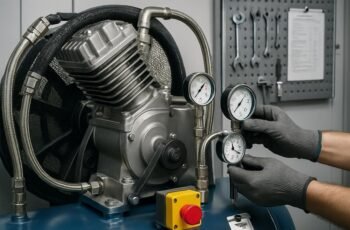
Choosing the correct air compressor hose size involves matching the diameter, length, and material to your system’s pressure and airflow requirements, ensuring ideal performance and safety. Proper sizing minimizes pressure loss, reduces wear, and prevents damage during operation. Understanding these factors is essential for efficient setup and long-term reliability. As we explore these considerations, you’ll gain the knowledge needed to select the right hose for your specific application.
Key Takeaways
- Match hose diameter to compressor pressure and airflow (CFM) to prevent pressure loss and ensure efficiency.
- Use ¼-inch hoses for light-duty tools, 3/8-inch or larger for heavy-duty applications.
- Consider hose length and diameter to minimize pressure drops and maintain optimal tool performance.
- Ensure hose pressure ratings exceed system pressure with a safety margin for safe operation.
- Select hose material and flexibility based on environmental conditions and tool compatibility.
How to Determine the Right Diameter for Your Air Compressor Hose
Choosing the correct diameter for your air compressor hose is essential to guarantee ideal airflow and pressure retention. To determine the appropriate size, consider your compressor’s maximum pressure and airflow capacity, typically measured in CFM (cubic feet per minute). Larger diameters reduce pressure drop over distance, maintaining consistent performance for high-demand tools. For light-duty applications, a 1/4-inch hose suffices, while heavy-duty tasks benefit from 3/8-inch or larger hoses. Always match the hose diameter to your compressor’s outlet and the tool’s requirements to prevent pressure loss. Precise sizing ensures efficient performance and minimizes strain on your compressor. By analyzing your specific usage needs and compressor specifications, you can select a hose diameter that balances airflow capacity with pressure retention, ensuring reliable, effective operation.
Why Hose Length Affects Performance and How to Choose It
Hose length directly impacts air flow efficiency and pressure maintenance, as longer hoses introduce additional resistance. This resistance causes pressure loss, reducing the power delivered to tools and affecting performance. Selecting an appropriate hose length requires balancing operational distance with minimizing pressure drops for maximum efficiency.
Air Flow Efficiency
When selecting an air compressor hose, understanding how length impacts airflow efficiency is vital because longer hoses increase resistance and cause pressure drops, reducing the overall performance of the system. Resistance to airflow is directly proportional to hose length, which results in decreased volume flow rate at the tool end. This pressure drop can impair tool operation, slow down tasks, and lead to inefficient energy use. To optimize airflow efficiency, it’s important to minimize hose length without sacrificing mobility or reach requirements. Using appropriately sized hoses with sufficient internal diameter helps maintain consistent airflow. Precise calculations considering hose length, diameter, and material properties enable us to select the right hose to preserve pressure and guarantee maximum performance.
Pressure Loss Factors
Why does hose length considerably influence pressure loss in compressed air systems? Longer hoses increase the resistance to airflow, resulting in pressure drops that reduce efficiency and tool performance. The impact depends on factors like hose diameter, material, and airflow rate. To illustrate, consider the following:
| Hose Length | Pressure Drop | Recommended Diameter |
|---|---|---|
| 25 ft | Moderate | 3/8 inch |
| 50 ft | Significant | 1/2 inch |
| 75 ft | High | 3/4 inch |
| 100 ft | Critical | 1 inch |
Choosing the correct hose length and diameter minimizes pressure loss, ensuring optimal system performance and safety. Proper sizing prevents unnecessary strain on the compressor and maintains consistent air delivery.
Understanding Pressure Ratings and Their Importance in Hose Sizing
Understanding pressure ratings is essential for selecting the appropriate air compressor hose, as these ratings directly indicate the maximum pressure the hose can safely withstand during operation. These ratings are typically expressed in pounds per square inch (PSI) and guarantee the hose can handle peak system pressures without failure. Selecting a hose with a pressure rating below your system’s maximum pressure risks rupture, leaks, and equipment damage. Conversely, over-specifying pressure ratings can lead to unnecessary costs and reduced flexibility. Accurate understanding of these ratings allows us to match hoses precisely to our compressor’s operational pressure, ensuring safety, durability, and peak performance. Always verify that the hose’s maximum pressure rating exceeds your system’s working pressure by a safe margin.
The Impact of Hose Material and Flexibility on Your Setup
The choice of hose material directly influences durability and wear resistance, impacting long-term performance and maintenance costs. Flexibility and maneuverability are essential for efficient operation, especially in confined spaces or complex setups. Compatibility with tools ensures ideal airflow and minimizes connection issues, emphasizing the importance of selecting appropriate hose materials and flexibility levels.
Durability and Wear Resistance
Choosing the right hose material considerably impacts its durability and wear resistance during regular use. Different materials offer varying resistance to abrasion, chemicals, and environmental factors. For example:
- Reinforced rubber hoses provide high resistance to physical wear and tear, extending lifespan.
- PVC hoses are lightweight and resistant to corrosion but may degrade quicker under UV exposure.
- Hybrid polymers combine flexibility with abrasion resistance, balancing durability and ease of handling.
- Polyester-reinforced hoses offer enhanced tensile strength, reducing the risk of rupture under pressure.
Selecting a hose with appropriate material properties guarantees longevity and reduces replacement costs. Material composition directly affects how well the hose withstands daily mechanical stresses, environmental exposure, and chemical contact, making it critical for reliable and sustained operation.
Flexibility and Maneuverability
Hose material markedly influences flexibility and maneuverability, directly impacting how easily you can handle and position the compressor setup. Flexible materials like rubber and thermoplastic elastomers allow for smoother movement and easier routing in tight spaces, reducing operator fatigue. Conversely, rigid materials such as reinforced PVC or steel braiding offer limited flexibility but provide enhanced stability and resistance to kinks. The choice of material affects not only ease of handling but also the hose’s ability to maintain consistent airflow during operation. For tasks requiring frequent repositioning or complex routing, a more flexible hose minimizes restrictions and simplifies setup. Precise material selection guarantees ideal maneuverability without compromising durability, directly affecting overall efficiency and safety in compressor operation.
Compatibility With Tools
The material composition and flexibility of a hose considerably influence its compatibility with various pneumatic tools. Different materials, such as rubber, polyurethane, or hybrid blends, affect durability, weight, and chemical resistance, directly impacting tool performance. Flexibility determines ease of maneuverability and connection stability. To optimize setup, consider these factors:
- Tool Compatibility: Ensure the hose material withstands the operating pressure and temperature of specific tools.
- Ease of Connection: Select hoses with fittings compatible with tool inlets to prevent leaks or disconnections.
- Weight and Handling: Lighter, flexible hoses improve maneuverability, reducing operator fatigue.
- Durability Requirements: Use reinforced hoses for heavy-duty tools to prevent wear, kinks, or damage during prolonged use.
Matching hose material and flexibility to your tools guarantees efficient, safe operation and minimizes setup issues.
How to Match Your Hose Size to Different Pneumatic Tools
To guarantee ideal performance and safety, it’s essential to match your hose size accurately to the pneumatic tools you plan to use. Proper matching ensures maximum airflow, pressure, and tool efficiency, preventing damage or performance issues. Use the following table to determine the appropriate hose diameter based on tool type and required airflow:
| Tool Type | Recommended Hose Diameter | Typical Airflow (CFM) |
|---|---|---|
| Impact Wrench | ½ inch | 10-15 CFM |
| Paint Sprayer | ¼ inch | 4-8 CFM |
| Sandblaster | 3/8 inch | 8-12 CFM |
| Nail Gun | ¼ inch | 2-4 CFM |
Matching these specifications ensures efficiency and safety during operation.
Common Mistakes to Avoid When Selecting an Air Compressor Hose
Selecting the wrong hose can lead to performance issues or equipment failure. We must carefully consider compatibility requirements and guarantee pressure ratings meet operational demands. Overlooking these factors can compromise safety and efficiency, so attention to detail is essential.
Ignoring Compatibility Requirements
Failing to verify compatibility requirements can lead to serious issues, such as reduced airflow, increased pressure drop, or even equipment damage. To avoid these problems, consider the following:
- Confirm that the hose fitting sizes match the compressor outlet and tools.
- Ensure the hose material is compatible with the intended working environment and media.
- Verify the hose’s internal diameter aligns with your airflow demands to prevent bottlenecks.
- Check that the coupling types are suitable for your connections to ensure secure attachment.
Neglecting these compatibility factors can compromise system efficiency and safety. It’s essential to review specifications thoroughly before selecting a hose to guarantee ideal performance and prevent costly malfunctions. Proper verification safeguards your equipment and maintains consistent operation.
Overlooking Pressure Ratings
Overlooking pressure ratings when choosing an air compressor hose can lead to significant safety hazards and equipment failure. It is crucial to select a hose rated for your system’s maximum operating pressure. Using a hose with insufficient pressure capacity risks bursting or leaks, which can cause injury or damage. Always verify the hose’s maximum working pressure and ensure it exceeds your compressor’s pressure output.
| Hose Pressure Rating | Typical Use Case | Safety Margin |
|---|---|---|
| 150 PSI | Light-duty applications | 25% above max |
| 200 PSI | General industrial tasks | 25% above max |
| 300+ PSI | Heavy-duty, high-pressure systems | 25% above max |
Choosing the correct pressure rating guarantees safety, durability, and peak performance.
Tips for Connecting and Securing Your Hose for Safety and Efficiency
To guarantee safety and maximize efficiency when using your air compressor hose, it’s essential to connect and secure the hose properly. First, confirm all fittings are compatible with your hose’s diameter and pressure rating to prevent leaks or disconnection. Second, use hose clamps or quick-connect fittings to secure connections firmly, avoiding accidental disconnection under pressure. Third, check for any signs of wear, cracks, or damage before each use, replacing compromised sections immediately. Fourth, store hoses properly when not in use, coiling them loosely to prevent kinks and stress points. Proper attachment and securement reduce the risk of pressure loss, leaks, and accidents, ensuring excellent performance and safety during operation.
How to Calculate the Optimal Hose Size for Your Air Compressor System
When selecting the ideal hose size for your air compressor system, it’s essential to take into account both the required airflow and pressure loss over the hose length. To determine the appropriate diameter, start by calculating the volumetric flow rate (CFM) needed for your tools. Next, consult standard charts or use the Darcy-Weisbach equation to quantify pressure losses at various hose diameters and lengths. Larger diameters reduce velocity and pressure drop, maintaining consistent performance, but may be less flexible. Conversely, smaller sizes increase velocity but cause more pressure loss. By balancing these factors, you choose a hose size that minimizes pressure drop without sacrificing handling convenience. Precise calculations ensure suitable airflow, efficiency, and safety for your compressor system operation.
When to Upgrade or Replace Your Air Compressor Hose
Regularly inspecting your air compressor hose is crucial to guarantee ideal performance and safety. Signs indicating the need for an upgrade or replacement include:
Regular inspections ensure safety and optimal performance by identifying wear and potential failures early.
- Visible wear, cracks, or brittleness in the hose material.
- Decreased airflow or pressure loss despite system adjustments.
- Leaks or hissing sounds during operation, indicating compromised integrity.
- Excessive hose movement or detachment during use, risking disconnection.
Timely replacement ensures consistent pressure delivery and prevents system failure. Upgrading may be necessary if your current hose’s maximum pressure rating no longer meets your system’s demands or if compatibility issues arise with new equipment. Conduct routine visual inspections and pressure tests to identify deterioration early, ensuring optimal operation and safety compliance.
FAQs About Air Compressor Hose Sizes and Specifications
Understanding the various sizes and specifications of air compressor hoses is essential for ensuring ideal system performance and safety. Common questions concern hose diameter, length, and pressure ratings. Typically, hose diameter ranges from ¼ inch to ¾ inch, with larger diameters supporting higher airflow rates and reduced pressure loss. Length impacts pressure drop; longer hoses may require larger diameters to maintain efficiency. Pressure ratings specify maximum operating pressures; exceeding these risks hose failure. Compatibility with fittings and tools is also vital, requiring precise measurements. We recommend selecting hoses that meet your compressor’s CFM requirements and pressure specifications. Properly matching hose size and specifications minimizes energy loss, maintains optimal airflow, and reduces safety hazards. Always consult manufacturer guidelines and technical datasheets for accurate, application-specific selection.
Frequently Asked Questions
How Does Ambient Temperature Affect Air Compressor Hose Performance?
Ambient temperature influences hose performance by affecting air pressure and material flexibility. Higher temperatures can cause expansion and reduced pressure, while lower temperatures increase stiffness, potentially restricting airflow and increasing wear, so selecting appropriate materials and sizes is essential.
Can Hose Size Influence Compressor Noise Levels?
Yes, hose size influences compressor noise levels; larger diameters reduce airflow restriction, minimizing turbulence and sound, while smaller hoses increase resistance and noise. Proper sizing optimizes performance and maintains quieter operation, enhancing overall efficiency and user comfort.
Are There Industry Standards for Air Compressor Hose Sizes?
Yes, industry standards for air compressor hose sizes exist, primarily specifying diameter and pressure ratings to guarantee safety, compatibility, and ideal performance. We adhere to these standards to maintain consistency and efficiency across various applications.
What Are the Signs of a Failing or Worn-Out Hose?
We observe cracks, leaks, or bulges, which signal wear. Reduced airflow, increased pressure, or inconsistent tool performance also indicate hose deterioration, prompting immediate inspection and replacement to maintain safety and efficiency in your operations.
How Do Quick-Connect Fittings Impact Hose Size Selection?
Quick-connect fittings influence hose size selection by requiring compatibility with fitting diameter and pressure ratings, ensuring ideal airflow and safety. We carefully match fittings with hose diameter and pressure capacity for efficient, secure connections and minimal pressure loss.
Conclusion
Choosing the right air compressor hose is like selecting the perfect conduit for essential life force—your compressed air system. When we match diameter, length, and material precisely, we guarantee efficient flow, safety, and longevity. Just as a well-designed pipeline sustains a city’s heartbeat, a properly sized hose sustains your tools’ performance, minimizing wear and maximizing productivity. Invest in the right size today, and your system will deliver continuous, reliable power like a steady, unbroken stream of life.