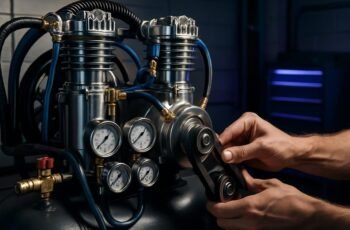
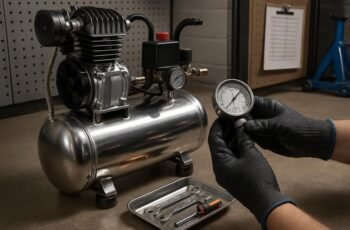
Studies show that up to 50% of an air compressor’s operational time can be idle, yet it still consumes significant energy. This idle period directly impacts operational costs and equipment efficiency, often without immediate detection. Understanding the causes and consequences of idle time is essential for cost management and sustainability. Exploring effective strategies to reduce this waste can lead to substantial savings and improved system longevity—something every facility should consider.
Key Takeaways
- Excessive idle time in air compressors leads to unnecessary energy consumption and higher operational costs.
- Poor control systems and oversized units contribute to prolonged idle periods, increasing energy waste.
- Managing idle times through automation and demand forecasting reduces energy costs and equipment wear.
- Regular maintenance and leak detection during idle periods improve efficiency and lower energy expenses.
- Implementing variable speed drives and demand-based controls optimizes compressor operation, saving energy and extending equipment lifespan.
What Causes Idle Time in Air Compressors?
Idle time in air compressors often results from operational inefficiencies and system design flaws that cause the equipment to run without performing useful work. This unnecessary running reduces compressor efficiency, leading to increased energy consumption without productivity gains. Factors such as poorly calibrated controls, oversized systems, or insufficient demand management contribute to this inefficiency. Regular energy audits help identify these issues by analyzing operational patterns and pinpointing causes of excessive idle periods. These audits reveal whether compressors are cycling on and off too frequently or remaining idling for extended durations, thereby flagging areas for system optimization. Addressing these root causes improves overall compressor efficiency and reduces waste, ensuring that the compressor operates only when needed and minimizing energy costs associated with unnecessary idle time.
How Does Idle Time Increase Energy Costs?
Idle time causes compressors to consume energy continuously, even when no active demand exists, leading to unnecessary operational costs. Additionally, prolonged inactivity accelerates wear and tear on components, increasing maintenance expenses. This combination results in significant energy waste and higher overall costs for the system.
Continuous Power Consumption
Although the compressor is not actively producing air, it continues to draw power to maintain its operational state, leading to continuous energy consumption during idle periods. This persistent power draw results in increased operational costs and contributes to inefficient energy use. Furthermore, sustained operation during idle times can negatively impact air quality by allowing slight leaks or residual emissions, which may compromise environmental standards. Additionally, continuous operation generates noise pollution, affecting workplace safety and comfort. These factors highlight the importance of managing idle times effectively. Reducing idle power consumption through proper maintenance, automation, or shutdown protocols can markedly decrease energy costs, improve air quality, and minimize noise pollution, ultimately leading to more sustainable and cost-efficient compressor operation.
Compressor Wear and Tear
How does extended downtime impact compressor wear and tear, and consequently, energy costs? During idle periods, compressor components experience increased wear due to insufficient lubrication, which can lead to metal-to-metal contact and accelerated deterioration. This wear compromises the compressor’s efficiency, requiring more energy to achieve the same output when restarted. Additionally, prolonged idling can cause parts like bearings and pistons to develop uneven wear patterns, further increasing operational inefficiencies. Noise reduction measures during downtime are essential to minimize vibrations that can exacerbate wear. Proper maintenance of compressor lubrication ensures fluid film integrity, mitigating friction-induced damage. Ultimately, these factors result in higher energy costs over time, emphasizing the importance of managing idle periods to reduce wear and extend equipment lifespan.
Increased Energy Waste
When a compressor remains idle for extended periods, it continues to consume energy without producing useful compressed air, leading to significant waste. This unnecessary energy expenditure directly impacts operational costs and efficiency. Idle compressors also contribute to deteriorating air quality by allowing moisture and contaminants to accumulate, which can compromise downstream processes. Additionally, prolonged operation without load increases noise levels, complicating noise reduction efforts in the facility. The table below summarizes key impacts:
| Impact Area | Effect | Mitigation Strategy |
|---|---|---|
| Energy Waste | Higher operational costs due to continuous energy use | Implement automatic shutdown controls |
| Air Quality | Contamination buildup from prolonged idle periods | Regular maintenance and filters |
| Noise Reduction | Elevated noise levels during idle times | Use soundproof enclosures |
Identifying When Your Compressor Is Sitting Idle
To effectively manage your air compressor’s energy consumption, it’s essential to accurately identify periods when the equipment is sitting idle. Monitoring operational patterns helps prevent unnecessary energy waste and maintains peak system performance. Key indicators include fluctuations in air quality, as drops in pressure often signal idle states, and compressor lubrication levels, which can reveal extended downtime if not maintained properly. Additionally, integrating real-time sensors can provide precise data on compressor activity. Recognizing these idle periods allows for targeted interventions, such as adjusting maintenance schedules or implementing automatic shutdowns. By accurately detecting when your compressor is inactive, you reduce energy costs and preserve equipment longevity, ensuring consistent air quality and superior compressor lubrication throughout operational cycles.
The Impact of Idle Time on Overall Equipment Efficiency
Extended idle time considerably diminishes overall equipment efficiency (OEE) by contributing to unnecessary energy consumption and increasing wear on critical components. During idle periods, compressors continue to draw power without performing productive work, leading to energy waste and higher operational costs. Additionally, prolonged idling can negatively impact air quality by allowing internal moisture and contaminants to accumulate, risking system corrosion and reducing compressor lifespan. Noise reduction becomes challenging during extended idle times, as unneeded operation contributes to ambient noise pollution without benefits. These inefficiencies not only impair equipment performance but also escalate maintenance needs, ultimately decreasing OEE. Managing idle periods effectively is essential to optimize energy use, protect compressor integrity, and maintain a safer, cleaner work environment.
Strategies to Minimize Compressor Idle Periods
Implementing effective strategies to minimize compressor idle periods is essential for enhancing energy efficiency and reducing operational costs. Reducing idle time also improves air quality by limiting unnecessary emissions and enhances noise pollution control. To achieve this, consider these approaches:
Minimize compressor idle time to boost energy efficiency, cut costs, and improve air quality.
- Implement automated control systems that optimize compressor operation based on demand fluctuations.
- Schedule regular maintenance to guarantee optimal performance and prevent unnecessary idling caused by equipment inefficiencies.
- Design and incorporate load/unload controls to match compressor activity closely with demand, avoiding prolonged idle states.
These strategies help maintain cleaner air quality, minimize noise pollution during idle periods, and lower energy consumption. Precise control and preventive measures are key to reducing the costs associated with compressor idle time while supporting environmental and operational objectives.
Implementing Variable Speed Drives to Save Power
Variable Speed Drives (VSDs) offer a precise method to regulate compressor power consumption by adjusting motor speed in real-time according to demand. This technology enhances air compressor efficiency by matching output to actual system requirements, reducing unnecessary energy use during low demand periods. Implementing VSDs minimizes idle time and maintains ideal operating points, leading to significant energy savings. Unlike fixed-speed units that run at full capacity regardless of need, VSD-equipped compressors modulate their speed, preventing wasteful power consumption during partial loads. This dynamic control improves overall system performance, decreases operational costs, and extends equipment lifespan. For facilities aiming to optimize energy use and reduce operational expenses, integrating VSDs is a technically sound, impactful strategy.
Using Automation and Control Systems for Better Management
Automation and control systems enable precise management of compressor operation, reducing unnecessary idle periods. Implementing automated load scheduling guarantees compressors run only when needed, optimizing energy use. Real-time monitoring provides critical data for quickly identifying inefficiencies and adjusting operations accordingly.
Automated Load Scheduling
By integrating advanced control systems, we can enhance load scheduling to reduce unnecessary idling of air compressors during low-demand periods. Automated load scheduling ensures compressors operate only when needed, minimizing energy waste and maintaining ideal air quality. Proper scheduling also preserves compressor lubricants by avoiding excessive cycling, which can degrade oil viscosity over time. To maximize benefits, we focus on:
- Demand forecasting to align compressor operation with actual needs, preventing overuse.
- Sequential startup/shutdown protocols that reduce pressure fluctuations, preserving air quality.
- Integration with ambient conditions to adapt compressor cycles based on environmental factors, supporting lubricant health.
Implementing these strategies enhances energy efficiency, prolongs compressor lifespan, and ensures consistent air quality, ultimately reducing operational costs associated with idle time.
Real-Time Monitoring Systems
Implementing real-time monitoring systems enhances the management of air compressor operations by providing continuous data on performance and energy consumption. These systems leverage automation and control technologies to detect inefficiencies, optimize load cycles, and reduce idle periods. By monitoring air quality parameters, operators can guarantee compressors maintain ideal output without excess filtration or moisture issues, which impact energy use. Additionally, real-time data helps identify noise pollution sources, enabling targeted mitigation to minimize environmental impact. Precise analytics allow for immediate adjustments, improving overall efficiency and lowering operational costs. This proactive approach facilitates better decision-making, reduces unnecessary energy expenditure, and helps maintain compliance with environmental standards related to air quality and noise pollution. Ultimately, real-time monitoring is vital for maximizing compressor performance and sustainability.
Regular Maintenance Checks to Reduce Idle Energy Waste
Regular maintenance checks are essential for minimizing idle energy waste in air compressors. Consistent inspections guarantee components like filters and valves are clean, optimizing air quality and preventing pressure drops that cause unnecessary energy consumption. Properly maintained systems also reduce noise levels, contributing to safer, more comfortable work environments.
Key points include:
- Regularly replacing filters to maintain air quality and prevent compressor strain.
- Checking for leaks to avoid energy loss during idle periods.
- Ensuring that cooling systems operate efficiently to reduce noise and heat buildup.
Monitoring and Analyzing Energy Consumption Data
Monitoring and analyzing energy consumption data allows us to identify patterns and pinpoint inefficiencies during idle periods, enabling targeted interventions to reduce energy waste. By examining detailed data, we can correlate compressor activity with air quality fluctuations, ensuring operations maintain ideal environmental standards. Additionally, analyzing noise pollution levels linked to idle times helps us detect excessive operational sounds that may indicate inefficiencies or mechanical issues. This data-driven approach reveals when compressors consume unnecessary energy, offering insights into control system performance and potential upgrades. Precise monitoring helps us maximize idle periods, reducing both energy costs and environmental impacts. Ultimately, continuous data analysis supports proactive maintenance, improves air quality management, and minimizes noise pollution, leading to more sustainable and efficient compressor operation.
Practical Tips for Business Owners to Cut Idle Time Costs
To effectively reduce idle time costs in air compressor operations, business owners should focus on refining system controls and scheduling. Properly managing compressor operation reduces unnecessary energy expenditure, minimizes wear, and maintains ideal air quality. Key strategies include:
Refine controls and scheduling to cut idle time, save energy, and extend compressor lifespan.
- Implementing automated controls that shut down compressors during low-demand periods, preventing excessive idle time.
- Regularly checking air compressor lubrication to guarantee smooth operation and prevent overheating, which can increase noise levels and energy use.
- Monitoring compressor noise levels as an indicator of inefficiency or mechanical issues, prompting timely maintenance.
Frequently Asked Questions
How Can I Accurately Measure Compressor Idle Time?
We measure compressor idle time accurately by analyzing runtime logs and sensor data, enabling efficient maintenance scheduling and load management; this helps optimize performance, reduce costs, and prevent unnecessary wear and tear on the equipment.
What Are the Best Tools to Monitor Compressor Energy Use?
Did you know energy-saving sensors can cut compressor costs by up to 30%? We recommend using these sensors combined with predictive analytics tools, enabling precise monitoring of energy use and optimizing performance through data-driven insights.
Does Compressor Size Affect Idle Time Energy Costs?
Yes, compressor sizing directly impacts idle time energy costs; oversizing leads to increased idle periods. Effective idle optimization involves selecting appropriately sized compressors to minimize unnecessary energy consumption during low-demand periods, enhancing overall efficiency.
Are There Industry Standards for Acceptable Idle Times?
We find industry standards suggest maintaining idle times within specific ranges, emphasizing regular maintenance schedules and proper compressor lubrication, which optimize efficiency and reduce unnecessary energy costs during idle periods.
How Does Ambient Temperature Influence Compressor Efficiency During Idle?
Did you know ambient heat can increase compressor energy costs by up to 15%? Higher temperatures impact efficiency by causing heat buildup, which strains components and elevates idle energy consumption, emphasizing the need for effective cooling during idle periods.
Conclusion
By actively managing idle time, we can turn energy waste into operational savings, much like turning a blind eye into clear vision. Implementing automation, regular maintenance, and data analysis transforms idle periods from costly pitfalls into opportunities for efficiency. Embracing these strategies isn’t just about lowering costs—it’s about sharpening our competitive edge and ensuring sustainable, long-term performance. In the end, controlling idle time isn’t just technical; it’s a strategic imperative for future-proofing our operations.