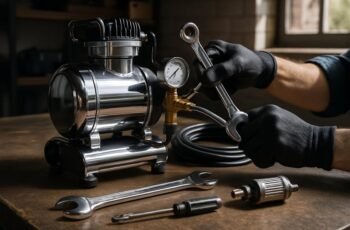
Effective leak detection in air compressors is essential for optimizing energy efficiency and extending equipment lifespan. Unaddressed leaks increase operational costs and strain system components, often going unnoticed until costly failures occur. By implementing precise detection methods, facilities can reduce energy waste and maintain stable pressure levels. Understanding how leaks impact overall performance is vital—so, let’s explore the techniques and tools that enable proactive maintenance and long-term savings.
Key Takeaways
- Detecting and repairing leaks prevents unnecessary compressor workload, reducing energy consumption significantly.
- Regular leak detection maintains optimal system pressure, enhancing overall energy efficiency.
- Advanced tools like infrared thermography and ultrasonic sensors enable quick, accurate leak identification, saving energy.
- Minimizing leaks extends equipment lifespan, reducing energy costs associated with frequent repairs or replacements.
- Consistent leak management supports long-term energy savings and sustainable compressor operation.
How Do Leaks Impact Your Energy Bills and Equipment Longevity?
Leaks in an air compressor system directly increase energy consumption by causing the compressor to work harder to maintain pressure levels, leading to higher operational costs. When leaks occur, the compressor compensates by cycling more frequently and increasing power output, which raises energy bills. Regular air compressor maintenance is essential to identify and repair leaks promptly, minimizing unnecessary energy use. Implementing effective energy conservation strategies, such as monitoring pressure drops and conducting leak detection tests, helps optimize system efficiency. By reducing leaks, we not only lower energy expenses but also extend equipment lifespan, as the compressor endures less stress and wear. Overall, proactive leak detection and maintenance are crucial steps toward achieving cost-effective, energy-efficient compressor operation.
Common Signs and Causes of Air Compressor Leaks
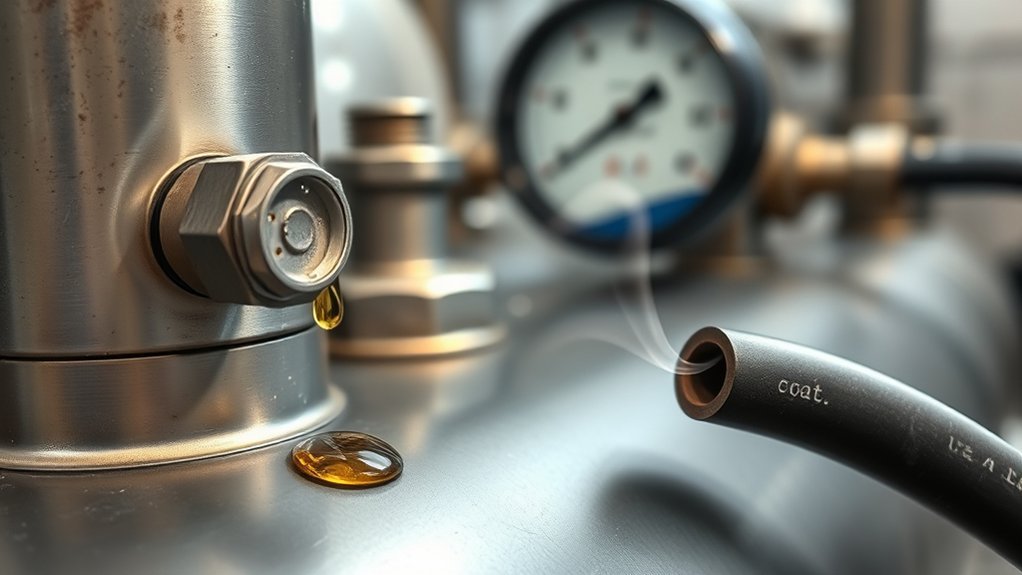
Identifying the signs and causes of air compressor leaks is essential for maintaining system efficiency and preventing costly downtime. Common signs include fluctuating pressure levels, hissing sounds, and increased energy consumption despite no change in workload. Visible damage, corrosion, or loose fittings often indicate underlying issues. Causes of leaks typically stem from wear and tear, improper installation, or inadequate air compressor maintenance. Faulty seals, cracked hoses, and worn-out valves are frequent culprits. Implementing effective leak prevention strategies involves regular inspections and timely repair of damaged components. Maintaining tight connections and replacing worn parts proactively reduces leak incidence. Recognizing these signs early allows for targeted maintenance, minimizing energy waste and extending equipment lifespan through precise leak management.
Effective Techniques for Detecting Air Leaks Quickly
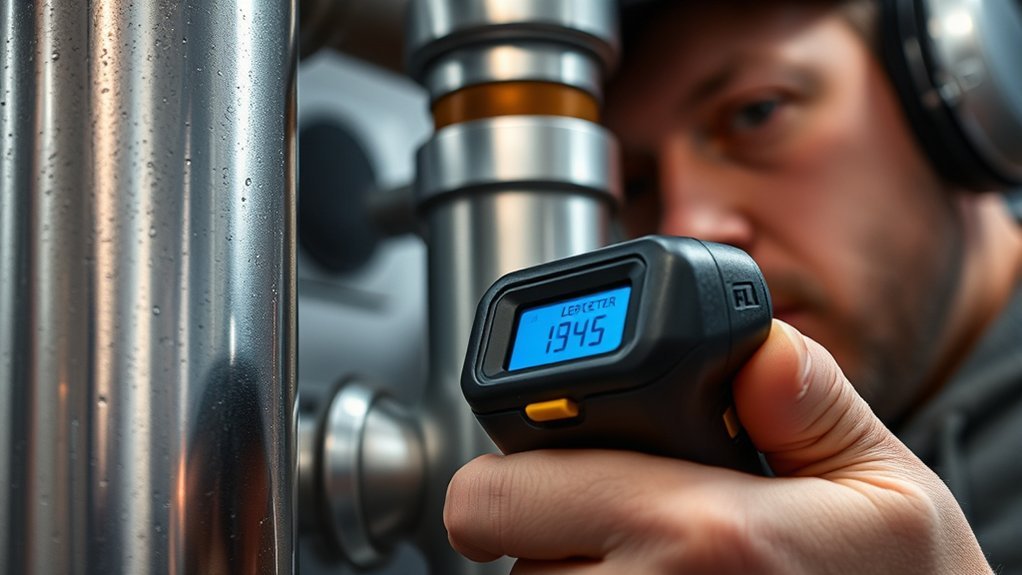
Effective leak detection relies on a combination of visual inspection, ultrasonic detection, and auditory cues. Visual methods identify obvious damage or wear, while ultrasonic detectors detect high-frequency sound emissions from leaks. Listening for hissing sounds can also pinpoint leaks that may not be visually apparent, enabling rapid and accurate diagnosis.
Visual Inspection Methods
Visual inspection remains one of the most straightforward and immediate methods for detecting air leaks in compressor systems. During routine air compressor maintenance, we carefully examine fittings, hoses, and connections for visible damage or deterioration. Leak prevention techniques include inspecting welds and joints for cracks or corrosion, as well as checking for loose fittings that may cause pressure drops. We look for hissing sounds or visible escaping air, which are clear indicators of leaks. Using a systematic approach guarantees no component is overlooked, reducing energy waste caused by unnoticed leaks. While visual inspection is quick and cost-effective, it’s most effective when combined with regular maintenance schedules, helping identify potential leak sources early and maintaining system efficiency.
Using Ultrasonic Detectors
Have you considered how ultrasonic detectors can enhance leak detection accuracy and speed? These devices detect sound waves within the ultrasonic frequency range, allowing us to pinpoint leaks that emit high-frequency sound waves beyond human hearing. The ultrasonic detector captures the sound wave generated by escaping air, converting it into an audible signal for precise localization. This method reduces false positives and accelerates diagnosis, especially in noisy environments. To understand the process better:
| Ultrasonic Frequency | Sound Wave Propagation | Detection Accuracy |
|---|---|---|
| High-frequency signals | Travel with minimal loss | Precise leak localization |
Using ultrasonic detectors enables quick, reliable leak detection, leading to significant energy savings and system efficiency improvements.
Listening for Hissing Sounds
Listening for hissing sounds is a straightforward yet highly effective technique for identifying air leaks quickly. By focusing on sound frequency and leak origins, we can pinpoint issues precisely. To enhance detection:
- Use a stethoscope or a listening device tuned to the typical sound frequency of leaks, often between 200 Hz and 4000 Hz.
- Move slowly around joints, fittings, and hoses, listening for distinct hissing that indicates escaping air.
- Isolate noisy areas by controlling ambient sounds, ensuring the leak sound isn’t masked.
- Cross-reference detected sounds with visual inspection to confirm leak origins and reduce false positives.
This method allows for immediate detection, especially in accessible areas, minimizing energy loss and optimizing compressor efficiency.
Tools and Technologies for Precise Leak Identification
We utilize advanced leak detection devices, such as ultrasonic sensors and infrared thermography tools, to pinpoint leaks with high accuracy. Ultrasonic testing techniques detect high-frequency sounds emitted by escaping air, while infrared thermography reveals temperature differences caused by leaks. These technologies enable precise identification, minimizing downtime and maximizing energy savings.
Advanced Leak Detection Devices
What are the most effective tools available today for pinpointing leaks in compressed air systems? Advanced leak detection devices leverage innovative technologies like smart sensors and IoT integration for enhanced accuracy. These tools enable real-time monitoring and precise localization of leaks, minimizing energy waste. Key devices include:
- Smart sensors that detect pressure drops and airflow irregularities with high sensitivity.
- IoT-enabled leak detectors that transmit data to centralized systems for immediate analysis.
- Wireless acoustic sensors designed for pinpointing leaks without system intrusion.
- Thermal imaging cameras that visualize temperature differences caused by escaping air.
These devices *considerably* improve leak detection efficiency, reduce downtime, and promote energy savings through precise, automated diagnostics.
Ultrasonic Testing Techniques
Ultrasonic testing techniques have become a leading method for accurately identifying leaks in compressed air systems, complementing other detection technologies by offering highly sensitive and precise localization. These techniques utilize ultrasonic waves emitted by escaping compressed air, which are inaudible to the human ear but detectable through specialized equipment. Testing methodologies involve scanning potential leak sites with ultrasonic sensors, which convert sound waves into visual or audible signals, enabling rapid identification of even minor leaks. The high frequency and directional sensitivity of ultrasonic waves allow for pinpoint accuracy, reducing false positives and increasing detection efficiency. This approach is particularly effective in noisy industrial environments, providing a reliable, non-invasive means to optimize system performance and energy savings through early leak detection.
Infrared Thermography Tools
Infrared thermography tools have become essential for accurately identifying leaks in compressed air systems due to their ability to detect temperature variations caused by escaping air. These tools enable rapid, non-invasive inspection, making them invaluable for effective air compressor maintenance and leak prevention strategies. By visualizing thermal anomalies, technicians can pinpoint leaks precisely, reducing downtime and energy waste.
Key features include:
- High-resolution thermal imaging for detailed detection.
- Real-time temperature mapping for immediate diagnostics.
- Portability for on-site inspections across complex systems.
- Data logging capabilities to track leak progression over time.
Utilizing infrared thermography enhances leak detection accuracy, ultimately supporting more efficient energy use and prolonging equipment lifespan, which aligns with ideal leak prevention strategies.
Practical Steps to Fix Leaks and Improve System Efficiency
Addressing leaks promptly is essential for maintaining ideal compressor efficiency and reducing energy costs. Effective air compressor maintenance involves systematically locating and repairing leaks using precise techniques such as ultrasonic leak detection or soap solution testing. Once identified, leaks should be sealed with appropriate fittings or repair kits to prevent pressure drops. Implementing energy conservation strategies includes regular system audits and maintaining maximum pressure settings, which minimize unnecessary airflow and energy expenditure. Incorporating leak repairs into routine maintenance schedules ensures consistent system performance and prolongs equipment lifespan. By actively managing leaks, we enhance overall system efficiency, decrease compressor load, and achieve significant energy savings. These practical steps are critical for sustainable operation and cost-effective energy use in compressed air systems.
How Regular Leak Detection Can Lead to Long-Term Cost Savings
Regular leak detection plays an essential role in achieving long-term cost savings by maintaining ideal compressor performance and minimizing unnecessary energy consumption. Consistent identification and repair of leaks ensure perfect air pressure maintenance, which directly enhances compressor efficiency. When leaks persist, compressors work harder to maintain pressure, increasing energy costs and causing wear. Regular detection prevents this cycle by early detection of small leaks before they escalate.
Key benefits include:
- Sustained air pressure stability, reducing operational variability.
- Improved compressor efficiency through reduced workload.
- Lower energy costs with minimized power draw.
- Extended equipment lifespan by preventing excess strain.
Frequently Asked Questions
What Are the Environmental Benefits of Reducing Air Leaks?
Reducing air leaks improves air quality by decreasing emissions and minimizes resource consumption, leading to lower environmental impact. We help conserve resources and promote sustainable practices, supporting a cleaner environment and reducing the ecological footprint associated with inefficient air compressor systems.
How Often Should Leak Detection Be Performed for Optimal Savings?
We recommend performing leak detection quarterly to keep energy savings on track. Using cost-effective methods like ultrasonic sensors guarantees timely detection, preventing leaks from becoming costly, and maintaining peak compressor efficiency throughout the year.
Can DIY Leak Detection Methods Be as Effective as Professional Services?
DIY techniques can identify obvious leaks, but they often lack the precision of professional accuracy. We recommend combining both methods for thorough leak detection, ensuring maximum efficiency and energy savings in your compressed air system.
What Safety Precautions Are Necessary During Leak Repair?
We prioritize safety during leak repairs, wearing personal protective equipment like gloves and goggles as shields, ensuring safe handling of tools and pressurized components, much like armor protecting a knight in a precise, technical battlefield.
How Do Leak Reductions Impact Overall Plant Productivity?
Leak detection directly boosts plant productivity by reducing unnecessary compressor workload, which enhances efficiency improvement. This minimizes downtime, lowers energy costs, and maintains consistent operations, ultimately leading to a more reliable and efficient manufacturing process.
Conclusion
By consistently detecting and repairing leaks, we safeguard our systems against unseen energy losses—an invisible thief in our efficiency. Embracing advanced detection techniques isn’t just about fixing leaks; it’s about fortifying our operational integrity and financial stability. When we act proactively, we turn a silent drain into a strategic advantage, ensuring our equipment’s longevity and peak performance. In the end, prevention isn’t just better than cure; it’s the key to sustainable, cost-effective operations.