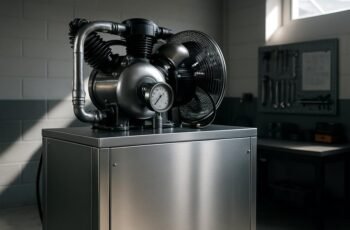
Maintaining proper oil levels and quality in your air compressor is critical for ensuring reliable performance and extending its lifespan. Regular oil changes, based on manufacturer recommendations and operating conditions, help prevent system failures and costly repairs. To achieve ideal results, it’s essential to understand the correct procedures and signs indicating when an oil change is necessary. We’ll explore these aspects thoroughly, starting with how often you should perform this essential maintenance.
Key Takeaways
- Check and monitor oil levels regularly; top up or change when oil appears dark, gritty, or contaminated.
- Use the correct oil type and viscosity as specified by the manufacturer for optimal performance.
- Drain old oil completely and replace oil filters during each oil change.
- Follow safety precautions: disconnect power, wear protective gear, and work in a well-ventilated area.
- Regular maintenance and timely oil changes extend compressor lifespan and prevent costly repairs.
How Often Should You Change Your Air Compressor Oil?
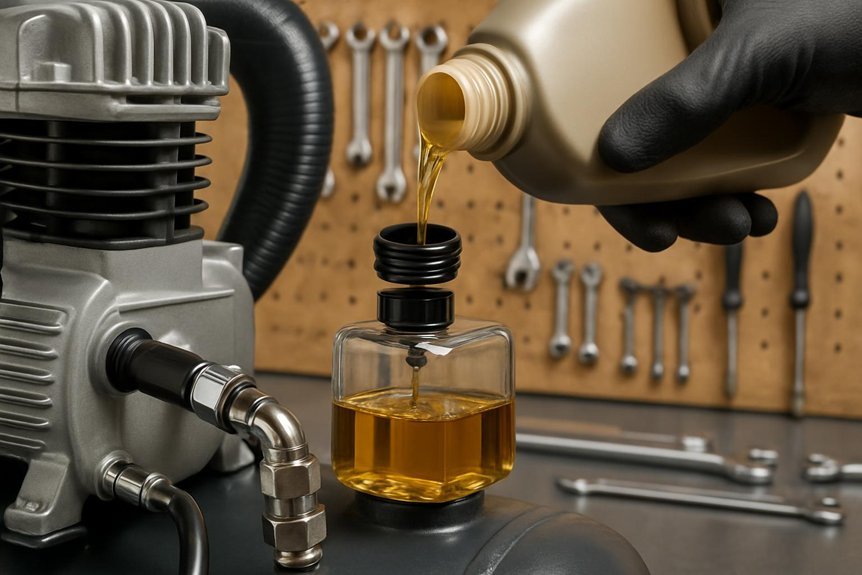
Determining the appropriate interval for changing your air compressor oil is essential for maintaining ideal performance and extending the lifespan of the equipment. Typically, oil change frequency depends on operational hours, with manufacturers recommending every 1,000 to 2,000 hours of use. Regular oil filtering during routine maintenance ensures contaminants are removed, preventing wear and corrosion. When changing the oil, proper oil disposal is critical to comply with environmental regulations and avoid contamination. It’s advisable to inspect the oil condition regularly; dark, gritty oil indicates a need for change. Using filtered oil helps maintain cleanliness, but used oil must be disposed of responsibly. Timely oil changes, combined with effective filtering and disposal practices, optimize compressor efficiency and durability.
Choosing the Right Oil for Your Air Compressor
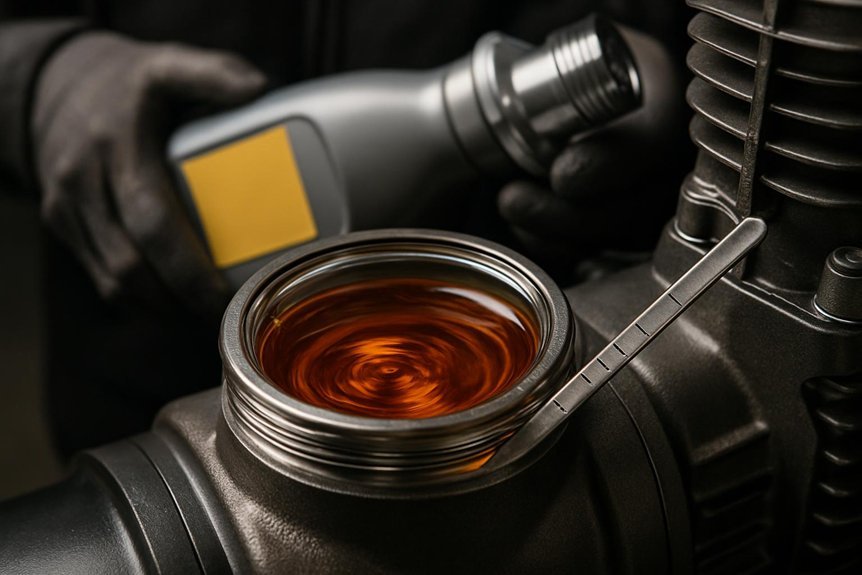
Selecting the correct oil involves guaranteeing it meets the specified viscosity requirements for ideal lubrication under operating conditions. Compatibility with your compressor’s materials and design is essential to prevent damage and ensure efficient performance. We must verify that the oil’s specifications align with the manufacturer’s recommendations for reliable operation.
Oil Viscosity Requirements
Have you ever wondered how the viscosity of oil impacts your air compressor’s performance? Viscosity influences lubrication, heat dissipation, and overall efficiency. Selecting the correct oil formulation requires adherence to viscosity standards, which guarantee ideal flow at operating temperatures. Too thick, and the oil may cause excessive wear; too thin, and it won’t protect components effectively.
| Temperature Range | Recommended Viscosity Standard |
|---|---|
| Low (cold start) | ISO VG 32 or 46 |
| High (operating) | ISO VG 68 or 100 |
Choosing the right viscosity ensures smooth operation and longevity, aligning with compressor manufacturer specifications.
Compatibility With Compressor
Ensuring the oil you choose is compatible with your air compressor is essential for peak performance and long-term durability. Compatibility testing involves verifying that the oil formulation aligns with your compressor’s specifications, including seal materials and operating conditions. Using incompatible oil can lead to accelerated wear, incorrect lubrication, or seal degradation. It’s vital to consult the manufacturer’s guidelines and select oils explicitly formulated for your compressor type. Pay attention to specifications such as additive packages and viscosity grades, ensuring they meet or exceed OEM recommendations. Proper compatibility testing guarantees that your chosen oil maintains ideal lubrication, reduces friction, and prevents corrosion. By selecting oil formulated for your compressor, you enhance efficiency and extend equipment lifespan, avoiding costly repairs and downtime.
Preparing Your Air Compressor for an Oil Change

Before beginning the oil change process, we must first prepare the compressor to guarantee safety and efficiency. Confirm the compressor is turned off and unplugged to prevent accidental operation. Inspect and clean the air compressor filters to remove dust and debris, which can interfere with the oil change process. Wearing appropriate safety gear, such as gloves and safety goggles, is essential to protect against potential oil splashes and debris. Secure the compressor in a stable position to prevent movement during maintenance. Confirm that the surrounding area is clear of obstructions and that you have all necessary tools ready. Proper preparation minimizes hazards and ensures a smooth, efficient oil change, maintaining the compressor’s performance and longevity.
Step-by-Step Guide to Draining Old Oil and Adding New Oil
To begin draining the old oil, locate the drain plug or drain valve on your compressor’s oil reservoir. Confirm the compressor is turned off and cooled down to prevent burns. Place a drain pan beneath the drain valve and carefully open it to release the oil. As the oil flows out, inspect the oil filter; if accessible, remove and replace it to guarantee ideal filtration. Once the reservoir is empty, securely close the drain valve to prevent leaks. Before adding new oil, verify the correct oil type and fill the reservoir slowly through the oil fill port, monitoring the level. This process guarantees old, degraded oil is fully removed, and the system is prepared for fresh oil, promoting compressor longevity and performance.
How to Check and Maintain Oil Levels After Changing
After replacing the oil, it’s crucial to regularly monitor the oil level using the designated dipstick or sight glass. Consistent maintenance checks guarantee the compressor operates within ideal parameters and prevent potential damage. We recommend establishing a routine inspection schedule to maintain proper oil levels and system performance.
Monitoring Oil Levels
How can we guarantee our air compressor operates efficiently and reliably after an oil change? The key is consistent monitoring of oil levels, ensuring ideal compressor lubrication. We should check the oil level using the dipstick or sight glass, verifying it falls within the recommended range. Proper oil filtration is essential; contaminated oil can impair lubrication and cause wear. After topping off, run the compressor briefly to circulate the new oil, then recheck levels for accuracy. Maintaining correct oil levels prevents overheating and minimizes component wear, extending equipment lifespan. Regularly monitoring also helps detect leaks or oil consumption issues early. Precise oil level management ensures the compressor’s lubrication remains effective, supporting consistent performance and reducing the risk of damage.
Regular Maintenance Checks
Maintaining proper oil levels requires regular inspection and adjustments to guarantee ideal compressor performance. We recommend checking oil levels daily, ensuring the oil filtration system functions effectively to prevent contaminants from compromising compressor lubrication. Use a clean, calibrated dipstick or sight glass to verify oil quantity, maintaining it within the manufacturer’s specified range. After an oil change, monitor oil levels closely until they stabilize, as fluctuations may indicate leaks or inadequate lubrication. Consistent checks help detect early signs of oil degradation or contamination, which can impair compressor efficiency. Proper maintenance of oil levels guarantees effective oil filtration, reducing wear on moving parts and extending equipment lifespan. Regular maintenance checks are essential for reliable operation and maintaining the compressor’s mechanical integrity.
Common Signs That Indicate It’s Time for an Oil Change
One of the most reliable ways to determine if your air compressor needs an oil change is by monitoring specific operational signs. Oil contamination often manifests through increased system noise or inconsistent pressure, indicating that dirt or debris has compromised lubrication. Additionally, compressor overheating is a critical indicator; when oil becomes degraded or contaminated, its ability to dissipate heat diminishes, leading to elevated operating temperatures. If you notice frequent overheating or a rise in temperature gauges, it’s likely time for an oil change. These signs signal that the oil’s protective properties are compromised, risking damage to internal components. Regularly observing these indicators ensures maximum compressor performance and prolongs equipment lifespan by addressing oil quality issues promptly.
Troubleshooting Oil-Related Issues in Air Compressors
When oil-related issues arise in air compressors, prompt and accurate troubleshooting is essential to prevent further damage and maintain peak performance. Oil contamination often leads to reduced lubrication efficiency, causing increased wear and potential compressor overheating. To address issues effectively, consider these steps:
Promptly troubleshoot oil issues to prevent damage and ensure optimal compressor performance.
- Inspect oil for contamination or discoloration, indicating degradation.
- Check for excessive oil buildup or sludge, which can impair lubrication.
- Monitor operating temperatures to detect signs of compressor overheating.
- Verify oil level and quality, ensuring proper viscosity and absence of debris.
Addressing oil contamination swiftly prevents further deterioration, while managing overheating ensures compressor longevity. Regular inspection and maintenance are critical to identify these issues early and avoid costly repairs or downtime.
Tips for Extending the Life of Your Compressor Oil
To prolong the effective lifespan of your compressor oil, it’s essential to implement proactive maintenance practices that minimize contamination and degradation. Using eco friendly lubricants can reduce environmental impact and improve oil stability over time. Regularly monitoring oil levels and viscosity ensures peak lubrication, preventing premature breakdown. Incorporating proper oil recycling methods allows for the safe disposal or reuse of used oil, reducing waste and contamination risks. Maintaining a clean air filtration system prevents dirt and debris from contaminating the oil, extending its service life. Additionally, scheduling timely oil analysis can detect early signs of oil degradation, enabling preventative actions before significant issues develop. These combined practices maximize oil performance, extend its lifespan, and promote a more sustainable and efficient compressor operation.
Safety Precautions to Follow During Oil Changes
Performing oil changes on an air compressor requires strict adherence to safety protocols to prevent accidents and equipment damage. Guarantee proper hazard awareness and the use of appropriate safety gear is essential. Always wear safety goggles, gloves, and protective clothing to shield against oil splashes and fumes. Before starting, disconnect power and depressurize the system to eliminate residual pressure. Keep the work area well-ventilated to reduce inhalation risks.
Always wear safety gear and depressurize the system before changing compressor oil.
The following safety precautions are critical:
- Use personal protective equipment (PPE) such as safety gear at all times.
- Assure the compressor is fully powered down and depressurized before servicing.
- Remove any potential trip hazards from the workspace.
- Be aware of oil spills, cleaning promptly to prevent slips and environmental hazards.
Frequently Asked Questions
Can I Use Synthetic Oil in My Air Compressor?
Yes, we can use synthetic oil in our air compressors if it maintains proper oil viscosity and is compatible with the compressor’s materials. Always verify synthetic compatibility and follow manufacturer guidelines to guarantee ideal performance and longevity.
What Are the Environmental Disposal Options for Used Oil?
They say “Waste not, want not,” so we recommend recycling used oil at certified recycling centers, following local disposal regulations. Proper disposal prevents environmental harm and guarantees compliance with safety standards for used oil management.
How Does Oil Quality Affect Compressor Performance?
Oil quality directly impacts compressor performance through ideal viscosity, ensuring proper lubrication, and contamination prevention, which reduces wear and extends equipment lifespan. Maintaining high-quality oil is essential for efficient, reliable compressor operation.
Is It Necessary to Change Oil if the Compressor Is Rarely Used?
Think of oil as the heart of your compressor—if rarely used, its oil lifespan still declines, making a maintenance schedule essential. Regular checks prevent degradation, ensuring peak performance and preventing costly damage, even during infrequent operation.
Are There Specific Tools Needed for an Oil Change?
We need a wrench to remove the drain plug, an oil filter wrench for the filter, and a drain pan to catch oil. Precise tools guarantee a clean, efficient oil change, preventing damage and maintaining compressor performance.
Conclusion
In summary, consistent, careful care of your compressor’s oil keeps it running reliably and efficiently. By following our focused, factual steps—checking, changing, and maintaining—we prevent problems and prolong equipment life. Properly planned procedures promote peak performance, preventing potential pitfalls. Partner with precision, prioritize preventative practices, and protect your investment. With diligent diligence in oil management, you guarantee your air compressor operates at its best, offering ongoing productivity and peace of mind.