When a vertical air compressor unexpectedly shuts down during a critical operation, it highlights the importance of proper maintenance. We recognize that regular upkeep isn’t just about avoiding downtime; it guarantees consistent performance and extends equipment lifespan. Proper inspection, lubrication, and component checks are essential, but knowing exactly what to focus on can be complex. To help you maintain peak efficiency and prevent costly repairs, let’s explore some detailed maintenance tips tailored for vertical compressors.
Key Takeaways
- Perform regular visual inspections of filters, leaks, and cooling components to prevent efficiency loss and mechanical failures.
- Maintain proper lubrication and check belt tension and alignment to reduce wear and ensure smooth operation.
- Regularly replace air filters and drain moisture to prevent corrosion and maintain air quality.
- Monitor and calibrate pressure gauges and safety valves for safe, efficient system performance.
- Schedule routine maintenance and promptly address signs of unusual noise or temperature changes to avoid costly repairs.
How to Perform Regular Visual Inspections of Your Vertical Air Compressor
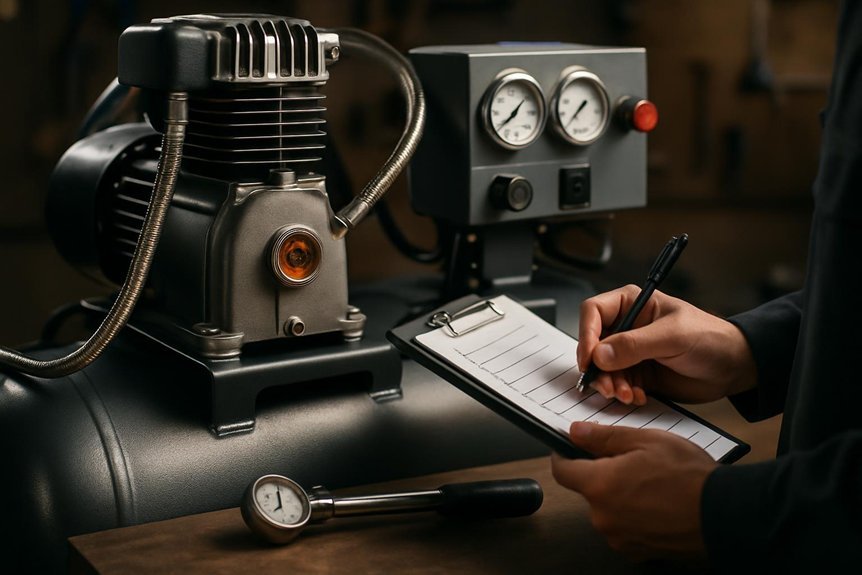
Performing regular visual inspections of your vertical air compressor is essential for maintaining peak operation and preventing costly breakdowns. During inspections, focus on the air filter, ensuring it’s free of dust, debris, and damage, as a clogged filter impairs airflow and reduces efficiency. Check the oil level, verifying it falls within the recommended range, since low oil levels lead to increased wear and risk of overheating. Look for signs of oil leaks around seals and fittings, which can indicate seal failure or over-pressurization. Examine the compressor’s vents and cooling fins for dust buildup, which can cause overheating and reduce performance. Consistent inspection of these components helps identify issues early, ensuring the compressor runs smoothly and prolongs its service life.
Essential Lubrication Tips to Keep Your Compressor Running Smoothly
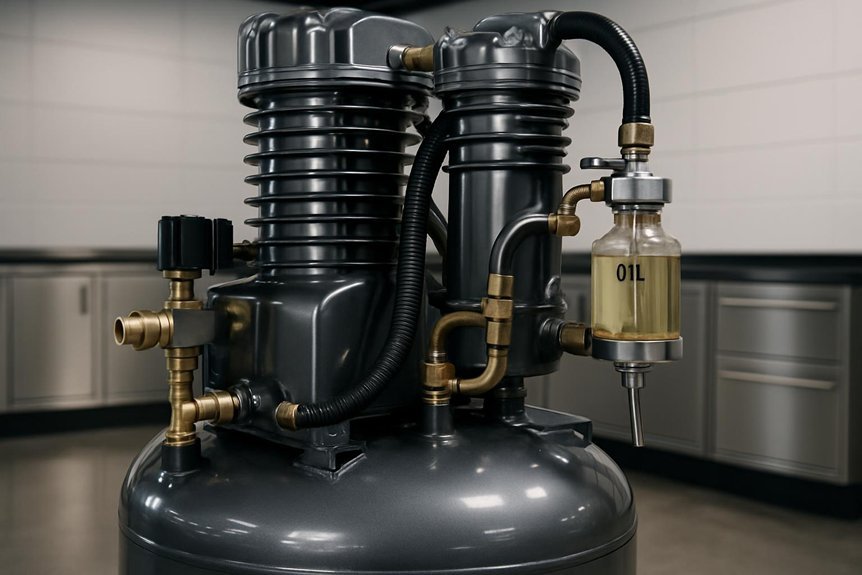
Proper lubrication is critical to maintaining the efficiency and longevity of your vertical air compressor, as it reduces friction between moving parts and prevents premature wear. Selecting the appropriate lubricant types is essential; synthetic oils often provide superior thermal stability and longer service life, while mineral oils are cost-effective for general use. When choosing lubricants, pay close attention to oil viscosity, ensuring it matches the manufacturer’s specifications. Correct viscosity guarantees ideal film strength, reducing metal-to-metal contact under varying operating temperatures. Regularly check oil levels and adhere to recommended lubrication schedules. Using the correct oil viscosity and high-quality lubricant types minimizes internal friction, heat buildup, and wear, ensuring your compressor runs smoothly and reliably over time.
How to Check and Replace Compressor Air Filters Effectively
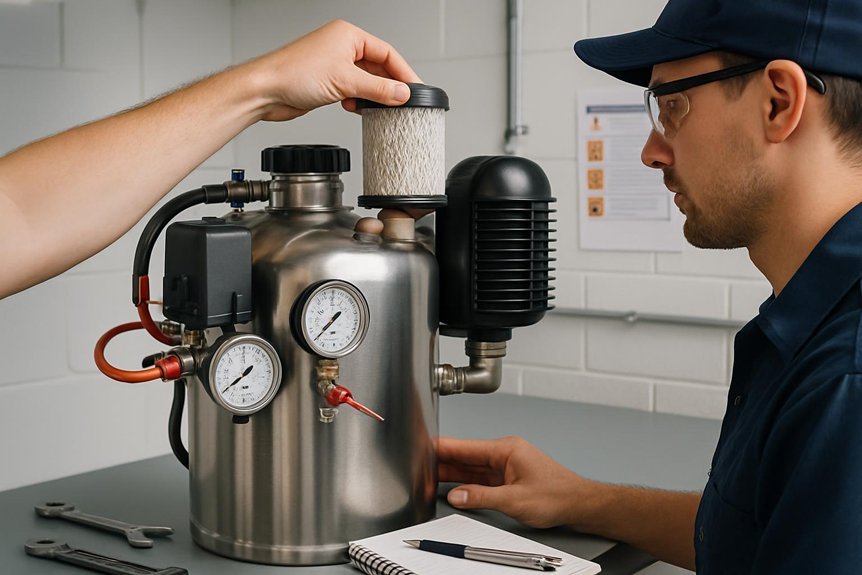
After ensuring your compressor’s lubrication is maintained correctly, attention must turn to the air filters, which play a crucial role in preserving air quality and protecting internal components. Regular inspection is essential to prevent clogging, which reduces efficiency. To check the filter, remove it using appropriate filter replacement tools, noting the air filter lifespan, typically every 6-12 months depending on operating conditions. When replacing, ensure the new filter matches specifications. Use the following table to guide your process:
| Step | Action | Tools Needed |
|---|---|---|
| 1 | Turn off compressor | None |
| 2 | Remove filter | Filter replacement tools |
| 3 | Inspect for dirt and damage | Visual assessment |
| 4 | Replace with new filter | Filter replacement tools |
| 5 | Restart compressor | None |
Consistent checks optimize performance and prolong component life.
Monitoring and Adjusting Pressure Settings for Optimal Performance
Monitoring and adjusting pressure settings is vital for maintaining ideal compressor performance, as improper pressures can lead to increased energy consumption, equipment wear, and operational inefficiencies. Accurate pressure calibration guarantees the compressor operates within specified parameters, preventing over-pressurization that risks damage and under-pressurization that reduces efficiency. We regularly verify gauge accuracy with calibrated tools and adjust pressure relief valves to match manufacturer specifications. Implementing strict safety protocols during pressure adjustments is essential to prevent accidental release or sudden system failure. Consistent monitoring of pressure gauges and control systems allows us to detect deviations early, enabling prompt adjustments. Properly calibrated and maintained pressure settings optimize compressor longevity, safety, and energy efficiency, guaranteeing dependable operation in demanding environments.
How to Drain and Prevent Water Accumulation in the Tank
To prevent water accumulation in the tank, we prioritize regular drainage of moisture collected during compression cycles. Installing water separation devices enhances this process by efficiently removing entrained moisture before it reaches the tank bottom. Consistent maintenance of these systems guarantees maximum compressor performance and minimizes corrosion risks.
Regularly Drain Tank Moisture
Since water vapor naturally condenses within the compressed air tank during operation, it’s essential to regularly drain accumulated moisture to prevent corrosion, reduce pressure fluctuations, and maintain ideal compressor function. Moisture buildup can compromise air quality by introducing contaminants, affecting downstream equipment, and increasing maintenance needs. Proper drainage also minimizes noise caused by pressure drops and water hammer effects, contributing to noise reduction. To effectively drain the tank, we recommend opening the drain valve at the lowest point, allowing moisture to escape completely. Regularly scheduled draining—especially after extended operation—ensures moisture doesn’t stagnate or cause internal corrosion. Using a combination of manual and automatic drains can streamline this process, ensuring consistent removal of water and supporting long-term compressor reliability and efficient air quality.
Install Water Separation Devices
How can we effectively prevent water accumulation in a vertical air compressor tank? Installing water separation devices is essential. These devices use advanced filtration systems to remove moisture from compressed air before it enters the tank, reducing water carryover. Proper water treatment involves integrating coalescing filters or moisture separators that target water droplets, preventing them from settling in the tank. Regular maintenance of these devices ensures they operate efficiently, minimizing water build-up and corrosion risks. Additionally, installing a drain valve downstream of the water separator allows for quick removal of accumulated water, further protecting the system. By combining filtration systems with routine draining and monitoring, we can substantially reduce water-related issues, enhance compressor longevity, and maintain ideal air quality.
Troubleshooting Common Compressor Issues Before They Escalate
Identifying early warning signs such as abnormal noise, excessive vibration, or temperature fluctuations is vital for preventing major failures. We recommend conducting regular system inspections to detect issues like air leaks, pressure drops, or component wear before they worsen. Addressing any irregularities promptly guarantees peak compressor performance and minimizes downtime.
Recognize Early Warning Signs
Detecting early warning signs of compressor trouble is essential to preventing costly downtime and extensive repairs. One key indicator is deteriorating air quality, which may signal contamination or filter clogging, impacting performance and potentially damaging internal components. Unusual noises—such as knocking, hissing, or excessive vibration—often indicate mechanical issues or misalignment. Monitoring noise levels helps identify problems like worn bearings or loose fittings before they escalate. Additionally, inadequate noise reduction can suggest airflow obstructions or damaged mufflers, which compromise efficiency. Regularly inspecting these signs allows us to address issues proactively, ensuring ideal air quality and maintaining proper noise levels. Recognizing these early indicators enables timely interventions, safeguarding compressor longevity and operational reliability.
Regular System Inspections
Regular system inspections are essential for catching potential compressor issues before they develop into costly failures. During these inspections, we check air quality by monitoring filters, moisture separators, and oil levels to prevent contamination that could impair performance. We also evaluate the compressor’s noise levels, as unusual sounds often indicate mechanical wear or misalignment, which can be addressed early to reduce noise and prevent further damage. Additionally, inspecting for leaks, vibration irregularities, and temperature fluctuations helps identify inefficiencies or impending failures. Keeping the system clean and secure guarantees peak airflow, which directly impacts air quality and compressor longevity. Consistent inspections enable us to troubleshoot issues proactively, maintaining reliable operation and minimizing downtime.
Address Issues Promptly
When compressor issues arise, addressing them promptly is essential to prevent escalation into more severe and costly failures. Early troubleshooting ensures ideal air quality and noise reduction, extending equipment lifespan.
We recommend:
- Monitoring air filters regularly for clogs or dirt, which can compromise air quality and increase strain on the system.
- Inspecting pressure relief valves for proper operation to prevent pressure build-up that could cause noise or damage.
- Checking for leaks in hoses or fittings to maintain consistent air quality and reduce unnecessary noise.
- Listening for unusual noises, such as rattling or knocking, which indicate mechanical issues needing immediate attention.
Timely intervention prevents minor problems from becoming major failures, maintaining efficient operation and system integrity.
The Importance of Regular Belt and Pulley Maintenance
Maintaining the integrity of belts and pulleys is essential for guaranteeing peak compressor performance and minimizing downtime. Proper belt tension prevents slippage and excessive wear, while correct pulley alignment reduces vibrations and uneven load distribution. Regular inspections should focus on these aspects to avoid costly breakdowns. When checking belt tension, use a tension gauge and verify it matches manufacturer specifications. For pulley alignment, employ a straightedge or laser alignment tool for precision. Here’s a quick reference:
| Aspect | Importance | Maintenance Tip |
|---|---|---|
| Belt Tension | Prevents slippage and extends belt life | Use a tension gauge for accuracy |
| Pulley Alignment | Ensures smooth operation and reduces vibrations | Regularly check with alignment tools |
| Wear Indicators | Detect early signs of belt deterioration | Replace worn belts promptly |
| Noise Levels | Signal potential misalignment or wear | Investigate unusual sounds immediately |
Safe and Proper Electrical Checks for Your Vertical Air Compressor
Ensuring the electrical components of your vertical air compressor are functioning correctly is crucial for safety and ideal performance. Proper electrical safety checks help prevent hazards related to faulty wiring or inadequate grounding. We recommend the following steps:
- Inspect all wiring connections for signs of wear, corrosion, or looseness, ensuring they meet manufacturer specifications.
- Verify that the power supply voltage matches the compressor’s rated voltage to prevent electrical overloads.
- Test circuit breakers and fuses for proper operation, replacing any that trip or blow prematurely.
- Check grounding connections for continuity and secure attachment to prevent electrical shock risks.
Performing these detailed electrical safety checks ensures reliable operation and minimizes the risk of electrical faults that could cause equipment failure or safety hazards.
How to Schedule Preventive Maintenance for Long-Term Reliability
Effective scheduling of preventive maintenance is essential for maintaining the long-term reliability of your vertical air compressor. Regularly planned intervals allow us to implement energy-saving techniques, such as optimizing compressor load cycles and ensuring proper insulation, which reduce operational costs. Consistent maintenance also minimizes compressor noise, improving workplace safety and comfort. To achieve this, we recommend creating a detailed maintenance calendar based on manufacturer guidelines and operating hours. Routine inspections of belts, filters, and lubrication levels prevent unexpected failures. Additionally, scheduling periodic performance tests helps identify efficiency drops early. By systematically planning maintenance tasks, we extend the compressor’s lifespan, optimize energy use, and maintain quieter operation, ensuring reliable performance over the long haul.
Key Signs It’s Time to Call a Professional Technician
We should consider calling a professional when the compressor produces unusual noises, such as knocking or high-pitched squeals, indicating possible mechanical issues. A noticeable drop in performance or increased operating temperatures can also signal underlying problems that require expert diagnosis. Recognizing these signs early helps prevent costly repairs and guarantees ideal compressor function.
Unusual Compressor Noises
Unusual noises emanating from your air compressor often indicate underlying mechanical issues that require prompt attention. Such compressor noise, especially if persistent or irregular, can signal component misalignment or bearing failure. Vibration analysis can help identify the source of abnormal sounds, revealing imbalance or worn parts.
Signs to call a professional include:
- Persistent knocking or banging sounds during operation, indicating internal component damage.
- High-pitched squeals suggesting belt or pulley misalignment.
- Rattling noises that point to loose mounting or fasteners.
- Unusual vibrations accompanied by irregular compressor noise, which may signal bearing or rotor issues requiring expert diagnosis.
Addressing these signs early can prevent costly repairs and assure reliable operation.
Decreased Performance Levels
When an air compressor begins to deliver less airflow or fails to maintain its pressure levels, it’s a clear indication that performance has degraded, often signaling underlying mechanical or operational issues. Reduced efficiency can lead to compromised air quality, affecting downstream tools and processes. Additionally, decreased performance often results in increased noise levels as the compressor works harder to reach set pressures, making noise reduction efforts less effective. Common causes include clogged filters, worn piston rings, or compromised valves, which hinder airflow and pressure stability. If these issues persist, the compressor’s capacity to deliver consistent, high-quality air diminishes. Recognizing these signs early prompts the need for professional inspection and repairs, ensuring ideal operation and preventing further damage that could escalate maintenance costs.
Excessive Operating Temperatures
Excessive operating temperatures are a critical indicator that your air compressor may require professional inspection and repair. Elevated temperatures often hinder effective temperature management and impair heat dissipation, risking component failure. Recognizing key signs early can prevent costly downtime.
Consider these indicators:
- Unusually high temperature readings on the compressor’s thermometers or sensors, signaling inadequate heat dissipation.
- Overheating during extended operation, suggesting insufficient airflow or heat exchange.
- Frequent thermal cutouts or shutdowns that point to thermal overloads.
- Visible signs of overheating damage, such as discoloration or burnt smell around critical components.
Prompt diagnosis by a professional ensures proper cooling system maintenance, ideal temperature management, and prevents long-term damage from excessive operating temperatures, safeguarding compressor longevity.
Frequently Asked Questions
How Often Should I Replace the Compressor Oil?
We recommend replacing compressor oil every 3,000 hours or annually, ensuring peak oil quality; regularly check and replace filters to prevent contamination, and monitor oil condition to maintain compressor efficiency and prolong lifespan effectively.
What Safety Precautions Are Necessary During Maintenance?
During maintenance, we prioritize safety by wearing personal protective equipment like gloves and goggles, and strictly follow lockout/tagout procedures to prevent accidental startup, ensuring a secure environment and minimizing risk of injury or equipment damage.
How Can I Improve Energy Efficiency of My Compressor?
We can improve our compressor’s energy efficiency through targeted energy saving upgrades like installing variable speed drives and upgrading insulation, while regularly calibrating the compressor to guarantee peak performance and reduce unnecessary energy consumption.
What Are Signs of Compressor Overheating?
We’ve found that over 60% of compressor failures relate to overheating, caused by inadequate cooling or lubrication issues. Signs include high temperature readings, motor overheating, and abnormal noise, which cooling methods like fans or water jackets can effectively manage.
How Do I Properly Store Spare Parts?
We carefully organize our spare parts inventory in a cool, dry storage environment, ensuring they’re clean, labeled, and protected from moisture and dust, which preserves their quality and readiness for quick replacement during compressor maintenance or repairs.
Conclusion
By staying vigilant with these maintenance tips, we keep our vertical air compressors running like well-oiled machines, ensuring peak performance and longevity. Regular inspections, prompt filter changes, and attentive monitoring are the backbone of reliable operation. Think of maintenance as the heartbeat of your compressor—neglect it, and performance will falter like a racing engine without tune-up. With diligent care, we can extend equipment life and avoid costly downtime, securing smooth operation for years to come.