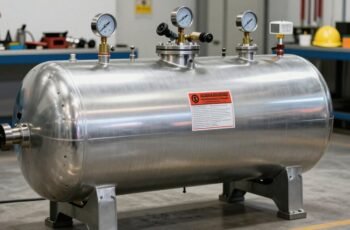
Did you know that neglecting small maintenance tasks can considerably shorten your air compressor’s lifespan and increase operational costs? Proper preventive maintenance involves more than just occasional checks; it requires a systematic approach to inspecting, monitoring, and replacing key components at precise intervals. Without adherence to these detailed practices, you risk unexpected failures and costly downtimes. To guarantee reliable performance and extend your equipment’s service life, it’s critical to understand the specific tips and schedules that keep your compressor running efficiently.
Key Takeaways
- Follow manufacturer-recommended maintenance schedules, adjusting frequency based on environment and workload.
- Regularly inspect and replace air filters, drain moisture, and monitor pressure levels daily.
- Check belts, hoses, and electrical connections for wear, cracks, or leaks, replacing damaged components immediately.
- Calibrate pressure gauges regularly and maintain proper lubrication to prevent system failure.
- Develop a proactive maintenance plan, track performance data, and schedule inspections to minimize downtime.
How Often Should You Perform Air Compressor Maintenance?
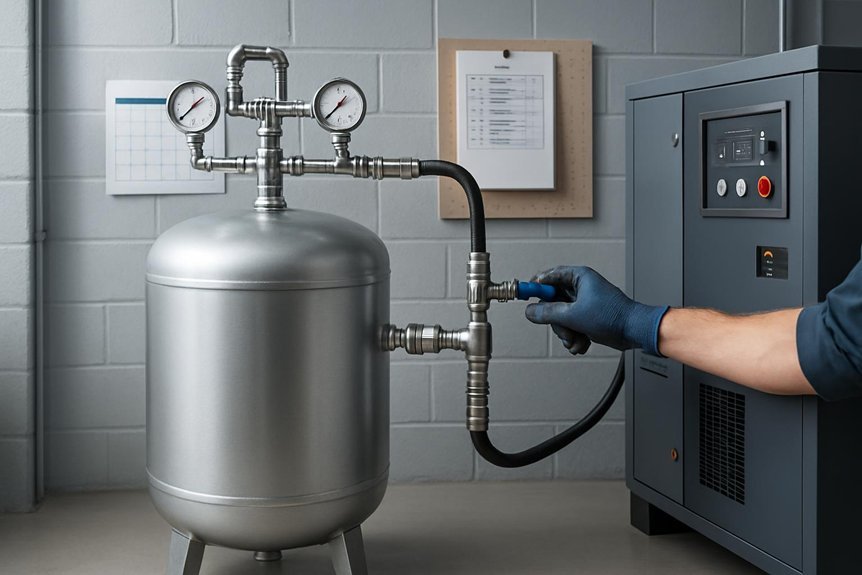
Determining the appropriate frequency for air compressor maintenance is essential to guarantee ideal performance and longevity. Regular maintenance intervals directly impact air quality by preventing contamination buildup, which can compromise system output and product integrity. Additionally, scheduling maintenance based on operational hours or manufacturer recommendations ensures maximum energy efficiency, as worn components or improperly lubricated parts increase power consumption. We advise inspecting critical systems—such as lubrication, cooling, and pressure regulation—at intervals specified in the equipment manual. Maintenance frequency should be adjusted according to compressor workload and environmental conditions, with more frequent checks for harsh or dusty environments. Properly timed maintenance reduces downtime, maintains high air quality, and preserves energy efficiency, ensuring reliable operation and extending the compressor’s service life.
Checking and Replacing Air Filters for Optimal Performance
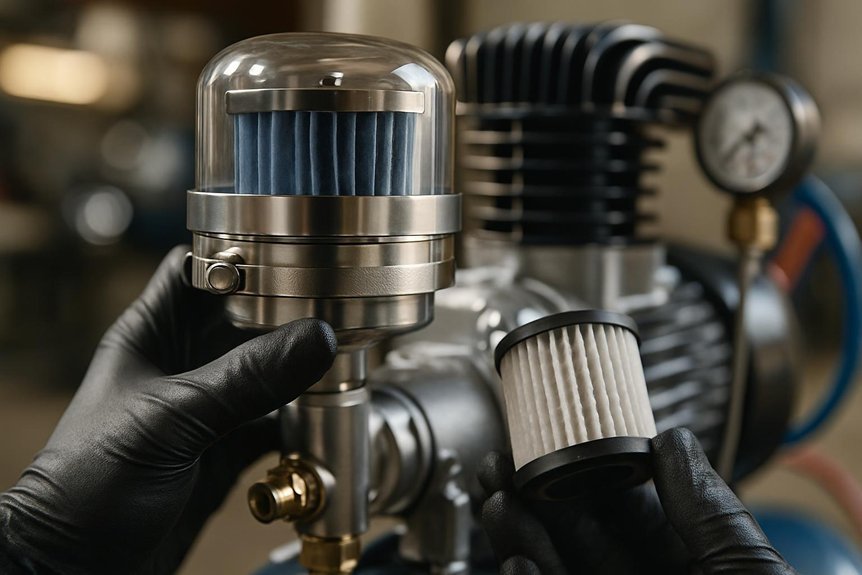
How often should we check and replace air filters to maintain ideal compressor performance? Generally, the filter cleaning frequency depends on usage intensity and environment. For standard operations, inspect filters weekly and replace or clean them every 1-3 months. Heavy-duty environments with dust or debris demand more frequent filter replacements and cleaning. Proper air filter replacement prevents contaminants from entering the system, ensuring peak airflow and efficiency.
| Operating Conditions | Recommended Action |
|---|---|
| Light use, clean air | Check monthly, replace annually |
| Heavy use, dusty air | Check weekly, replace every 1-2 months |
| Mild environment | Inspect bi-monthly, replace semi-annually |
| Harsh environment | Inspect weekly, replace monthly |
| General maintenance | Follow manufacturer guidelines |
Draining Moisture From the Compressor Tank Regularly
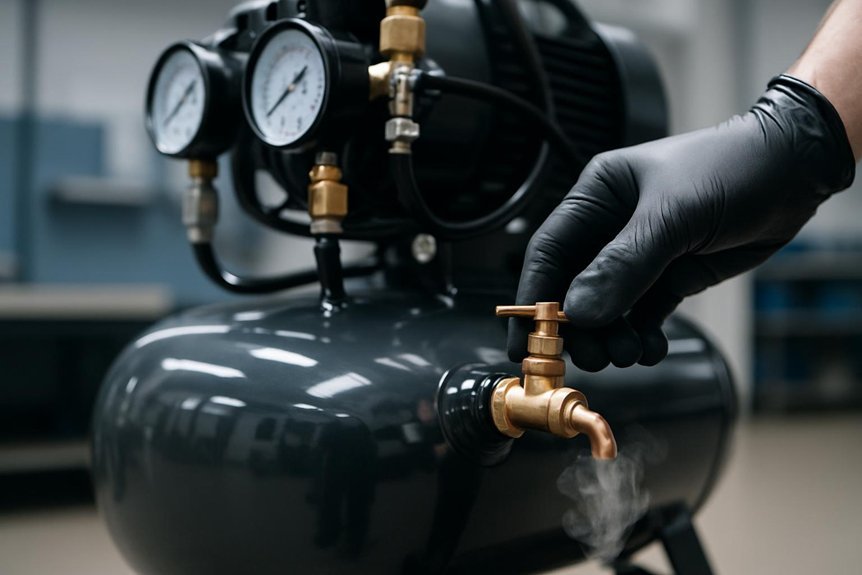
Regularly draining moisture from the compressor tank is vital to prevent corrosion, maintain ideal pressure, and extend equipment lifespan. Moisture buildup occurs during compression due to cooling, leading to water accumulation inside the tank. If unchecked, this moisture promotes tank corrosion, weakening structural integrity and increasing failure risk. To effectively drain moisture, use the tank’s drain valve, opening it fully until water and condensate are expelled. This process should be performed at the end of each shift or daily, depending on usage. Regular drainage ensures moisture doesn’t stagnate, preventing rust formation and preserving compressor efficiency. Proper maintenance of this step is essential for avoiding costly repairs and guaranteeing reliable operation over the compressor’s service life.
Inspecting and Maintaining Compressor Belts and Hoses
After draining moisture from the compressor tank, it’s important to examine the belts and hoses that connect and support the system. For belts, check belt tension by applying moderate pressure; it should have minimal slack but not be overly tight, as improper tension can cause premature wear or slipping. Look for cracks, fraying, or glazing on the belt surface, which indicate deterioration. For hoses, perform thorough hose inspection by inspecting for cracks, soft spots, bulges, or leaks. Ensure all fittings are secure and free from corrosion. Replace any worn or damaged belts and hoses immediately to prevent system failure. Regularly maintaining belt tension and conducting detailed hose inspection enhances compressor efficiency, minimizes downtime, and prolongs component lifespan.
Monitoring and Adjusting Pressure Settings Correctly
To guarantee peak performance, we systematically monitor pressure levels and verify that pressure gauges are calibrated accurately at regular intervals. During operation, we make precise adjustments to the pressure settings, ensuring they align with manufacturer specifications and workload demands. Consistent calibration and real-time adjustments are essential to maintain safe, efficient compressor function.
Regularly Check Pressure Levels
How often should we verify the pressure levels on our air compressor? Regular checks are essential to guarantee proper pressure regulation and maintain ideal performance. We recommend inspecting pressure gauges at least daily, especially during peak operation periods. Accurate readings help identify deviations from manufacturer specifications, which could indicate issues with safety protocols or system integrity. When checking pressure levels, assure the compressor is off and depressurized before adjustments. Maintaining correct pressure prevents overloading components, reduces wear, and enhances safety. Any discrepancies should be corrected immediately, following established safety protocols. Consistent monitoring not only prolongs equipment lifespan but also minimizes risk of failure or accidents caused by incorrect pressure settings.
Calibrate Pressure Gauges Frequently
Since pressure gauges can drift over time due to mechanical wear or environmental factors, we must calibrate them regularly to assure accurate readings. Proper pressure calibration ensures gauge accuracy, preventing false readings that could lead to system inefficiencies or damage. Regular calibration involves comparing the gauge’s readings against a certified reference standard and adjusting it accordingly, if possible. This process helps detect any deviations caused by wear or external influences, maintaining precise pressure monitoring. Accurate gauges are essential for timely adjustments and safe operation of the compressor system. We recommend establishing a routine calibration schedule based on usage frequency and environmental conditions, using calibrated reference tools. Consistent pressure calibration safeguards system reliability and optimizes compressor performance.
Adjust Settings During Use
Monitoring and adjusting pressure settings during operation is essential for maintaining ideal compressor performance and ensuring safety. When adjusting settings during use, we must verify that the pressure is within the manufacturer’s recommended range, avoiding over-pressurization that could damage equipment or cause hazards. Use a calibrated pressure gauge to monitor real-time pressure, and if the system exceeds or drops below best levels, promptly adjust the pressure regulator or control valve. Proper adjustment involves turning the regulator slowly and incrementally, observing the gauge after each change. Regularly inspecting safety relief valves and ensuring they function correctly during these adjustments helps prevent pressure build-up. Consistent, precise adjustments during use maximize efficiency and extend the compressor’s operational lifespan.
Lubricating Moving Parts to Prevent Wear and Tear
Proper lubrication of moving parts is essential to minimize friction and prevent premature component failure in air compressors. Selecting the correct lubricant—such as synthetic oil or grease—and adhering to a consistent lubrication schedule guarantees peak performance and longevity. Regular application based on manufacturer specifications maintains critical clearances and reduces wear-related downtime.
Importance of Proper Lubrication
Why is proper lubrication essential for air compressor longevity? Effective lubrication minimizes metal-to-metal contact, reducing friction and preventing premature component failure. Implementing correct lubrication techniques ensures moving parts operate smoothly, maintaining ideal efficiency. The choice of oil viscosity is critical; it must be appropriate for operating temperatures to form a protective film, reducing wear and heat buildup. Using too thick or too thin oil can impair lubrication, leading to increased friction and potential damage. Regularly monitoring oil levels and quality helps identify contamination or degradation early. Proper lubrication not only extends component lifespan but also enhances overall compressor performance, decreases downtime, and reduces maintenance costs. Precision in applying the right lubrication techniques and selecting suitable oil viscosity is fundamental for reliable, long-term operation.
Selecting Appropriate Lubricants
Choosing the right lubricants is critical to ensuring the durability and efficient operation of an air compressor’s moving parts. Proper selection hinges on factors like oil viscosity, which must match the compressor’s operating temperature and load conditions to minimize internal friction and heat. It’s essential to prevent lubricant contamination, which can cause abrasive wear, corrosion, or reduced lubrication effectiveness. High-quality lubricants with appropriate viscosity levels provide maximum film strength, reducing metal-to-metal contact. Additionally, selecting oils resistant to oxidation and thermal breakdown prolongs equipment life. Regularly inspecting for signs of contamination—such as sludge or particulates—is crucial. To enhance performance, consider these key points:
- Match oil viscosity to operating conditions
- Use lubricants with anti-oxidation properties
- Prevent lubricant contamination through proper storage
- Select oils compatible with compressor materials
Regular Lubrication Schedule
How often should we schedule lubrication to guarantee peak performance of an air compressor? Regular lubrication is essential to optimize lubrication efficiency and prevent oil contamination, which can cause increased wear and system failure. For most compressors, lubrication should be checked daily and lubricants replaced or topped up every 250-500 operating hours, depending on workload and environment. Using the correct lubricant type and maintaining a strict schedule minimizes oil contamination and assures moving parts remain properly lubricated.
| Maintenance Task | Frequency |
|---|---|
| Check oil level | Daily |
| Replace oil | Every 250-500 hours |
| Inspect for oil contamination | Weekly |
| Clean lubrication points | Monthly |
| Record lubrication activities | Each maintenance cycle |
Troubleshooting Common Issues Before They Escalate
Addressing potential issues early is crucial to prevent costly downtime and equipment damage. Regular troubleshooting enables us to identify signs of malfunction before they escalate, conserving the maintenance budget and minimizing operational disruptions. Proper operator training plays a fundamental role, equipping personnel to recognize symptoms such as unusual noise, pressure drops, or overheating—indicators of underlying problems.
Early troubleshooting prevents costly downtime and equipment damage through proactive detection and skilled operator awareness.
Key troubleshooting considerations include:
- Monitoring pressure gauges for abnormal fluctuations
- Inspecting for leaks or damaged hoses
- Checking filters and valves for clogs or wear
- Verifying electrical connections and control systems
Creating a Preventive Maintenance Schedule That Works
Establishing an effective preventive maintenance schedule is essential to guarantee the longevity and peak performance of air compressors. To achieve this, we must align maintenance tasks with manufacturer recommendations and operational demands. Regularly scheduled inspections should include monitoring air quality to prevent contamination that can impair performance and cause corrosion. Incorporate routine checks of oil levels, filters, and moisture traps to sustain ideal air quality. Additionally, timely component replacements, such as belts and valves, help maintain energy efficiency by reducing unnecessary power consumption. Tracking compressor runtime and performance data allows us to identify patterns that indicate potential issues, enabling proactive adjustments. A well-structured schedule minimizes downtime, ensures consistent air quality, and maximizes energy efficiency, ultimately extending equipment lifespan.
Frequently Asked Questions
What Are the Signs of Compressor Overheating?
Signs of compressor overheating include thermal expansion causing excessive heat, frequent overload protection trips, and unusual noises or vibrations. We recommend monitoring temperature gauges closely to prevent damage, ensuring proper cooling, and maintaining overload protection systems effectively.
How Do You Identify Compressor Leaks Effectively?
We verify compressor leaks through thorough leak detection methods, such as ultrasonic testing or soap bubble solutions, and conduct seal inspections to identify cracks or deterioration, ensuring accurate leak identification and efficient compressor operation.
What Safety Precautions Are Necessary During Maintenance?
We prioritize safety by always donning appropriate safety gear, including gloves and eye protection, and strictly following lockout procedures to guarantee the compressor is fully de-energized before maintenance, preventing accidental startups or electrical hazards.
How Can I Improve Energy Efficiency of My Compressor?
We can boost our compressor’s energy efficiency by implementing energy-saving upgrades and ensuring precise compressor calibration, which optimizes performance, reduces energy consumption, and minimizes operational costs, ultimately fostering a more sustainable and cost-effective industrial environment.
What Are the Best Practices for Compressor Storage During Off-Hours?
We recommend insulating compressors and storing them in a controlled environment with ideal temperature and humidity. Proper compressor insulation prevents temperature fluctuations, while a stable storage environment minimizes moisture and corrosion risks during off-hours, ensuring longevity and reliability.
Conclusion
By adhering to these maintenance tips, we can greatly extend our compressor’s life and ensure peak performance. But the real challenge lies in knowing when and how to adapt these routines to changing conditions. Are we overlooking subtle signs of wear, or neglecting critical calibration? Staying vigilant and proactive is essential. The next step could mean the difference between smooth operation and costly downtime—so, are you ready to uncover what’s truly lurking beneath the surface?