Maintaining an oil-free air compressor requires a systematic approach to guarantee consistent performance and extend its service life. We focus on routine inspections of critical components, cleaning procedures, and proper condensate disposal, all of which demand attention to detail. Proper maintenance minimizes downtime and operational costs, but neglecting these tasks can lead to costly repairs. To optimize your compressor’s reliability, understanding the specific steps involved is essential—let’s explore these key aspects in more detail.
Key Takeaways
- Regularly inspect and clean cooling fins, fan blades, and filters to ensure optimal airflow and prevent overheating.
- Check and maintain proper lubrication levels without over-lubricating moving parts.
- Monitor and troubleshoot electrical connections, grounding, and voltage stability to prevent electrical issues.
- Drain condensate regularly using automatic or manual drain valves to prevent corrosion and contamination.
- Schedule calibration and professional inspections to ensure pressure accuracy and extend compressor lifespan.
How to Perform Routine Inspections and Cleanings on Your Oil-Free Air Compressor
Performing routine inspections and cleanings on your oil-free air compressor is essential to maintaining peak performance and preventing costly repairs. Begin by examining the compressor’s moving parts for proper lubrication, focusing on lubrication techniques that avoid over-lubrication, which can lead to buildup and inefficiency. Regularly inspect for any signs of wear or misalignment that could increase noise levels. To reduce operational noise, clean the cooling fins and fan blades, ensuring unobstructed airflow. Tighten loose fasteners and check for vibration sources that amplify sound. Maintaining a clean, well-lubricated system minimizes friction and noise, while early detection of issues prevents component failure. These precise inspections and cleaning practices guarantee the compressor runs smoothly, efficiently, and quietly over its lifespan.
Essential Filters and Components to Maintain for Optimal Performance
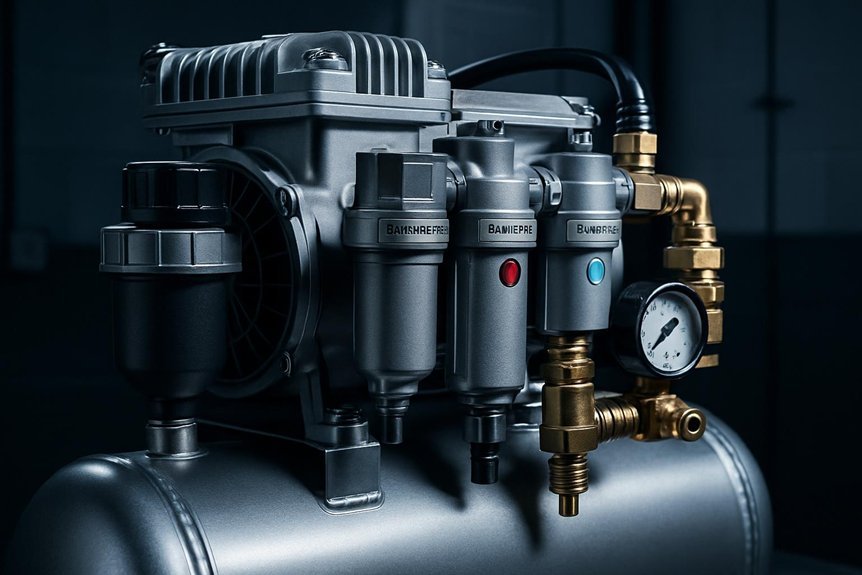
To guarantee peak performance, we must prioritize the maintenance of essential filters and components within the oil-free air compressor. Key filters include intake filters, which prevent debris from entering the system, and moisture filters that remove water vapor, ensuring consistent air quality. Regular inspection and replacement of these filters prevent pressure drops and reduce wear on internal parts. Attention to lubrication essentials is vital; using the correct lubricants and maintaining proper lubrication levels minimizes friction and component wear. Additionally, power source maintenance involves inspecting electrical connections, ensuring proper grounding, and monitoring voltage stability to prevent electrical failures. Consistent upkeep of these components guarantees maximum compressor operation, reduces downtime, and extends equipment lifespan. Proper attention to filters, lubrication, and power source integrity forms the foundation of reliable, efficient performance.
How to Properly Drain and Dispose of Condensate and Water Build-Up
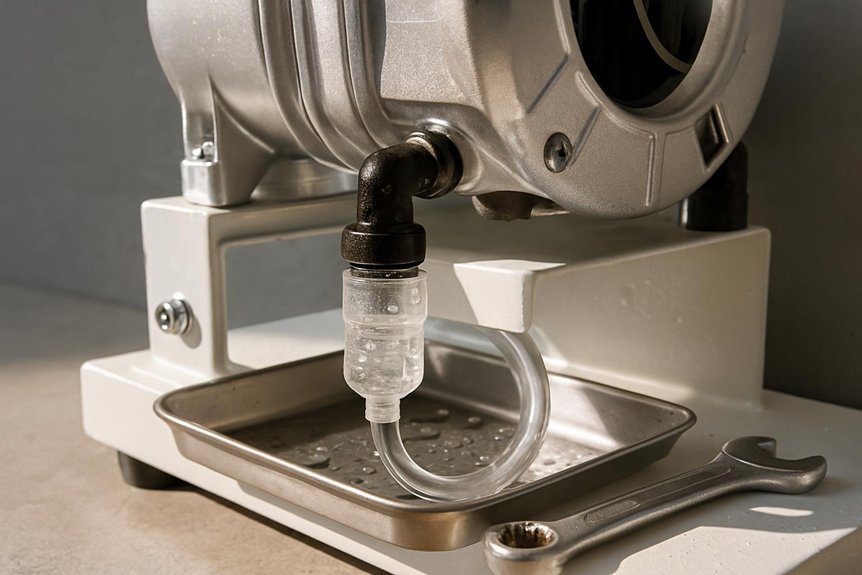
Since condensate and water build-up are inevitable byproducts of the compression process, it’s essential to drain and dispose of them properly to maintain compressor efficiency and prevent damage. Effective condensate management involves regularly checking drain points and utilizing automatic or manual drain valves to remove accumulated water. Proper water removal prevents corrosion and contamination within the compressor, which can compromise air quality and system longevity. When draining, confirm the compressor is depressurized and follow manufacturer instructions for safe water disposal. Collect the condensate in approved containers, avoiding environmental contamination. Regular maintenance of condensate management systems guarantees water build-up doesn’t impair compressor function. By adhering to these procedures, you optimize compressor performance and extend its operational lifespan.
Troubleshooting Common Issues and When to Seek Professional Service
When an oil-free air compressor exhibits abnormal noises, reduced airflow, or inconsistent pressure, these symptoms often indicate underlying issues that require prompt diagnosis. Unusual noise levels may stem from improper lubricant selection, leading to increased vibration or component wear. Noise reduction can often be achieved by inspecting and replacing worn or misaligned parts, and ensuring the compressor is properly lubricated with compatible, high-quality lubricants. Reduced airflow or pressure fluctuations might point to clogged filters or faulty valves, necessitating thorough cleaning or replacement. If troubleshooting these issues does not resolve the problem, it’s essential to seek professional service. Expert technicians can diagnose complex mechanical or electrical faults, ensuring the compressor operates efficiently and preventing further damage.
Best Practices for Extending the Lifespan of Your Oil-Free Air Compressor
Maintaining ideal operating conditions is essential for maximizing the lifespan of your oil-free air compressor. Regularly guaranteeing proper oil-free lubrication prevents metal-to-metal contact, reducing wear on critical components. We recommend implementing a scheduled compressor calibration to verify pressure settings and motor performance, preventing overloading and inefficiencies. Monitoring ambient temperature and humidity levels helps sustain optimal compressor operation, minimizing stress on internal parts. Keep air intake filters clean and replace them as needed to prevent particulate contamination, which can accelerate component degradation. Consistent maintenance of these parameters reduces the risk of premature failure, extending your compressor’s service life. By adhering to precise calibration routines and maintaining proper lubrication, you ensure reliable performance and maximize the operational lifespan of your equipment.
Frequently Asked Questions
How Often Should I Replace the Compressor’s Belts or Pulleys?
We recommend inspecting belts and pulleys every 3 to 6 months, checking belt tension and pulley alignment closely. Replace worn or cracked belts promptly to prevent misalignment, which can cause belt slippage and reduced compressor efficiency.
What Safety Precautions Should I Take During Maintenance?
We always wear safety gear and follow lockout procedures to guarantee safety during maintenance; this prevents accidental startup, protects against moving parts, and minimizes hazards, allowing us to work confidently and avoid injury.
Can I Use Aftermarket Parts for Repairs?
We can use aftermarket parts, but we carefully consider alternative brand compatibility and perform cost comparisons. We prioritize maintaining compressor performance, reliability, and safety, ensuring that replacement parts meet or exceed OEM standards for long-term efficiency.
How Does Ambient Temperature Affect Compressor Performance?
Ambient temperature impacts compressor performance through temperature regulation and air flow management; higher temperatures can reduce efficiency, cause overheating, and increase wear. Maintaining ideal ambient conditions ensures consistent airflow and operation, preventing temperature-related performance issues.
Is There a Recommended Storage Procedure for Long-Term Shutdowns?
We recommend following precise storage guidelines for long-term preservation, including cleaning, draining moisture, lubricating components, sealing openings, and storing in a dry, temperature-controlled environment to prevent corrosion and guarantee ideal performance upon restart.
Conclusion
By adhering to these maintenance practices, we guarantee our compressor remains as reliable as a well-tuned engine, ready to perform when needed. Regular inspections, timely filter replacements, and proper condensate disposal act as the keystones of longevity, much like a craftsman’s careful attention to detail. Staying vigilant against issues helps us avoid unexpected breakdowns, allowing our equipment to operate efficiently and extend its lifespan—because, like a finely calibrated instrument, precision and care make all the difference.