When approaching the installation of an industrial air compressor, we recognize the importance of a systematic, detail-oriented process that guarantees safety, efficiency, and long-term reliability. Every step, from workspace preparation to final testing, must be executed with precision to prevent operational hazards and optimize performance. Understanding the nuances involved can considerably impact your system’s lifespan and productivity, prompting us to explore the essential guidelines that can help you navigate this complex task effectively.
Key Takeaways
- Prepare the workspace by assessing environmental factors, ensuring safety, and selecting a level, well-ventilated location with proper utilities.
- Choose the appropriate compressor model based on power needs, space constraints, and noise considerations.
- Properly position and connect air hoses, ensuring leak-free, secure fittings and effective drainage.
- Conduct routine maintenance, safety checks, and final inspections before commissioning the compressor.
- Implement noise control measures and ensure adequate ventilation to optimize environmental safety and system performance.
How to Prepare Your Workspace for Air Compressor Installation
Before beginning the installation process, it’s essential to thoroughly prepare your workspace to guarantee safety, efficiency, and proper operation of the air compressor. We start by examining the area for noise reduction opportunities—placing the compressor away from work zones and installing sound-dampening materials minimizes noise pollution. Next, evaluate ventilation to manage heat dissipation and reduce environmental impact, ensuring adequate airflow and moisture control. Clear the space of clutter and obstructions for safe access and maintenance. Confirm the floor’s load capacity supports the compressor’s weight, preventing structural issues. Proper electrical wiring and grounding are critical to avoid electrical hazards and ensure reliable operation. Systematic planning of these steps enhances operational safety, minimizes environmental footprint, and optimizes overall efficiency.
Selecting the Right Industrial Air Compressor for Your Facility
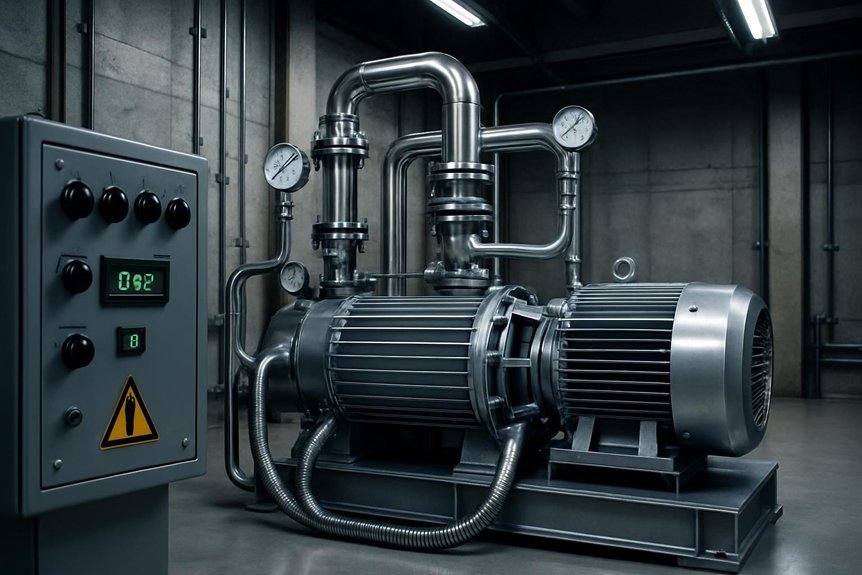
Choosing the appropriate industrial air compressor requires a thorough analysis of power demands, available space, and ongoing maintenance requirements. We need to systematically evaluate your facility’s operational load, spatial limitations, and ease of service to guarantee ideal performance. This structured approach helps identify a compressor that balances capacity, footprint, and long-term reliability.
Assessing Power Requirements
Evaluating power requirements is a critical step in selecting the appropriate industrial air compressor, as it guarantees the equipment can reliably meet your facility’s operational demands without overloading existing electrical systems. To achieve this, we analyze voltage, current, and power capacity, considering future expansion. Proper assessment ensures ideal energy efficiency and noise reduction, minimizing operational costs and environmental impact. The table below summarizes key electrical parameters:
| Parameter | Measurement | Importance |
|---|---|---|
| Voltage | Volts (V) | Ensures compatibility |
| Current | Amperes (A) | Prevents overloads |
| Power Consumption | Kilowatts (kW) | Impacts energy efficiency |
| Starting Current | Amperes (A) | Affects electrical infrastructure |
| Power Factor | Ratio (0-1) | Influences energy use |
Considering Space Constraints
Evaluating space constraints is a vital step in selecting an industrial air compressor that integrates seamlessly into your facility’s layout. We systematically analyze available floor space, guaranteeing the compressor fits without impeding workflow. Prioritizing space optimization involves choosing compact models or modular configurations that maximize efficiency in limited areas. Equally important is considering noise reduction; quieter units reduce sound pollution and facilitate a safer, more comfortable environment. We assess whether the compressor’s dimensions align with existing infrastructure, such as ceiling height and ventilation requirements. We also explore options for vertical or wall-mounted units to save floor space. By carefully balancing size, noise output, and functional needs, we confirm the selected compressor enhances operational efficiency without sacrificing valuable space.
Evaluating Maintenance Needs
Understanding the maintenance requirements of an industrial air compressor is essential for guaranteeing reliable operation and minimizing downtime. Proper evaluation involves analyzing routine tasks such as adhering to lubrication schedules and scheduling filter replacements. Maintaining ideal lubrication reduces wear and prevents overheating, directly impacting compressor lifespan. Regular filter replacements ensure clean airflow, enhancing efficiency and preventing contamination-related failures.
Key considerations include:
- Monitoring lubrication intervals based on usage and environmental conditions
- Establishing a routine for timely filter replacements
- Tracking compressor runtime to predict maintenance needs
- Implementing a systematic maintenance schedule aligned with manufacturer recommendations
Step-by-Step Guide to Installing Your Air Compressor System
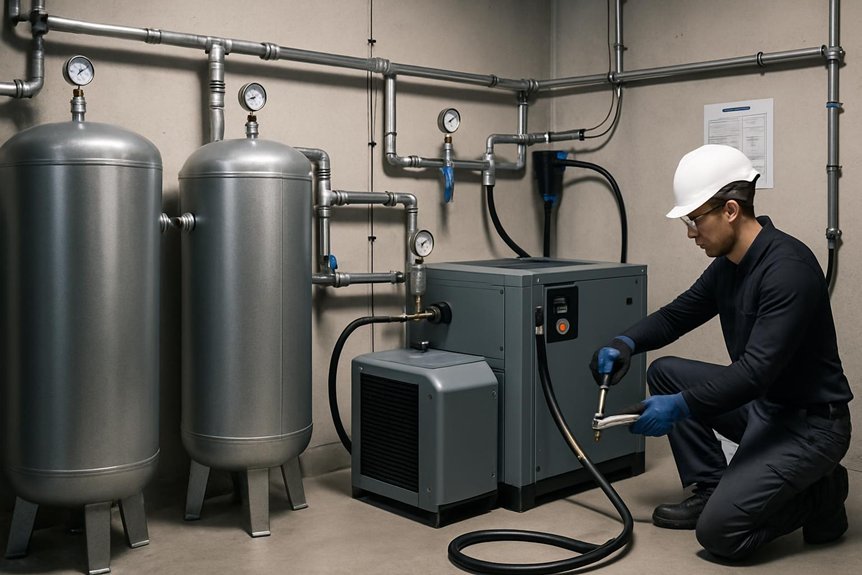
To guarantee a smooth installation, we start by thoroughly preparing the site, addressing space, ventilation, and foundation requirements. Next, we focus on correctly setting up the equipment, verifying connections, and aligning components according to manufacturer specifications. Finally, we conduct detailed safety checks and final inspections to confirm operational readiness and compliance with safety standards.
Site Preparation Essentials
Before installing your air compressor system, it’s essential to thoroughly prepare the site to guarantee ideal performance and safety. Proper site preparation minimizes noise transmission, reduces environmental impact, and ensures efficient operation. Key steps include selecting a location with adequate ventilation and stable footing, away from sensitive areas. Consider installing noise reduction barriers or enclosures to contain operational sound. Make certain the site has reliable power supply connections and proper drainage to prevent moisture buildup. Additionally, evaluate the proximity to utility lines and environmental hazards, like flooding or excessive dust. By systematically addressing these factors, we create a safe, environmentally conscious environment that optimizes compressor longevity and performance.
- Adequate ventilation and stable footing
- Noise reduction barriers or enclosures
- Reliable power and drainage systems
- Proximity to utilities and hazard assessment
Proper Equipment Setup
Have you prepared the foundation for your air compressor system? Ensuring proper equipment setup begins with precise placement. We systematically position the compressor on a stable, level surface to minimize vibrations and maintain ideal air quality. Check that the location offers adequate ventilation and easy access for maintenance, which supports noise reduction and temperature control. Carefully connect air hoses, ensuring they are secured and free of leaks, as leaks compromise air quality and system efficiency. Confirm electrical connections meet safety standards, and verify the compressor’s alignment with other system components. During setup, consider noise attenuation measures—install mufflers or soundproof enclosures where necessary. A meticulous, detail-oriented approach guarantees a reliable, quiet operation while maintaining high air quality standards.
Safety and Final Checks
After completing the setup, attention shifts to verifying safety protocols and conducting final checks to guarantee the system operates reliably and securely. We systematically review emergency protocols, confirming all personnel are familiar with shutdown procedures and safety measures. We evaluate noise reduction strategies, assuring soundproof enclosures or mufflers are properly installed to minimize noise pollution. Additionally, we inspect electrical connections for secure grounding and proper insulation, preventing potential hazards. We verify that pressure relief valves function correctly, avoiding over-pressurization risks. Finally, we conduct a thorough operational test, monitoring for leaks, abnormal vibrations, or overheating. These meticulous checks ensure safety, compliance, and ideal performance, reducing the risk of accidents and ensuring the compressor runs smoothly within a secure environment.
Essential Safety Checks During Installation
We initiate safety checks during installation by systematically inspecting all electrical connections to guarantee they meet manufacturer specifications and local electrical codes. This step is crucial for hazard identification, ensuring there are no loose wires, improper grounding, or damaged components. We then verify that safety protocols are strictly followed, such as installing appropriate circuit breakers and grounding systems. Our focus is on detecting potential hazards that could compromise operator safety or equipment integrity. We also check for clear labeling and proper insulation, reducing the risk of electrical faults. Each connection undergoes careful scrutiny to confirm compliance with safety standards. This meticulous approach minimizes hazards, promotes safe operation, and lays the foundation for a reliable, compliant air compressor installation.
Connecting and Configuring the Air Compressor Correctly
To guarantee ideal performance and safety, connecting and configuring the air compressor must follow a precise, step-by-step process. First, confirm proper alignment of inlet and outlet connections to prevent leaks and maintain air quality. Next, adjust the pressure settings according to manufacturer specifications, avoiding over-pressurization that could compromise safety or equipment. Properly install noise reduction components, such as silencers or enclosures, to minimize operational noise. Additionally, verify that all electrical connections are secure and conform to local codes, ensuring safe operation and stable power flow. Finally, inspect the system’s filters and moisture traps, replacing or cleaning them regularly to preserve air quality. This systematic approach optimizes compressor efficiency while addressing noise reduction and air quality concerns.
Testing the System and Ensuring Optimal Performance
Before fully operationalizing the air compressor system, thorough testing is essential to confirm that all components function correctly and that performance meets specified standards. We begin by evaluating air quality, ensuring moisture and particulates are within acceptable limits through proper filtration and drainage. Next, we monitor the system’s pressure stability under load, verifying that the compressor maintains consistent output. Noise reduction measures are also tested; we measure decibel levels at various points to confirm effective noise mitigation. Additionally, safety devices such as pressure relief valves are tested for proper operation. Systematic inspection of piping, electrical connections, and control systems guarantees no leaks or faults. This exhaustive testing guarantees peak performance, minimizes operational issues, and ensures compliance with safety and quality standards.
Common Installation Mistakes and How to Avoid Them
Installing an air compressor system involves numerous precise steps, but common mistakes can compromise performance and safety if not addressed. Poor placement can hinder air quality and elevate noise levels, affecting both efficiency and safety. To avoid these issues, we must pay close attention to:
- Incorrect location placement, which can increase noise levels and reduce air quality.
- Neglecting proper ventilation, leading to overheating and compromised system longevity.
- Failing to use appropriate soundproofing measures, resulting in excessive noise pollution.
- Overlooking the importance of correct piping and drainage, risking moisture buildup that affects air quality and system performance.
Maintenance Tips to Extend Your Air Compressor’s Lifespan
Regular maintenance is crucial for maximizing the lifespan of your air compressor, as neglecting key components can lead to premature wear and costly repairs. Systematic inspections of filters, belts, and valves guarantee maximum energy efficiency by preventing blockages and leaks that cause unnecessary power consumption. Regular lubrication reduces friction, extending component life and maintaining consistent performance. Additionally, cleaning and replacing filters improve air quality and reduce noise levels, contributing to noise reduction and a quieter work environment. Monitoring pressure levels and temperature gauges helps identify inefficiencies early, allowing for timely adjustments. Implementing a scheduled maintenance plan not only prolongs your compressor’s operational life but also enhances energy efficiency, reducing overall operational costs. Consistent upkeep is essential for sustained performance and longevity.
Troubleshooting Tips for Post-Installation Issues
When issues arise after installing an air compressor, a systematic approach is essential to identify and resolve problems efficiently. First, check air quality parameters; contaminants can impair performance and damage components. Next, evaluate noise reduction measures—excess noise may indicate misalignment or vibration issues that need correction. Confirm all connections are tight and filters are clean, as leaks or clogged filters reduce efficiency. Also, verify that the compressor’s ventilation and cooling systems are functioning properly, preventing overheating. Finally, inspect for abnormal vibrations or vibrations, which often signal imbalance or mounting issues. By methodically reviewing these areas, you can pinpoint post-installation problems related to air quality, noise reduction, and overall operation, ensuring reliable performance and compliance with safety standards.
Frequently Asked Questions
How Often Should I Schedule Professional Inspections After Installation?
We recommend scheduling professional inspections every six to twelve months, aligning with your maintenance schedule and inspection frequency. Regular, systematic assessments guarantee ideal compressor performance, prevent unexpected failures, and extend equipment lifespan through detailed, proactive maintenance practices.
What Permits or Regulations Are Required for Compressor Installation?
We understand 75% of installations overlook permit requirements, risking non-compliance. For compressor installation, make certain you acquire all necessary permits and adhere to regulations systematically, guaranteeing safety, legal adherence, and smooth operation.
How Do I Choose the Best Location to Minimize Noise Disturbance?
We choose a location with minimal vibration and apply vibration reduction techniques, like rubber mounts, while incorporating acoustic insulation to dampen noise, ensuring the compressor operates efficiently without disturbing nearby areas, and regularly assess noise levels for ideal placement.
What Are the Energy Efficiency Considerations During Installation?
We prioritize energy savings and operational optimization by selecting efficient compressor models, optimizing airflow pathways, and ensuring proper insulation, which reduces energy consumption and enhances overall system performance during installation.
How Can I Upgrade or Expand My Compressor System Later?
Upgrading or expanding your compressor system is straightforward with strategic maintenance planning and seamless system integration; we analyze your current setup, identify scalability options, and implement phased enhancements to guarantee ideal performance and future-proof your operations.
Conclusion
As we conclude, remember that a successful installation mirrors a well-orchestrated symphony—each step carefully coordinated, every detail scrutinized. By approaching the process systematically, respecting safety protocols, and maintaining diligent inspections, we guarantee peak performance and longevity. Like a craftsman tending to their masterpiece, our precision and attentiveness lay the foundation for reliable, efficient operation. In this harmony of effort, we forge a resilient system that stands the test of time.