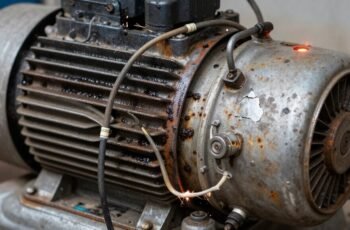
Maintaining rotary screw air compressors is essential for ensuring consistent performance and minimizing operational costs. We realize that regular inspections and precise adjustments can prevent unexpected failures and extend equipment lifespan. However, the complexity of components like filters, oil systems, and pressure controls requires a systematic approach. Focusing on these critical aspects can greatly impact reliability, but establishing an effective maintenance routine involves careful planning and technical insight—considering what factors truly influence ideal operation might be more involved than it initially appears.
Key Takeaways
- Regularly monitor and maintain lubrication levels and quality to prevent wear and ensure efficient operation.
- Replace air and oil filters as per schedule to maintain optimal airflow and compressor performance.
- Conduct routine inspections of bearings, gears, and seals to identify signs of wear early.
- Track temperature and vibration data to detect overheating or mechanical issues proactively.
- Perform calibration and system adjustments to optimize pressure, flow, and overall compressor efficiency.
Understanding the Basics of Rotary Screw Air Compressors
While rotary screw air compressors are widely used in industrial applications for their efficiency and reliability, understanding their fundamental operation is essential for effective maintenance. These compressors operate via two intermeshing helical screws that compress air as they rotate, requiring precise lubrication techniques to minimize friction and prevent component wear. Proper lubrication not only ensures smooth operation but also reduces compressor noise, which can indicate issues such as insufficient lubrication or misalignment. Monitoring lubrication levels and quality is critical for maintaining peak performance. Additionally, understanding how lubrication influences noise levels helps in early detection of potential failures. By mastering these aspects, we can enhance compressor longevity and prevent costly downtime, ensuring consistent and efficient air supply in industrial settings.
Regular Inspection and Monitoring of Compressor Components
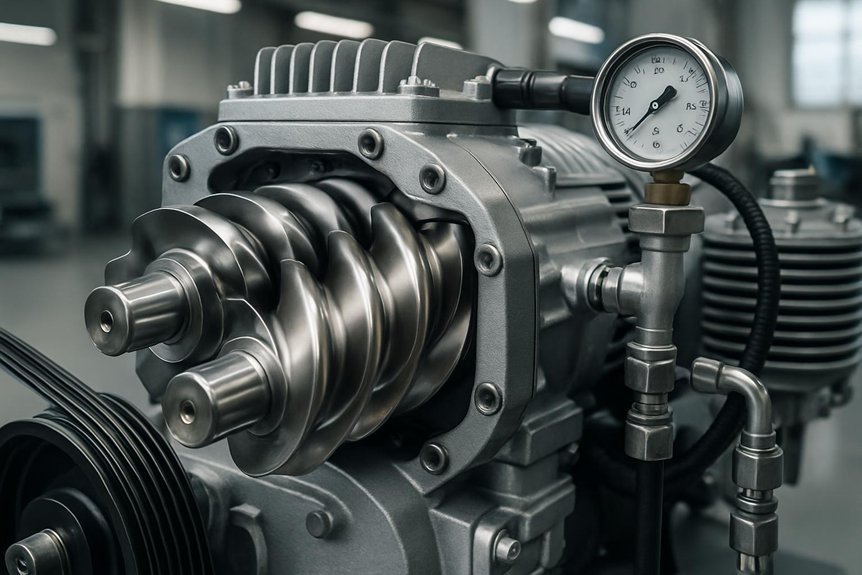
Regular inspection of compressor components is crucial to identify signs of wear and tear that could lead to failure. Monitoring operating temperatures helps detect overheating issues early, preventing more serious damage. Consistent evaluation of these factors guarantees peak performance and extends the lifespan of the equipment.
Check for Wear and Tear
Inspecting compressor components regularly is essential to identify signs of wear and tear that could compromise performance or lead to failure. Conducting a thorough wear assessment allows us to detect early signs of component degradation, such as surface pitting, scoring, or abnormal wear patterns. By monitoring these indicators, we can evaluate the rate of deterioration and determine if parts require replacement or repair. Consistent inspection helps prevent unexpected breakdowns and extends equipment lifespan. It’s important to focus on critical components like bearings, gears, and seals, where wear typically manifests first. Accurate documentation of wear levels enables predictive maintenance, reducing downtime and operational costs. Ultimately, diligent checks for wear and tear are crucial to maintaining peak compressor efficiency and reliability.
Monitor Operating Temperatures
How do we guarantee our rotary screw air compressor operates efficiently and reliably? By closely monitoring operating temperatures, we detect early signs of system stress and prevent failures. Tracking temperature trends in key components helps us identify overheating issues linked to cooling system inefficiencies or component wear. Regular inspections ensure temperature levels stay within manufacturer specifications, avoiding thermal damage. We focus on:
- Analyzing temperature trends over time for early warnings
- Ensuring cooling systems operate effectively to maintain ideal temperatures
- Checking temperature sensors for accuracy and calibration
- Addressing abnormal temperature spikes immediately to prevent damage
This systematic approach maximizes compressor uptime, enhances performance, and extends component lifespan through proactive temperature management.
How to Properly Change and Maintain Compressor Oil?
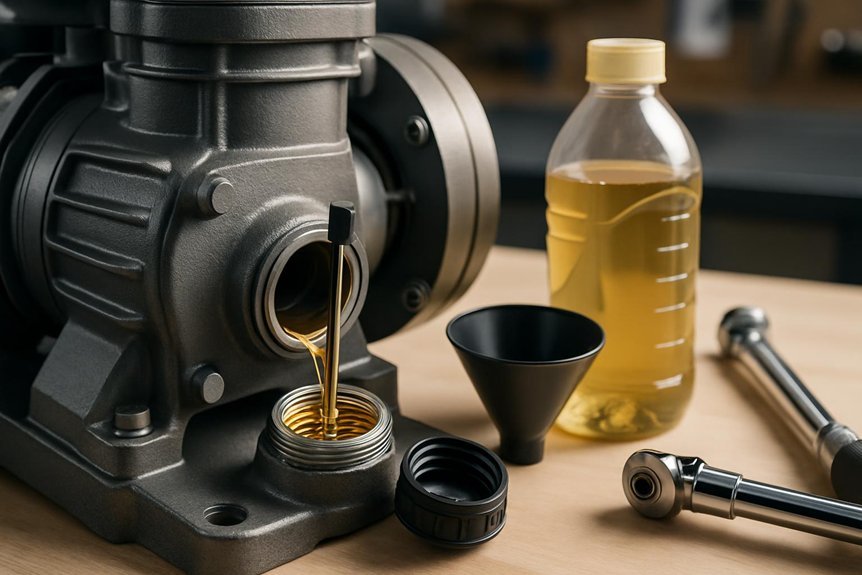
Ever wonder why maintaining proper compressor oil levels and quality is critical for peak performance? Consistent oil management guarantees proper lubrication, reduces wear, and prevents overheating. When changing oil, verify lubricant compatibility to avoid damaging seals or components. Regularly check oil levels and replace the lubricant before it degrades, typically every 1,000 to 2,000 hours of operation. Proper disposal of used oil is crucial; follow environmental regulations to prevent contamination. Here’s a quick overview:
| Step | Action | Notes |
|---|---|---|
| 1 | Drain old oil | Use a designated container |
| 2 | Check lubricant compatibility | Ensure it matches OEM specs |
| 3 | Refill with fresh oil | Maintain proper levels |
| 4 | Dispose of used oil | Follow environmental protocols |
| 5 | Record maintenance | Track oil change intervals |
Cleaning and Replacing Air Filters for Optimal Performance
Regularly cleaning and replacing air filters is essential to maintaining ideal compressor performance, as clogged or dirty filters restrict airflow and increase motor load. An effective maintenance routine involves monitoring the air filter’s condition and adhering to a defined replacement schedule. Failure to do so can lead to decreased efficiency, higher energy costs, and potential damage to internal components.
Key points include:
- Inspect the air filter at regular intervals based on operational hours and environmental conditions.
- Replace the air filter according to the manufacturer’s recommended replacement schedule.
- Use high-quality filters to ensure maximum filtration and airflow.
- Document maintenance activities to track filter lifespan and schedule timely replacements.
Following these steps ensures maximum airflow, reduces wear, and prolongs compressor lifespan.
Checking and Adjusting Compressor Settings for Efficiency
To optimize compressor efficiency, we need to regularly monitor pressure levels and guarantee they remain within specified ranges. Calibration of control settings is essential to maintain accurate system responses and prevent energy waste. Adjusting flow parameters based on real-time data allows us to fine-tune performance and minimize operational costs.
Monitoring Pressure Levels
How can we guarantee peak compressor performance through pressure monitoring? Consistent tracking of pressure levels is essential to detect pressure fluctuations that may compromise efficiency or safety. By monitoring pressure gauges regularly, we identify deviations from ideal setpoints, which can indicate system inefficiencies or potential failures. Proper pressure management ensures adherence to safety protocols, reducing risk during operation. Key considerations include:
- Continuously observing pressure readings during operation
- Recognizing abnormal pressure fluctuations promptly
- Adjusting system controls to maintain consistent pressure levels
- Documenting pressure trends for maintenance planning
Maintaining excellent pressure not only improves efficiency but also minimizes wear on components and prevents safety hazards. Regular, precise monitoring enables proactive adjustments, ensuring the compressor operates within safe, efficient parameters.
Calibrating Control Settings
Ensuring ideal compressor performance requires more than just monitoring pressure levels; it also involves precise calibration of control settings. Control calibration is essential for maintaining peak operation, as it directly influences energy consumption and system longevity. We systematically verify and adjust control parameters to ensure they align with manufacturer specifications and operational demands. This process involves analyzing system feedback, such as pressure and temperature readings, to identify deviations from desired setpoints. Setting optimization is achieved by fine-tuning control points to improve efficiency, reduce wear, and prevent over-compression. Regular calibration ensures the controls respond accurately under varying load conditions, minimizing energy waste. Ultimately, meticulous control calibration is a critical step in maximizing compressor reliability and ensuring consistent, efficient performance over time.
Adjusting for Optimal Flow
Achieving ideal flow in a rotary screw air compressor requires precise adjustment of its operational settings to guarantee maximum efficiency. Proper flow regulation ensures consistent air delivery while minimizing energy consumption. During compressor tuning, we focus on optimizing parameters like variable speed drives and pressure setpoints to match demand accurately. Key steps include monitoring pressure differentials, adjusting control valves, and verifying sensor calibration. Fine-tuning these aspects prevents excess flow or restriction, which can lead to wasted energy or system strain. Regularly reviewing compressor performance data helps identify deviations, enabling targeted adjustments. Ultimately, effective compressor tuning enhances operational stability, extends equipment lifespan, and maintains excellent airflow. Proper attention to flow regulation during maintenance is essential for maximizing compressor efficiency and reducing operational costs.
Troubleshooting Common Rotary Screw Compressor Issues
When diagnosing issues with rotary screw compressors, it’s essential to systematically identify the root causes to minimize downtime and maintain peak performance. Vibration analysis is a key diagnostic tool, revealing imbalances or misalignments that lead to mechanical failures. Noise reduction techniques also help identify abnormal operation, signaling bearing wear or airflow restrictions. Here’s a quick overview:
| Issue | Diagnostic Method | Common Cause |
|---|---|---|
| Excessive vibration | Vibration analysis | Misalignment, imbalance |
| Unusual noise | Acoustic monitoring | Worn bearings, leaks |
| Reduced efficiency | Performance checks | Dirty filters, misadjusted valves |
Proper troubleshooting combines these methods to pinpoint issues, enabling targeted repairs and optimized compressor life.
Implementing Preventative Maintenance Schedules
Implementing a preventative maintenance schedule is essential for maximizing the reliability and efficiency of rotary screw compressors. Scheduled inspections and timely part replacements help maintain ideal performance, directly influencing energy efficiency and noise reduction.
- Regularly monitor and adjust airflow and pressure settings to prevent energy waste
- Schedule filter and lubricant changes to sustain compressor efficiency and reduce operational noise
- Conduct vibration analysis to identify and address imbalances that affect noise levels and longevity
- Maintain accurate records to identify patterns and enhance maintenance intervals
Best Practices for Extending the Lifespan of Your Compressor
To maximize the lifespan of your rotary screw compressor, adopting a proactive approach to maintenance is essential. Regular vibration analysis allows us to detect early signs of imbalance or misalignment, preventing component wear and catastrophic failure. By monitoring vibration patterns, we can identify issues before they escalate, reducing downtime and maintenance costs. Noise reduction techniques also play a crucial role, as excessive noise often indicates underlying mechanical problems. Implementing sound analysis helps pinpoint sources of abnormal noise, guiding targeted repairs. Combining vibration analysis with noise reduction strategies ensures thorough condition monitoring, enabling us to extend the service life of critical components. These practices not only preserve compressor efficiency but also optimize operational reliability and safety over the equipment’s lifespan.
Frequently Asked Questions
How Often Should Compressor Belts and Couplings Be Inspected or Replaced?
We recommend inspecting compressor belts and couplings every 3 to 6 months, checking belt tension and coupling alignment regularly. Replace belts when worn or cracked, and realign couplings promptly to prevent mechanical failure and guarantee ideal compressor performance.
What Are Signs of Compressor Internal Component Wear or Failure?
We observe signs like increased vibration, unusual noises, and oil contamination, indicating internal component wear or failure. Regular vibration analysis helps detect early issues, preventing costly repairs and ensuring compressor reliability and efficiency over time.
How Does Ambient Temperature Affect Compressor Performance and Maintenance?
Ambient conditions, particularly temperature, profoundly influence compressor performance, as elevated temperatures hinder heat dissipation, risking overheating and wear. Effective temperature regulation is vital to maintain ideal operation, reduce failures, and guarantee dependable maintenance schedules.
Are There Specific Lubricants Recommended for Different Compressor Models?
Think of lubricants as the blood of your compressor; selecting compatible oils guarantees smooth operation. Always match lubricant compatibility and oil filter specifications to your compressor model to prevent wear, maximize efficiency, and extend lifespan effectively.
What Safety Precautions Should Be Taken During Compressor Maintenance?
We prioritize safety protocols by wearing proper PPE, guaranteeing emergency procedures are clear, disconnecting power before maintenance, and adhering to manufacturer guidelines to minimize risks, prevent accidents, and ensure a safe, efficient compressor servicing process.
Conclusion
In mastering rotary screw compressor maintenance, we balance meticulous inspections with proactive adjustments. While neglect invites costly failures, diligent care extends equipment life and boosts efficiency. Like tuning a finely calibrated instrument, our attention to detail ensures ideal performance. Ultimately, the harmony between routine checks and strategic interventions transforms a complex machine into a reliable asset—proof that precision and foresight are the cornerstones of sustainable operation.